Stay up-to-date on the companies, people and issues that impact businesses in Syracuse, Central New York and beyond.

Oswego Hospital medical staff appoints new leadership
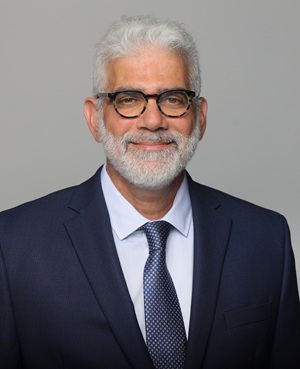
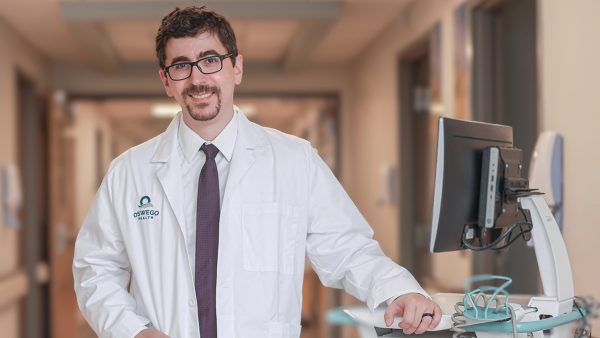
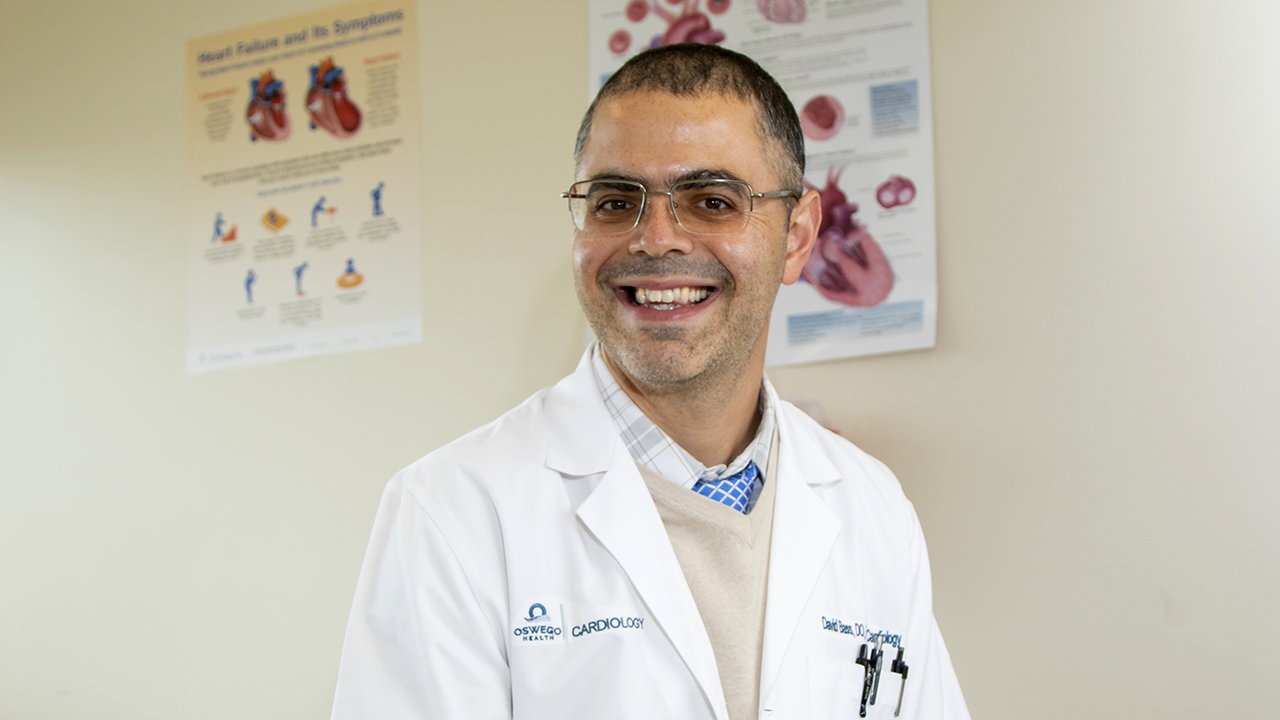
OSWEGO, N.Y. — The medical staff at Oswego Hospital recently appointed new leadership for 2025-2026, including David Bass, DO, as president and Michael Danise, MD, as VP, according to a Dec. 8 announcement from Oswego Health. Dr. Bass, a board-certified cardiologist, has served the community since 2020 through the Center of Cardiology at Oswego Health […]
Become a Central New York Business Journal subscriber and get immediate access to all of our subscriber-only content and much more.
Click here to purchase a paywall bypass link for this article.

OSWEGO, N.Y. — The medical staff at Oswego Hospital recently appointed new leadership for 2025-2026, including David Bass, DO, as president and Michael Danise, MD, as VP, according to a Dec. 8 announcement from Oswego Health.
Dr. Bass, a board-certified cardiologist, has served the community since 2020 through the Center of Cardiology at Oswego Health Medical Practice. He earned his medical degree from the New York College of Osteopathic Medicine and completed a cardiovascular medicine fellowship at Nassau University Medical Center. His career includes extensive service across New York state, including work as a noninvasive cardiologist at Canton Potsdam Hospital, per the announcement.
As president of the medical staff, Dr. Bass will chair the Medical Executive Committee and serve on the Oswego Health board of directors. In this capacity, he will represent the perspectives of the medical staff on key organizational matters, ensure ongoing communication with hospital leadership, and oversee compliance with credentialing standards and member rights.
Dr. Danise, a general surgeon with the Center for Surgical Services, joined Oswego Health in 2024. He completed his general surgery residency at Rhode Island Hospital through Brown University and earned his medical degree from the University at Buffalo Jacobs School of Medicine and Biomedical Sciences. Dr. Danise specializes in minimally invasive procedures and is a certified daVinci robotic surgeon, Oswego Health said.
In his new role as VP of the medical staff, Danise will chair the Oswego Health Quality Assurance and Process Improvement Committee and serve on the Medical Executive Committee.
The medical staff at Oswego Hospital includes more than 270 providers representing a wide range of specialty services throughout Central New York, according to Oswego Health.

New York cheese production rises more than 4 percent in October
New York production facilities produced nearly 78 million pounds of cheese (excluding cottage cheese) in October of this year. That’s up 4.2 percent from the approximately 74.8 million pounds produced in both September 2025 and October 2024, the USDA’s National Agricultural Statistics Service (NASS) recently reported. U.S. cheese production (excluding cottage cheese) totaled about 1.26
Become a Central New York Business Journal subscriber and get immediate access to all of our subscriber-only content and much more.

Click here to purchase a paywall bypass link for this article.
New York production facilities produced nearly 78 million pounds of cheese (excluding cottage cheese) in October of this year.
That’s up 4.2 percent from the approximately 74.8 million pounds produced in both September 2025 and October 2024, the USDA’s National Agricultural Statistics Service (NASS) recently reported.
U.S. cheese production (excluding cottage cheese) totaled about 1.26 billion pounds this October, up 3.7 percent from about 1.215 billion pounds this September, and up 3.2 percent from just over 1.22 billion pounds in October 2024, per the USDA.
New York state producers accounted for more than 6 percent of national cheese production, according to the October 2025 data.

CNYSME selects Benz as the 49th recipient of its Crystal Ball Award
SYRACUSE, N.Y. — A Syracuse real-estate developer will be the 49th recipient of the Crystal Ball Award from the Central New York Sales & Marketing

SUNY Poly dean awarded $50K grant to embed Google industry credentials into course work
MARCY, N.Y. — SUNY has awarded $50,000 to the dean of arts and sciences at SUNY Polytechnic Institute (SUNY Poly) in Marcy through the Embedding

VIEWPOINT: Economic resilience, the Fed’s dual mandate, and the road ahead
I’m going to talk to you [in this article] about the U.S. economy and how the Federal Reserve is working to achieve its dual mandate of maximum employment and price stability. I’ll also discuss recent actions by the Federal Open Market Committee (FOMC), and I’ll give my economic outlook. Turning the Corner One of the
Become a Central New York Business Journal subscriber and get immediate access to all of our subscriber-only content and much more.

Click here to purchase a paywall bypass link for this article.
I’m going to talk to you [in this article] about the U.S. economy and how the Federal Reserve is working to achieve its dual mandate of maximum employment and price stability. I’ll also discuss recent actions by the Federal Open Market Committee (FOMC), and I’ll give my economic outlook.
One of the important parts of my job is to travel throughout the Federal Reserve’s Second District. It gives me the opportunity to meet with business, community, and government leaders and get a firsthand and in-depth look at the challenges and opportunities facing our region.
If I had to choose one word to describe 2025, it is uncertainty. What’s striking is that despite all the uncertainty, the U.S. economy has shown considerable resilience and looks poised to pick up steam next year.
In other words, after navigating through the challenges of 2025, we now appear to be turning the corner. Of course, there’s always uncertainty about the road ahead. But over the past year, our local, national, and even global economies have proven to be resilient.
Before I [discuss] what I expect for the economy, I want to tell you more about its current state. I’ll focus on the two sides of the Fed’s dual mandate: maximum employment and price stability.
I’ll start with price stability, which the FOMC defines as 2 percent inflation over the longer run. In monetary policy, we rely on the totality of the data — and there is a lot of data. While we haven’t had the normal flow of official data in recent months due to the [federal] government shutdown, we are able to use a wide array of indicators to monitor how the economy is doing.
What the data tell me is that the effects of trade policies have boosted inflation this year, but these effects have been more muted and drawn out than I originally anticipated. As a result of the tariffs, progress toward the FOMC’s 2 percent longer-run inflation goal has temporarily stalled, with the most recent inflation reading of about 2-3/4 percent roughly unchanged from a year ago. While it is not possible to precisely measure the effects of trade-policy actions, my estimate is that they have contributed around [0.5 percent] to the current inflation rate.
I do not see any signs of tariffs contributing to second-round or other spillover effects on inflation. In particular, no broad-based supply chain bottlenecks have emerged, shelter inflation has declined steadily, and measures of wage growth point to a continued gradual slowing. This is consistent with reports from around the Second District, where several of my business contacts have noted that, while tariffs continue to drive up their input costs, the pace of price increases has eased slightly.
Most importantly, inflation expectations remain well anchored. The New York Fed’s Survey of Consumer Expectations (SCE) continues to show that inflation expectations remain well within their pre-COVID ranges. This is something I watch closely, because well-anchored expectations are critical to ensuring low and stable inflation.
Turning to the employment side of our mandate, the data show that the labor market has continued to cool, with labor demand softening more than supply. Job growth has been anemic, and the unemployment rate has moved up steadily in recent months.
In addition, survey-based measures of the balance between demand and supply show increasing slack in the labor market. In the Conference Board’s consumer-confidence survey, a measure of the difference between the share of respondents who think jobs are plentiful and the share of those who think jobs are hard to get has declined throughout 2025. We have seen a similar pattern with the National Federation of Independent Business’s (NFIB) survey measure of the difficulty in filling jobs. And the SCE’s “job security gap” measure — defined as respondents’ job-finding expectations minus their job-loss expectations — has fallen considerably this year.
Many labor-market indicators are now at levels we saw prior to the pandemic, a time when the market was not overheated. And although the labor market is clearly cooling, I should emphasize that this has been an ongoing, gradual process, without signs of a sharp rise in layoffs or other indications of rapid deterioration.
Looking ahead, it is imperative that we restore inflation to our 2 percent longer-run goal on a sustained basis. It is equally important to do so without creating undue risks to our maximum employment goal. My assessment is that in recent months, the downside risks to employment have increased as the labor market has cooled, while the upside risks to inflation have lessened somewhat.
Monetary policy is focused on bringing these risks into balance. To that end, the FOMC has moved the modestly restrictive stance of monetary policy toward neutral. At its meeting Dec. 9-10, the FOMC decided to lower the target range for the federal funds rate by a 1/4 percentage point to to a range of 3.5-3.75 percent. The accompanying FOMC statement said that “in considering the extent and timing of additional adjustments to the target range for the federal funds rate, the Committee will carefully assess incoming data, the evolving outlook, and the balance of risks.” With these actions, monetary policy is well positioned as we head into 2026.
Looking ahead, I expect tariffs will have a largely one-off, price-level effect that will be fully realized in 2026. I anticipate inflation to decline to just under 2.5 percent next year, before reaching the FOMC’s longer-run 2 percent goal in 2027.
I expect real GDP growth to be about 2.25 percent in 2026, well above my forecast for this year’s pace of around 1.5 percent. This pickup is in part due to the effects of the government shutdown, but it’s also fueled by tailwinds from fiscal policy, favorable financial conditions, and increased investments in artificial intelligence.
And I expect the unemployment rate to rise to around 4.5 percent at the end of this year, reflecting some additional effects from the government shutdown. With my forecast of above-trend GDP growth, I expect the unemployment rate to gradually come down over the next few years.
On Dec. 1, the FOMC stopped reducing its holdings of Treasury securities and agency debt and agency mortgage-backed securities. With the level of bank reserves now deemed to be ample, the FOMC decided to initiate reserve-management purchases to maintain an ample level of reserves. This is the natural next step in the implementation of our ample reserves framework to ensure effective interest-rate control.
With the steady decline in the level of reserves, we have observed upward pressure on repo rates at times in recent months. When this occurs, the Fed’s standing repo operations can act as a shock absorber by capping pressures on money market rates resulting from strong liquidity demand or market stress. I fully expect that standing repo operations will continue to be actively used in this way.
So, after a year of uncertainty, we will be starting 2026 from a place of resilience. The economy is poised to return to solid growth and price stability.
But, as 2025 has shown, the road may shift in unpredictable ways. In assessing the future path of monetary policy, my views, as always, will be based on the evolution of the totality of the data, the economic outlook, and the balance of risks to the achievement of our maximum employment and price stability goals. We must be ready to adjust our route as needed to reach our destination.
John C. Williams is president and CEO of the Federal Reserve Bank of New York. This article is drawn (and edited for space) from a speech, as prepared for delivery, that he gave on Dec. 15 at the New Jersey Bankers Association in Jersey City, New Jersey. In his speech, Williams gave the standard Fed disclaimer that the views he expressed were his alone and do not necessarily reflect those of the FOMC or others in the Federal Reserve System. The full, unedited text of the speech is available at: https://www.newyorkfed.org/newsevents/speeches/2025/wil251215

Click here to view the 2025 Nonprofit Directory!
Become a Central New York Business Journal subscriber and get immediate access to all of our subscriber-only content and much more.
Click here to purchase a paywall bypass link for this article.

TC3, SU’s College of Professional Studies sign transfer agreement
DRYDEN, N.Y. — Graduates of Tompkins Cortland Community College (TC3) now have a direct transfer pathway into online bachelor’s degree programs in Syracuse University’s (SU) College of Professional Studies (CPS). The transfer agreement offers TC3 graduates discounted tuition rate for those undergraduate online degree programs, per the Nov. 18 announcement. Amy Kremenek, president of Tompkins
Become a Central New York Business Journal subscriber and get immediate access to all of our subscriber-only content and much more.
Click here to purchase a paywall bypass link for this article.
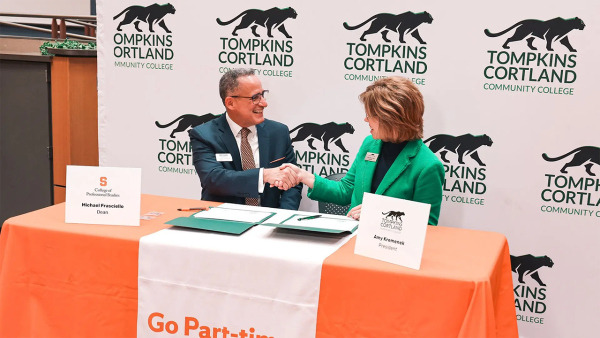
DRYDEN, N.Y. — Graduates of Tompkins Cortland Community College (TC3) now have a direct transfer pathway into online bachelor’s degree programs in Syracuse University’s (SU) College of Professional Studies (CPS).
The transfer agreement offers TC3 graduates discounted tuition rate for those undergraduate online degree programs, per the Nov. 18 announcement.
Amy Kremenek, president of Tompkins Cortland Community College, and Michael Frasciello, dean of the College of Professional Studies at Syracuse University, formally signed the agreement at the TC3 campus in Dryden in Tompkins County.
“Helping students succeed is our top priority at TC3, and for many, success is being accepted into a top world-class institution to complete their undergraduate degree. This agreement provides a guaranteed path for our students to transfer into Syracuse University and complete their bachelor’s degree at a top university,” Kremenek said in the TC3 announcement. “This partnership presents a tremendous opportunity for our students, and I am proud of the work of everyone at TC3 and Syracuse for bringing this agreement to fruition.”
Under the agreement, students who complete a TC3 associate degree with a minimum GPA (grade point average) of 3.0 or better in one of seven programs are guaranteed acceptance into one of two bachelor’s degree programs at the College of Professional Studies. Those students will receive a discounted tuition rate for the uninterrupted duration of their enrollment at the College.
“Our goal is to remove barriers and create opportunities for students who want to continue their education at a world-class university,” Frasciello said. “This partnership ensures that TC3 graduates have a clear, affordable, and supportive path to earning their bachelor’s degree at Syracuse University. We’re excited to welcome these students and help them achieve their academic and career aspirations.”
The agreement covers the following TC3 associate degree programs transferring to CPS bachelor’s degree programs:

Deadline for MMRI 2026 summer-fellowship program applicants is early February
UTICA, N.Y. — The Masonic Medical Research Institute (MMRI) in Utica says college students interested in a summer fellowship can apply for consideration. The application deadline is Friday, Feb. 6, 2026. The program is open to both local and national undergraduate and graduate students. The MMRI Summer Fellowship is a 10-week, hands-on training program designed
Become a Central New York Business Journal subscriber and get immediate access to all of our subscriber-only content and much more.

Click here to purchase a paywall bypass link for this article.
UTICA, N.Y. — The Masonic Medical Research Institute (MMRI) in Utica says college students interested in a summer fellowship can apply for consideration.
The application deadline is Friday, Feb. 6, 2026. The program is open to both local and national undergraduate and graduate students.
The MMRI Summer Fellowship is a 10-week, hands-on training program designed to get undergraduate and graduate students involved in scientific research.
The upcoming fellowship will run from May 11, 2026, through July 17, 2026 at MMRI, which is located at 2150 Bleecker St. in Utica.
Fellows will gain hands-on laboratory experience, mentorship from some of the nation’s leading scientists and “valuable insight into the process of scientific discovery,” MMRI said. The program also offers opportunities to network with peers and experts, attend educational workshops, and receive guidance on medical and graduate school applications.
“The summer fellowship helped me to decide on my future career path that I wasn’t necessarily sure of prior to the program,” Gianna Frank, a 2024 summer fellow and pre-medical student at Syracuse University, said in the MMRI announcement. “Participating in this fellowship not only taught me skills necessary for hands-on benchwork, but it also showed me the ‘behind the scenes’ of the entire research process.”
Undergraduate and graduate students pursuing science-related programs, including biology, chemistry, genetics, molecular biology, nanomedicine, physiology, drug delivery and other life sciences, are encouraged to apply.
To learn more about MMRI’s summer fellowship program, visit mmri.edu/summerfellow.

Southern Tier nonprofits to benefit from Tioga Downs Foundation grants
NICHOLS, N.Y. — Nonprofit organizations throughout the Southern Tier and Northern Pennsylvania will use a total of $2 million in grant funding provided by the Tioga Downs Regional Community Foundation. The money is meant to help further their objectives, missions, and organizations, Tioga Downs said in announcing the grant awards. Grant recipients were announced during
Become a Central New York Business Journal subscriber and get immediate access to all of our subscriber-only content and much more.
Click here to purchase a paywall bypass link for this article.
NICHOLS, N.Y. — Nonprofit organizations throughout the Southern Tier and Northern Pennsylvania will use a total of $2 million in grant funding provided by the Tioga Downs Regional Community Foundation.
The money is meant to help further their objectives, missions, and organizations, Tioga Downs said in announcing the grant awards.
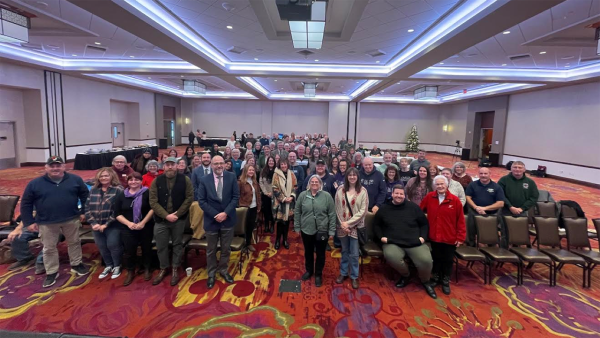
Grant recipients were announced during an afternoon awards ceremony at Tioga Downs Casino Resort on Dec. 2. Nonprofit organizations from Chemung, Tioga, Broome, and Bradford counties were recognized for their initiatives in addressing and combating local poverty and community deterioration, per the announcement.
Additionally, Tioga Downs owner Jeff Gural also donated $100,000 to the Food Bank of the Southern Tier to further help combat food insecurity in the region.
More than 120 organizations were awarded grants, and nearly 200 organizations had applied this year. It was a record number of applicants, Tioga Downs encourages all of them to apply again next year, even if they were awarded a grant at this year’s event.
“Through the experiences shared by our award winners, we eagerly anticipate the ripple effects of these grants making a real difference close to home,” Gural said in the announcement. “There are countless organizations doing amazing work, often without the budget they truly deserve, and these grants aim to amplify their impact.”
The Tioga Downs Regional Community Foundation says it is dedicated to promoting economic and community development by supporting organizations that contribute to charitable, religious, literary, scientific, and educational endeavors within the target counties. With hundreds of applications received annually, the foundation works to donate to as many organizations as possible, Tioga Downs noted.

Oswego Health Foundation’s 6th annual gala raises more than $132K
OSWEGO, N.Y. — The Oswego Health Foundation’s 6th annual gala, “The Power of Pink,” drew a crowd of 252 generous guests and supporters at the Lake Ontario Event and Conference Center on Nov. 8 and raised more than $132,000 to advance local health care. Proceeds from this year’s gala will support the creation of a
Become a Central New York Business Journal subscriber and get immediate access to all of our subscriber-only content and much more.
Click here to purchase a paywall bypass link for this article.
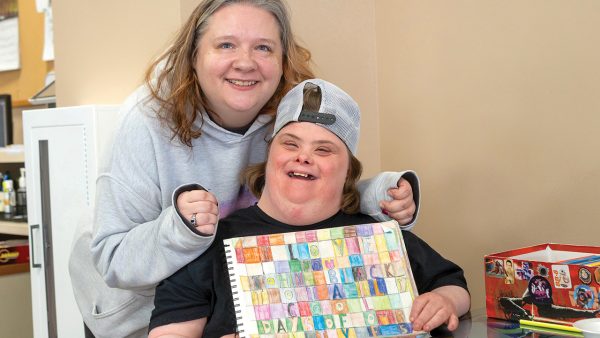
OSWEGO, N.Y. — The Oswego Health Foundation’s 6th annual gala, “The Power of Pink,” drew a crowd of 252 generous guests and supporters at the Lake Ontario Event and Conference Center on Nov. 8 and raised more than $132,000 to advance local health care.
Proceeds from this year’s gala will support the creation of a state-of-the-art multi-specialty imaging suite at Oswego Hospital, Oswego Health announced. This innovative space will unite ultrasound, mammography, and bone-density services in one modern, patient-centered environment. It will include private changing rooms, an inviting waiting area, and improved staff workspaces designed to enhance both comfort and care, the health system added.
“Every dollar raised at the Gala directly impacts the quality of care available right here in our community,” Michele Hourigan, director of business and community development at the Oswego Health Foundation, said in the announcement. “The Power of Pink represented more than a theme — it symbolized our community’s strength, compassion, and commitment to one another. We’re deeply grateful to our sponsors, donors, and guests for helping us continue to invest in the health of our neighbors.”
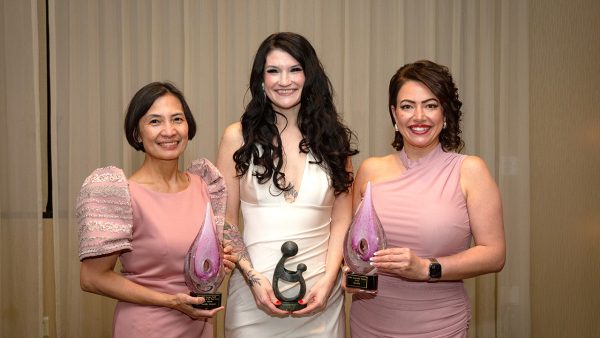
Oswego Health also used the evening to honor three award recipients:
Physician of the Year: Dr. Marie Castillo-Alcasid — Affectionately known as Dr. Marie, this board-certified internal medicine physician has been a cornerstone of Oswego Hospital’s hospitalist team since 2008. Known for her empathy, expertise, and dedication to patient-centered care, Dr. Marie is admired by patients, colleagues, and families, alike, Oswego Health noted.
DAISY Award Winner: Allison Flett, RN — Since joining Oswego Health in 2021, Flett has exemplified compassion, adaptability, and a true passion for nursing. Starting her career as an LPN at Urgent Care, she quickly earned her RN license in 2022 and has since served across the ICU, Emergency Department, and Med-Surg units, the health system said.
Community Partner Award: Novelis — A global leader in sustainable aluminum products and services and the world’s largest recycler of aluminum, Novelis has been a steadfast force in Oswego County for more than six decades, Oswego Health contended. Since 1988, Novelis has contributed more than $344,000 to Oswego Health and remains a dedicated supporter of community growth through both philanthropy and volunteerism. With nearly 1,150 employees locally, the company continues to invest in programs that strengthen Central New York — from STEM education and health care to children’s advocacy and hunger relief.
Stay up-to-date on the companies, people and issues that impact businesses in Syracuse, Central New York and beyond.