
Stay up-to-date on the companies, people and issues that impact businesses in Syracuse, Central New York and beyond.

Onondaga County hotel indicators mixed in 1st half of 2025
SYRACUSE — The first half of 2025 was mixed for Onondaga County hotels when it comes to three key indicators of business performance. The hotel-occupancy rate (rooms sold as a percentage of rooms available) in Central New York’s largest county slipped 0.7 percent to 58 percent in the first six months of this year, compared […]
Become a Central New York Business Journal subscriber and get immediate access to all of our subscriber-only content and much more.

Click here to purchase a paywall bypass link for this article.
SYRACUSE — The first half of 2025 was mixed for Onondaga County hotels when it comes to three key indicators of business performance.
The hotel-occupancy rate (rooms sold as a percentage of rooms available) in Central New York’s largest county slipped 0.7 percent to 58 percent in the first six months of this year, compared to the same period in 2024, according to STR, a Tennessee–based hotel market data and analytics company.
Revenue per available room (RevPar), an industry gauge that measures how much money hotels are bringing in per available room, rose 1.6 percent to $76.01 in Onondaga County through June 30, 2025 versus the initial six months of last year.
Average daily rate (or ADR), which represents the average rental rate for a sold room, increased by 2.2 percent to $131.16 in the first half of 2025, compared to the year-ago period, STR reports.

Airports in Syracuse, Oswego County, Ithaca to use funding for projects, equipment
SYRACUSE — More than 20 airports around New York state will utilize federal funding for improvement projects and equipment, and they include facilities serving Syracuse, Oswego County, Rome, Watertown, and Ithaca. The awards are part of more than $66 million announced for 22 New York state airports, U.S. Senate Minority Leader Charles Schumer (D–N.Y.) and
Become a Central New York Business Journal subscriber and get immediate access to all of our subscriber-only content and much more.
Click here to purchase a paywall bypass link for this article.
SYRACUSE — More than 20 airports around New York state will utilize federal funding for improvement projects and equipment, and they include facilities serving Syracuse, Oswego County, Rome, Watertown, and Ithaca.
The awards are part of more than $66 million announced for 22 New York state airports, U.S. Senate Minority Leader Charles Schumer (D–N.Y.) and U.S. Senator Kirsten Gillibrand (D–N.Y.) announced on Aug. 26.
This federal funding was awarded through the Federal Aviation Administration’s (FAA) Airport Improvement Program and Airport Infrastructure Grant program, the lawmakers noted.
In addition to these newly announced grants, the FAA announced congressionally directed spending that the senators had previously secured as part of the 2024 fiscal year funding package, including $6 million for Syracuse Hancock International Airport and $1.5 million for Ithaca Tompkins International Airport.
Those grants will pay for projects that enhance safety measures and help “ensure a more reliable and comfortable passenger experience.”
Syracuse Hancock International Airport will use more than $8.3 million for taxiway renovations and signage and lighting replacement, over $3.4 million for terminal apron expansion, and more than $1.5 million for runway renovations.
Watertown International Airport in the town of Hounsfield was awarded more than $3 million for terminal construction, nearly $2.9 million for runway and signage renovations, more than $1.3 million for acquiring more than five acres of land to protect the runway approach, and over $192,000 for removing trees and other structures identified as obstructions.
Oswego County Airport in the town of Volney will use a funding award of more than $94,000 for airfield signage and lighting reconstruction.
Griffiss International Airport in Rome was awarded nearly $204,000 for wildlife fencing reconstruction.
Ithaca Tompkins International Airport in the town of Lansing will use a more than $3.1 million grant for site clearing and preparation for new snow removal, aircraft rescue, and firefighting facilities.
In the North Country, Adirondack Regional Airport in the town of Harrietstown (near Saranac Lake) will use nearly $711,000 for taxiway renovations. Also, the Plattsburgh International Airport in the town of Plattsburgh was awarded more than $1.8 million for security-camera installations and mechanical-gate operator reconstruction.

New York manufacturing index turns negative in September
New York manufacturers are again reporting drops in both new orders and shipments, which helped unexpectedly push the monthly gauge of the sector back into negative territory. The general-business conditions index of the Empire State Manufacturing Survey fell 21 points to -8.7 in September, its first negative reading since June. In the prior couple months,
Become a Central New York Business Journal subscriber and get immediate access to all of our subscriber-only content and much more.
Click here to purchase a paywall bypass link for this article.
New York manufacturers are again reporting drops in both new orders and shipments, which helped unexpectedly push the monthly gauge of the sector back into negative territory.
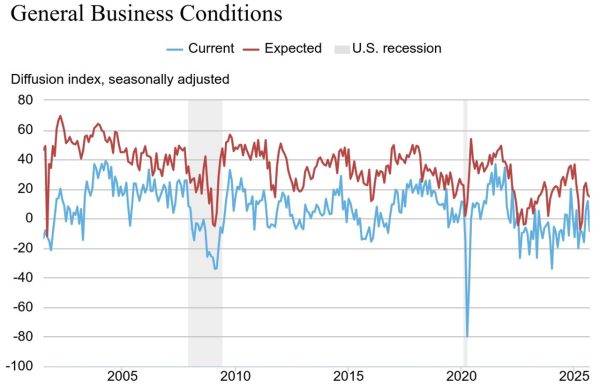
The general-business conditions index of the Empire State Manufacturing Survey fell 21 points to -8.7 in September, its first negative reading since June.
In the prior couple months, the index rose 6 points to 11.9 in August, after soaring 22 points to 5.5 in July. The general business conditions index is the monthly barometer of the New York manufacturing industry.
Based on firms responding to the survey, the September measurement indicates business activity “declined modestly” in New York state, the Federal Reserve Bank of New York said in its Sept. 15 report.
A negative reading on the index indicates a decline in the sector, while a positive number points to expansion or growth in manufacturing activity.
The September general business conditions index’s negative reading was much worse than economists’ expectations of a measurement of 4.3, which would have indicated continued expansion in the sector.
The September survey found new orders and shipments fell “sharply,” the New York Fed said. Supply availability “worsened somewhat,” while inventories edged lower for a second straight month.
Firms expected some improvement in conditions in the months ahead, but optimism remained “subdued.”
The new-orders index declined 35 points to -19.6, and the shipments index fell 30 points to -17.3, the lowest levels for both indexes since April 2024, pointing to “significant declines” in orders and shipments, the New York Fed said.
Unfilled orders fell. The inventories index remained modestly negative at -4.9, indicating that business inventories “continued to shrink somewhat.”
Delivery times were unchanged. The supply-availability index dropped to -8.8, a sign that supply availability continued to worsen.
The index for number of employees came in at around 0, suggesting that employment was little changed after increasing for the prior three months, while the average-workweek index declined to -5.1, pointing to a modest drop in hours worked.
The prices-paid index fell 8 points to 46.1, a sign that input-price increases “slowed but remained steep,” while the prices-received index was little changed at 21.6, indicating that selling prices continued to rise at a moderate pace.
The index for future general business conditions came in at 14.8, suggesting that firms expect conditions to improve somewhat in the months ahead, but optimism remained restrained. New orders and shipments are expected to increase, and supply availability is expected to be little changed.
The future employment index fell to near zero, a “rare occurrence” suggesting that employment levels are not expected to increase over the next six months, the New York Fed said. Capital spending plans remained soft.
The New York Fed distributes the Empire State Manufacturing Survey on the first day of each month to the same pool of about 200 manufacturing executives in New York. On average, about 100 executives return responses.

Bassett to expand services using more than $7.6 million in state funding
COOPERSTOWN — The Bassett Healthcare Network, based in Cooperstown, will use grant funding of more than $7.6 million for the project that is expected to begin in early 2026. The money will provide Bassett with capital resources to open additional inpatient psychiatric beds at Bassett Medical Center and construct a new convenient-care clinic at its
Become a Central New York Business Journal subscriber and get immediate access to all of our subscriber-only content and much more.
Click here to purchase a paywall bypass link for this article.
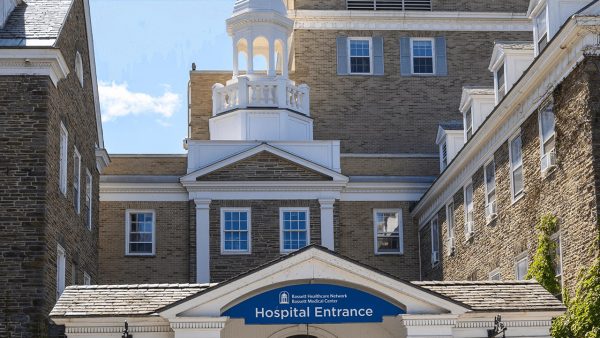
COOPERSTOWN — The Bassett Healthcare Network, based in Cooperstown, will use grant funding of more than $7.6 million for the project that is expected to begin in early 2026.
The money will provide Bassett with capital resources to open additional inpatient psychiatric beds at Bassett Medical Center and construct a new convenient-care clinic at its Hartwick Seminary Specialty Services location in Milford.
The grant funding comes through New York’s Statewide Health Care Facility Transformation Program IV, per Bassett’s Aug. 14 announcement.
Bassett Healthcare Network is included in more than 50 projects across the state that are part of the transformation program. The program focuses on efforts to expand access to inpatient, behavioral health, primary, and long-term care.
“This transformative investment in access to care for New York State residents is tremendous,” Staci Thompson, president and CEO of Bassett Healthcare Network, said in the announcement. “It is especially impactful in rural communities like Bassett’s region, where people in remote areas depend on our services.”
Inpatient-psychiatric space in Cooperstown will increase by six rooms, providing more capacity for patients with acute behavioral-health needs, Bassett said. The project will include upgrading patient-monitoring equipment, in addition to room renovations.
The grant money will also support construction on Bassett’s new convenient-care center south of Cooperstown.
The newly renovated clinic will include six exam rooms, a waiting and reception area, an X-ray room, and a nurses’ station.
“Walk-in care for non-emergency medical concerns is a high area of need among our patient population,” Thompson said. “Adding a clinic for same-day and next-day care options seven days a week will give our communities an additional layer of access for acute conditions — including thousands of families who rely on us for care when they visit the area each summer.”

Two local nonprofits benefit from Taste of Syracuse fundraising
SYRACUSE — Two local nonprofit organizations benefitted from the fundraising effort at this past June’s Taste of Syracuse event that generated more than $24,000. Galaxy Media, which organizes Taste of Syracuse, on Sept. 3 presented checks totaling just over $12,000 to both David’s Refuge and Ronald McDonald House Charities of Central New York. The money
Become a Central New York Business Journal subscriber and get immediate access to all of our subscriber-only content and much more.

Click here to purchase a paywall bypass link for this article.
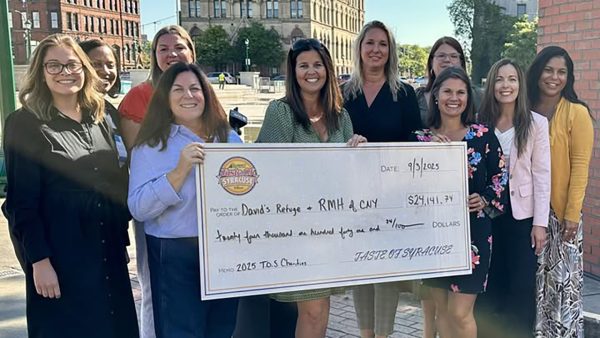
SYRACUSE — Two local nonprofit organizations benefitted from the fundraising effort at this past June’s Taste of Syracuse event that generated more than $24,000.
Galaxy Media, which organizes Taste of Syracuse, on Sept. 3 presented checks totaling just over $12,000 to both David’s Refuge and Ronald McDonald House Charities of Central New York.
The money collected for the two charities was a joint effort between two Taste of Syracuse sponsors, including The Summit Federal Credit Union and Tops Friendly Markets.
“We can’t thank our partners enough for their tremendous support of the festival and for their generosity in regard to giving back to local charities,” Carrie Wojtaszek, COO of Galaxy Events, said in the announcement.
Taste of Syracuse — described as Central New York’s biggest food and music festival — attracted an estimated 200,000 people over two days.
“Being a caregiver can be incredibly rewarding, but it also comes with physical, emotional, and financial challenges. We are thrilled that we were able to highlight the work of these two organizations that do so much to support families and caregivers in Central New York,” Twanda Christensen, VP of marketing and community engagement for The Summit Federal Credit Union, said.
“Every year, we are overwhelmed by the generosity of our community and grateful for their willingness to give back to those in need,” Courtney Mailhot, community relations manager of Tops Friendly Markets, added. “Being able to shine a light on these two amazing organizations, who do so much for our neighbors each and every day, while helping to raise much-needed funds for their cause, truly embodies our Neighbors Helping Neighbors philosophy.”

Centralus Health CEO Stallone to start Excellus job in December
ROCHESTER — Dr. Martin Stallone, the current CEO of Centralus Health, is moving to a new job on Dec. 1. Rochester–based Excellus BlueCross BlueShield on Aug. 28 named Stallone executive VP, chief healthcare services officer of Excellus and its parent company, The Lifetime Healthcare Companies. Excellus is Central New York’s largest health insurer. Stallone is
Become a Central New York Business Journal subscriber and get immediate access to all of our subscriber-only content and much more.

Click here to purchase a paywall bypass link for this article.
ROCHESTER — Dr. Martin Stallone, the current CEO of Centralus Health, is moving to a new job on Dec. 1.
Rochester–based Excellus BlueCross BlueShield on Aug. 28 named Stallone executive VP, chief healthcare services officer of Excellus and its parent company, The Lifetime Healthcare Companies. Excellus is Central New York’s largest health insurer.
Stallone is currently CEO of Centralus Health, a health-care system formed through the affiliation of Cayuga Health of Ithaca and Arnot Health in Elmira. It includes five hospitals serving communities across New York’s Southern Tier, Finger Lakes, and Central New York regions.
In addition to his role as CEO of Centralus Health, Stallone served in a variety of leadership positions during his 17 years at Cayuga Health.
In his new position, Stallone will oversee Excellus BlueCross BlueShield’s health care-related functions including pharmacy services, provider network, quality programs, and medical services including member-care management. He’ll also oversee efforts to “more closely align” providers, insurers, and other health-care partners.
“As a local, nonprofit health plan, we increasingly partner with hospital systems and provider practices to help improve community health while tackling the growing challenge of rising healthcare costs,” Jim Reed, CEO and president of The Lifetime Healthcare Companies, said in the announcement. “We’re thrilled to welcome Dr. Stallone to our team … His clinical leadership in health care delivery, combined with his understanding of our regional health systems, will help us drive innovation and deepen our provider partnerships to better serve our communities in Central New York and throughout upstate New York.”
Stallone earned his Doctor of Medicine and MBA degrees from the University of Pennsylvania. He also holds degrees from the U.S. Naval War College and Cornell University.
He is an Air Force colonel and the New York State Air Surgeon for the New York Air National Guard, Excellus said.

VIEWPOINT: How the OBBBA’s Tax Reform Could Fuel Your Company’s Growth
The One Big Beautiful Bill Act (OBBBA), a sweeping tax-reform package that includes significant provisions for businesses of all sizes, was signed into law on July 4. While many headlines have focused on individual tax cuts, the bill contains several game-changing business provisions that deserve the attention of every entrepreneur, CFO, and business owner. Three
Become a Central New York Business Journal subscriber and get immediate access to all of our subscriber-only content and much more.
Click here to purchase a paywall bypass link for this article.
The One Big Beautiful Bill Act (OBBBA), a sweeping tax-reform package that includes significant provisions for businesses of all sizes, was signed into law on July 4. While many headlines have focused on individual tax cuts, the bill contains several game-changing business provisions that deserve the attention of every entrepreneur, CFO, and business owner.
Three key opportunities from the legislation are:
1. The return of 100 percent bonus depreciation — along with an expanded Section 179 and a brand-new Qualified Production Property category
2. Full expensing of domestic research and development costs
3. Expanded business interest deductions under a favorable EBITDA-based limitation
What’s changed?
Under prior law, businesses were watching bonus depreciation phase down — dropping to 40 percent in 2025. The OBBBA restores 100 percent bonus depreciation for qualified property placed in service after Jan. 19, 2025. That means businesses can immediately expense the entire cost of eligible assets instead of depreciating them over several years.
What qualifies?
Bonus depreciation generally applies to:
• New and used tangible assets with a recovery period of 20 years or less (think equipment, machinery, furniture, and certain improvements to nonresidential real estate).
The OBBBA also introduces a new category to further incentivize domestic production: Qualified Production Property (QPP). While IRS guidance is (hypothetically / theoretically) expected, this new category is effectively referring to property built for manufacturing. For local manufacturers, contractors, and even breweries, this could be a major incentive to modernize facilities.
Section 179 expansion
Alongside bonus depreciation, the OBBBA significantly expands IRC §179 expensing, another powerful tool for small and mid-sized businesses. Section 179 allows companies to immediately deduct the cost of qualifying property — generally machinery, equipment, vehicles, and certain improvements to nonresidential real property (think roofs, HVAC, alarm, and security systems) — up to an annual limit. Under the new law, that limit increases to $2.5 million with the phase-out threshold beginning at $4 million of qualifying purchases. In practice, this means many more businesses, even those making substantial investments, will be able to expense the full cost of their purchases without relying solely on bonus depreciation.
Planning opportunities:
•Evaluate expansions. If you’re building out a production line, opening a new facility, or expanding capacity, review whether the investment qualifies as QPP.
•Compare strategies. Section 179 allows greater flexibility (you can pick individual assets to expense), while bonus depreciation applies automatically unless you elect out for an entire asset class. Smart planning can maximize deductions in years when taxable income is high. Note that your review process should factor in New York State’s exclusion of bonus depreciation.
What’s changed?
One of the most controversial provisions of the 2017 Tax Cuts and Jobs Act (TCJA) required businesses to amortize domestic research and experimental (the IRS refers to this as “R&E”, but you’ll often hear this called R&D) expenditures over five years. This created cash flow headaches and reduced incentives for innovation.
The OBBBA repeals that rule and restores immediate expensing of domestic R&E costs for tax years beginning after Dec. 31, 2024. This means wages, supplies, and certain overhead costs directly tied to U.S.-based research can once again be deducted in full in the year incurred. In addition, businesses that capitalized research expenses from 2022 through 2024 can now accelerate recovery of such deductions, and small businesses (defined as average gross receipts under $31 million) may apply this change retroactively.
What Qualifies?
Qualifying expenditures include research or experimental costs intended to discover information that would eliminate uncertainty regarding the development or improvement of a product. Importantly, any amount incurred domestically for internally developed software is treated as a qualifying R&E expenditure.
Why this matters:
Whether you’re a tech startup developing software, a manufacturer improving processes, or even a food company testing new recipes, these costs may qualify. Combined with the R&D tax credit under IRC §41, this is a one-two punch of tax relief.
Planning opportunities:
• Rewrite history or accelerate now. Consider whether amending prior tax returns or “catching up” deductions on your 2025 return provides the greatest benefit. Businesses that incurred heavy R&D costs in recent years may unlock significant refunds.
The OBBBA permanently restores the EBITDA-based limitation for the business interest-expense deduction under IRC § 163(j). For tax years beginning after Jan. 1, 2025, businesses may deduct interest expense up to 30 percent of adjusted taxable income, calculated as EBITDA (earnings before interest, taxes, depreciation, and amortization). This change reverses the prior, more restrictive EBIT-based limitation that excluded depreciation and amortization from the calculation. In practical terms, this means depreciation and amortization (the DA of EBITDA) are added back to adjusted taxable income — raising the ceiling on deductible interest.
Planning Opportunities:
• Project the impact on your current debt. Forecast your taxable income and deductible interest under the new standard, factoring in the effects of bonus depreciation and R&D expensing, both of which increase EBITDA and thus the interest-deduction limitation
• Strategic Debt Planning. With cheaper after-tax borrowing, expansion projects that once looked marginal may now pencil out. This is especially relevant for small and mid-sized businesses seeking to expand capacity or acquire competitors.
The One Big Beautiful Bill Act is a turning point in business taxation. For many local companies, these provisions represent more than just tax savings — they’re tools to fuel growth, innovation, and expansion.
The key takeaway? Timing and proactive planning matters. Because these provisions hinge on assets and expenses incurred in 2025 and beyond, now is the time to coordinate with your CPA or tax advisor. Whether it’s accelerating equipment purchases, reevaluating R&D activities, or planning financing strategies, proactive businesses will capture the greatest benefits. This game will not be won from the sidelines.
Joe Greene is a senior manager at Evans and Bennett, LLP, a full-service accounting firm based in Syracuse. Contact him at jgreene@evansandbennett.com

Bryant & Stratton students train at new high-tech nursing lab at Liverpool campus
CLAY — Bryant & Stratton College has a new nursing lab at its Liverpool location at 7805 Oswego Road (Route 57) in the town of Clay. “This lab represents more than just new equipment. It reflects a commitment to educational excellence, innovation, and the future of compassionate, high quality nursing care,” Mary Hawkins, Syracuse market
Become a Central New York Business Journal subscriber and get immediate access to all of our subscriber-only content and much more.
Click here to purchase a paywall bypass link for this article.
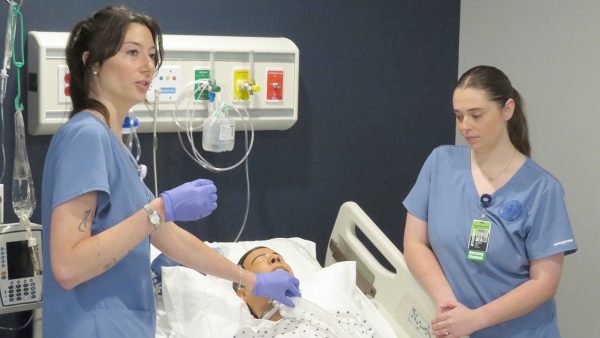
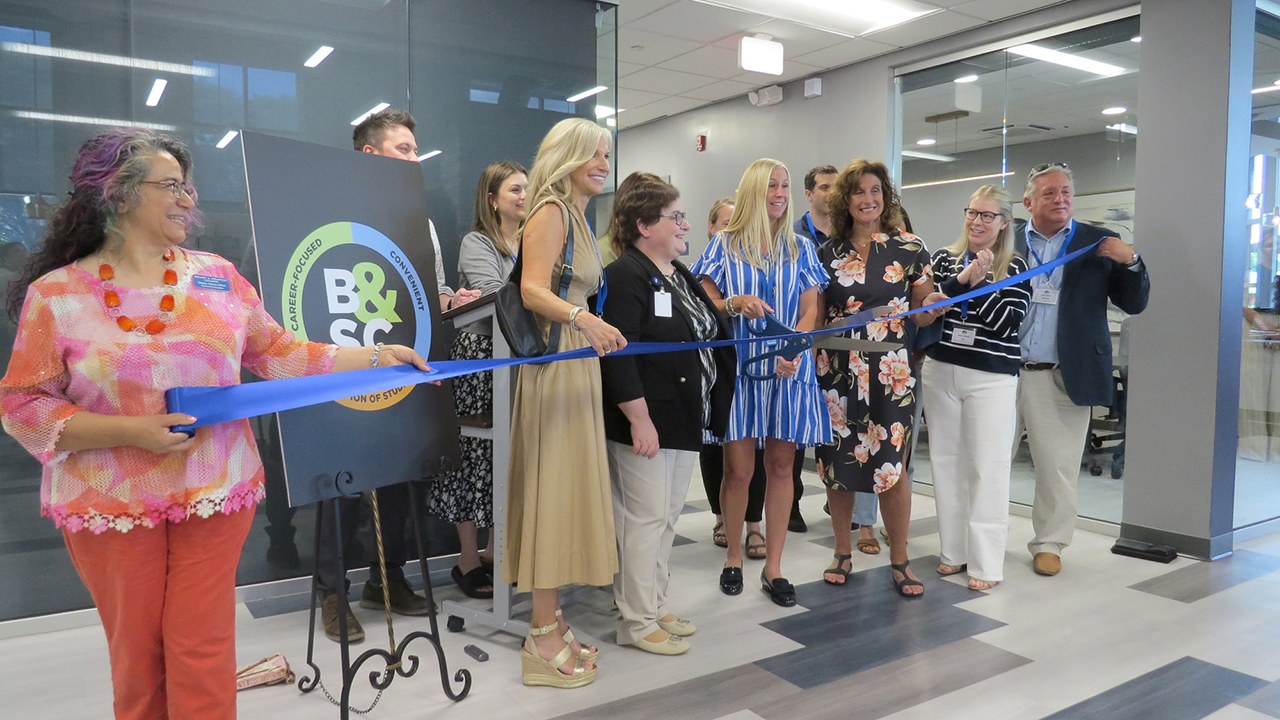
CLAY — Bryant & Stratton College has a new nursing lab at its Liverpool location at 7805 Oswego Road (Route 57) in the town of Clay.
“This lab represents more than just new equipment. It reflects a commitment to educational excellence, innovation, and the future of compassionate, high quality nursing care,” Mary Hawkins, Syracuse market director at Bryant & Stratton College, said in addressing the gathering at the Liverpool campus during the July 18 formal-opening event.
Designed to replicate a small hospital wing, the lab features private patient rooms with simulation mannequins, a staff office, and a debriefing room equipped with a large wall monitor for real-time observation and discussion.

The school believes the simulation lab, along with an existing skills lab, will give Bryant & Stratton College “greater capacity” to equip future nurses with hands-on experience and help address Central New York’s ongoing nursing shortage.
In her remarks, Hawkins credited Sue Cumoletti, former director of the Syracuse campuses, and Kara Evans, a registered nurse, dean of instruction, and the nursing-program director, for the vision and leadership which resulted in the new simulation lab.
The event also included greetings from the CenterState CEO Ambassadors volunteer group and a ribbon cutting.
Those attending also had the chance to tour both the simulation lab and the skills lab, which included interactive demonstrations led by Bryant & Stratton nursing faculty.
The simulation lab provides real-time care scenarios with interactive simulation mannequins, and the skills lab, which the school describes as having “fully equipped hospital-like training environments.”
As the program moved from the lobby to the simulation lab, Evans told the gathered crowd, “As the only single institution, pre-licensure, bachelor of science degree in nursing program in the region, Bryant & Stratton College embraces a unique and impactful responsibility to educate and prepare the next generation of nurses who will serve our community with skill, compassion, and integrity.”
Bryant & Stratton College’s nursing program serves more than 2,000 students across New York state and beyond, the school said.

Upstate Medical University contributes more than $3 billion to state economy
SYRACUSE — Upstate Medical University contributes $3.2 billion to the state economy and supports, directly and indirectly, more than 24,000 jobs, a new report found. The economic-impact report “underscores the substantial contribution Upstate makes to the regional and state economy,” the health system said in its July 30 announcement. The report — conducted by Kansas
Become a Central New York Business Journal subscriber and get immediate access to all of our subscriber-only content and much more.
Click here to purchase a paywall bypass link for this article.
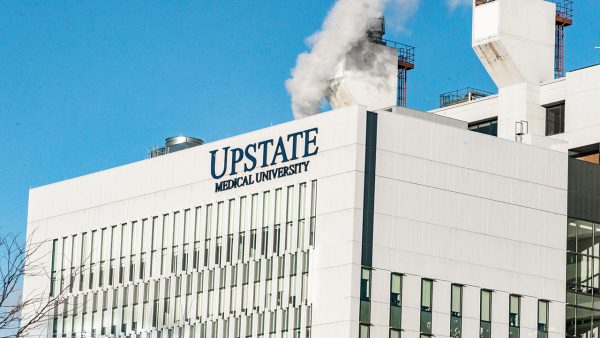
SYRACUSE — Upstate Medical University contributes $3.2 billion to the state economy and supports, directly and indirectly, more than 24,000 jobs, a new report found.
The economic-impact report “underscores the substantial contribution Upstate makes to the regional and state economy,” the health system said in its July 30 announcement.
The report — conducted by Kansas City, Missouri–based Tripp Umbach — details Upstate’s “significant influence” in the form of employment, tax revenue, community involvement, and academic and research endeavors.
“Upstate today is a growing and dynamic force in the economy,” Paul Umbach, president of Tripp Umbach, who authored the report, said in the Upstate announcement.
In fiscal year 2024 (FY24), Upstate Medical University generated an estimated $3.2 billion in total economic impact for the state of New York, nearly doubling its impact from $1.7 billion in 2008, the report found. This growth, driven by Upstate’s health-care services, educational programs, and research initiatives, “demonstrates the vital role” the institution plays in advancing the economy and health-care infrastructure, the health system contended.
In a breakdown by geography, Upstate Medical University’s economic impact for Central New York is $2.8 billion, for Onondaga County the impact is $2.6 billion, and for the City of Syracuse the impact is $1 billion, per the report.
Upstate supports 11,531 direct jobs (this number as of July 2025 is 12,788) in New York and contributes to a total of 20,453 jobs when including indirect and induced employment. Since 2008, Upstate’s total employment impact has grown by 46 percent, “making it a key driver of job creation in the region,” per the announcement.
The academic health system also generated $241.6 million in state and local tax revenue through its regional spending in fiscal year 2024, nearly tripling its tax impact since 2008, the report found.
“This highlights Upstate’s crucial role in supporting the financial well-being of New York’s local and state governments,” per the Upstate announcement.
For every dollar the state invests, Upstate returns just under $50, the report found.
“We are proud of the Upstate tradition of excellence in education, research, and patient care, which not only enhances the well-being of our communities but also generates substantial economic and social value for Central New York and New York state,” Dr. Mantosh Dewan, president of Upstate Medical University, said. “The continued growth in our economic impact reflects the work of our students, faculty, staff, and healthcare providers, and our commitment to driving innovation in medicine and healthcare delivery.”
Economic impact begins when an organization spends money, per the Upstate announcement.
Economic-impact studies measure the direct economic impact of an organization’s spending, plus additional indirect and induced spending in the economy as a result of direct spending. Direct economic impact measures the dollars that are generated within New York because of the presence of Upstate Medical University.
This includes not only spending on goods and services with vendors across the state and the spending of its employees, patients, and visitors, but also the business volume generated by businesses within New York that benefit from Upstate’s spending.
Upstate also stressed that it’s important to remember that not all dollars spent by Upstate stay in New York. Dollars that go out of the state in the form of purchases from out‐of‐state vendors aren’t included in the economic impact that Upstate makes on the state of New York.
The total economic impact includes the “multiplier” of spending from companies that do business with Upstate Medical University. Support businesses may include lodging establishments, restaurants, construction firms, vendors, and temporary agencies.
Spending multipliers attempt to estimate the ripple effect in the state economy where the spending occurs. For example, spending by Upstate with local vendors provides these vendors with additional dollars that they re‐spend in the local economy, causing a multiplier effect.
Upstate’s economic impact was estimated using IMPLAN (IMpact Analysis for PLANning), an econometric modeling system developed by applied economists at the University of Minnesota and the U.S. Forest Service, Upstate Medical University said.
The IMPLAN modeling system has been in use since 1979 and is used by more than 500 private consulting firms, university research centers, and government agencies. The IMPLAN modeling system combines the U.S. Bureau of Economic Analysis’ (BEA) input-output benchmarks with other data to construct quantitative models of trade flow relationships between businesses and between businesses and final consumers.
From this data, one can examine the effects of a change in one or several economic activities to predict its effect on a specific state, regional, or local economy (impact analysis).
The IMPLAN input-output accounts capture all monetary market transactions for consumption in a given period. The IMPLAN input-output accounts are based on industry survey data collected periodically by the U.S. BEA and follow a balanced-account format recommended by the United Nations.

MMRI uses $500K DOD grant to research catastrophic injuries
UTICA — The Masonic Medical Research Institute (MMRI) in Utica will use a $500,000 grant from the U.S. Department of Defense (DOD) for an ongoing research project. It directly addresses a critical need for military personnel who have survived catastrophic injuries, particularly those from blasts, MMRI said. The money will aid the work in developing
Become a Central New York Business Journal subscriber and get immediate access to all of our subscriber-only content and much more.

Click here to purchase a paywall bypass link for this article.
UTICA — The Masonic Medical Research Institute (MMRI) in Utica will use a $500,000 grant from the U.S. Department of Defense (DOD) for an ongoing research project.
It directly addresses a critical need for military personnel who have survived catastrophic injuries, particularly those from blasts, MMRI said.
The money will aid the work in developing methods to examine the health of vascularized composite allografts (VCA).
This will result in doctors having the ability to quickly determine whether graft rejection is occurring and alter the immunosuppression needed to keep the transplant viable, MMRI said.
VCAs are transplants made of skin, muscle, bones, and nerves, such as an arm or a face, to restore function and appearance.
Those surviving blasts would be candidates for VCAs, yet the risks associated with this “life-changing” therapeutic option “often outweigh the benefits,” as rejection of the graft could put the patient’s life at risk.
Jason McCarthy, associate professor of biomedical research and translational medicine at MMRI, is the principal investigator.
“Our goal is to develop technologies to facilitate routine examination of markers of rejection to catch episodes early, allowing for the modification of immunosuppressive therapies,” McCarthy said in the MMRI announcement. “Current gold standard diagnostics detect rejection too late. Using our technology, we envision in-home monitoring of graft health, enabling more widespread adoption of VCA transplantation.”
McCarthy — working alongside Carl Atkinson, Ph.D., from Northwestern University — combines expertise in the immune system with bioengineering to design these advanced imaging tools. The ultimate vision is to make these tools available in simple, user-friendly devices, MMRI said.
“We’re conducting groundbreaking research right here in the Mohawk Valley,” Maria Kontaridis, Ph.D., executive director, Gordon K. Moe professor and chair of biomedical research and translational medicine at MMRI, contended. “This funding will empower our talented scientists to help a part of the population who have sacrificed so much to keep our country safe — our dedicated soldiers and veterans. I am incredibly proud of Dr. McCarthy and his team for leading this vital project.”
The nonprofit MMRI says it is dedicated to scientific research that improves the health and quality of life for all humankind.
“We conduct high quality research aimed at developing a deeper understanding of the causes of cardiovascular, neurocognitive and autoimmune diseases, in the hopes of identifying innovative treatments and cures for these devastating ailments,” per the announcement.
Stay up-to-date on the companies, people and issues that impact businesses in Syracuse, Central New York and beyond.