Stay up-to-date on the companies, people and issues that impact businesses in Syracuse, Central New York and beyond.

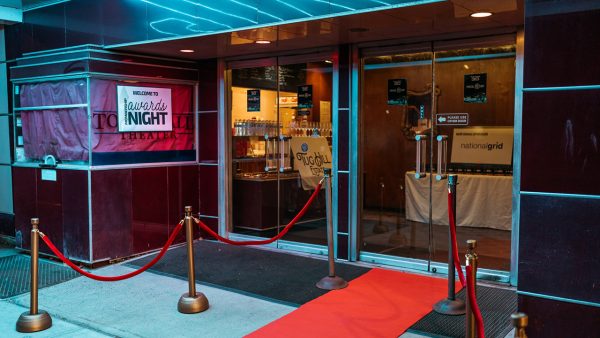
CNYSME selects Benz as the 49th recipient of its Crystal Ball Award
SYRACUSE, N.Y. — A Syracuse real-estate developer will be the 49th recipient of the Crystal Ball Award from the Central New York Sales & Marketing

SUNY Poly dean awarded $50K grant to embed Google industry credentials into course work
MARCY, N.Y. — SUNY has awarded $50,000 to the dean of arts and sciences at SUNY Polytechnic Institute (SUNY Poly) in Marcy through the Embedding

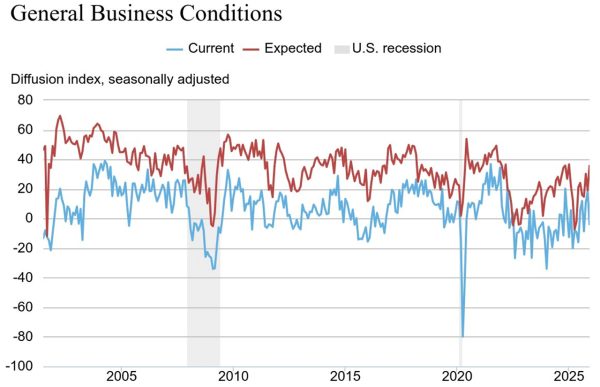
VIEWPOINT: Economic resilience, the Fed’s dual mandate, and the road ahead
I’m going to talk to you [in this article] about the U.S. economy and how the Federal Reserve is working to achieve its dual mandate

Click here to view the 2025 Nonprofit Directory! Already an Subcriber? Log in Get Instant Access to This Article Become a

TC3, SU’s College of Professional Studies sign transfer agreement
DRYDEN — Graduates of Tompkins Cortland Community College (TC3) now have a direct transfer pathway into online bachelor’s degree programs in Syracuse University’s (SU) College of Professional Studies (CPS). The transfer agreement offers TC3 graduates discounted tuition rate for those undergraduate online degree programs, per the Nov. 18 announcement. Amy Kremenek, president of Tompkins Cortland
Become a Central New York Business Journal subscriber and get immediate access to all of our subscriber-only content and much more.

Click here to purchase a paywall bypass link for this article.
DRYDEN — Graduates of Tompkins Cortland Community College (TC3) now have a direct transfer pathway into online bachelor’s degree programs in Syracuse University’s (SU) College of Professional Studies (CPS).
The transfer agreement offers TC3 graduates discounted tuition rate for those undergraduate online degree programs, per the Nov. 18 announcement.
Amy Kremenek, president of Tompkins Cortland Community College, and Michael Frasciello, dean of the College of Professional Studies at Syracuse University, formally signed the agreement at the TC3 campus in Dryden in Tompkins County.
“Helping students succeed is our top priority at TC3, and for many, success is being accepted into a top world-class institution to complete their undergraduate degree. This agreement provides a guaranteed path for our students to transfer into Syracuse University and complete their bachelor’s degree at a top university,” Kremenek said in the TC3 announcement. “This partnership presents a tremendous opportunity for our students, and I am proud of the work of everyone at TC3 and Syracuse for bringing this agreement to fruition.”
Under the agreement, students who complete a TC3 associate degree with a minimum GPA (grade point average) of 3.0 or better in one of seven programs are guaranteed acceptance into one of two bachelor’s degree programs at the College of Professional Studies. Those students will receive a discounted tuition rate for the uninterrupted duration of their enrollment at the College.
“Our goal is to remove barriers and create opportunities for students who want to continue their education at a world-class university,” Frasciello said. “This partnership ensures that TC3 graduates have a clear, affordable, and supportive path to earning their bachelor’s degree at Syracuse University. We’re excited to welcome these students and help them achieve their academic and career aspirations.”
The agreement covers the following TC3 associate degree programs transferring to CPS bachelor’s degree programs:

Deadline for MMRI 2026 summer-fellowhip program applicants is early February
UTICA — The Masonic Medical Research Institute (MMRI) in Utica says college students interested in a summer fellowship can apply for consideration. The application deadline is Friday, Feb. 6, 2026. The program is open to both local and national undergraduate and graduate students. The MMRI Summer Fellowship is a 10-week, hands-on training program designed to
Become a Central New York Business Journal subscriber and get immediate access to all of our subscriber-only content and much more.
Click here to purchase a paywall bypass link for this article.
UTICA — The Masonic Medical Research Institute (MMRI) in Utica says college students interested in a summer fellowship can apply for consideration.
The application deadline is Friday, Feb. 6, 2026. The program is open to both local and national undergraduate and graduate students.
The MMRI Summer Fellowship is a 10-week, hands-on training program designed to get undergraduate and graduate students involved in scientific research.
The upcoming fellowship will run from May 11, 2026, through July 17, 2026 at MMRI, which is located at 2150 Bleecker St. in Utica.
Fellows will gain hands-on laboratory experience, mentorship from some of the nation’s leading scientists and “valuable insight into the process of scientific discovery,” MMRI said. The program also offers opportunities to network with peers and experts, attend educational workshops, and receive guidance on medical and graduate school applications.
“The summer fellowship helped me to decide on my future career path that I wasn’t necessarily sure of prior to the program,” Gianna Frank, a 2024 summer fellow and pre-medical student at Syracuse University, said in the MMRI announcement. “Participating in this fellowship not only taught me skills necessary for hands-on benchwork, but it also showed me the ‘behind the scenes’ of the entire research process.”
Undergraduate and graduate students pursuing science-related programs, including biology, chemistry, genetics, molecular biology, nanomedicine, physiology, drug delivery and other life sciences, are encouraged to apply.
To learn more about MMRI’s summer fellowship program, visit mmri.edu/summerfellow.

Southern Tier nonprofits to benefit from Tioga Downs Foundation grants
NICHOLS — Nonprofit organizations throughout the Southern Tier and Northern Pennsylvania will use a total of $2 million in grant funding provided by the Tioga Downs Regional Community Foundation. The money is meant to help further their objectives, missions, and organizations, Tioga Downs said in announcing the grant awards. Grant recipients were announced during an
Become a Central New York Business Journal subscriber and get immediate access to all of our subscriber-only content and much more.
Click here to purchase a paywall bypass link for this article.
NICHOLS — Nonprofit organizations throughout the Southern Tier and Northern Pennsylvania will use a total of $2 million in grant funding provided by the Tioga Downs Regional Community Foundation.
The money is meant to help further their objectives, missions, and organizations, Tioga Downs said in announcing the grant awards.
Grant recipients were announced during an afternoon awards ceremony at Tioga Downs Casino Resort on Dec. 2. Nonprofit organizations from Chemung, Tioga, Broome, and Bradford counties were recognized for their initiatives in addressing and combating local poverty and community deterioration, per the announcement.
Additionally, Tioga Downs owner Jeff Gural also donated $100,000 to the Food Bank of the Southern Tier to further help combat food insecurity in the region.
More than 120 organizations were awarded grants, and nearly 200 organizations had applied this year. It was a record number of applicants, Tioga Downs encourages all of them to apply again next year, even if they were awarded a grant at this year’s event.
“Through the experiences shared by our award winners, we eagerly anticipate the ripple effects of these grants making a real difference close to home,” Gural said in the announcement. “There are countless organizations doing amazing work, often without the budget they truly deserve, and these grants aim to amplify their impact.”
The Tioga Downs Regional Community Foundation says it is dedicated to promoting economic and community development by supporting organizations that contribute to charitable, religious, literary, scientific, and educational endeavors within the target counties. With hundreds of applications received annually, the foundation works to donate to as many organizations as possible, Tioga Downs noted.

Oswego Health Foundation’s 6th annual gala raises more than $132K
OSWEGO — The Oswego Health Foundation’s 6th annual gala, “The Power of Pink,” drew a crowd of 252 generous guests and supporters at the Lake Ontario Event and Conference Center on Nov. 8 and raised more than $132,000 to advance local health care. Proceeds from this year’s gala will support the creation of a state-of-the-art
Become a Central New York Business Journal subscriber and get immediate access to all of our subscriber-only content and much more.

Click here to purchase a paywall bypass link for this article.
OSWEGO — The Oswego Health Foundation’s 6th annual gala, “The Power of Pink,” drew a crowd of 252 generous guests and supporters at the Lake Ontario Event and Conference Center on Nov. 8 and raised more than $132,000 to advance local health care.
Proceeds from this year’s gala will support the creation of a state-of-the-art multi-specialty imaging suite at Oswego Hospital, Oswego Health announced. This innovative space will unite ultrasound, mammography, and bone-density services in one modern, patient-centered environment. It will include private changing rooms, an inviting waiting area, and improved staff workspaces designed to enhance both comfort and care, the health system added.
“Every dollar raised at the Gala directly impacts the quality of care available right here in our community,” Michele Hourigan, director of business and community development at the Oswego Health Foundation, said in the announcement. “The Power of Pink represented more than a theme — it symbolized our community’s strength, compassion, and commitment to one another. We’re deeply grateful to our sponsors, donors, and guests for helping us continue to invest in the health of our neighbors.”
Oswego Health also used the evening to honor three award recipients:
Physician of the Year: Dr. Marie Castillo-Alcasid — Affectionately known as Dr. Marie, this board-certified internal medicine physician has been a cornerstone of Oswego Hospital’s hospitalist team since 2008. Known for her empathy, expertise, and dedication to patient-centered care, Dr. Marie is admired by patients, colleagues, and families, alike, Oswego Health noted.
DAISY Award Winner: Allison Flett, RN — Since joining Oswego Health in 2021, Flett has exemplified compassion, adaptability, and a true passion for nursing. Starting her career as an LPN at Urgent Care, she quickly earned her RN license in 2022 and has since served across the ICU, Emergency Department, and Med-Surg units, the health system said.
Community Partner Award: Novelis — A global leader in sustainable aluminum products and services and the world’s largest recycler of aluminum, Novelis has been a steadfast force in Oswego County for more than six decades, Oswego Health contended. Since 1988, Novelis has contributed more than $344,000 to Oswego Health and remains a dedicated supporter of community growth through both philanthropy and volunteerism. With nearly 1,150 employees locally, the company continues to invest in programs that strengthen Central New York — from STEM education and health care to children’s advocacy and hunger relief.

Upstate nonprofits win Excellus 2025 Health Equity Innovation grant awards
Rochester–based health insurer Excellus BlueCross BlueShield says a total of 22 Upstate nonprofit organizations have received 2025 Health Equity Innovation Awards. Excellus describes the grants as an annual-funding opportunity that supports nonprofit organizations working to eliminate health disparities and improve health outcomes across upstate New York. Twenty-two nonprofit organizations in the Central New York/Southern Tier,
Become a Central New York Business Journal subscriber and get immediate access to all of our subscriber-only content and much more.

Click here to purchase a paywall bypass link for this article.
Rochester–based health insurer Excellus BlueCross BlueShield says a total of 22 Upstate nonprofit organizations have received 2025 Health Equity Innovation Awards.
Excellus describes the grants as an annual-funding opportunity that supports nonprofit organizations working to eliminate health disparities and improve health outcomes across upstate New York.
Twenty-two nonprofit organizations in the Central New York/Southern Tier, Rochester, and Utica/North Country regions were chosen from a competitive pool of nearly 300 applicants.
The selected organizations are leading efforts to “close gaps in care through innovative, community-driven solutions tailored to the unique needs of the people they serve,” per the Excellus announcement.
Focus areas for funding in each region were strategically identified through community needs assessments, which helped pinpoint the most pressing health challenges and disparities affecting local populations, the health insurer noted.
The Health Equity Innovation Awards will help advance a wide range of initiatives, including community-centered mental health and wellness programs; community-based chronic disease prevention and education; maternal and child-health support services; food access and nutrition initiatives; and workforce development and training in health-related fields.
CENTRAL NEW YORK REGION
• A Tiny Home for Good – Lead Freedom House, which renovates a Syracuse property to provide free, temporary housing for families during lead remediation.
• InterFaith Works – Telehealth education for older adults expands workshops and one-on-one support to help seniors use telehealth and improve access to care.
• Ithaca Health Alliance – Behavioral-health consultant program, which launches free clinic program offering quick triage and short-term counseling, linking patients to ongoing mental-health care.
• Oswego Health Foundation – Online prenatal education provides free virtual classes on pregnancy, postpartum care, breastfeeding, and infant safety to overcome rural access barriers.
• Restoreforlife, Inc. – Healing through the arts, which uses creative expression and guided circles to help families build coping skills, resilience, and emotional wellness.
• The Public Broadcasting Council of Central New York, Inc. (WCNY) – Behind the Woman career challenge, which connects Syracuse high school students with mentors for hands-on health career learning, hospital shadowing, and research projects.
• United Way – Healthy Start, Safe Home, a program that embeds navigators and peer advocates in high-risk neighborhoods to improve maternal and early childhood health through education and resources.
UTICA REGION
• Bassett Medical Center – Bassett Cancer Institute partnership, which provides medically tailored meals to cancer patients in Otsego County, addressing food insecurity and improving health outcomes.
• Madison County Rural Health Council – Mental health first aid trainings that offer evidence-based training for schools, community groups, and healthcare settings to identify and respond to mental health challenges, reducing stigma and improving access.
• Mohawk Valley Resource Center for Refugees – Healthy Pathways nutrition program that delivers culturally responsive nutrition education, cooking demonstrations, and strategies for healthy eating to 500 refugees and immigrants.
• St. Lawrence Health Foundation – Living in Balance, which is a peer-led initiative and supports recovery from substance use through peer-led groups and the Living in Balance curriculum, helping participants build coping skills and resilience.
SOUTHERN TIER REGION
• Binghamton Philharmonic Inc. – Social prescribing program, which offers complimentary concert tickets through healthcare partnerships to reduce isolation and improve health for the IDD (intellectual and developmental disabilities) community.
• Broome County Council of Churches – Greater Good Grocery mobile market bus that operates an ADA (Americans with Disabilities Act)-accessible mobile market bus to deliver affordable, healthy food to residents in county food deserts.
• Catholic Charities of Tompkins/Tioga – Tioga Fresh mobile café that provides free meals and groceries to more than 3,000 rural residents, reducing food insecurity and connecting families to health resources.
• Family Enrichment Network Inc. – Help Me Grow, which promotes developmental screening and connects families to care, strengthening early childhood systems and school readiness.
• Rural Health Network of SCNY Inc. – Produce-prescription program, which is a card-technology pilot and expands a long-standing produce-prescription program with a card-based system to improve access to fresh food for patients with chronic conditions.

VIEWPOINT: Snowbirds Beware: The Ins & Outs of Nonresident Income & Estate Tax
It’s that time of year again, when snowbirds break out their suitcases and make plans to flee the Empire State for warmer weather. Anyone who has experienced New York winters can appreciate the desire to avoid the back-breaking shoveling, frozen eyelashes, and wind-burned cheeks of a typical New York January and February. While weather is
Become a Central New York Business Journal subscriber and get immediate access to all of our subscriber-only content and much more.

Click here to purchase a paywall bypass link for this article.
It’s that time of year again, when snowbirds break out their suitcases and make plans to flee the Empire State for warmer weather. Anyone who has experienced New York winters can appreciate the desire to avoid the back-breaking shoveling, frozen eyelashes, and wind-burned cheeks of a typical New York January and February. While weather is certainly one incentive to fly away to southern climes, many snowbirds head south for an additional reason — to establish or maintain residency in another state for tax purposes.
This article provides an overview of New York income and estate taxation rules for nonresidents. While changes in the law have somewhat reduced the impact of New York’s estate tax, the opportunity to further reduce New York income taxes remains a strong motivator to establish residency outside the state.
New York residents are taxed by the state on all income from all sources, with the highest tax rate being 10.9 percent. In contrast, nonresidents are only subject to personal income tax on income from New York sources. New York source income is defined as the sum of the income, gain, losses, and deductions derived from or connected with New York sources, for example, income from owning New York real or tangible property, or from services or business carried on within the state. An individual who can establish legal residency outside New York, however, will only be obligated to report and pay tax on income actually generated in the Empire State. Whether a taxpayer is determined to be a New York resident may have a significant impact on the assets that are taxed and the tax that may be owed.
a. Defining Residency
New York’s tax laws are aimed at thwarting wealthy people who maintain homes in New York and spend the majority of their time here, but still claim non-residency status. New York’s Tax Law provides for two separate analyses to determine residency — domicile and statutory residence. A taxpayer determined to be domiciled in New York will pay state tax on all income regardless of the source. A taxpayer not domiciled in New York will still be taxed as a New York domiciliary if he or she is determined to be a “statutory resident.” Only if taxpayers can establish by clear and convincing evidence that they are neither domiciled in New York nor a statutory resident will they be taxed only on income actually generated in this state, likely saving a significant amount of money.
i) Domicile
While in everyday language “residence” and “domicile” are used interchangeably, they have different legal meanings. “Domicile” is the place individuals intends to be their permanent home — where they intend to return after being away. A person can have several residences at a time, but only one domicile.
New York’s Tax Department offers five primary factors to determine domicile: (1) Home: use and maintenance of a New York residence; (2) Active Business Involvement: employment relating to compensation derived in the year under review; (3) Time: where the individual spent time during the year; (4) “Near and Dear”: the location of items that have significant sentimental or other value to the individual; and (5) Family Connections: a bond that draws a person back to a location, such as where minor children attend school.
Other factors state auditors may consider include addresses on financial records, location and registration of automobiles, voter registration, and location of safe deposit boxes. There are also “non-factors” that will not be considered, such as where the taxpayer’s will is probated, location of bank accounts, charitable contributions to organizations within the state, and volunteering for nonprofit organizations.
ii) Statutory Resident
A taxpayer not domiciled in New York may still be subject to taxation as a resident if the taxpayer: (1) maintains a permanent place of abode in New York; and (2) spends more than 183 days in the state. This test is what often trips up taxpayers who keep a New York house after moving to a warmer and more tax-friendly state, compelling them to carefully keep track of the number of days they spend in New York.
New York’s Tax Law considers “permanent place of abode” to mean a residence taxpayers maintain, whether they own it or not, that is suitable for year-round use. The definition generally includes a dwelling place owned or leased by the taxpayer’s spouse, but not a camp or cottage that is suitable and used solely for vacations. A life estate interest in a New York home may also be considered a permanent place of abode under New York tax laws.
If the taxpayer seeking non-resident status is found to have a permanent place of abode in New York, the next step is to determine whether the individual spent more than 183 days in the state during the relevant tax year. Importantly, New York courts have held that for this purpose, “day” is defined as any part of a day, not 24 hours. A taxpayer who fails to satisfy both tests will be considered a statutory resident and will be taxed by New York on all sources of income for the entire year, just like a full-time resident, even if the taxpayer’s domicile changed during the year. By contrast, a taxpayer who does not have a New York domicile and is not a statutory resident will only pay income tax to New York on New York source income.
Both the federal government and New York State impose tax on the transfer of assets owned by a deceased person at the time of his/her death if the value of those assets exceeds certain thresholds. Over the last decade, substantial changes have been made to the estate-tax exclusion amount on both the federal and state levels. As a result of the “One Big Beautiful Bill Act”, the federal estate-tax exclusion permanently increased this year to $15 million, indexed for inflation, for decedents dying and gifts made after Dec. 31, 2025. The New York estate-tax exclusion amount as of Jan. 1, 2025 is $7,160,000. While these changes mean that fewer New Yorkers are concerned about estate tax at death, wealthier snowbirds who maintain property in the Empire State may still face filing requirements and nonresident estate tax.
Under Section 952(a) of New York’s Tax Law, estate tax applies to the estate of any “individual who at his or her death was a resident of New York State.” Unlike the rules governing income tax, however, the estate-tax regulations do not define “resident.” Notwithstanding, courts faced with these issues will consider many of the same facts and circumstances.
An analysis of the type of assets owned by a nonresident is necessary to determine whether an estate-tax return must be filed. The determination is based on whether the decedent’s estate includes real or tangible personal property located in the state and, under Tax Law § 971 (a)(2), whether the federal gross estate plus includible taxable gifts of real or tangible personal property located in the state plus intangible personal property used in a business, trade, or profession carried on in New York while the individual was a resident exceeds the New York State basic exclusion amount.
“Real property” for purposes of this analysis is defined as an interest in land, including buildings and other improvements, located in the state. “Tangible personal property” is personal property that can be physically touched and moved, such as cars, artwork, or jewelry. “Intangible property” includes money, credits, and securities within the state, except to the extent they are part of a business, trade or profession carried on in New York. Nonresidents wishing to avoid potential estate tax would be well advised to ensure that they do not own real or tangible personal property in New York.
Property with New York ties that is categorized as intangible rather than real or tangible is not subject to New York estate tax. A typical example of an intangible asset located in New York but treated as being sited outside the state for estate-tax purposes is a personal bank account maintained in New York by a Florida resident. New York’s Constitution prohibits the state from imposing estate tax on a nonresident’s intangible property even if it is located in the state.
Nonresident taxpayers seeking to avoid having to file a New York estate-tax return and potentially being taxed should consider changing the ownership of real or tangible property by creating a business entity to own such assets, Interests in a limited liability company constitute an intangible asset, so real estate held in an LLC is not includible in the nonresident’s New York estate. Similarly, stock in a subchapter S corporation holding New York real property is considered intangible, provided the corporation is engaged in business activity. Whether it makes sense to create an entity to own real or tangible property is specific to an individual taxpayer and includes considerations such as the type and value of the New York assets involved, the taxpayer’s overall net worth, and the ultimate beneficiaries of the estate.
a) Filing Requirements and Calculation of Tax
Prior to April 2014, executors of estates of nonresidents with New York real and tangible property were required to file and pay tax without the benefit of the estate-tax exclusion amount. Now, however, if the value of the total estate is less than or equal to the New York exclusion amount (currently $7,160,000), no filing is required and no tax is due. On the other hand, if the value of the federal gross estate exceeds the New York exclusion and the estate holds New York real or tangible property, the executor must file a return. New York estate tax will be due if the value of the New York situs property exceeds the exclusion. As a warning, the current rules include an add-back requirement for certain gifts made within three years of death.
Regardless of the level of wealth and income, snowbirds are advised to consider their tax plans before packing their bags. Taxpayers may want to deploy strategies such as transferring or restructuring New York assets, reducing New York source income and implementing snowbird calendars. With forethought, clients can steer clear of the snowbanks of New York taxation.
Jaime J. Hunsicker is a partner in the Elder Law & Special Needs, Tax, Family Business Succession Planning and Trusts & Estates Practices of Hancock Estabrook, LLP. Contact her at: jhunsicker@hancocklaw.com.
Author’s note: Marion Hancock Fish, also a partner at Hancock Estabrook, co-authored an earlier version of this article.
Stay up-to-date on the companies, people and issues that impact businesses in Syracuse, Central New York and beyond.