SYRACUSE, N.Y. — The Central New York Community Foundation announced that it has a local impact-investing program that has closed on a $490,000 deal for WCNY’s Entertainment Academy until funding from a state-grant contract is fulfilled. This project is receiving funding from a certificate of deposit (CD) that the Community Foundation has established in partnership […]
Already an Subcriber? Log in
Get Instant Access to This Article
Become a Central New York Business Journal subscriber and get immediate access to all of our subscriber-only content and much more.
- Critical Central New York business news and analysis updated daily.
- Immediate access to all subscriber-only content on our website.
- Get a year's worth of the Print Edition of The Central New York Business Journal.
- Special Feature Publications such as the Book of Lists and Revitalize Greater Binghamton, Mohawk Valley, and Syracuse Magazines
Click here to purchase a paywall bypass link for this article.
SYRACUSE, N.Y. — The Central New York Community Foundation announced that it has a local impact-investing program that has closed on a $490,000 deal for WCNY’s Entertainment Academy until funding from a state-grant contract is fulfilled.
This project is receiving funding from a certificate of deposit (CD) that the Community Foundation has established in partnership with Pathfinder Bank.
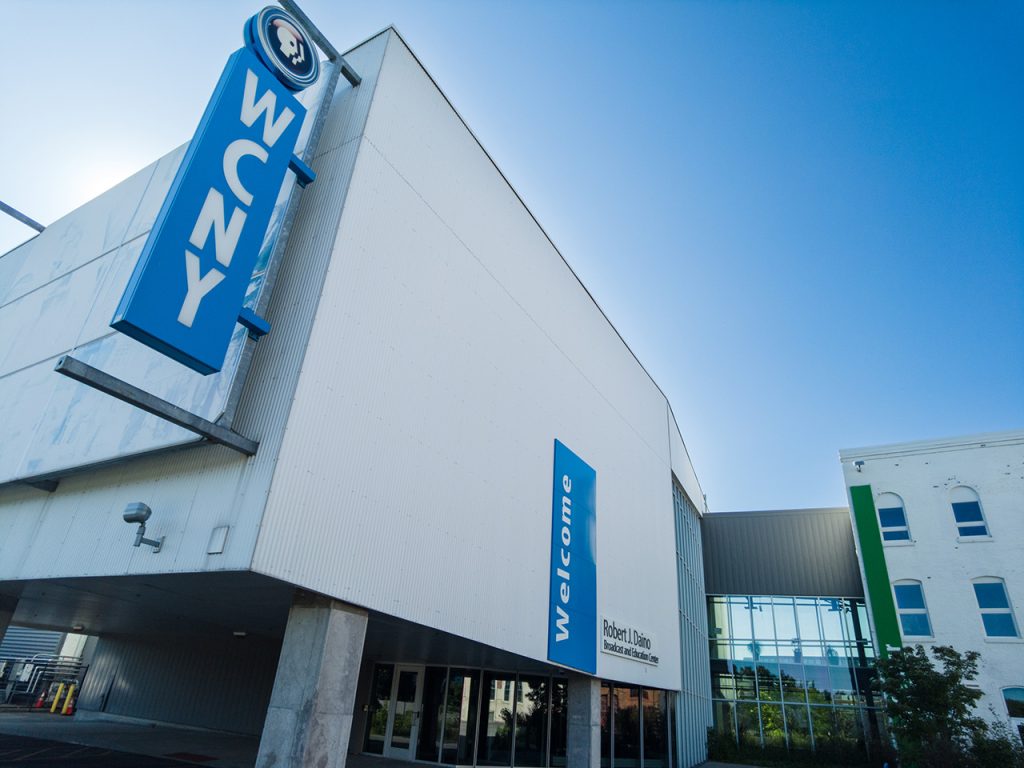
WCNY — Central New York’s public-communications organization — is located at 415 W. Fayette St. in Syracuse.
WCNY’s Entertainment Academy is a 28-week, workforce-development training program. This new agreement will allow WCNY to host the training program while awaiting reimbursement from Empire State Development. The course teaches 25-to-39-year-olds from underserved neighborhoods the skills needed to work in the television and film trades.
The program is comprised of 14-week sessions, during which up to 40 students learn skills in shopcraft, gaffer, and grip work as well as the operation of aerial lifts. Those involved can apply those skills to higher paying film production and warehouse jobs. WCNY says most of the previous participants who started the training while on public assistance have since been able to reduce or fully eliminate their assistance within a month of completing the program.
“We are grateful for the partnership with the Central New York Community Foundation, Pathfinder Bank and the New York State Economic Development Corporation,” Carol Opee-Stelios, VP of human resources and workforce development at WCNY, said in the Community Foundation announcement. “This type of community coalition is instrumental in allowing WCNY to train talented and committed people for jobs in our region’s growing television and film production industry.”
Through its impact-investing program, the Community Foundation forms similar agreements for the benefit of nonprofit organizations and unincorporated organizations working with a 501(c)(3) fiscal sponsor that seek larger amounts of support than its nonprofit bridge-loan program can provide. The Community Foundation is responsible for intake and preliminary due-diligence review. Applications that meet the Community Foundation’s internal standards could be eligible to receive a lower interest rate from a local bank over the duration of a CD term, the Community Foundation said.
The bridge loan and CD line of credit programs are designed to help nonprofit organizations continue essential community services while awaiting the receipt of approved grant funding. It is common for government agencies and other funders to require awardees to draw down funds on a reimbursement basis, often taking several months to process reimbursements.
“It is not uncommon for Central New York nonprofits to wait several months to receive grant payments, forcing them to alter services or find other stop-gap measures,” Frank Ridzi, VP of community investment at the Community Foundation, said. “The vital work of local community organizations is our top priority, so by providing flexible support through this loan fund, we hope to help ensure their services continue.”
This investment marks a total of more than $6.5 million now advancing housing, business development, and lending through the Community Foundation’s local impact-investing program. Impact investing allows the organization to use its financial resources to make investments that generate both financial returns and positive social outcomes. In 2023, the foundation’s board of directors approved a policy that allows the use of up to 5 percent of its main investment pool for the purpose of impact investment.