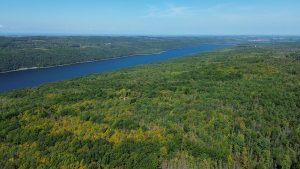
SYRACUSE, N.Y. — SUNY College of Environmental Science and Forestry (ESF) will use a $2 million donation from Sam and Carol Nappi for expanded research into the cause of algal blooms on Skaneateles Lake.
The work will focus on the cause of algal blooms —both harmful (HAB) and non-toxic — and how they can impact recreation, aesthetics, and human health on Skaneateles Lake and its watershed “as a living laboratory,” per the ESF announcement.
This project, which Stephen Shaw will lead, seeks to “develop actionable solutions” for preserving the water quality of New York lakes.

The Importance of a Quality of Earnings Study
Are you planning to buy a business or sell your own business? If yes, then it is highly recommended to get a Quality of Earnings (QoE) study done. A QoE
New York State Now Requires 30-Minute Paid Lactation Breaks
For the past year or so, New York employers have been adapting to the State law protections granting employees returning from childbirth leave the right to express breast milk at
“This generous donation from Sam and Carol Nappi will significantly advance our understanding of the causation of algal blooms on the Finger Lakes and help us develop tools to better forecast and prevent blooms,” Shaw said. “Their support is invaluable to finding new solutions to address blooms and to train the next generation of scientists.”
The Nappis are committed to environmental sustainability and community well-being, ESF noted.
“Skaneateles Lake and the Finger Lakes region have held deep personal significance to the Nappi family for four generations. It is this appreciation that drives our commitment to seeing what can be accomplished beyond government to benefit the long-term health of community and lake,” Sam and Carol Nappi said in the ESF announcement. “We look forward to seeing the solutions that come forward from Dr. Shaw’s research and forging additional partnerships to expand this work.”
The work will continue beyond the Nappis’ donation to ESF with future plans to extend their connections with other university and community partners to bring a “collaborative approach to developing solutions to algal blooms on Skaneateles Lake,” ESF said.