ALBANY, N.Y. — When it comes to Thruway tolls, the New York State Thruway Authority is generally accurate with its billing process, although a recent review identified some exceptions and recommended better monitoring and corrective actions. That’s according to an audit that New York State Comptroller Thomas DiNapoli released Sept. 23. “The Thruway Authority has […]
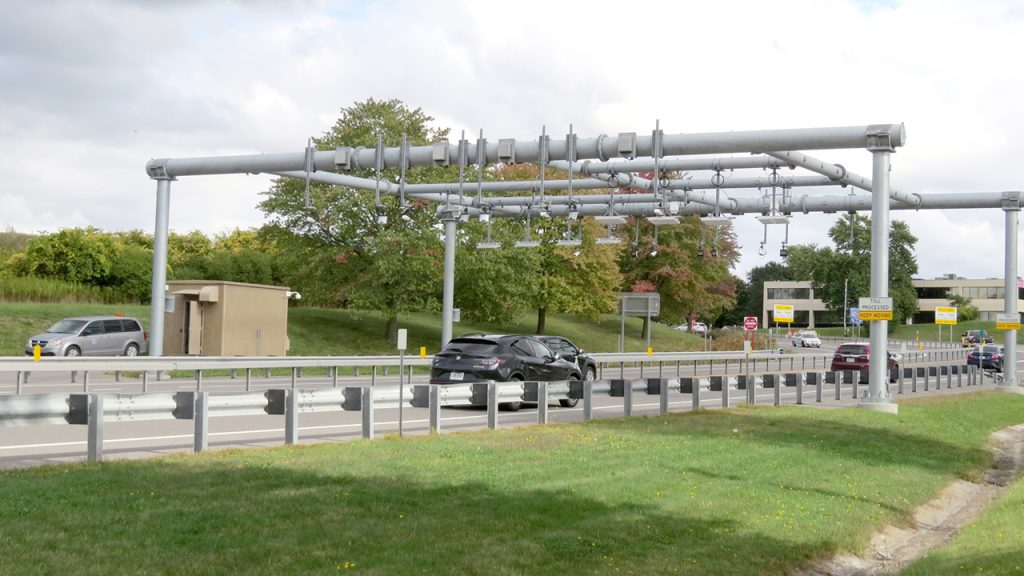
ALBANY, N.Y. — When it comes to Thruway tolls, the New York State Thruway Authority is generally accurate with its billing process, although a recent review identified some exceptions and recommended better monitoring and corrective actions.
That’s according to an audit that New York State Comptroller Thomas DiNapoli released Sept. 23.
“The Thruway Authority has come a long way since it first introduced cashless tolls, but some problems remain,” DiNapoli said in the announcement. “Even a smaller percentage of unreadable or inaccurate tolls can mean loss of revenue to the state or aggravation for New Yorkers facing incorrect bills. I appreciate the efforts the Authority has undertaken to fix the issues we identified.”
A few findings
In 2024, Thruway reported $1 billion in toll and related revenues, up from $804 million in 2021, DiNapoli’s office said. E-Z Pass accounts for 95 percent of all tolls collected last year. The comptroller’s previous audit from May 2023 found the Thruway Authority needed to improve its collections process.
The latest audit found improvements but also work that still needs to be done, DiNapoli’s office said. For example, auditors looked at collections over a three-week period and found 92,000 tolls couldn’t be charged because vehicles’ license plates were not readable. At one exit, interchange 25A near Schenectady, some 36,000 tolls were incorrectly charged and another 8,000 that should have been charged but were not, for an error rate of about 5 percent.
The audit also found the Thruway Authority needed to provide stronger oversight of the more than 12,000 non-revenue E-Z Pass tags that do not get charged, as well as the toll discounts it gives to certain drivers.
In looking at a random sample of 75 non-revenue tags, the Thruway Authority was unable to provide supporting documentation for the eligibility of 46 (61 percent) tags, “making it unclear whether eligible individuals were using them.
DiNapoli’s office went on to say that the Thruway Authority created the Office of the Toll Payer Advocate (TPA) in December 2019 to help customers resolve toll-related issues, using guidelines with a set of criteria to address the most common issue, reducing violation fees.
Auditors found that the Thruway Authority “did not always follow its own guidelines,” DiNapoli’s office said.
In an examination of 50 cases, 20 were for toll-related issues on the Thruway. Of those, 12 received fee reductions that exceeded the amounts allowed by the criteria. The Thruway Authority has the authority to give reductions over its own guidelines, but the audit determined that it should document and explain why it’s doing so to “ensure a fair and responsive process for everyone.”
The Authority doesn’t have a workable method for dealing with undeliverable mail. Auditors looked at 48 toll bills or past-due notices mailed out by the Authority’s vendor and found 25 were undeliverable. Of those, 21 were for New York and Massachusetts plates and instead of resolving the problem, the vendor continued to send mail to the undeliverable addresses.
For toll payers to be treated fairly, they must be notified of the amount of payment due to enable them to avoid accruing penalties, DiNapoli’s office said.
The audit made nine recommendations for improving toll collections and customer service including a review of collections at Exit 25A to ensure charges are accurate, a periodic review of transactions to identify inaccuracies and their cause to prevent them from recurring, a review of non-revenue and discount tags to ensure eligibility, and documentation of toll settlements that are outside of guidelines.
Thruway Authority response
The comptroller’s office noted that the Thruway Authority generally agreed with the audit findings and said it has already taken steps to implement some of the recommendations.
The DiNapoli audit included a letter to the state comptroller’s office from Frank Hoare, executive director of the New York State Thruway Authority, reacting to the recommendations in the audit.
One such recommendation reads, “Periodically review transactions to ensure tolls were correctly charged, identify the cause of incorrect charges, take appropriate action to prevent it from recurring, and document those where no action is deemed necessary.”
In response, the Thruway Authority said, “The Authority agrees with OSC’s (Office of the State Comptroller) finding that tolls are accurately charged, with a limited number of exceptions. The Authority routinely conducts reviews of toll transactions to ensure the integrity of the tolling system but it agrees it should continuously improve the quality assurance process to further mitigate incorrect tolls being charged.”