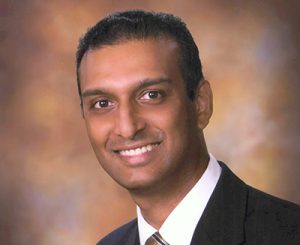
ROME — Rome Memorial Hospital (RMH) today announced it has named Dewey Rowlands as CFO.
He replaces Nicholas Mayhew, who is now serving as president and CEO of GPO Federal Credit Union, RMH said in a news release. Mayhew had worked at RMH for 20 years.
Rowlands had worked with Mayhew at Excellus BlueCross BlueShield in the early 1980s, RMH said.

Ask the Expert: How Companies Can Future-Proof Their Workforce
In today’s landscape, workforce challenges are more pressing than ever. Across New York and beyond, companies are grappling with unfilled positions, skills gaps, and increasing turnover. These challenges can slow

New Sexual Harassment Policy and Training Requirements. Does Your Policy Comply?
New York State requires all employers to provide annual sexual harassment prevention training and a harassment policy to its employees. This requirement applies to all employees, including hourly and salaried,
Rowlands joins RMH as it continues the “due diligence process” to finalize an affiliation agreement with Bassett Medical Center in Cooperstown, Basil Ariglio, president and CEO of RMH, said in the news release.
“His extensive healthcare knowledge and experience will be valuable assets as we continue to adapt to the ever evolving challenges in the healthcare industry,” Ariglio said.
Rowlands has 32 years of experience in health-care finance, RMH said.
Before joining RMH, Rowlands served as CFO at Oneida Healthcare Center. The facility promoted him to the position from his previous role as the organization’s controller.
Rowlands had worked for Oneida Healthcare Center for 26 years, according to RMH.
His familiarity with Mayhew and Ariglio, who he’s known for more than 20 years, encouraged his pursuit of the CFO job at RMH, Rowlands said.
“Although smaller hospitals need to explore affiliation relationships with other organizations to enhance access to physicians and services, community hospitals will always serve a need even as the delivery system evolves over the next 10 years,” Rowlands said. “Residents in small communities need to have accessible care close to home and can’t be expected to travel for their basic needs.”
Organizations that are able to “cost efficiently” deliver care will “prosper,” even as payment models evolve from fee-for-service to more risk-based contracts, Rowlands contends.
“We just need to ensure that the payment models are fair and provide adequate funds to cover the services needed,” Rowlands said. “Payment models shouldn’t interfere with patients getting the services and care that they need.”
Contact Reinhardt at ereinhardt@cnybj.com