UTICA — The main thing that drew Darlene Stromstad to Mohawk Valley Health System (MVHS) as its new CEO seven years ago is also one of the accomplishments she’s most proud of from her time leading the regional health system with about $650 million in annual revenue and more than 3,000 full-time employees. That signature […]
Already an Subcriber? Log in
Get Instant Access to This Article
Become a Central New York Business Journal subscriber and get immediate access to all of our subscriber-only content and much more.
- Critical Central New York business news and analysis updated daily.
- Immediate access to all subscriber-only content on our website.
- Get a year's worth of the Print Edition of The Central New York Business Journal.
- Special Feature Publications such as the Book of Lists and Revitalize Greater Binghamton, Mohawk Valley, and Syracuse Magazines
Click here to purchase a paywall bypass link for this article.
UTICA — The main thing that drew Darlene Stromstad to Mohawk Valley Health System (MVHS) as its new CEO seven years ago is also one of the accomplishments she’s most proud of from her time leading the regional health system with about $650 million in annual revenue and more than 3,000 full-time employees.
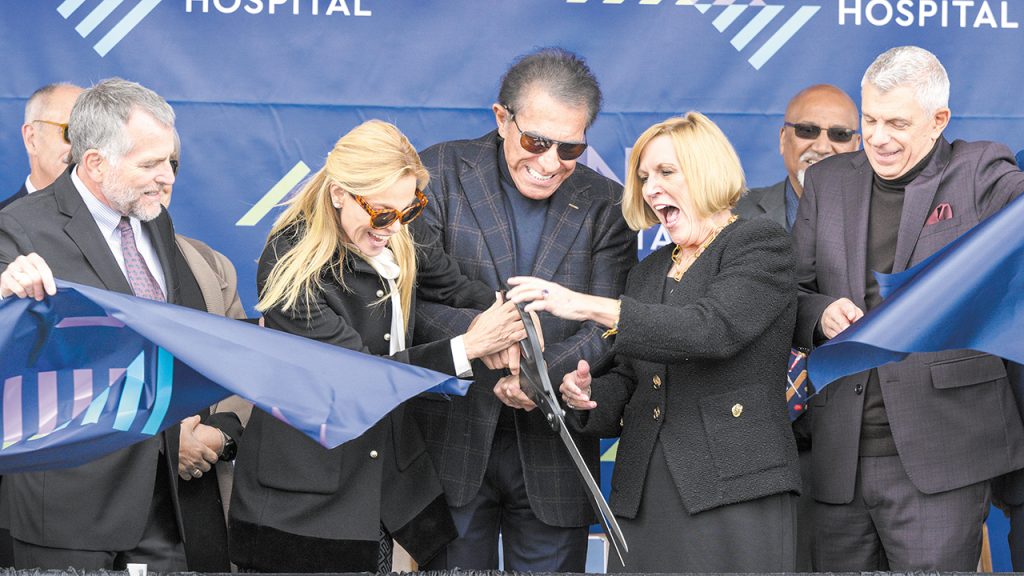
That signature accomplishment was opening the new Wynn Hospital in downtown Utica in October 2023.
During her first health-care job in North Dakota, Stromstad had a front-row seat as the CEO of that organization was planning to build a new hospital. “Being part of that transformation, I knew I would always be involved in transformative health care,” she recalls.
While she feels privileged to be part of that process in the Mohawk Valley, the journey was not without its ups and downs.
“Some of the obstacles, you expect along the way,” she says. “You expect you’re going to find them. It was a little more personal in the attacks here.”
Despite the negative feedback from some, MVHS and Stromstad successfully oversaw construction of the new Wynn Hospital during the COVID pandemic and celebrated its opening nearly two years ago.
“That gives us the opportunity to look up and out, to make progress and improve health-care delivery,” she says of the new hospital.
Now, Stromstad is looking ahead in a new direction — retirement. She announced earlier this year that she will retire at the end of 2025.
With retirement ahead of her, Stromstad reflects on some of the things she’s most proud of during her tenure at MVHS besides opening the Wynn Hospital.
During the pandemic, while the Wynn was under construction, MVHS’s St. Elizabeth Medical Center and St. Luke’s Hospital served as hub hospitals to serve the community. That meant on top of dealing with pandemic illness, MVHS also served in other ways during the pandemic, including as a vaccination site.
“People really stepped up here,” Stromstad says of the staff. “I was really proud of how our people in the health system behaved.”
Stromstad pointed to growth in the organization’s residency program, which is crucial for training new providers.
She’s also proud of how hard MVHS has worked to embed itself in the community in order to best serve that community.
Stromstad is also proud of the progress the organization has made since opening the Wynn, which involved merging two separate facilities — each with their own staff and own way of doing things – into one unified facility.
“Those first few months were rough, really, really rough,” she recalls. Things were so rough, in fact, that MVHS made it a priority to focus on improving things in 2024.
“It feels very, very positive in here,” Stromstad says of today’s environment within Wynn Hospital.
Other highlights of her tenure include becoming a heart care center, implementing a system-wide electronic medical-records system, and even introducing artificial intelligence transcription to help doctors take notes so they can focus on the patients.
“There are constantly innovations that change the way we work,” Stromstad says.
She feels confident now that the hospital and MVHS as a whole are in a good place where she can turn the reins over to someone new.
“I will miss the energy that you get in a hospital that’s different than any other building you walk into,” she says of her impending retirement. While she won’t miss the early mornings, she’ll miss interacting with a diverse community daily.
Stromstad has some advice for those looking to fill her shoes — or those of any health-care administrator.
“If you let people hijack your focus, then you’re not doing your job,” she says. “Not everybody likes change. They are going to take a swipe or two at you, but you can’t let it distract you. You’ve got to have thick skin and rise above it.”
The search for her replacement is already underway and going well. While not involved in the search, Stromstad confirmed that the search committee is reviewing candidates with an eye at final interviews toward the end of summer.
“I think health care is the most interesting place to work,” she says. “The jobs are varied. The work is very meaningful. There’s really important work to be done.”