ITHACA, N.Y. — Cornell University’s Ithaca campus and Weill Cornell Medicine in New York City are starting an autism-research center using a three-year, $5.1 million federal grant.
The National Institutes of Health’s (NIH) Autism Data Science Initiative (ADSI) awarded the grant, per the Cornell Chronicle, the university’s news website.
The new center is officially called the Autism Replication, Validation, and Reproducibility (AR2) Center. It aims to improve the reliability of autism research and foster public trust in the field.

Would Your Nonprofit Be Prepared to Handle an Audit?
Although some may see them as a headache, audits play a very important purpose in the operation of a nonprofit. For starters, audits are designed to help organizations build long-term
Revitalizing a historic brand in New York State- JRECK Subs
Founded in Carthage, New York, in 1967, by 5 schoolteachers who started selling subs out of a converted school bus! JRECK Subs has built its reputation on quality, community, and
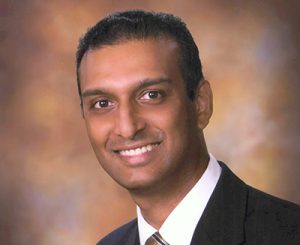
“The AR2 Center will serve as a scientific quality control hub for the ADSI teams and projects,” Judy Zhong, the principal investigator who is leading the project, said in the Cornell announcement. Zhong is the chief of the division of biostatistics in the department of population health sciences and director of the data coordinating center at Weill Cornell Medicine.
AR2 is one of 13 projects that the $50 million ADSI research effort is funding to assess the roles of genetics, environmental interactions, and other factors in autism, Cornell said. AR2 will use existing data from previous research, Medicaid claims, and other data repositories, including the INSIGHT Clinical Research Network, and PCORnet, to support its analysis of the validity and generalizability of ADSI results.
Dr. Rainu Kaushal, who leads the INSIGHT Clinical Research Network, is another researcher working with Zhong. Kaushal is senior associate dean of health data science at Weill Cornell Medicine and chair of the department of population health sciences at Weill Cornell Medicine and New York-Presbyterian/Weill Cornell Medical Center.
Zhong and her colleagues will use a three-step process that starts with replicating the data analysis to confirm the initial results reported by ADSI investigators, Cornell said. Then, they will validate that the investigators’ models work in different subsets of patients or in patients identified using different diagnostic tools. Finally, they will ensure that other scientists can reproduce the findings by providing adequate documentation and transparency.
A community advisory board will meet with the AR2 leaders every six months to advise them and help ensure that the projects addresses the needs of patients and their families.
The board includes policymakers, researchers and parents of children with autism.
“We hope to build and ensure trust in ADSI’s research,” Zhong said. “We want patients and their families to be heard. We hope to serve as a bridge so that the patient community and policy makers can understand the science.”
CCSS involvement
The AR2 Center will leverage the advanced computing infrastructure and replication expertise of the Cornell Center for Social Sciences (CCSS) Data and Reproduction Archive at the Ithaca campus.
The CCSS will help replicate ADSI project results, facilitate data sharing among investigators, collaboratively establish best practices for ADSI projects and host training workshops for ADSI teams, Peter Enns, co-investigator, said in the Cornell Chronicle.
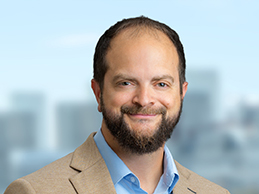
Enns is the Robert S. Harrison Director of CCSS and a professor in the department of government in the College of Arts and Sciences and the Cornell Jeb E. Brooks School of Public Policy.
“Everyone wants reproducible research,” Enns said. “We view ourselves as independent evaluators collaborating with ADSI teams to reach that goal.”
The center will also benefit from the expertise of the Data Coordinating Center at Weill Cornell Medicine, which leads real-world data studies and supports clinical trials funded by academia, government and industry.
Zhong said she hopes the three-year project will be just the start of the team’s work improving reproducibility in science more broadly. Enns agreed, noting that the cross-campus collaboration is a good model for other areas of research to follow.
“We believe it is our responsibility to build on our experience and expertise to enhance trust in scientific research in general,” Zhong said.