Stay up-to-date on the companies, people and issues that impact businesses in Syracuse, Central New York and beyond.

NYSDOT CNY director David Smith retires
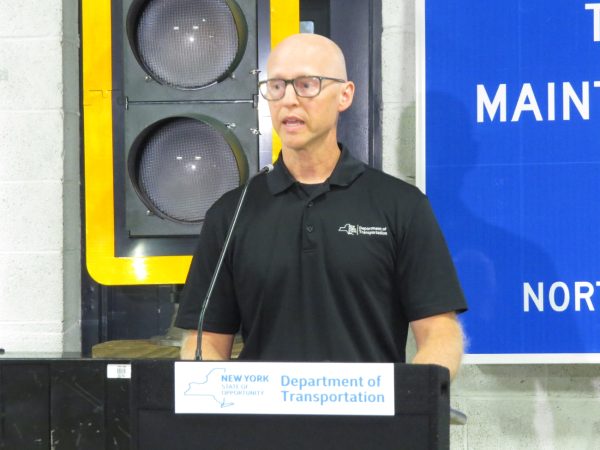
SYRACUSE, N.Y. — David Smith has been among the officials providing information on the ongoing Interstate 81 viaduct-replacement project — and he is set to retire on Friday, Aug. 1. Smith, Central New York regional director of the New York State Department of Transportation (NYSDOT), will conclude 33 years of service with the department, Marie […]
Become a Central New York Business Journal subscriber and get immediate access to all of our subscriber-only content and much more.
Click here to purchase a paywall bypass link for this article.
SYRACUSE, N.Y. — David Smith has been among the officials providing information on the ongoing Interstate 81 viaduct-replacement project — and he is set to retire on Friday, Aug. 1.
Smith, Central New York regional director of the New York State Department of Transportation (NYSDOT), will conclude 33 years of service with the department, Marie Therese Dominguez, NYSDOT commissioner, said in making the announcement.
For the past nine years, Smith has led department operations in the six counties that make up region 3: Cayuga, Cortland, Onondaga, Oswego, Seneca, and Tompkins.
His duties have involved overseeing hundreds of staff and working on numerous projects that will have an impact on the region, including the I-81 project, which is described as the “largest undertaking in Department of Transportation history.”
“I have every confidence that our dedicated team will see Central New York’s projects through to successful completion,” Smith said in the NYSDOT announcement. “This community has long been my home, and I know the professionals that make up every component of the Department of Transportation in Central New York will continue to prioritize its needs, working to ensure our infrastructure remains modern, reliable, resilient, and safe for all. As I look forward to this next chapter, I do so with deep gratitude and pride in what we have accomplished together.”
Smith began his career with NYSDOT in 1992, working as a junior engineer in the Long Island traffic and safety group. Smith steadily advanced through the ranks before making the move to Central New York in 2003, where he served as resident engineer in Cayuga and Seneca counties, and later, Onondaga County. Smith was promoted to regional director of operations for Central New York in 2006 and was named Central New York regional director in 2016.
“After 33 years of outstanding service to the Department of Transportation and the Central New York community, we wish Dave Smith the very best as he transitions into retirement after decades of exemplary service,” Dominguez said. “Dave has tirelessly guided operations for DOT in Central New York through an unprecedented period of growth, and his insight, knowledge, and exemplary direction have proven to be invaluable.”
Andy Stiles will serve as the acting regional director in Central New York until a permanent replacement is appointed. Stiles has worked for the NYSDOT for 27 years and has served as regional director in Binghamton since May 2024.

Downtown Syracuse Foundation accepting applications for Syracuse Cultural Festivals Fund grants
SYRACUSE, N.Y. — The Downtown Syracuse Foundation, Inc. is accepting applications for grants through the Syracuse Cultural Festivals Fund with $135,000 available. Festivals planned to
Retiring leader reflects on MVHS tenure
UTICA — The main thing that drew Darlene Stromstad to Mohawk Valley Health System (MVHS) as its new CEO seven years ago is also one of the accomplishments she’s most proud of from her time leading the regional health system with about $650 million in annual revenue and more than 3,000 full-time employees. That signature
Become a Central New York Business Journal subscriber and get immediate access to all of our subscriber-only content and much more.

Click here to purchase a paywall bypass link for this article.
UTICA — The main thing that drew Darlene Stromstad to Mohawk Valley Health System (MVHS) as its new CEO seven years ago is also one of the accomplishments she’s most proud of from her time leading the regional health system with about $650 million in annual revenue and more than 3,000 full-time employees.
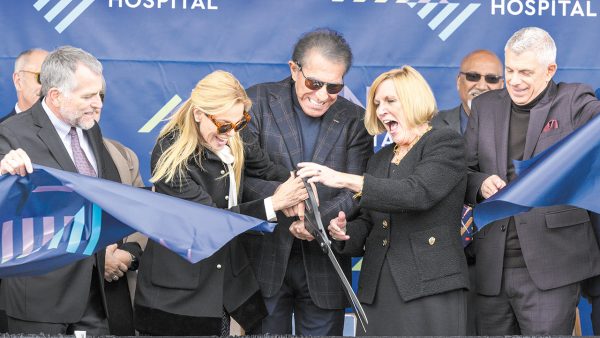
That signature accomplishment was opening the new Wynn Hospital in downtown Utica in October 2023.
During her first health-care job in North Dakota, Stromstad had a front-row seat as the CEO of that organization was planning to build a new hospital. “Being part of that transformation, I knew I would always be involved in transformative health care,” she recalls.
While she feels privileged to be part of that process in the Mohawk Valley, the journey was not without its ups and downs.
“Some of the obstacles, you expect along the way,” she says. “You expect you’re going to find them. It was a little more personal in the attacks here.”
Despite the negative feedback from some, MVHS and Stromstad successfully oversaw construction of the new Wynn Hospital during the COVID pandemic and celebrated its opening nearly two years ago.
“That gives us the opportunity to look up and out, to make progress and improve health-care delivery,” she says of the new hospital.
Now, Stromstad is looking ahead in a new direction — retirement. She announced earlier this year that she will retire at the end of 2025.
With retirement ahead of her, Stromstad reflects on some of the things she’s most proud of during her tenure at MVHS besides opening the Wynn Hospital.
During the pandemic, while the Wynn was under construction, MVHS’s St. Elizabeth Medical Center and St. Luke’s Hospital served as hub hospitals to serve the community. That meant on top of dealing with pandemic illness, MVHS also served in other ways during the pandemic, including as a vaccination site.
“People really stepped up here,” Stromstad says of the staff. “I was really proud of how our people in the health system behaved.”
Stromstad pointed to growth in the organization’s residency program, which is crucial for training new providers.
She’s also proud of how hard MVHS has worked to embed itself in the community in order to best serve that community.
Stromstad is also proud of the progress the organization has made since opening the Wynn, which involved merging two separate facilities — each with their own staff and own way of doing things – into one unified facility.
“Those first few months were rough, really, really rough,” she recalls. Things were so rough, in fact, that MVHS made it a priority to focus on improving things in 2024.
“It feels very, very positive in here,” Stromstad says of today’s environment within Wynn Hospital.
Other highlights of her tenure include becoming a heart care center, implementing a system-wide electronic medical-records system, and even introducing artificial intelligence transcription to help doctors take notes so they can focus on the patients.
“There are constantly innovations that change the way we work,” Stromstad says.
She feels confident now that the hospital and MVHS as a whole are in a good place where she can turn the reins over to someone new.
“I will miss the energy that you get in a hospital that’s different than any other building you walk into,” she says of her impending retirement. While she won’t miss the early mornings, she’ll miss interacting with a diverse community daily.
Stromstad has some advice for those looking to fill her shoes — or those of any health-care administrator.
“If you let people hijack your focus, then you’re not doing your job,” she says. “Not everybody likes change. They are going to take a swipe or two at you, but you can’t let it distract you. You’ve got to have thick skin and rise above it.”
The search for her replacement is already underway and going well. While not involved in the search, Stromstad confirmed that the search committee is reviewing candidates with an eye at final interviews toward the end of summer.
“I think health care is the most interesting place to work,” she says. “The jobs are varied. The work is very meaningful. There’s really important work to be done.”

Work progresses on $370M Turning Stone Evolution project
VERONA — The Oneida Indian Nation’s $370 million Turning Stone Evolution project is forging full-steam ahead, on target to open in 2027. The effort includes the new 258-bed Crescent Hotel; a new conference center that doubles the resort’s existing conference space with eight new meeting rooms, two new ballrooms, an outdoor courtyard and three outdoor event
Become a Central New York Business Journal subscriber and get immediate access to all of our subscriber-only content and much more.

Click here to purchase a paywall bypass link for this article.
VERONA — The Oneida Indian Nation’s $370 million Turning Stone Evolution project is forging full-steam ahead, on target to open in 2027.
The effort includes the new 258-bed Crescent Hotel; a new conference center that doubles the resort’s existing conference space with eight new meeting rooms, two new ballrooms, an outdoor courtyard and three outdoor event spaces, and a new 2,000-space parking garage; the new Salt Seafood & Raw Bar; and an onsite medical center for employees and guests.
Some elements of the project, such as the transformation of the former Lava Nightclub into NY Rec & Social Club, are already complete while work continues on the rest. The Crescent celebrated a topping ceremony in April, marking significant progress on that part of the project.
“It’s moving along on time, on budget, slated to open in 2027,” Oneida Nation VP for Strategic Communications and Community Engagement Joel Barkin says. “Now, it’s really taking form.”
Also moving ahead is construction of the parking garage, which is about halfway complete, he adds, while the Grand Expo 165,000-square-foot conference and events center is being framed out.
“We’re already starting to prospect for business,” Barkin says of the Grand Expo. Staff are already meeting with event and meeting planners interested in the space and will soon be taking reservations for the hotel and Grand Expo.
The additional space is needed based on current demand, especially for weddings, which is expected to grow. “There’s more interest and demand than supply,” Barkin says of Turning Stone’s event space.

The new hotel will bring the total number of rooms close to 1,000, while the expanded meeting space provides options to host more events. “We are able to go after much larger meetings and events,” Barkin adds.
Once complete, the project will put Turning Stone in competition with major convention venues, he says. Turning Stone will be the largest event venue in upstate New York and one of the three venues of the same size in the state.
“It opens up an entire universe of potential new partners and prospects to us,” he says.
The project is expected to generate a $616 million one-time economic impact, create 3,600 one-time jobs, and generate $22.1 million in state and local tax revenues.
“We think everything we’re offering complements what we’re building,” Barkin says of the Turning Stone Evolution project.
Turning Stone Resort Casino already includes five hotels, two spas, five golf courses, more than 20 dining options, a 125,000-square-foot gaming floor, a sports-betting lounge, The Showroom concert venue, a 5,000-seat arena, and several nightlife venues.
The Oneida Indian Nation has also been busy renovating its Point Place Casino located in the hamlet of Bridgeport, in the town of Sullivan. That project, coming in at $50 million, is doubling the existing gaming floor, adding a 100-room hotel with event space and a lobby café, adding a full-service restaurant, reimagining the Fireside Lounge, doubling parking, and adding new retail space.
The first phase of the Point Place project, which includes the gaming and retail expansion and café, will open later this summer, followed by the hotel, restaurant, and other amenities later in the fall.
The Oneida Indian Nation will also open its fifth Verona Collective cannabis dispensary in Bridgeport later this summer.

Picente says county purchase of former golf course helped secure Chobani
ROME — Oneida County Executive Anthony Picente, Jr. believes the county’s purchase of the former Mohawk Glen Golf Course was a big factor in Chobani’s decision to build a 1.4 million square foot, $1.2 billion facility on the Triangle site at Griffiss International Airport in Rome. The golf course, which previously served the former Griffiss
Become a Central New York Business Journal subscriber and get immediate access to all of our subscriber-only content and much more.

Click here to purchase a paywall bypass link for this article.
ROME — Oneida County Executive Anthony Picente, Jr. believes the county’s purchase of the former Mohawk Glen Golf Course was a big factor in Chobani’s decision to build a 1.4 million square foot, $1.2 billion facility on the Triangle site at Griffiss International Airport in Rome.
The golf course, which previously served the former Griffiss Air Force Base, is situated adjacent to the Triangle site.
Oneida County bought the 160-acre golf course at 880 Perimeter Road W. in Rome for $1.4 million from owner Michael DeSalvio. The Oneida County Board of Legislators authorized the purchase during the Nov. 13, 2024 meeting, and the transaction closed in early January of this year.

“So, I do envision at least right now that any development there … would be focused on Chobani’s desire to add a second phase. Now, could that change? I suppose it could,” says Picente, who spoke with CNYBJ in a phone interview on July 10.
Prior to Chobani’s interest and subsequent major announcement, Oneida County had envisioned developing the site into a semiconductor supply-chain campus. The county had even secured a $23.6 million award under the state’s Focused Attraction of Shovel-Ready Tracts New York (FAST NY) grant program.
The FAST NY grant doesn’t apply to the golf course property, the Oneida County executive noted.
Oneida County has also applied for second round of FAST NY, which also would be just for the Triangle parcel because of its size, which is larger than the golf course property, the county executive says.
Picente said the initial vision for a semiconductor supply-chain campus came about “because we were hearing so much about it,” referencing both Micron Technology Inc. (NASDAQ: MU) in the town of Clay in Onondaga County, as well as Wolfspeed (NYSE: WOLF) in Marcy.
“In economic development, a lot of times, when you’re courting companies of that size or looking at that large of footprint, they look for some buffer space and other areas for not just staging but for future development, so that’s where the focus is right now,” Picente says.
He went on to say that Oneida County had been in discussions with the golf course owner about the property even before the talks with Chobani started and before the state awarded the county the grant to help develop the Triangle site.
Even if Chobani hadn’t selected the Triangle site for its project, Oneida County still wanted to purchase the golf course property because “the benefit of that Triangle [site] is greater with the golf course property.”
“Because everything in that area is somewhat landlocked to a degree, it makes it all the more important that those parcels that are connected remain connected,” he says.
Picente told CNYBJ that Chobani had reached out to Oneida County in the middle of 2024 about the Triangle site but the discussions got “more serious” in September of last year.
“It culminated when [Chobani founder and CEO Hamdi Ulukaya] himself came to meet with me in October,” says Picente. “We were moving toward an agreement.”

Jazz at Beeches Manor to benefit Nascentia Neighborhood capital campaign
ROME — Nascentia Health says it has scheduled an exciting community event called Jazz at Beeches Manor for Aug. 10 with an all-day lineup of jazz performances, free of charge, from 11:30 a.m. to 8 p.m. at 7900 Turin Road in Rome. It benefits the Nascentia Neighborhood capital campaign, which supports the renovation of the
Become a Central New York Business Journal subscriber and get immediate access to all of our subscriber-only content and much more.

Click here to purchase a paywall bypass link for this article.
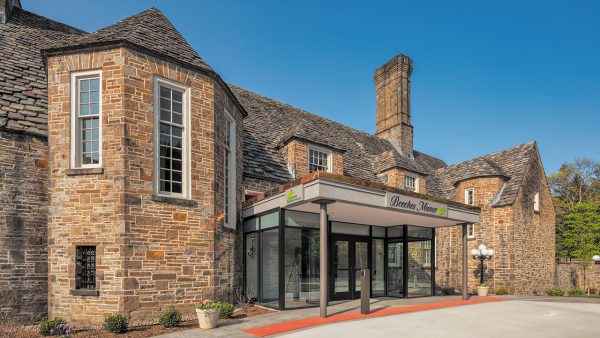
ROME — Nascentia Health says it has scheduled an exciting community event called Jazz at Beeches Manor for Aug. 10 with an all-day lineup of jazz performances, free of charge, from 11:30 a.m. to 8 p.m. at 7900 Turin Road in Rome.
It benefits the Nascentia Neighborhood capital campaign, which supports the renovation of the 72-acre Beeches property in Rome into an aging-in-place community for adults 55 and older.
The completed project will offer independent-living units, integrated health care, and wellness-focused amenities to “promote independence, vitality, and connection.” The campaign is now in its public phase and recently received a $4 million donation from The Griffin Charitable Foundation.
Jazz at Beeches Manor is described as a “family-friendly” event that is open to the public and will have food, refreshments, and merchandise for purchase.
The 2025 Jazz at Beeches Manor music lineup includes talented artists from across Central New York. The headlining act is Gap Mangione and the New Big Band.
The lineup also includes the CNY Jazz Youth Orchestra; The Hot Club of Syracuse with Joe Davoli, Joe Ferlo, Tyrin Conti & Matt Vacanti; The Octobermen with Paul Dowd, Bill Scranton, Jeff Ruzich & Evan DuChene; The 10th Mountain Army Division Jazz Combo; and The John Rohde Tribute Band with Andrea Miceli, Jeff Stockham, Rick Montalbano, Jimmy Johns, Ronnie France & Joe Carello.
Nascentia Health and the Nascentia Neighborhood Capital Campaign Strategy Committee on April 17 announced the public phase of the Nascentia Neighborhood Capital Campaign and recognize The Griffin Charitable Foundation for its $4 million donation for the project.
In recognition of the foundation’s “transformative” gift, Nascentia Health said the Nascentia Neighborhood’s future on-site medical building will be named The Griffin Charitable Foundation Medical Complex. The organization called it a “lasting tribute to Dorothy and Bill Griffin, whose selfless giving continues to shape the Copper City and beyond.”
“We are incredibly grateful to The Griffin Charitable Foundation for choosing to invest in this project,” Kate Rolf, president and CEO of Nascentia Health, said in a statement. “This gift will help our company continue delivering exceptional healthcare, creating strong communities, and executing a vision designed to meet the needs of aging adults. I am honored that the Nascentia Neighborhood Capital Campaign has already been propelled forward by a transformative donation.”
Phase one of the project is already complete with the renovation and reopening of Beeches Manor as an event venue and restaurant/pub open to the community for lunch and dinner.

Cornhill Empowerment Center operating under new ownership
UTICA — The Cornhill Empowerment Center is now operating under the leadership of the Community Foundation of Herkimer and Oneida Counties. Formerly known as the Empowerment Center and previously managed by the HomeOwnershipCenter, the facility is offering programming for residents led by local nonprofit organizations. Community members, nonprofit partners, and local leaders gathered together on
Become a Central New York Business Journal subscriber and get immediate access to all of our subscriber-only content and much more.
Click here to purchase a paywall bypass link for this article.
UTICA — The Cornhill Empowerment Center is now operating under the leadership of the Community Foundation of Herkimer and Oneida Counties.
Formerly known as the Empowerment Center and previously managed by the HomeOwnershipCenter, the facility is offering programming for residents led by local nonprofit organizations.
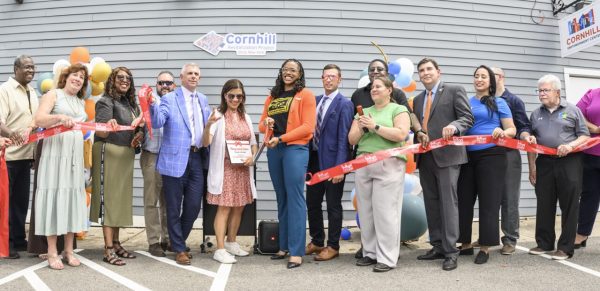
Community members, nonprofit partners, and local leaders gathered together on June 18 for the grand opening and ribbon cutting of the newly reintroduced Cornhill Empowerment Center.
The event, held at 230 James Street in Utica, “marked an exciting new chapter for the neighborhood and was a major success,” per a June 23 summary from the Community Foundation.
The Cornhill Empowerment Center’s key partners — the Community Foundation, Mid-Utica Neighborhood Preservation Corporation (MUNPC), and the City of Utica — hosted the event.
Besides the ribbon cutting, the event included an open house allowing attendees to explore the space and learn about upcoming programming opportunities. It concluded with a guided neighborhood walk highlighting key sites included in the broader Cornhill Revitalization Project.
“It’s essential that we continue working together, talking, and communicating openly to keep this project moving forward,” Oneida County Legislator Evon Ervin said in the announcement. “I’ve seen this neighborhood at its best, its worst, and everything in between. When I see community members of all backgrounds walking past my home in Cornhill, it reminds me of what’s possible. That’s how this revitalization should move forward — hand-in-hand, growing together, regardless of race, ethnicity, gender, or background.”
The Cornhill Empowerment Center launched its inaugural program this summer with the STEMpowerment Series — a free, hands-on STEM camp for youth ages 8 to 15. STEM is short for science, technology, engineering, and mathematics. It started July 7 and continues through Aug. 14. SUNY Polytechnic Institute is presenting the series with support from Mohawk Valley Community College.
The STEMpowerment Series is a program designed to “ignite curiosity, build confidence, and inspire youth through engaging STEM experiences.” Participants have been exploring science, technology, engineering, and math through interactive experiments, team-based engineering challenges, and leadership-building activities.
The Cornhill Empowerment Center is set to serve as a model for future neighborhood projects, the Community Foundation contends. The Community Foundation, MUNPC, People First, The Collective Impact Network, Oneida County, and the City of Utica are leading a long-term investment of more than
$77 million in Cornhill over the next 30 years, per the announcement.
The effort includes the future West Street and James Street Impact Centers, which will “act as anchor institutions in this transformation.”
“We were thrilled to welcome the community into this space and celebrate the start of this exciting new chapter,” Tyler Hutchinson, director of strategic initiatives at the Community Foundation, said in the announcement. “The Cornhill Empowerment Center represents a collective commitment to unlocking opportunity, preserving the neighborhood’s history, and building a bright future for everyone who calls Cornhill home.”

MV EDGE initiates dairy roundtable as Chobani plans Rome processing facility
ROME — Chobani’s April announcement that it will build a $1.2 billion plant in Rome at Griffiss Business and Technology Park isn’t just good news for people looking for a job or those who like the company’s Greek yogurt. It’s also good news for the hundreds of farmers in the Mohawk Valley who will have
Become a Central New York Business Journal subscriber and get immediate access to all of our subscriber-only content and much more.

Click here to purchase a paywall bypass link for this article.
ROME — Chobani’s April announcement that it will build a $1.2 billion plant in Rome at Griffiss Business and Technology Park isn’t just good news for people looking for a job or those who like the company’s Greek yogurt.
It’s also good news for the hundreds of farmers in the Mohawk Valley who will have an opportunity to provide milk and other products to the facility, which will house up to 28 production lines designed to process 12 million pounds of milk per day.
That’s why Mohawk Valley EDGE is working now to bring the industry and other stakeholders together to make sure farmers can benefit.
MV EDGE had internal discussions in early June, outlining how to bring together stakeholders from the agriculture, workforce, education, and policy sectors to talk about not just now Chobani’s new plant will impact the region but also how to address the needs of New York’s dairy industry.
“We just want to support them in every way possible,” MV EDGE Chief of Staff Marc Barraco says.
Those initial talks outlined six core areas: Chobani’s expansion and supply-chain readiness; event planning and stakeholder engagement; workforce challenges, upskilling, and education; policy and program gaps; and actionable next steps.
The goal, Barraco says, is to ensure that not only is Chobani successful but also the whole upstate dairy industry prospers.
“We want to broaden this outreach as much as we can,” he says. Talks may involve more than just how much milk Chobani needs and include topics such as the trucking industry and farm-worker protections.
“If we want the biggest bang for our buck, this is the perfect time to be having these discussions,” Barraco says.
Agriculture remains Oneida County’s top industry by volume, Oneida County Executive Anthony J. Picente, Jr. notes. “That’s still a large part of this county’s industry,” he says. And it’s not just dairy, he adds. Chobani may also need fruits from some of the region’s many producers.
Along with requiring all that milk, Chobani also expects to create more than 1,000 full-time jobs once the Rome facility opens.
That’s why workforce development is one of the planned topics for the roundtable. MV EDGE and Chobani are already talking with colleges and universities, as well as others, about how to create that workforce.
EDGE is eyeing a late summer or early fall date for the roundtable event, and Barraco wants people to come prepared.
“We want to task everyone that’s invited … to come with resources at the ready,” he says. MV EDGE wants more than just ideas at the table. It wants resources and tools, plans to overcome challenges, and identified actionable opportunities.
“It’s a big endeavor, but it’s worth it,” Barraco says.

YMCA of the Greater Tri-Valley focuses on building renovations
ROME — It was March 12, 2020, and the YMCA of the Greater Tri-Valley was enjoying its best year ever. The organization had a robust membership of 9,200 and operated 27 before-school and after-school programs. It also had the opportunity to plan for an even better future on available land on Floyd Avenue that would
Become a Central New York Business Journal subscriber and get immediate access to all of our subscriber-only content and much more.

Click here to purchase a paywall bypass link for this article.
ROME — It was March 12, 2020, and the YMCA of the Greater Tri-Valley was enjoying its best year ever.
The organization had a robust membership of 9,200 and operated 27 before-school and after-school programs. It also had the opportunity to plan for an even better future on available land on Floyd Avenue that would bring the Y’s offerings close to the 7,000 people working in the nearby Griffiss Business and Technology Park, recalls CEO Hank Leo.
“We explored what that might look like,” he says. In the works since 2018, the organization had planned to build a new 42,000-square-foot building on Floyd Avenue to replace its aging building on West Bloomfield Street.
On March 12, the outlook was bright. “The next day, the whole thing changed,” Leo recalls.
First, schools closed, which shuttered the before- and after-school programs, which supported 400 children and generated $1 million in revenue.
“Then the next day all the businesses closed,” Leo says. The YMCA of the Greater Tri-Valley closed along with them for a short time before reopening as an essential child-care center for five months. It furloughed 250 of the 260 people on staff.
The YMCA gave its 9,200 members a choice — keep their membership, put it on hold, or terminate their membership, and 5,200 of those members chose to end their YMCA membership.
“But 4,800 stayed with us,” Leo says. They even brought lawn chairs and held socially distanced gatherings in the parking lot, craving that interaction with others.
For Leo, who always knew the value of the organization, that really drove home its importance to the community it serves.
That’s why when the cost of building a new facility kept rising, from an initial $16 million to $23 million as the pandemic continued, he and his fellow leaders at the organization knew that building a new facility was not the best path forward for an organization so vital to the community.
In September 2024, the YMCA of the Greater Tri-Valley announced it would no longer move forward with the project. While it had raised some funds from generous donors, it learned it would not receive a hoped-for $2 million New York State Home and Community Renewal grant.
“That’s when we kind of shifted gears,” Leo says. YMCA leadership met with members at several town halls to talk about a new plan. The focus now is on renovating its existing building at 301 West Bloomfield St., which serves a current membership of 7,100.
“We’re going room by room, and we’re repurposing each of the spaces,” Leo says. The organization has enough funds to cover renovations underway on the second floor. Work has included updated electrical infrastructure and equipment for the cardio room, transforming the former personal training room into a spin studio, and converting golf-simulator space into a multifunction area for personal training and cross training.
A donation of both paint and labor from Sherwin-Williams helped transform the facility’s gym into a brighter, more inviting space, Leo adds. The YMCA will refinish the gym floors and install a new curtain divider later this summer.
The building will get a new roof and HVAC system, thanks to $3.4 million in state funding secured by Assemblywoman Marianne Buttenschon.
Leo is hopeful the YMCA of the Greater Tri-Valley can begin tackling first-floor renovations next spring. The first floor includes the swimming pool, locker rooms, and childcare wing.
While it wasn’t easy backpedaling from the announcement of a new building, the YMCA’s membership has been supportive of the decision, he notes.
Samantha Petschauer joined the YMCA as its Rome branch executive right as it was switching gears away from a new building, but that didn’t phase her.
“I didn’t come for a building,” she says. “I came for a mission.”
Recalling how much the YMCA has meant to her family personally, she is confident the renovated building will have that same impact on generations to come.
“We are much more than a gym and swim,” she says. “We are trying to help families grow. We are trying to help our community thrive.”

Herkimer College launches projects to upgrade athletic facilities
HERKIMER — Herkimer County Community College recently announced it has formally broken ground on a series of projects to transform the college’s athletic facilities to elevate the experience for student athletes, officials, and fans. The project will modernize existing spaces, enhance accessibility, and create “top-tier” competition venues with an expected completion by the end of
Become a Central New York Business Journal subscriber and get immediate access to all of our subscriber-only content and much more.

Click here to purchase a paywall bypass link for this article.
HERKIMER — Herkimer County Community College recently announced it has formally broken ground on a series of projects to transform the college’s athletic facilities to elevate the experience for student athletes, officials, and fans.
The project will modernize existing spaces, enhance accessibility, and create “top-tier” competition venues with an expected completion by the end of this year. Herkimer College did not disclose a price tag for the project, nor other financial details.
“This project is a major step forward for Herkimer College athletics,” Dean of Students/Director of Athletics Don Dutcher said in the announcement. “These upgrades will not only provide our student-athletes with the resources they deserve, but will also enhance the experience for our fans, visiting teams, and the entire campus community.”
Work to renovate existing locker rooms has already begun. The initiative will create 11 new team locker rooms that will accommodate interactive coaching presentations and provide individual lockers for each athlete. Additional upgrades include two officials’ changing rooms, an expanded athletic-training room with a dedicated hydrotherapy space, and fully renovated bathrooms and showers on each floor. The work will also ensure all areas are fully ADA-compliant.
Herkimer College is also making improvements to its outdoor athletic venues including overhauling its storm-prone baseball field and creating a companion softball stadium of equal caliber. The modern fields will address recurring game cancellations by providing a “state-of-the-art, all-weather home field” on campus. The design plan includes the complete repositioning and rebuilding of both diamonds using synthetic turf, LED lighting systems, elevated bleacher platforms, press boxes, dugouts, batting tunnels, scoreboards, and flagpoles.
The Herkimer Generals have 19 intercollegiate athletic teams that participate in NJCAA Division III.
Stay up-to-date on the companies, people and issues that impact businesses in Syracuse, Central New York and beyond.