Stay up-to-date on the companies, people and issues that impact businesses in Syracuse, Central New York and beyond.

Cornhill Empowerment Center operating under new ownership
UTICA — The Cornhill Empowerment Center is now operating under the leadership of the Community Foundation of Herkimer and Oneida Counties. Formerly known as the Empowerment Center and previously managed by the HomeOwnershipCenter, the facility is offering programming for residents led by local nonprofit organizations. Community members, nonprofit partners, and local leaders gathered together on […]
Become a Central New York Business Journal subscriber and get immediate access to all of our subscriber-only content and much more.
Click here to purchase a paywall bypass link for this article.
UTICA — The Cornhill Empowerment Center is now operating under the leadership of the Community Foundation of Herkimer and Oneida Counties.
Formerly known as the Empowerment Center and previously managed by the HomeOwnershipCenter, the facility is offering programming for residents led by local nonprofit organizations.
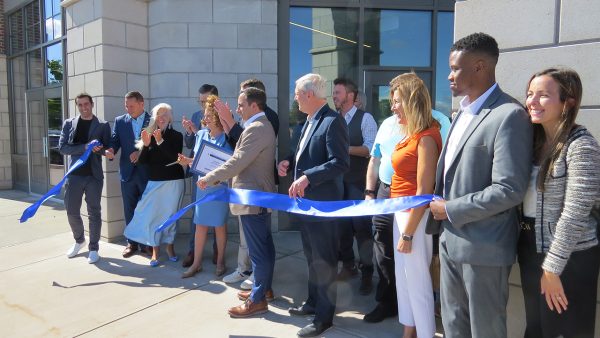
Community members, nonprofit partners, and local leaders gathered together on June 18 for the grand opening and ribbon cutting of the newly reintroduced Cornhill Empowerment Center.
The event, held at 230 James Street in Utica, “marked an exciting new chapter for the neighborhood and was a major success,” per a June 23 summary from the Community Foundation.
The Cornhill Empowerment Center’s key partners — the Community Foundation, Mid-Utica Neighborhood Preservation Corporation (MUNPC), and the City of Utica — hosted the event.
Besides the ribbon cutting, the event included an open house allowing attendees to explore the space and learn about upcoming programming opportunities. It concluded with a guided neighborhood walk highlighting key sites included in the broader Cornhill Revitalization Project.
“It’s essential that we continue working together, talking, and communicating openly to keep this project moving forward,” Oneida County Legislator Evon Ervin said in the announcement. “I’ve seen this neighborhood at its best, its worst, and everything in between. When I see community members of all backgrounds walking past my home in Cornhill, it reminds me of what’s possible. That’s how this revitalization should move forward — hand-in-hand, growing together, regardless of race, ethnicity, gender, or background.”
The Cornhill Empowerment Center launched its inaugural program this summer with the STEMpowerment Series — a free, hands-on STEM camp for youth ages 8 to 15. STEM is short for science, technology, engineering, and mathematics. It started July 7 and continues through Aug. 14. SUNY Polytechnic Institute is presenting the series with support from Mohawk Valley Community College.
The STEMpowerment Series is a program designed to “ignite curiosity, build confidence, and inspire youth through engaging STEM experiences.” Participants have been exploring science, technology, engineering, and math through interactive experiments, team-based engineering challenges, and leadership-building activities.
The Cornhill Empowerment Center is set to serve as a model for future neighborhood projects, the Community Foundation contends. The Community Foundation, MUNPC, People First, The Collective Impact Network, Oneida County, and the City of Utica are leading a long-term investment of more than
$77 million in Cornhill over the next 30 years, per the announcement.
The effort includes the future West Street and James Street Impact Centers, which will “act as anchor institutions in this transformation.”
“We were thrilled to welcome the community into this space and celebrate the start of this exciting new chapter,” Tyler Hutchinson, director of strategic initiatives at the Community Foundation, said in the announcement. “The Cornhill Empowerment Center represents a collective commitment to unlocking opportunity, preserving the neighborhood’s history, and building a bright future for everyone who calls Cornhill home.”

MV EDGE initiates dairy roundtable as Chobani plans Rome processing facility
ROME — Chobani’s April announcement that it will build a $1.2 billion plant in Rome at Griffiss Business and Technology Park isn’t just good news for people looking for a job or those who like the company’s Greek yogurt. It’s also good news for the hundreds of farmers in the Mohawk Valley who will have
Become a Central New York Business Journal subscriber and get immediate access to all of our subscriber-only content and much more.

Click here to purchase a paywall bypass link for this article.
ROME — Chobani’s April announcement that it will build a $1.2 billion plant in Rome at Griffiss Business and Technology Park isn’t just good news for people looking for a job or those who like the company’s Greek yogurt.
It’s also good news for the hundreds of farmers in the Mohawk Valley who will have an opportunity to provide milk and other products to the facility, which will house up to 28 production lines designed to process 12 million pounds of milk per day.
That’s why Mohawk Valley EDGE is working now to bring the industry and other stakeholders together to make sure farmers can benefit.
MV EDGE had internal discussions in early June, outlining how to bring together stakeholders from the agriculture, workforce, education, and policy sectors to talk about not just now Chobani’s new plant will impact the region but also how to address the needs of New York’s dairy industry.
“We just want to support them in every way possible,” MV EDGE Chief of Staff Marc Barraco says.
Those initial talks outlined six core areas: Chobani’s expansion and supply-chain readiness; event planning and stakeholder engagement; workforce challenges, upskilling, and education; policy and program gaps; and actionable next steps.
The goal, Barraco says, is to ensure that not only is Chobani successful but also the whole upstate dairy industry prospers.
“We want to broaden this outreach as much as we can,” he says. Talks may involve more than just how much milk Chobani needs and include topics such as the trucking industry and farm-worker protections.
“If we want the biggest bang for our buck, this is the perfect time to be having these discussions,” Barraco says.
Agriculture remains Oneida County’s top industry by volume, Oneida County Executive Anthony J. Picente, Jr. notes. “That’s still a large part of this county’s industry,” he says. And it’s not just dairy, he adds. Chobani may also need fruits from some of the region’s many producers.
Along with requiring all that milk, Chobani also expects to create more than 1,000 full-time jobs once the Rome facility opens.
That’s why workforce development is one of the planned topics for the roundtable. MV EDGE and Chobani are already talking with colleges and universities, as well as others, about how to create that workforce.
EDGE is eyeing a late summer or early fall date for the roundtable event, and Barraco wants people to come prepared.
“We want to task everyone that’s invited … to come with resources at the ready,” he says. MV EDGE wants more than just ideas at the table. It wants resources and tools, plans to overcome challenges, and identified actionable opportunities.
“It’s a big endeavor, but it’s worth it,” Barraco says.

YMCA of the Greater Tri-Valley focuses on building renovations
ROME — It was March 12, 2020, and the YMCA of the Greater Tri-Valley was enjoying its best year ever. The organization had a robust membership of 9,200 and operated 27 before-school and after-school programs. It also had the opportunity to plan for an even better future on available land on Floyd Avenue that would
Become a Central New York Business Journal subscriber and get immediate access to all of our subscriber-only content and much more.

Click here to purchase a paywall bypass link for this article.
ROME — It was March 12, 2020, and the YMCA of the Greater Tri-Valley was enjoying its best year ever.
The organization had a robust membership of 9,200 and operated 27 before-school and after-school programs. It also had the opportunity to plan for an even better future on available land on Floyd Avenue that would bring the Y’s offerings close to the 7,000 people working in the nearby Griffiss Business and Technology Park, recalls CEO Hank Leo.
“We explored what that might look like,” he says. In the works since 2018, the organization had planned to build a new 42,000-square-foot building on Floyd Avenue to replace its aging building on West Bloomfield Street.
On March 12, the outlook was bright. “The next day, the whole thing changed,” Leo recalls.
First, schools closed, which shuttered the before- and after-school programs, which supported 400 children and generated $1 million in revenue.
“Then the next day all the businesses closed,” Leo says. The YMCA of the Greater Tri-Valley closed along with them for a short time before reopening as an essential child-care center for five months. It furloughed 250 of the 260 people on staff.
The YMCA gave its 9,200 members a choice — keep their membership, put it on hold, or terminate their membership, and 5,200 of those members chose to end their YMCA membership.
“But 4,800 stayed with us,” Leo says. They even brought lawn chairs and held socially distanced gatherings in the parking lot, craving that interaction with others.
For Leo, who always knew the value of the organization, that really drove home its importance to the community it serves.
That’s why when the cost of building a new facility kept rising, from an initial $16 million to $23 million as the pandemic continued, he and his fellow leaders at the organization knew that building a new facility was not the best path forward for an organization so vital to the community.
In September 2024, the YMCA of the Greater Tri-Valley announced it would no longer move forward with the project. While it had raised some funds from generous donors, it learned it would not receive a hoped-for $2 million New York State Home and Community Renewal grant.
“That’s when we kind of shifted gears,” Leo says. YMCA leadership met with members at several town halls to talk about a new plan. The focus now is on renovating its existing building at 301 West Bloomfield St., which serves a current membership of 7,100.
“We’re going room by room, and we’re repurposing each of the spaces,” Leo says. The organization has enough funds to cover renovations underway on the second floor. Work has included updated electrical infrastructure and equipment for the cardio room, transforming the former personal training room into a spin studio, and converting golf-simulator space into a multifunction area for personal training and cross training.
A donation of both paint and labor from Sherwin-Williams helped transform the facility’s gym into a brighter, more inviting space, Leo adds. The YMCA will refinish the gym floors and install a new curtain divider later this summer.
The building will get a new roof and HVAC system, thanks to $3.4 million in state funding secured by Assemblywoman Marianne Buttenschon.
Leo is hopeful the YMCA of the Greater Tri-Valley can begin tackling first-floor renovations next spring. The first floor includes the swimming pool, locker rooms, and childcare wing.
While it wasn’t easy backpedaling from the announcement of a new building, the YMCA’s membership has been supportive of the decision, he notes.
Samantha Petschauer joined the YMCA as its Rome branch executive right as it was switching gears away from a new building, but that didn’t phase her.
“I didn’t come for a building,” she says. “I came for a mission.”
Recalling how much the YMCA has meant to her family personally, she is confident the renovated building will have that same impact on generations to come.
“We are much more than a gym and swim,” she says. “We are trying to help families grow. We are trying to help our community thrive.”

Herkimer College launches projects to upgrade athletic facilities
HERKIMER — Herkimer County Community College recently announced it has formally broken ground on a series of projects to transform the college’s athletic facilities to elevate the experience for student athletes, officials, and fans. The project will modernize existing spaces, enhance accessibility, and create “top-tier” competition venues with an expected completion by the end of
Become a Central New York Business Journal subscriber and get immediate access to all of our subscriber-only content and much more.

Click here to purchase a paywall bypass link for this article.
HERKIMER — Herkimer County Community College recently announced it has formally broken ground on a series of projects to transform the college’s athletic facilities to elevate the experience for student athletes, officials, and fans.
The project will modernize existing spaces, enhance accessibility, and create “top-tier” competition venues with an expected completion by the end of this year. Herkimer College did not disclose a price tag for the project, nor other financial details.
“This project is a major step forward for Herkimer College athletics,” Dean of Students/Director of Athletics Don Dutcher said in the announcement. “These upgrades will not only provide our student-athletes with the resources they deserve, but will also enhance the experience for our fans, visiting teams, and the entire campus community.”
Work to renovate existing locker rooms has already begun. The initiative will create 11 new team locker rooms that will accommodate interactive coaching presentations and provide individual lockers for each athlete. Additional upgrades include two officials’ changing rooms, an expanded athletic-training room with a dedicated hydrotherapy space, and fully renovated bathrooms and showers on each floor. The work will also ensure all areas are fully ADA-compliant.
Herkimer College is also making improvements to its outdoor athletic venues including overhauling its storm-prone baseball field and creating a companion softball stadium of equal caliber. The modern fields will address recurring game cancellations by providing a “state-of-the-art, all-weather home field” on campus. The design plan includes the complete repositioning and rebuilding of both diamonds using synthetic turf, LED lighting systems, elevated bleacher platforms, press boxes, dugouts, batting tunnels, scoreboards, and flagpoles.
The Herkimer Generals have 19 intercollegiate athletic teams that participate in NJCAA Division III.

Rooster’s Smash Burgers serves up burgers and a welcoming environment
UTICA — Focus on one thing and do it well. That’s the goal of Rooster’s Smash Burgers owner Javon Pratt. His restaurant, open for nearly four years, focuses only on burgers with the goal of making the best burger around. Pratt used to own a pizzeria before selling it in 2019. He also worked for
Become a Central New York Business Journal subscriber and get immediate access to all of our subscriber-only content and much more.
Click here to purchase a paywall bypass link for this article.
UTICA — Focus on one thing and do it well. That’s the goal of Rooster’s Smash Burgers owner Javon Pratt.
His restaurant, open for nearly four years, focuses only on burgers with the goal of making the best burger around.
Pratt used to own a pizzeria before selling it in 2019. He also worked for a while at Upstate Cerebral Palsy (Upstate Caring Partners), but says, “I just had the itch to go back into business for myself.”
Pratt thought about opening another pizzeria but couldn’t find a suitable space. Then he saw a space available on Charlotte Street he thought would be a good location, but he needed to figure out what to serve if it wasn’t pizza.
The idea came to him after he got “stuck” for a while in a fast-food drive-thru waiting for a burger.
“There’s a market for burgers,” he says, and he liked the idea of serving only burgers. “If you go to Philly, you have places that just sell cheesesteaks. If you go to Chicago, you have places that just serve hot dogs.”
So, Rooster’s Smash Burgers was born in November 2021. The name honors a former employee from Pratt’s pizzeria, and the menu features about a dozen different burgers along with fries. The lone exception to the burger-only menu policy is chicken nuggets.
At first, Pratt was the sole employee with a streamlined system that allowed him to work the entire restaurant by himself.
“Then we just slowly grew,” he says.
Eventually, Rooster’s transitioned to a new location on North Genesee Street, where Pratt took over the restaurant side of Kookie Q’s, which still operates a seasonal ice-cream business there. The businesses share prep space.
“We do a lot more volume,” Pratt says of the new location, which Rooster’s Smash Burgers moved into last October. His old space had seating for 19 people, while he can seat 40 people inside at his new location, which also offers outdoor seating.
The Rooster’s employee count grew as well, from about four employees on Charlotte Street to about 14 employees now, Pratt says.
He prides himself on the homey, welcoming feel of Rooster’s, along with use fresh-baked buns from Salvatore’s Bakery and meat that’s ground fresh at Chanatry’s daily.
Pratt trains his employees to focus on quality service and products. “I want you to make this burger like it’s for your mom,” he says.
“I think the thing I’m most proud of with Rooster’s is what people have to say about the way we make people feel,” Pratt concludes.

Upstate Medical University contributes $3.2 billion to state economy, report finds
SYRACUSE, N.Y. — A new report finds Upstate Medical University contributes $3.2 billion to the state economy and supports, directly and indirectly, more than 24,000

Oneida Indian Nation to host vendor and economic-development conference Sept. 12
VERONA, N.Y. — The Oneida Indian Nation says it will host a half-day conference titled “Doing Business with the Oneida Indian Nation” on Sept. 12. The conference is scheduled between 9:00 a.m. and 1:30 p.m. at Turning Stone Resort Casino in Verona. This event is for prospective and existing vendors and regional business partners interested
Become a Central New York Business Journal subscriber and get immediate access to all of our subscriber-only content and much more.

Click here to purchase a paywall bypass link for this article.
VERONA, N.Y. — The Oneida Indian Nation says it will host a half-day conference titled “Doing Business with the Oneida Indian Nation” on Sept. 12.
The conference is scheduled between 9:00 a.m. and 1:30 p.m. at Turning Stone Resort Casino in Verona.
This event is for prospective and existing vendors and regional business partners interested in working with Turning Stone Enterprises, which the Oneida Indian Nation owns.
The conference will include remarks from Ray Halbritter, Oneida Indian Nation representative and Turning Stone Enterprises CEO. He’ll share details on the $370 million Turning Stone Evolution and Point Place Casino’s $50 million expansion, as well as the Nation’s future projects and evolving economic development plans.
Other sessions throughout the conference will include an overview of Turning Stone Enterprises’ business developments in the next 12-18 months, what the Oneida Indian Nation is looking for in new and existing vendors, and how to navigate the Nation’s procurement process and learn about opportunities.
The sessions will also include one with details on ways to partner with Turning Stone Enterprises to enhance your meetings and events, the Oneida Nation said.
The conference will provide time for local businesses to meet directly with the Nation’s purchasing representatives and learn which products and services are most needed today and will be the most in-demand in the future.
For more information or to register, visit the website: https://www.turningstoneenterprises.com/economic-development/vendor-meeting

NBT Bancorp boosts quarterly dividend by nearly 9 percent
NORWICH, N.Y. — NBT Bancorp Inc. (NASDAQ: NBTB) announced on Monday that its board of directors has approved an increase of its quarterly cash dividend

ConnextCare uses $100K Delta Dental grant to complete hybrid dental room
OSWEGO, N.Y. — ConnextCare announced it has used a $100,000 grant from the Delta Dental Foundation to complete a hybrid dental room at its Oswego

MMRI holds graduation ceremony for summer fellows program
UTICA, N.Y. — Masonic Medical Research Institute (MMRI) of Utica on Friday held its annual graduation ceremony to honor the accomplishments of its 13 summer fellows who completed the scientific program. For 10 weeks, these Summer Fellows studied in the laboratories of MMRI’s principal investigators gaining scientific-research experience. MMRI selected students based on academic excellence,
Become a Central New York Business Journal subscriber and get immediate access to all of our subscriber-only content and much more.
Click here to purchase a paywall bypass link for this article.
UTICA, N.Y. — Masonic Medical Research Institute (MMRI) of Utica on Friday held its annual graduation ceremony to honor the accomplishments of its 13 summer fellows who completed the scientific program.
For 10 weeks, these Summer Fellows studied in the laboratories of MMRI’s principal investigators gaining scientific-research experience.
MMRI selected students based on academic excellence, innovative scientific project ideas, and demonstrated drive for the program, which it describes as “rigorous and competitive,” per the announcement.
“We were delighted to celebrate the work accomplished by these impressive students of MMRI’s coveted Summer Fellowship program,” Maria Kontaridis, Ph.D., executive director and Gordon K. Moe professor and chair of biomedical research and translational medicine at MMRI, said. “I am incredibly proud of the knowledge and skills these students have gained under the mentorship of MMRI faculty and postdoctoral fellows. The scientific principles they have now mastered at MMRI will serve them for a lifetime, and we are honored to have been part of their journey. This a testament to our mission, which includes our commitment to training future generations of scientists and clinicians.”
Throughout the program, those involved conducted hands-on research using “state-of-the-art” techniques, such as induced pluripotent stem cells (iPSCs) and targeted drug delivery, MMRI said. They also participated in professional-development workshops and lectures focused on the various scientific disciplines “in which MMRI excels,” the institute said.
“For the past 10 weeks these students have worked diligently to not only master new skills, but to learn to think like a scientist,” Jason McCarthy, Ph.D., associate professor/scientific operations director at MMRI, said. “I could not be more proud of their hard work dedication and look forward to seeing their future successes.”
Those speaking at the event included Oneida County Executive Anthony Picente, Jr. and New York State Assemblymembers Marianne Buttenschon (D–Marcy) and Brian Miller (R–New Hartford).
Principal investigators and fellows
The 2025 MMRI summer fellowship program involved MMRI principal investigators (bolded) and their student fellows and the colleges/universities they attend:
Maria Kontaridis, Ph.D.
Natalie-Lorine Barber, SUNY Polytechnic Institute
Genesis Campbell, University at Buffalo
Riley Collis, Emory University
Amna Khan, SUNY Polytechnic Institute
Claire Marshall, Rochester Institute of Technology
Sandi Myint, Yale University
Chase Kessinger, Ph.D.
Willa Pratt, University of Delaware
Zhiqiang Lin, Ph.D.:
Angelina Tangorra, Nazareth University
Jason McCarthy, Ph.D.
Lucas Constantine, Hamilton College
Nurhaliza Syukur, Utica University
Matthew Nystoriak, Ph.D.
Cooper Borelli, Boston College
Emma Burke, Bates College
Tongbin Wu, Ph.D.
Victoria Cioni, Nazareth University
Stay up-to-date on the companies, people and issues that impact businesses in Syracuse, Central New York and beyond.