
Get our email updates
Stay up-to-date on the companies, people and issues that impact businesses in Syracuse, Central New York and beyond.
What's New
Upcoming Events
CNYBJ Job Board

KeyBank awards Home HeadQuarters $200K bicentennial grant
SYRACUSE, N.Y. — KeyBank Foundation has awarded a $200,000 philanthropic grant to Syracuse–based Home HeadQuarters, Inc. The funding is meant to “celebrate 200 years of

Pathfinder Bancorp posts small Q2 profit as it sells nonperforming loans
OSWEGO, N.Y. — Pathfinder Bancorp, Inc. (NASDAQ: PBHC), the holding company for Pathfinder Bank, on Wednesday, July 30, reported net income of $31,000, or less

A Moment of Momentum: Building the Future of the Mohawk Valley
As we advance into the second half of 2025, our region finds itself at a pivotal moment, characterized by both challenges and opportunities. At Mohawk Valley EDGE, we are working with urgency and optimism to ensure that our region not only navigates at this moment but also emerges stronger, more resilient, and more inclusive than
Get Instant Access to This Article
Become a Central New York Business Journal subscriber and get immediate access to all of our subscriber-only content and much more.
- Critical Central New York business news and analysis updated daily.
- Immediate access to all subscriber-only content on our website.
- Get a year’s worth of the Print Edition of The Central New York Business Journal.
- Special Feature Publications such as the Book of Lists and Revitalize Greater Binghamton, Mohawk Valley, and Syracuse Magazines
Click here to purchase a paywall bypass link for this article.
As we advance into the second half of 2025, our region finds itself at a pivotal moment, characterized by both challenges and opportunities. At Mohawk Valley EDGE, we are working with urgency and optimism to ensure that our region not only navigates at this moment but also emerges stronger, more resilient, and more inclusive than ever. Our team is dedicated to redeveloping sites and launching innovative workforce-development initiatives. We are committed to building the necessary infrastructure — both physical and human — that will drive the Mohawk Valley’s next chapter of growth.
Chobani at Griffiss: A $1.2 billion catalyst for regional growth
One of the most significant developments in the recent history of the Mohawk Valley is officially underway. Chobani is set to begin construction on a $1.2 billion, 1.4 million-square-foot natural-food manufacturing facility at the Griffiss Triangle Site in Rome. This project represents the most significant investment in natural-food production in American history and is expected to create more than 1,000 high-quality jobs.
The new facility will have the capacity to produce more than 1 billion pounds of dairy products annually across up to 28 production lines, processing more than 12 million pounds of milk each day at full capacity. Chobani plans to purchase an estimated 6 billion pounds of raw milk annually from New York dairy farms, up from the 1 billion pounds it currently sources. This expansion will provide a significant boost to the state’s dairy economy.
The Oneida County Industrial Development Agency (IDA) continues to be a driving force in the region’s economic development, playing a key role in major projects like Chobani’s expansion at Griffiss. In addition to supporting industrial growth, the IDA is also addressing the region’s housing needs by backing mixed-use redevelopment and exploring innovative financing tools to expand workforce and housing options.
For nearly three decades, the Griffiss Local Development Corporation (GLDC) has led the transformation of the former Griffiss Air Force Base into a thriving business and technology park. With more than $1 billion invested to date — and more on the way —Griffiss stands as one of the nation’s most successful base-reuse projects.
Convening for Agriculture: A regional vision for dairy growth
As upstate New York experiences a surge in dairy demand driven by transformative investments from companies like Chobani, HP Hood, and others, Mohawk Valley EDGE is actively working to bring together stakeholders from across the agricultural, workforce, education, and policy sectors. Our goal is to develop a unified, regional response that ensures farms of all sizes — especially small and mid-sized operations — can participate in and benefit from this growth.
We are currently in the process of organizing a Dairy Roundtable that will serve as a platform for collaboration, innovation, and action. This event will focus on building a resilient, inclusive, and future-ready agricultural ecosystem across the Mohawk Valley and beyond. Key areas of discussion will include workforce development, housing, immigration reform, and education — critical components for the long-term sustainability of the dairy sector.
Details of the roundtable will be announced soon, with plans to convene stakeholders later this summer. This marks the beginning of a long-term, coalition-driven initiative to elevate agriculture as a strategic growth sector and ensure that upstate New York farmers are well-equipped to meet the demands of a rapidly expanding dairy economy.
Preparing the Next Big Site
As the Mohawk Valley gains national recognition in advanced manufacturing and agribusiness, EDGE is preparing the next wave of development sites to sustain this momentum. We’re focused on locations that are infrastructure-ready and aligned with the needs of high-tech industries like semiconductors, clean energy, and food production.
With support from New York State’s FAST-NY program, EDGE has secured major funding to accelerate development at two key sites: expanding infrastructure at the Marcy Nanocenter for future semiconductor growth, and transforming the Triangle Site at Griffiss into a premier hub for advanced food manufacturing — to be home to Chobani’s $1.2 billion facility.
These achievements wouldn’t be possible without strong collaboration at every level of government. I want to especially recognize Oneida County Executive Anthony Picente for his unwavering commitment to the Griffiss Triangle and the leadership of his team. Their partnership has been vital as we work together to shape the next chapter of growth at Griffiss.
Reimagining St. Luke’s: A new chapter for a historic site
As part of our commitment to revitalizing legacy properties, Mohawk Valley EDGE is leading the transformation of the former St. Luke’s Hospital campus in New Hartford. This 53-acre site is being reimagined as a vibrant, mixed-use neighborhood that reflects the region’s values and future needs.
In partnership with Oneida County and Mohawk Valley Health System, we’ve developed a bold, community-driven vision that includes housing, parks, trails, and adaptive reuse of existing buildings. As we move forward with environmental reviews and developer outreach, we’re laying the foundation for a connected, wellness-focused district that honors the site’s history while embracing its potential.
Navigating Industry Headwinds: Wolfspeed and Semikron Danfoss
While the Mohawk Valley continues to attract transformative investments, we are also navigating the realities of a shifting global economy. Two recent developments —Wolfspeed’s Chapter 11 bankruptcy filing and Semikron Danfoss’s decision to scale down operations at its Utica facility — highlight the volatility of the advanced manufacturing sector and the importance of regional resilience.
Wolfspeed filed for bankruptcy in July, as part of a prepackaged restructuring plan to reduce its debt by $4.6 billion. Despite this, the company remains committed to its operations in the Mohawk Valley. The Marcy-based 200mm silicon carbide fab continues to ramp up production. Hiring activity remains strong, and the facility is on track to significantly expand capacity through 2026.
Meanwhile, Semikron Danfoss has begun a controlled ramp-down of production in Utica due to declining demand and changes in federal policy on electric-vehicle incentives. The company has offered severance, job placement, and career counseling to affected employees.
Mohawk Valley EDGE is working closely with Empire State Development, New York State, and regional workforce partners to support impacted workers and connect them with new opportunities. Our goal is to retain talent and minimize disruption to families and the local economy.
These moments remind us that progress doesn’t always follow a straight line. Economic development can be unpredictable — it takes flexibility, strong partnerships, and a long-term focus on innovation and workforce strength. At EDGE, we’re staying the course. Even when the road gets bumpy, we’re committed to supporting advanced manufacturing and keeping the Mohawk Valley moving forward.
A Vision for Transformational Growth
At EDGE, we believe economic development is about people. Whether it’s supporting workers in the dairy sector, helping small manufacturers enter the semiconductor supply chain, or revitalizing long-neglected neighborhoods, our goal is the same: to build a Mohawk Valley that works for everyone. The road ahead will not be without challenges. But with strong partnerships, a clear vision, and a deep commitment to our communities, we are confident that Mohawk Valley’s best days are still to come.
Shawna Papale is president of Mohawk Valley EDGE.

New Utica Children’s Museum welcomes kids of all ages
UTICA — More than three months after opening to the public, the new Utica Children’s Museum provides activities and educational opportunities for the region’s youngest citizens. Besides its galleries and exhibits, the museum currently has a weekly garden club that started July 23 and continues through Aug. 27 with sessions on Wednesdays at 11 a.m.
Get Instant Access to This Article
Become a Central New York Business Journal subscriber and get immediate access to all of our subscriber-only content and much more.
- Critical Central New York business news and analysis updated daily.
- Immediate access to all subscriber-only content on our website.
- Get a year’s worth of the Print Edition of The Central New York Business Journal.
- Special Feature Publications such as the Book of Lists and Revitalize Greater Binghamton, Mohawk Valley, and Syracuse Magazines
Click here to purchase a paywall bypass link for this article.
UTICA — More than three months after opening to the public, the new Utica Children’s Museum provides activities and educational opportunities for the region’s youngest citizens.
Besides its galleries and exhibits, the museum currently has a weekly garden club that started July 23 and continues through Aug. 27 with sessions on Wednesdays at 11 a.m. and 2 p.m.
“We’re going to have a different topic every week,” says Meghan Fraser McGrogan, executive director of the Utica Children’s Museum. “It’s just a great way to educate kids on how they can connect with nature, and we’ll be talking about all different types of gardening and planting topics.”
McGrogan spoke with CNYBJ in a July 9 phone interview.
Located within the Integrated Community Alternatives Network (ICAN) Family Resource Center at 106 Memorial Parkway, the “completely reimagined” museum includes a 4,000-square-foot rotunda and a renovated 10,000-square-foot second floor, which has six galleries and 60 custom-fabricated exhibits, the office of Gov. Kathy Hochul said in an April 29 announcement about the museum’s opening.
The new museum is part of a larger project of ICAN — the development of a first-of-its-kind Family Resource Center that houses ICAN family-based programs, a community room available for other organizations, and the museum.
With more than 60 years of history, the Utica Children’s Museum is one of the oldest children’s museums in the country.
The new $8 million Utica Children’s Museum is part of an overall $14 million ICAN Family Resource Center project, Hochul’s office said.
In addition to the governor’s grant of $750,000 from state capital-funding sources to support the Utica Children’s Museum, Empire State Development provided more than $1 million in capital funding through the Market New York program. The New York State Council on the Arts also provided a $300,000 capital grant.
New York State Assemblymember Marianne Buttenschon (D–Marcy) also secured an additional $125,000 in funding through the fiscal year 2024 state budget, Hochul’s office noted.
The organization generally serves elementary school kids, or ages five through 12, McGrogan says, but she also notes the museum includes a toddler forest for children up to three years of age.
“There’s definitely something for every kid regardless of age to engage and interact with,” she says.
McGrogan says the museum considers itself an extension of the classroom. “The whole museum has been designed very much with New York State education standards in mind.”
Reservations to visit the museum are recommended but not required, she adds.
Museum galleries, exhibits
The 14,000-square-foot museum includes exhibits designed as exciting play-based experiences with many benefits for children, per Hochul’s office.
The museum has six galleries with more than 60 exhibits, McGrogan tells CNYBJ. The galleries include Build it Up, which exposes kids to the trades; the World Market is a cultural area that highlights all the cultures in the Mohawk Valley; the Let’s Experiment gallery is a STEM-based (science, technology, engineering, and mathematics) gallery with activities and challenges that focus on inventions, such as race cars.
In addition, the Seasons gallery focuses on the four seasons in the Mohawk Valley; the Cove area, which has low lighting, soft furniture, and calming colors to “create a sense of peace and relaxation throughout” for children and adults with sensory needs, per the museum’s website; and the Climber, which McGrogan describes as a “showstopper” when people walk into the museum, is a two-story, enclosed jungle gym that the website says provides “physical challenges and safe risk-taking to build confidence.”
As the Utica Children’s Museum website says, “Children’s Museums show our youngest citizens that they are valued and important. We create a space for connection, exploration, cultural awareness, and growth.”
“The opening of the new Utica Children’s Museum marks an exciting milestone for our community and for families across Oneida County,” Oneida County Executive Anthony Picente, Jr. said in the state’s announcement. “We are proud to have invested $500,000 in the museum’s incredible climber exhibit — an innovative space that will spark curiosity, encourage hands-on learning, and inspire the next generation. This facility will be a cornerstone of childhood development, offering opportunities for school readiness, career exploration, and meaningful family engagement. I applaud ICAN and all our state and local partners for bringing this extraordinary vision to life.”
Recent history
On March 4, 2020, ICAN and the Utica Children’s Museum announced the museum would be moving and rebuilt at 106 Memorial Parkway in Utica. A week later, the COVID-19 pandemic hit and the former museum closed sooner than expected. Virtual programming was created and provided to the community’s children, per the history page of the museum’s website.
In October 2021, ICAN and the Utica Children’s Museum held a groundbreaking event for the new location. The Rotunda on the new building was completed in 2023, and the new museum opened to the public on May 1 of this year, the website says.
Rome Health’s capital project continues after opening of new ICU, surgical center
ROME — Rome Health has completed two components of its capital project with its new, 9-bed intensive-care unit (ICU) and the opening of the new Kaplan Center for Surgical Services. The new surgery center opened ahead of schedule, following final approval from the New York State Department of Health (DOH) on July 3. Rome Health
Get Instant Access to This Article
Become a Central New York Business Journal subscriber and get immediate access to all of our subscriber-only content and much more.
- Critical Central New York business news and analysis updated daily.
- Immediate access to all subscriber-only content on our website.
- Get a year’s worth of the Print Edition of The Central New York Business Journal.
- Special Feature Publications such as the Book of Lists and Revitalize Greater Binghamton, Mohawk Valley, and Syracuse Magazines
Click here to purchase a paywall bypass link for this article.
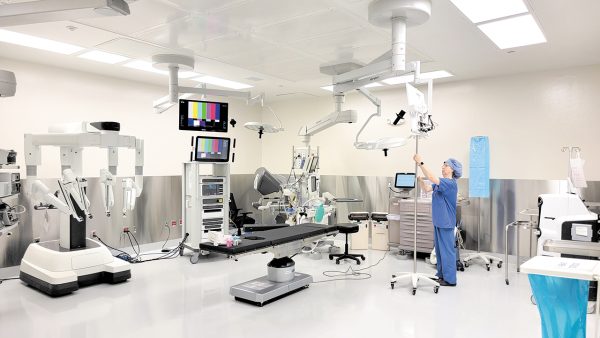
ROME — Rome Health has completed two components of its capital project with its new, 9-bed intensive-care unit (ICU) and the opening of the new Kaplan Center for Surgical Services.
The new surgery center opened ahead of schedule, following final approval from the New York State Department of Health (DOH) on July 3. Rome Health also received final approval from the DOH to open its new ICU on June 18.
Phases II and III of the capital project — which include the renovation of former operating rooms and construction of modern clinical support areas — remain on track for completion in 2026, Rome Health said in the June 18 announcement about opening the ICU.
The health-care provider saw the opening of the ICU as “marking a major milestone in the hospital’s continued transformation of community-based healthcare.”
The new ICU is part of the hospital’s $45.7 million capital-improvement project to modernize surgical and critical care services. The new main entrance also opened June 18 with expanded parking for patients and visitors.
About the ICU
All patients were successfully transitioned June 18 from the hospital’s previous ICU —constructed in 1969 — into the “modern, purpose-built” facility designed to support advanced critical care, Rome Health said. The health system conducted a tabletop exercise in advance to ensure a smooth transition for patients and team members.
“Replacing our aging ICU was the next capital investment needed to ensure local access to high-quality critical care services for patients and their families,” AnneMarie Czyz, president and CEO of Rome Health, said in the announcement. “We are incredibly grateful to the City of Rome and the generous donors whose support brought this vision to life. Together, we are delivering the best care out there — right here.”
Besides her role as CEO, Czyz is also a registered nurse.
The new ICU has private rooms equipped with the latest critical-care technology, including ventilators, IV pumps, monitoring systems, and specialty beds to reduce the risk of pressure injuries.
Each room has “family-friendly” accommodations, including sleeper sofas and seating to encourage family involvement, which research shows can “significantly improve patient outcomes,” Rome Health contended.
The unit also has private, handicapped-accessible restrooms in each room, which is an upgrade from the shared facilities in the previous ICU, per the announcement.
The new ICU also has specialty rooms to meet the needs of patients of size and those with behavioral-health challenges, along with advanced ventilation systems to support infection control and protect vulnerable patients.
In addition, Rome Health says the new unit has natural daylight and “thoughtful design to support a comfortable and calming healing environment that may reduce length of stay.”
“At Rome Health, we are transforming community-based healthcare to ensure that patients have convenient access to the highest level of care in facilities that match the exceptional quality our team delivers,” Czyz said.
About the Kaplan Center
The Kaplan Center complements the hospital’s new 9-bed ICU, Rome Health said in a July 7 announcement.
The Kaplan Center for Surgical Services is named in honor of Charles and Florence Kaplan, whose landmark
$5 million gift stands as the largest donation in Rome Health’s history.
“This is more than just a new space — it’s a major investment in the health and wellbeing of our community,” Czyz said. “The Kaplan Center for Surgical Services is built for the future of surgery, combining clinical excellence, innovative technology, and a healing environment that puts patients first.”
The new center is part of Rome Health’s $45.7 million capital-improvement project to modernize surgical and critical-care services.
Rome Health sees the new facility as “ensuring that patients in the Mohawk Valley have access to high-quality care in a state-of-the-art setting close to home.”
“Thanks to the close collaboration between our construction team, the New York State Department of Health, and the incredible agility and flexibility of our staff, we were able to accelerate the transition to our new facility,” Ashley Edwards, chief nursing officer and VP of clinical services at Rome Health, said. “This move comes at a critical time, as we’ve recently experienced inconsistencies with heating and humidity in the existing ORs that have disrupted case flow. Transitioning sooner ensures we continue caring for our patients in the safest possible environment.”
Rome Health says it funded the new surgical center through a mix of public support and private philanthropy. The public support included a $26 million New York State Healthcare Facility Transformation Grant, $3 million in American Rescue Plan Act (ARPA) funds from the City of Rome for the ICU and $500,000 in ARPA funds from Oneida County.
The campaign also received “enthusiastic” support from more than 400 donors, Rome Health said.
Designed to improve both patient experience and staff efficiency, the Kaplan Center includes four operating rooms designed to accommodate advanced surgical procedures, including minimally invasive and robotic-assisted surgeries, and two procedure rooms.
Grant program benefits Oneida County small businesses
ROME — Mohawk Valley EDGE, in cooperation with Oneida County, offers a Microenterprise Grant Program to help new and existing small businesses take on projects that lead to job creation. Available to Oneida County businesses outside of the cities of Utica and Rome with five or fewer employees, the program provides reimbursable grants of up
Get Instant Access to This Article
Become a Central New York Business Journal subscriber and get immediate access to all of our subscriber-only content and much more.
- Critical Central New York business news and analysis updated daily.
- Immediate access to all subscriber-only content on our website.
- Get a year’s worth of the Print Edition of The Central New York Business Journal.
- Special Feature Publications such as the Book of Lists and Revitalize Greater Binghamton, Mohawk Valley, and Syracuse Magazines
Click here to purchase a paywall bypass link for this article.
ROME — Mohawk Valley EDGE, in cooperation with Oneida County, offers a Microenterprise Grant Program to help new and existing small businesses take on projects that lead to job creation.
Available to Oneida County businesses outside of the cities of Utica and Rome with five or fewer employees, the program provides reimbursable grants of up to $35,000. Projects must create at least one new full-time job.
“It’s best used for investment in new equipment, perhaps inventory, or if your business is looking to implement a new technology,” says Mohawk Valley EDGE VP of Economic Development Tim Fitzgerald.
The grants can be used to cover up to 90 percent of the cost of projects, with the remaining 10 percent coming from an equity contribution from the grant recipient.
“That can be a sticking point,” Fitzgerald notes, as some businesses may not have the capital to invest. Fortunately, there are options for funding to help out such as the Mohawk Valley Economic Development District. “One of their programs is bridge lending for programs just like this.”
While businesses in all industries are eligible if they meet the criteria, the program prioritizes businesses in manufacturing and agribusiness. In the last funding round, which awarded $170,000 to six businesses, five of those businesses were farming related, Fitzgerald notes.
One of those businesses went on to create just over two full-time jobs from the funding, exceeding the one-job goal. “It’s nice when you have those overperformers,” Fitzgerald notes.
In addition to creating that job, businesses that receive funding must stay in business for two years after receiving the grant. Other businesses that have benefited from the Microenterprise Grant Program include a music studio and a business creating a technology platform to connect refugee/immigrant chefs to opportunities.
“There are really neat things this program has been able to facilitate,” Fitzgerald says.
Oneida County applies for the program funding from the New York State Office of Community Renewal, and Mohawk Valley EDGE administers the program on behalf of the county.
EDGE is now accepting applications for the sixth round of funding through the program, and the funding must be committed by May 2026. The funding is awarded on a first-come, first-serve basis.
Mohawk Valley EDGE works closely with other organizations, such as the Mohawk Valley Small Business Development Center, to make sure businesses and entrepreneurs are aware of the funding.

Arc Herkimer plans for first leadership change in 20 years
HERKIMER — Arc Herkimer will have a new leader in the new year when Kevin Crosley retires after leading the organization for 20 years. Lorene Bass, a 26-year employee, will take over the top slot in 2026 with a focus on building upon what Crosley began and continuing to grow the organization, which provides an
Get Instant Access to This Article
Become a Central New York Business Journal subscriber and get immediate access to all of our subscriber-only content and much more.
- Critical Central New York business news and analysis updated daily.
- Immediate access to all subscriber-only content on our website.
- Get a year’s worth of the Print Edition of The Central New York Business Journal.
- Special Feature Publications such as the Book of Lists and Revitalize Greater Binghamton, Mohawk Valley, and Syracuse Magazines
Click here to purchase a paywall bypass link for this article.
HERKIMER — Arc Herkimer will have a new leader in the new year when Kevin Crosley retires after leading the organization for 20 years.
Lorene Bass, a 26-year employee, will take over the top slot in 2026 with a focus on building upon what Crosley began and continuing to grow the organization, which provides an array of services to people with disabilities.
“What we’ve done has been great,” Bass says. Arc Herkimer has made tremendous strides in promoting inclusion and breaking stereotypes. “I truly believe our community is more accepting than ever.”
She’s excited to continue that mission as Arc Herkimer’s first female leader in more than 40 years. “I know I have some creative, innovative people [on staff],” she says. “I’m excited to be able to grow with that team and grow in our community.”
Bass has already notched some achievements in her current role as executive VP of support and services at Arc Herkimer including bringing all the agency’s services together under one umbrella.
“I’ve never really been afraid to take on a challenge,” she says.
As the newest president and CEO, Bass will take on the organization’s planned event center project at its Mohawk Valley Golf and Event Center. She expects the project to break ground next year, and she will oversee getting the center off the ground and profitable.
The project got its start under Crosley, who joined the agency in 2005 — a time when it was more service-based and less entrepreneurial.
“When I came, it was time for a culture change,” Crosley says. He joined Arc Herkimer from an agency in Cortland that was very entrepreneurial and brought that spirit with him. He likes to say that not-for-profit is a tax status, not a business model.
Under Crosley’s leadership, Arc Herkimer opened a number of entrepreneurial ventures including the golf and event center and the Arc Mall in Ilion, both made possible by donations, as well as the Arc Herkimer Goods Store.
“It’s been great for the community and the people we serve,” Crosley says of those ventures. The golf and event center alone provides employment or services for more than 50 people that Arc Herkimer serves.
Other ventures haven’t been as successful. The agency opened the Copper Café in its Arc Mall in Ilion, providing jobs for people with disabilities and tasty coffee and treats for the community. However, when Slocum-Dickson vacated its space in the mall and nearby Remington Arms closed, business volume dropped, and the café closed.
But he doesn’t view it as a failure. “We see them as learning experiences,” Crosley says.
Looking ahead to retirement, he isn’t sure what is on the agenda just yet.
“I think I just want to chill and figure out what my next step will be,” says Crosley. “I’m just looking forward to changing the pace a little bit.”

VIEWPOINT: The Keys to the Mohawk Valley’s Resurgence
I’m often asked what happened that transformed the Mohawk Valley or more specifically what was Oneida County’s role in its resurgence. While there are many factors that have impacted our growth over the past several years, there are some significant projects and actions that played a major role in our growth. The one area that
Get Instant Access to This Article
Become a Central New York Business Journal subscriber and get immediate access to all of our subscriber-only content and much more.
- Critical Central New York business news and analysis updated daily.
- Immediate access to all subscriber-only content on our website.
- Get a year’s worth of the Print Edition of The Central New York Business Journal.
- Special Feature Publications such as the Book of Lists and Revitalize Greater Binghamton, Mohawk Valley, and Syracuse Magazines
Click here to purchase a paywall bypass link for this article.
I’m often asked what happened that transformed the Mohawk Valley or more specifically what was Oneida County’s role in its resurgence. While there are many factors that have impacted our growth over the past several years, there are some significant projects and actions that played a major role in our growth.
The one area that I constantly point to is the financial strength of our government. The ability to borrow only when necessary and to build up a solid fund balance allows flexibility and investment in community improvement. Without a strong credit rating no government or business can properly move forward.
Our financial vigor, as well as our economic effectiveness, received a huge lift when we completed the historic agreement with the Oneida Indian Nation. The 2013 agreement set the stage for wide-ranging economic development and established a new revenue source to provide relief to our property taxpayers. This pact allowed us to hold the tax levy at the same amount for the last 12 years. Coupled with spending restrictions and improved management efficiencies, our county’s financial health improved substantially.
In the same time frame, working with Robert Esche and his investors we were able to attract an AHL (American Hockey League) franchise to locate in Utica at the historic Memorial Auditorium (now Adirondack Bank Center) that immediately charged the area with new energy. Hockey had taken on a resurgence in our area because of Utica University’s team that was attracting great crowds and made the move even more exciting. The two complemented each other and showed the community that we could compete in this marketplace across larger metropolitan areas such as Syracuse and Albany and injected a new vibe into the county. It is amazing what a successful sports/entertainment enterprise can do to stimulate not just overall enjoyment but also the belief that more is possible.
We began a venture into uncrewed aerial systems (UAS), better known as drones, with one of the seven approved FAA test sites in the United States at Griffiss International Airport. We built the largest indoor testing center by converting one former hangar, helping our area become a leader in UAS research and testing.
We achieved the long-held dream of expanding in the world of nanotechnology, building with Wolfspeed the largest silicon-carbide chip manufacturing facility in the U.S. in the town of Marcy.
Another transformational project was the construction of a new state-of-the-art hospital, Wynn Hospital, which opened in downtown Utica in the fall of 2023. Wynn Hospital was the first new hospital facility built in New York state in over a quarter century. By building it in downtown Utica we were able to remove blocks of blight and address a serious health-care need in the community. Oneida County also built a 1,300-space parking garage attached to the hospital for public and hospital use.
The expansion of our sports facilities grew with the building of the Utica University Nexus Center; three additional rinks of ice attached to the Adirondack Bank Center that can be converted to soccer and lacrosse and can be used for numerous events. Already Nexus has exceeded expectations with tournament play nearly every weekend of the year.
During the emergence of our hockey revival, we have hosted two AHL All Star games (broadcast across the world) with sponsorship from the Oneida Indian Nation’s Turning Stone Enterprises; and the IIHF Women’s World Hockey Championship with 10 national teams from across the globe, including the United States.
The 2024 men’s and women’s World Lacrosse Box Championships were also held in the Utica region with a total of 38 international teams participating. More signature events are also planned for the immediate future.
Our most current success story is the acceptance of Chobani to build a 1.4 million-square-foot production facility at Griffiss Business and Technology Park (Triangle site). Chobani’s announcement of adding more than 1,000 jobs to the existing economy, coupled with investment of well over $1.2 billion to build the largest natural-food facility in the nation, is still reverberating throughout Central New York.
During this same period, Turning Stone Resort Casino is undergoing yet another major expansion, called the Turning Stone Evolution, a $370 million initiative. The project includes the new 258-room Crescent Hotel, as well as a new conference center that will be largest convention space in all of upstate New York.
Further investment at Griffiss includes the conversion of our largest hangar into a multi-faceted sports facility. A portion of the building will be transformed for a variety of indoor sports, like basketball, softball, volleyball, pickleball and so much more. In addition, other amenities for food, drink, and other areas of entertainment will be built to complement the site for families and all individuals to enjoy.
The bottom line is Oneida County looks significantly different today than it did several years ago. The reason is we began to believe in ourselves and after years of economic downturn, we turned the page from negativity and focused on possibility. By doing, that we were able to join in partnership with others — private investors, state and local governments, regional economic-development agencies, and more — who believed in our potential and saw a county that was growing. Much of this renaissance was built during the pandemic, further showing the world and our residents that we could accomplish anything.
The future of the Mohawk Valley is bright, and a big piece has been the light that is shining here in Oneida County where we believe in the possible. Stay tuned because there is much more to come.
Anthony J. Picente, Jr. is the 13th Oneida County Executive. He is the longest-serving county executive in Oneida County history. Picente was appointed to the position in January 2007 and subsequently won five straight elections to four-year terms in 2007, 2011, 2015, 2019, and 2023.

MVCC to lead ON-RAMP workforce-development center
UTICA — Mohawk Valley Community College (MVCC) will lead a regional ON-RAMP center by redeveloping the Science and Technology building at MVCC’s Utica campus. Gov. Kathy Hochul on Feb. 6 announced that the state selected Mohawk Valley, Capital Region, and Finger Lakes to advance to the planning stage of the $200 million One Network for
Get Instant Access to This Article
Become a Central New York Business Journal subscriber and get immediate access to all of our subscriber-only content and much more.
- Critical Central New York business news and analysis updated daily.
- Immediate access to all subscriber-only content on our website.
- Get a year’s worth of the Print Edition of The Central New York Business Journal.
- Special Feature Publications such as the Book of Lists and Revitalize Greater Binghamton, Mohawk Valley, and Syracuse Magazines
Click here to purchase a paywall bypass link for this article.
UTICA — Mohawk Valley Community College (MVCC) will lead a regional ON-RAMP center by redeveloping the Science and Technology building at MVCC’s Utica campus.
Gov. Kathy Hochul on Feb. 6 announced that the state selected Mohawk Valley, Capital Region, and Finger Lakes to advance to the planning stage of the $200 million One Network for Regional Advanced Manufacturing Partnerships (ON-RAMP) program.
The center will offer training for in-demand skills on low-cost, no-cost, and work-and-learn models; retention strategies to engage marginalized and underserved populations and support completion; and employer integration to facilitate direct job placement. MVCC will lead a consortium of six core organizations with a “proven track record” of workforce innovation.
MVCC’s Free Fast Track program and MACNY’s Real-Life Rosies and Advanced 2 Apprenticeship programs, both successful direct-placement programs, will be housed at the ON-RAMP center and provide additional capacity for these programs to increase enrollment.
“We are so grateful to the governor and her staff for this incredible opportunity to work even more closely with our workforce partners in the region to significantly scale opportunities that connect people to quality jobs and enhance the overall vibrancy of the communities we serve,” Randall VanWagoner, president of MVCC, said in the state’s announcement.
The new facility is “strategically located” near major employers Danfoss, Indium and Wolfspeed; across the street from the city’s high school; and directly adjacent to a “high-diversity” neighborhood, Hochul’s office said.
In addition to MVCC, The Center for Economic Growth (CEG) will lead the Capital Region’s ON-RAMP center, while Monroe Community College will lead the Finger Lakes ON-RAMP center in partnership with RochesterWorks.
The regions join Central New York, in which Syracuse was established as the program’s flagship location. They’ll create a network of “high-impact” workforce-development centers to connect New Yorkers with careers in high-growth, advanced-manufacturing industries.
These workforce centers will equip New Yorkers with the skills they need and create an “on-ramp” to training, internships, apprenticeships and permanent employment and capitalize on the State’s success in attracting and expanding advanced manufacturing companies such as Micron Technology, Inc. (NASDAQ: MU) in the Onondaga County town of Clay and GlobalFoundries in the Saratoga County town of Malta in the Capital Region.
“By adding centers in the Capital Region, Mohawk Valley and Finger Lakes to connect with Central New York, the ON-RAMP network will connect New Yorkers to new opportunities all along the upstate semiconductor corridor,” Hope Knight, president, CEO and commissioner of Empire State Development, said in the state’s announcement. “Today’s announcement represents our latest investments in workforce training under Governor Hochul, and supports our continued efforts to reshore manufacturing jobs and build out the advanced manufacturing ecosystem.”

New York UAS test site exhibits at key industry trade show
ROME — The New York UAS test site announced that it was among the exhibitors and participants at AUVSI XPO 2025, described as the “premier gathering” for the autonomous-systems industry. The Association for Uncrewed Vehicle Systems International (AUVSI) hosted the event, which was held from May 19-22 in Houston, Texas. The New York UAS Test
Get Instant Access to This Article
Become a Central New York Business Journal subscriber and get immediate access to all of our subscriber-only content and much more.
- Critical Central New York business news and analysis updated daily.
- Immediate access to all subscriber-only content on our website.
- Get a year’s worth of the Print Edition of The Central New York Business Journal.
- Special Feature Publications such as the Book of Lists and Revitalize Greater Binghamton, Mohawk Valley, and Syracuse Magazines
Click here to purchase a paywall bypass link for this article.
ROME — The New York UAS test site announced that it was among the exhibitors and participants at AUVSI XPO 2025, described as the “premier gathering” for the autonomous-systems industry.
The Association for Uncrewed Vehicle Systems International (AUVSI) hosted the event, which was held from May 19-22 in Houston, Texas.
The New York UAS Test Site at Griffiss International Airport in Rome is one of just seven Federal Aviation Administration (FAA)-designated unmanned aircraft systems (UAS) test sites in the country — and the only one operating on an active airport. A UAS includes a drone and equipment used to control its flight. A drone is also referred to in the industry as an unmanned aerial vehicle, or UAV.
This year’s AUVSI XPO 2025 theme, “Converging Autonomy: Systems, Safety, and Scale,” “strongly” aligned with the mission of the New York UAS test site, the announcement said. In its exhibit, the New York UAS test site highlighted its facilities, airspace, and BVLOS (beyond visual line of sight) flight corridors for UAS and advanced air mobility (AAM) applications.
Mary Carol (MC) Chruscicki, co-founder and chief technology officer at AX Enterprize, LLC, of Yorkville, also spoke on several conference panels including, “Your Best Test Option: FAA-Designated UAS Test Sites” on May 19. The New York UAS Test Site is owned by Oneida County and operated in collaboration with AX Enterprize
“Exhibiting at AUVSI XPO 2025 provided the New York UAS Test Site with a strategic opportunity to showcase its advanced testing capabilities, discuss regulatory developments, and build upon critical industry partnerships,” a spokesperson for AX Enterprize told CNYBJ in a July 11 email. “With direct access to FAA officials, defense leaders, and commercial stakeholders, we had the opportunity to be at the forefront of key conversations, including BVLOS rulemaking, UTM integration, and safety validation.”
The spokesperson went on to say, “Additionally, through AX Enterprize’s speaking engagements at XPO 2025, we fostered collaboration across the network and educated stakeholders on test site capabilities. Moreover, we furthered the visibility of the New York UAS Test Site collaboration with the other FAA-designated test sites. And, together with organizations such as AUVSI, we are pioneering the future of aviation technology.”
About AX Enterprize
Established in April 2011, AX Enterprize is a New York State-certified woman-owned and ISO 9001 certified small business specializing in the development and integration of UAS and AAM technologies.
Its expertise includes secure UAS traffic management and air-domain awareness solutions, detect and avoid systems, trustworthy remote ID, and counter-UAS solutions. AX describes itself as a “trusted partner” of Oneida County since the inception of the New York UAS test site in 2014, overseeing daily operations and providing safety and technical support.
About the New York UAS test site
The New York UAS Test Site at Griffiss International Airport provides advanced testing, engineering, and flight-support services for unmanned aircraft systems. It plays a “critical role” in supporting FAA integration efforts and serves as a hub for innovation and commercialization in the uncrewed aviation sector.
Get our email updates
Stay up-to-date on the companies, people and issues that impact businesses in Syracuse, Central New York and beyond.