Stay up-to-date on the companies, people and issues that impact businesses in Syracuse, Central New York and beyond.

New study on Ithaca retail strategy urges focus on arts, artisan culture
ITHACA, N.Y. — Downtown Ithaca needs a retail mix that focuses on the merchandising of arts and crafts products, along with marketing campaigns to position Ithaca as a must-visit destination for the arts and artisan culture. Those are among the recommendations in a new study that focuses on a retail strategy for the City of […]
Become a Central New York Business Journal subscriber and get immediate access to all of our subscriber-only content and much more.

Click here to purchase a paywall bypass link for this article.
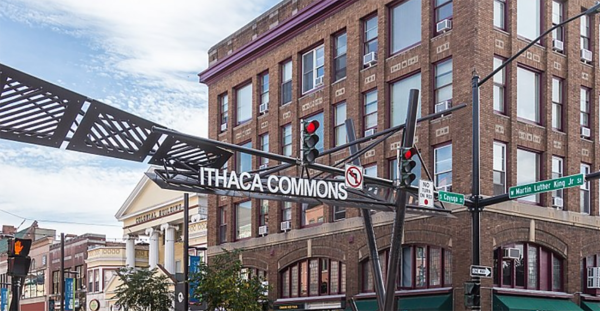
ITHACA, N.Y. — Downtown Ithaca needs a retail mix that focuses on the merchandising of arts and crafts products, along with marketing campaigns to position Ithaca as a must-visit destination for the arts and artisan culture.
Those are among the recommendations in a new study that focuses on a retail strategy for the City of Ithaca.
The Downtown Ithaca Alliance (DIA) and the City of Ithaca see the study as a “critical step” toward revitalizing Ithaca’s retail landscape, per the Aug. 7 DIA announcement.
MJB Consulting handled the work on the preliminary retail analysis and strategy. MJB, which is based in New York City and Berkeley, California is a national retail planning and real-estate consultancy focused on urban and downtown business districts.
With phase I nearing completion, MJB is now finalizing its findings and recommendations into a written report to be released later this fall. The DIA and the City of Ithaca have already contracted MJB for phase II implementation, The second phase will focus on the creation of leasing materials that “reframe the opportunity” in the minds of prospective tenants. It’ll also focus on the training of an in-house prospector to support local landlords and brokers in attracting businesses that correspond to the recommendations of the strategy.
The recommendations complement DIA’s ongoing work in placemaking, marketing, and economic development to “create and sustain an environment conducive to a thriving retail sector and further investment.”
“This retail study provides a comprehensive roadmap for strengthening Ithaca’s business districts citywide,” Ithaca Mayor Robert Cantelmo said in the Downtown Ithaca Alliance announcement. “From Collegetown to the West End, the insights and recommendations recognize that our community’s economic vitality depends on thoughtful, place-based strategies that reflect the character of each district while uniting us through shared values and aspirations. I’m grateful to the Downtown Ithaca Alliance, City staff, and MJB Consulting for their collaborative work, which will help ensure Ithaca remains a dynamic and inclusive place to live, work, and visit.”
Commissioned in 2023, the study focuses on creating a “cohesive,” citywide retail strategy for Ithaca’s key business districts. They include downtown Ithaca, centered on the Commons pedestrian mall; the West State Street corridor; the West End, including the waterfront; and Collegetown, adjacent to Cornell University.
MJB’s work “responds to the city’s unique position as a university town with a broader regional trade area of over 100,000 people and a robust tourism draw,” per the DIA announcement.
Rather than viewing Ithaca’s market through the traditional lenses of “town and gown” or local versus out-of-towner, MJB proposed a “more unifying approach” focused on shared psychographics — common lifestyles, values, and aspirations. The shift in perspective allowed MJB to identify retail opportunities that resonate with both residents and visitors alike, DIA said.
Specifically, MJB identified an opportunity to market Ithaca, and downtown Ithaca in particular, to the “yupster” psychographic — well-educated, well-off households that celebrate the artistic and creative lifestyle — which predominates among both Ithacans as well as tourists.
The MJB study recommends curating a retail mix in downtown Ithaca that focuses on the merchandising of arts and crafts products as well as handmade goods more generally, complemented by other synergistic tenants like bookstores, vintage/consignment shops, cafes, eateries and wine bars.
It also recommends providing support for landlords and brokers to recruit tenants that align with this positioning, including the creation of leasing materials that tell Ithaca’s and downtown Ithaca’s “unique” story.
In addition, the report recommends developing targeted marketing campaigns to position Ithaca as a must-visit regional “(if not national)” destination for the arts and artisan culture, aligning with the “Ithaca is Gorges” brand.
MJB also recommends enhancing downtown’s role as a regional hub for the creative ecosystem by fostering collaborations between local makers, galleries, theaters, and other entrepreneurial platforms.
Beyond downtown Ithaca, MJB also emphasized the need for Cornell University, with its roughly 27,000 students, to assume a proactive role in revitalizing the Collegetown district as a selling point for prospective faculty, researchers, and students, pointing to successful models at peer institutions like Yale and the University of Pennsylvania.
MJB also reframed the West State Street corridor as more than just a connector between districts, “with its own psychographic appeal and retail niche that is nonetheless quite fragile and urgently in need of a more robust City response.”

“This much-anticipated strategy taps into what makes Ithaca special and offers us the possibility to turn our unique assets into economic drivers,” Nan Rohrer, CEO of the Downtown Ithaca Alliance, said. “Downtown is more than a shopping district — it’s a creative ecosystem. By centering our retail recruitment around this core identity, we’re creating a destination that is authentic to both locals and visitors, while defining a compelling case for future investors, business owners, and residents.”

New York rural counties face severe health-care provider shortage
ALBANY, N.Y. — A recent report by New York State Comptroller Thomas P. DiNapoli found a severe shortage of health professionals, including primary care, OBGYN doctors, pediatricians, dentists, and mental-health practitioners in 16 rural counties in the Empire State. The report, titled “The Doctor is…Out: Shortages of Health Professionals in Rural Areas,” described the shortfalls
Become a Central New York Business Journal subscriber and get immediate access to all of our subscriber-only content and much more.
Click here to purchase a paywall bypass link for this article.
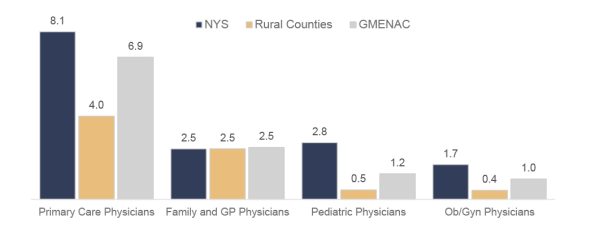
ALBANY, N.Y. — A recent report by New York State Comptroller Thomas P. DiNapoli found a severe shortage of health professionals, including primary care, OBGYN doctors, pediatricians, dentists, and mental-health practitioners in 16 rural counties in the Empire State.
The report, titled “The Doctor is…Out: Shortages of Health Professionals in Rural Areas,” described the shortfalls as “alarming” and found that several of the counties have no pediatricians or OBGYN physicians at all.
The 16 counties examined, with a combined population of 748,093 people, were: Allegany, Cattaraugus, Chenango, Delaware, Essex, Franklin, Greene, Hamilton, Herkimer, Lewis, Schuyler, Steuben, Sullivan, Washington, Wyoming, and Yates. All of the counties have been designated by the federal government as having professional shortages in at least two fields of medicine.
Key findings of the comptroller’s report include the following:
A key factor driving the shortage, according to the DiNapoli report, is the limited number of physical facilities in New York’s rural counties. The report stated, “Not all counties have hospitals or rural health clinics, and those that do operate on tight margins, or at a loss.”
The report offers some potential options for overcoming the barriers to access in rural areas including medical-transport services, expanded telemedicine, mobile clinics, and incentivizing health professionals to serve in rural areas through loan forgiveness, stipends, or subsidies.
“Having access to health care is an essential quality of life issue and helps people live healthier lives,” DiNapoli said. “Addressing gaps in the rural healthcare workforce to alleviate current shortages and plan for future demand will not only positively impact the health of people living in less populated areas of New York, but could also create new jobs and bolster our rural economies.”
You can check out the full report at: https://www.osc.ny.gov/files/reports/pdf/rural-health-shortages.pdf?utm_medium=email&utm_source=govdelivery

Strategic tops $2.5 billion in assets under management
UTICA, N.Y. — Strategic Financial Services, Inc. — an independent wealth-management firm with offices in the Mohawk Valley, Syracuse, and beyond — recently announced that its assets under management have grown to surpass $2.5 billion. “This milestone reflects the continued trust our clients place in us — and our commitment to having ‘good people’ that
Become a Central New York Business Journal subscriber and get immediate access to all of our subscriber-only content and much more.
Click here to purchase a paywall bypass link for this article.
UTICA, N.Y. — Strategic Financial Services, Inc. — an independent wealth-management firm with offices in the Mohawk Valley, Syracuse, and beyond — recently announced that its assets under management have grown to surpass $2.5 billion.
“This milestone reflects the continued trust our clients place in us — and our commitment to having ‘good people’ that consistently deliver for those clients; reaching the $2.5 billion milestone is proof that the model works,” Alan Leist III, Strategic’s CEO, said in the announcement.
In business since 1979, Strategic has more than 40 employees, servicing over 1,250 clients. Areas of focus include investment management, financial planning, institutional investment management, and corporate retirement plans.
“It is exciting to see this kind of growth, but even more meaningful to know it’s happening because we’re helping people live great lives. We will keep investing in what matters — our people, our process, and our client experience — so we’re always delivering the best of Strategic,” Doug Walters, chief investment officer at Strategic Financial Services, said in the announcement.
Strategic is headquartered in Utica, with satellite offices in Rome, Little Falls, Syracuse, Rochester, and West Palm Beach, Florida. The wealth-management firm says it is growing from established roots, and continuing to expand its geographic footprint and influence across the northeast and throughout the U.S.

OPINION: Building Electrification Ruling: Latest Gut Punch To New York Residents
New York State has an energy problem, and it seems to be getting worse by the day. The latest setback for New Yorkers came by way of a recent court ruling clearing the way for the state to impose a wildly burdensome and costly new requirement [under the 2023 All-Electric Building Act] that nearly all
Become a Central New York Business Journal subscriber and get immediate access to all of our subscriber-only content and much more.
Click here to purchase a paywall bypass link for this article.
New York State has an energy problem, and it seems to be getting worse by the day. The latest setback for New Yorkers came by way of a recent court ruling clearing the way for the state to impose a wildly burdensome and costly new requirement [under the 2023 All-Electric Building Act] that nearly all new buildings seven stories or less must be built using zero-emission appliances and heating.
The shortcomings of the plan to fully electrify the state have been well documented. Most notably, Cornell University Professor Lindsay Anderson and her team recently built out a projection model based on New York’s actual energy usage, transmission infrastructure, and weather and found we will have nowhere near enough energy to power New York under the requirements of the Climate Leadership and Community Protection Act (CLCPA), which is the blueprint for the state’s energy plans.
Not only is the CLCPA inadequate, it’s also extremely costly. For example, earlier this year, cost estimates for just one component of the law, a requirement that all school buses must be zero-emission by 2035, range between $8 billion and $15.25 billion. Now, building contractors are going to be in the same boat as school districts — being forced to spend huge amounts of money to follow an unworkable mandate that most people don’t even want. And like the school-bus mandate, the incoming cost increases are going to be passed down to you.
The true impact of the court ruling [in favor of the all-electric building mandate] was summed up succinctly by Donna Ciancio of the Southern Tier Homebuilders and Remodelers Association, who said there is real concern the mandate is going to discourage new home construction, especially in communities that already don’t see a ton of construction activity. And Buffalo Niagara Building Association President Phil Nanula, who is also president of Essex Homes, added, “New York State … it’s been difficult to get anyone to really listen to any logic on the problems that this poses to us as builders. It was going to create about a $20,000 increase in the cost to build a home.”
They’re right, and laws like this are a major reason why New York has a massive outmigration problem. A lack of new homes means diminished economic activity, which will drive away businesses, tourists, and taxpayers.
It’s hard to ignore the irony of imposing costly mandates on construction when lawmakers and experts on both sides agree New York is already facing a housing crisis. Young people are having a terribly hard time finding homes as it is. Affordable housing in nearly every region of the state is at a critical level. And the plan is to make it more expensive to buy a home. How does that make any sense?
As I have repeatedly stated, clean, reliable, and diverse energy sources are critical to the future of New York, and I support measures to reasonably mitigate our carbon footprint. But there is nothing reasonable about passing an energy plan with no price tag or guarantee of dependability. It feels like New Yorkers have less choice every day, and this [mandated all-electric building] policy being upheld in court is just the latest example of how little say we have in our economic and energy future.
William (Will) A. Barclay, 56, Republican, is the New York Assembly minority leader and represents the 120th New York Assembly District, which encompasses all of Oswego County, as well as parts of Jefferson and Cayuga counties.

OPINION: Nuclear threat deserves attention as much as ever
Most of the world scarcely noticed when tensions flared between India and Pakistan this spring. Terrorists allegedly killed dozens of civilians in the disputed Kashmir region, and soon the two countries were launching airstrikes and drone attacks against each other. But this was no simple neighborhood dispute. India and Pakistan are among the nine nations
Become a Central New York Business Journal subscriber and get immediate access to all of our subscriber-only content and much more.
Click here to purchase a paywall bypass link for this article.
Most of the world scarcely noticed when tensions flared between India and Pakistan this spring. Terrorists allegedly killed dozens of civilians in the disputed Kashmir region, and soon the two countries were launching airstrikes and drone attacks against each other.
But this was no simple neighborhood dispute. India and Pakistan are among the nine nations that possess nuclear weapons — each reportedly has about 170 warheads. Any armed conflict between them could expand to threaten not only South Asia but the world.
As a recent series in the Washington Post makes clear, a nuclear war could start from a regional conflict like the one between India and Pakistan. It could start from a miscalculation as enemies escalate fighting. Or it could start by accident, possibly from equipment failure or human error. “The end of humanity could arrive in minutes — that is what makes nuclear war so different from other wars,” officials with the Federation of American Scientists write in the Washington Post series.
We have known for 80 years that nuclear weapons pose an existential threat. We saw their destructive power when the U.S. dropped atomic bombs on Hiroshima and Nagasaki at the end of World War II. But we have lived with the threat for so long that it is easy to ignore.
During the Cold War, the U.S. and Soviet Union stockpiled enough nuclear weapons to destroy each other many times over. Thanks to diplomacy, a strategy of mutual deterrence, weapons treaties, and no small amount of luck, we didn’t use them. But we came dangerously close.
Most of us are familiar with the Cuban Missile Crisis, the 13-day U.S.-Soviet standoff in 1962. But the Washington Post series describes multiple close calls. Between 1960 and 1976, a U.S. early-warning system produced seven false alarms that we were under attack. Then, in 1979-80, there were five mistaken alerts that Soviet missiles had been launched. Any of those could have produced a response that led to catastrophe.
Over time, the number of nuclear weapons was reduced significantly, but they didn’t disappear. Today the nuclear club includes the U.S., Russia, Britain, China, France, India, Pakistan, Israel, and North Korea. They have more than 12,000 warheads at 120 sites in 14 countries, according to the Federation of American Scientists. Roughly 2,100 are on high alert and can be launched without delay. The combined nuclear arsenals have the power of more than 145,000 Hiroshima bombs.
The last remaining nuclear treaty, New START, which limits U.S. and Russian intercontinental weapons, will expire in February 2026. Meanwhile, weapons systems are being made more complex and sophisticated, capable of avoiding detection and striking targets in minutes. Some leaders have raised the possibility of using so-called tactical nuclear weapons in conventional warfare.
As the Federation of American Scientist officials write, “It is as if the lessons of the Cold War — that there is never a finish line to the arms race and that more-effective nuclear weapons do not lead to stability and security — have been forgotten by the current generation of defense planners.”
It’s not just defense planners who seem to have forgotten. Most Americans are understandably much more concerned with what affects our daily lives: inflation, the economy, and crime, etc. We may follow news about immigration, conflict in the Middle East, or the Russia-Ukraine war. Nuclear war is probably the least of our worries. But this is no garden-variety threat.
The Nobel committee made the point when it awarded the 2024 Peace Prize to survivors of the Hiroshima and Nagasaki bombings: “At this moment in human history, it is worth reminding ourselves what nuclear weapons are: the most destructive weapons the world has ever seen.” We should expect our leaders to do everything they can to ensure such weapons are never used.
Lee Hamilton, 94, is a senior advisor for the Indiana University (IU) Center on Representative Government, distinguished scholar at the IU Hamilton Lugar School of Global and International Studies, and professor of practice at the IU O’Neill School of Public and Environmental Affairs. Hamilton, a Democrat, was a member of the U.S. House of Representatives for 34 years (1965-1999), representing a district in south-central Indiana.

VIEWPOINT: New York’s Medicaid Spending Rate Remains the Highest of Any State
New York’s Medicaid program remained a spending outlier in 2024, with per-resident outlays that were 24 percent higher than those of any other state and 77 percent above the national average, according to a federal report released on July 31. The report from the Centers for Medicare & Medicaid Services provides timely context for the
Become a Central New York Business Journal subscriber and get immediate access to all of our subscriber-only content and much more.

Click here to purchase a paywall bypass link for this article.
New York’s Medicaid program remained a spending outlier in 2024, with per-resident outlays that were 24 percent higher than those of any other state and 77 percent above the national average, according to a federal report released on July 31.
The report from the Centers for Medicare & Medicaid Services provides timely context for the current discussion about how state leaders should respond to looming cutbacks in federal health funding. Its data suggest that New York has the capacity to absorb billions of dollars in reduced federal aid while continuing to operate a generous and well-funded Medicaid program by national standards.
Medicaid is a safety-net health plan for the low-income and disabled that is jointly financed by the federal government and the states. The federal report, available at Medicaid.gov, summarizes almost $1 trillion in nationwide spending on the program for the fiscal year ending in September 2024.
Although New York represents less than 6 percent of the U.S. population, its $98 billion Medicaid budget accounted for more than 10 percent of national spending on the program.
New York’s Medicaid spending per resident, at $4,942, was by far the highest among the 50 states. The second-highest state was Kentucky at $3,989 per resident, and the national average was $2,791 per resident.
New York’s No. 1 status reflects a combination of factors, including above-average enrollment in the program (currently 35 percent of the population, including 47 percent of New York City residents), a broad array of covered benefits, and relatively high payments to providers.
New York State also operates the Essential Plan, an optional benefit under the Affordable Care Act that was exercised by only two other states, Minnesota and Oregon. New York’s version is offered to people with incomes above the cut-off for Medicaid, from 138 percent to 250 percent of the poverty level, and covers 1.7 million enrollees, or 9 percent of the population.
The federal government currently foots the bill for the Essential Plan’s entire $13.7 billion budget, an amount not included in the July 31 report.
Recently enacted federal-budget legislation — known as the One Big Beautiful Bill Act — would scale back federal funding for both Medicaid and the Essential Plan. New York State officials have estimated that the changes will ultimately displace 1.5 million New Yorkers from coverage and cost the state $13 billion in lost revenue or added expenses.
In the shorter term, the Budget Division has put the direct cost to the state health budget at $3 billion to $4 billion annually.
Significant as those amounts are, they are still smaller than the spending gaps between New York and neighboring states as documented in the CMS report.
If, for example, New York lowered its per-resident outlays to match the No. 2 state, Kentucky, its overall Medicaid spending would be $19 billion less and the state government’s share of those savings would be about $8 billion.
If New York matched the spending rate of Massachusetts, its total Medicaid savings would be $25 billion and the state-share savings would be $11 billion.
And if New York matched the per-resident rate of New Jersey, the total savings would be $48 billion and the state-share savings would be $20 billion.
Bill Hammond is senior fellow for health policy at the Empire Center for Public Policy, which says it is an independent, nonpartisan, nonprofit think tank located in Albany that promotes public-policy reforms grounded in free-market principles, personal responsibility, and the ideals of effective and accountable government. Hammond tracks developments in New York’s health-care industry, with a focus on how decisions made in Albany and Washington, D.C. affect the well-being of patients, providers, taxpayers, and the state’s economy.

Ask Rusty: I’m Turning 70 Soon. When Should I Apply for Social Security?
Dear Rusty: I am currently receiving Social Security (SS) benefits while continuing to work full time. There are no restrictions on my wage earnings because

Grace Rosati has joined Klepper, Hahn & Hyatt as an administrative and marketing assistant. She received her bachelor’s degree in English with a minor in

Oneida County breaks ground on expansion project for Cornell Cooperative Extension
ORISKANY, N.Y. — Oneida County on Wednesday, Aug. 13 broke ground on a $7.2 million expansion project that will add 16,000 square feet of office,

Schweinfurth Art Center in Auburn names new executive director
AUBURN, N.Y. — Schweinfurth Art Center in Auburn has named Catherine Underhill its new executive director, effective Aug. 25. Underhill, a Syracuse native, most recently served as executive director of View Art Center in Old Forge. “I’ve spent my entire career in the arts,” Underhill said in the announcement. “No matter what discipline — visual
Become a Central New York Business Journal subscriber and get immediate access to all of our subscriber-only content and much more.
Click here to purchase a paywall bypass link for this article.
AUBURN, N.Y. — Schweinfurth Art Center in Auburn has named Catherine Underhill its new executive director, effective Aug. 25.
Underhill, a Syracuse native, most recently served as executive director of View Art Center in Old Forge.
“I’ve spent my entire career in the arts,” Underhill said in the announcement. “No matter what discipline — visual art, dance, music, theatre — the arts provide an important opportunity to inspire and engage community members of all ages. A core component of our work is to provide the tools to help people intersect with the art, because it’s here to inspire, to provoke thought, and to engage people.”
She has held leadership positions in arts organizations in several locations. The positions included Atlanta, Georgia and both Denver and Boulder in Colorado before returning to Central New York in 2013 to serve as managing director for Symphoria, which is now the Syracuse Orchestra.
She later served as director of development at Everson Museum of Art in Syracuse, before taking over at View Art Center.
Early inspiration for Underhill’s career in the arts came from a year spent as a high-school exchange student in Peru, the Schweinfurth Art Center said.
“The food, the architecture, the clothing, the music, all of the cultural indicators were so important in beginning to understand the people and the place and the history — especially early on when I didn’t speak Spanish,” she said. “So I think that’s where I got interested in art history.”
Underhill is planning to take the same approach with the Schweinfurth, the center noted. She plans to “immerse herself” in learning about the organization, its programs, audiences, and the communities it serves, and then work to expand its reach and standing.
“[Retiring Executive Director] Donna Lamb’s leadership over the last 25 years has been extraordinary, and the team now at Schweinfurth is very strong,” Underhill said. ”I’m fortunate that both provide a platform for further growth. I’d like to explore strategies to build on this legacy and see what we can do to continue to expand and engage more people locally, regionally, and potentially nationally.
Underhill has a bachelor’s degree in art history from the University of New Hampshire, a master’s degree in art history from the University of Colorado, and a master’s of public administration from Harvard University.
Stay up-to-date on the companies, people and issues that impact businesses in Syracuse, Central New York and beyond.