
Stay up-to-date on the companies, people and issues that impact businesses in Syracuse, Central New York and beyond.

Fulton Savings Bank names Oswego Health CFO to its board
FULTON, N.Y. — The Fulton Savings Bank announced that it has elected Eric T. Campbell as a member of its board of trustees. Campbell is the executive VP of finance and chief financial officer (CFO) at Oswego Health, where he has worked since 2010. In that role, he has oversight of financial and regulatory reporting, […]
Become a Central New York Business Journal subscriber and get immediate access to all of our subscriber-only content and much more.
Click here to purchase a paywall bypass link for this article.
FULTON, N.Y. — The Fulton Savings Bank announced that it has elected Eric T. Campbell as a member of its board of trustees.
Campbell is the executive VP of finance and chief financial officer (CFO) at Oswego Health, where he has worked since 2010. In that role, he has oversight of financial and regulatory reporting, financial analysis, budget, materials management, revenue cycle, health-information management, and compliance. Prior to Oswego Health, Campbell worked as an audit manager at Fust Charles Chambers, LLP.
“We are pleased to welcome Eric Campbell to the Board of Trustees at Fulton Savings Bank. Eric has a strong background in finance and accounting, as well as a longstanding reputation as a nonprofit and community leader,” Fulton Savings Bank Chairman of the Board Rev. John Canorro said in the announcement. “His vast experience will serve as a complement to the strategic initiatives we are continually undertaking at the Bank.”
Campbell is a graduate of George Mason University with a bachelor’s degree in accounting and is a certified public accountant in New York state. He is also the current board chair of United Iroquois Shared Services, Inc., serves on the finance committees for ConnextCare and the Oswego County Integrated Delivery Network, and is a member of the Healthcare Financial Management Association.
Fulton Savings Bank is headquartered in Fulton, and will celebrate its 155th anniversary in 2026. The bank has offices in Fulton, Baldwinsville (town of Van Buren), Phoenix (town of Schroeppel), Central Square, Brewerton (town of Cicero), and Constantia, with assets totaling more than $483 million and deposits totaling more than $281 million.

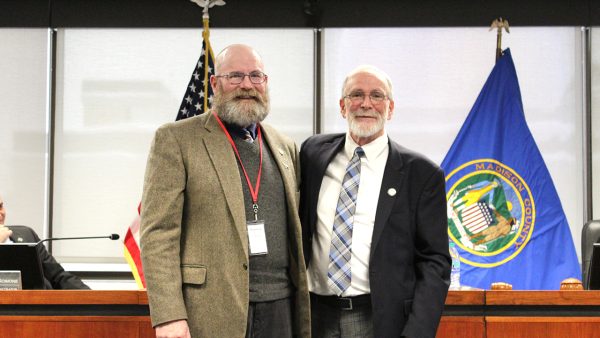
Cunningham re-elected as Madison County chairman of the Board of Supervisors
WAMPSVILLE, N.Y. — The Madison County Board of Supervisors on Jan. 6 re-elected Town of Nelson Supervisor James J. Cunningham as board chairman. Cunningham was

New York cheese production down 7 percent in November from October
New York production facilities produced more than 72.2 million pounds of cheese (excluding cottage cheese) in November 2025. That was down 7.3 percent from the nearly 78 million pounds produced in October 2025, but up 7.9 percent from almost 67 million pounds in November 2024, the USDA’s National Agricultural Statistics Service (NASS) reported on Jan.
Become a Central New York Business Journal subscriber and get immediate access to all of our subscriber-only content and much more.

Click here to purchase a paywall bypass link for this article.
New York production facilities produced more than 72.2 million pounds of cheese (excluding cottage cheese) in November 2025.
That was down 7.3 percent from the nearly 78 million pounds produced in October 2025, but up 7.9 percent from almost 67 million pounds in November 2024, the USDA’s National Agricultural Statistics Service (NASS) reported on Jan. 6.
U.S. cheese production (excluding cottage cheese) totaled nearly 1.22 billion pounds this past November, down 3.4 percent from about 1.26 billion pounds in October, but up 5.9 percent from about 1.15 billion pounds in November 2024, per the USDA.
New York state producers accounted for nearly 6 percent of national cheese production, according to the November 2025 data.

Fulton CDA receives $368,000 in state funding for homebuyer down payment assistance program
FULTON, N.Y. — The Fulton Community Development Agency (FCDA) on Jan. 13 announced it has been awarded $368,000 in New York State HOME Local funding to operate a homebuyer down payment assistance program in the city of Fulton. The program is designed to expand sustainable homeownership by helping income-eligible, first-time homebuyers overcome the affordability gaps
Become a Central New York Business Journal subscriber and get immediate access to all of our subscriber-only content and much more.

Click here to purchase a paywall bypass link for this article.
FULTON, N.Y. — The Fulton Community Development Agency (FCDA) on Jan. 13 announced it has been awarded $368,000 in New York State HOME Local funding to operate a homebuyer down payment assistance program in the city of Fulton.
The program is designed to expand sustainable homeownership by helping income-eligible, first-time homebuyers overcome the affordability gaps that often prevent them for qualifying for mortgages. In addition to financial assistance, participants will receive individualized housing counseling from FCDA’s HUD-certified housing counselors, helping prepare households for long-term success as homeowners, per the announcement.
The program will prioritize households earning at or below 80 percent of area median income, with targeted outreach to neighborhoods where affordability barriers are greatest. This investment will help strengthen neighborhood stability and support working families in achieving lasting homeownership in the city of Fulton, the FCDA said.
“We are thrilled to receive this HOME Local award,” Jessica Mills, FCDA executive director, said in the announcement. “Our team at the Fulton CDA works hard to identify community needs and to thoughtfully develop and write grant proposals that allow us to bring meaningful resources back to Fulton. We have also built a strong, collaborative relationship with our partners at New York State Homes and Community Renewal (HCR), and this award reflects that shared commitment.”
The funding was part of $68 million allocated statewide, including $4.4 million in Central New York and nearly $17 million in the North Country.
The awards are provided through state and federally funded programs: NYS HOME; NYS Community Development Block Grant; Access to Home; Access to Home for Heroes; Access to Home for Medicaid; Mobile and Manufactured Home Replacement; and RESTORE.
HCR’s Office of Community Renewal provides the grant funding directly to municipalities and local nonprofit organizations. Eligible households can then apply for assistance. Each program accepts applications in an annual competitive funding round. Potential beneficiaries should reach out to awardees serving a particular area to learn more about available grants.

Oswego Health names health information management manager
OSWEGO, N.Y. — Oswego Health recently promoted Brianna (Bree) Earl to health information management (HIM) manager. Earl, who joined Oswego Health in 2016, has consistently “demonstrated exceptional leadership, reliability, and a passion for supporting both her team and the patients” that the health system serves, according to a Dec. 2 Oswego Health announcement. She began
Become a Central New York Business Journal subscriber and get immediate access to all of our subscriber-only content and much more.

Click here to purchase a paywall bypass link for this article.
OSWEGO, N.Y. — Oswego Health recently promoted Brianna (Bree) Earl to health information management (HIM) manager.
Earl, who joined Oswego Health in 2016, has consistently “demonstrated exceptional leadership, reliability, and a passion for supporting both her team and the patients” that the health system serves, according to a Dec. 2 Oswego Health announcement. She began her career as an HIM clerical coordinator, transitioned in 2020 to the role of mental health & wellness lead clerical coordinator. She stepped into the role of HIM manager on Dec. 1.
In her new position, Earl will oversee day-to-day HIM operations at Oswego Hospital and the Lobdell Center for Mental Health & Wellness at Lakeview, ensuring the highest standards in documentation integrity, compliance, accessibility, and operational efficiency.
Oswego Health says this well-deserved advancement highlights its ongoing commitment to promoting from within and recognizing the hard work, dedication, and professional growth of its employees.
“We are thrilled to see Bree grow into this leadership role,” Heather Elen, director of HR operations, said. “Her commitment to our organization, her drive to continuously learn, and her dedication to our mission make her an exceptional fit for this position.”
Earl’s professional development reflects her long-term commitment to the field. She earned her associate of applied science degree from Cayuga Community College in 2016, and is currently in her final year of school pursuing her HIM degree while working toward her RHIA (registered health information administrator) credential through Oswego Health’s educational assistance program.

Utica Public Library names new director
UTICA, N.Y. — The Utica Public Library board of trustees announced that it has hired Nathan Jochum as the library’s new director, effective Jan. 5. Hailing from the Midwest, Jochum brings more than 20 years of library leadership experience to his new role. Jochum previously served as director of the Perry County Public Library in
Become a Central New York Business Journal subscriber and get immediate access to all of our subscriber-only content and much more.
Click here to purchase a paywall bypass link for this article.
UTICA, N.Y. — The Utica Public Library board of trustees announced that it has hired Nathan Jochum as the library’s new director, effective Jan. 5.
Hailing from the Midwest, Jochum brings more than 20 years of library leadership experience to his new role. Jochum previously served as director of the Perry County Public Library in Tell City, Indiana.
As the new director of the Utica Public Library, Jochum leads a team of 21 library professionals, including Assistant Director Heidi McManus who has successfully served as interim director of the Utica Public Library since Christopher Sagaas, former director, left to take a job with the Upper Hudson Library System last May. Additional responsibilities under Jochum’s purview include financial management, donor relations, strategic planning, community relations, and library policy, the library said.
“I am honored to join the Mohawk Valley community and thankful for the opportunity to lead one of its most cherished historic landmarks and public institutions,” Jochum said in a Jan. 6 announcement from the library. “I believe that public libraries are vital to the vibrancy of our communities. Together with the incredible team at the Utica Public Library, and with the support of the Board of Trustees, I look forward to cultivating a premier library experience that we can all be proud of.”
Jochum holds a master’s degree in library and information science from Drexel University’s iSchool and a bachelor’s degree from the University of Southern Indiana.
“Throughout our competitive national search process, Nathan’s passion for relationship building and community engagement shone through,” said Utica Public Library Board of Trustees President, Evon Ervin. “The Board is thrilled to have such a dynamic professional leading our library.”
The origins of a public library in Utica date back to 1838. In 1904, the Utica Public Library opened in its current location at 303 Genesee St. The Utica Public Library is a historic landmark on the National Register of Historic Places and a community hub that provides educational resources and free programming to community members of all ages. The 120-yearold structure has undergone multiple restorations in recent years, resulting in a revitalized physical space for the 31,000-square-foot building.

Ask Rusty: Why Didn’t My Friend’s Wife Get All Her SS Immediately?
Dear Rusty: A friend told me about what he believes is a strange thing in the Social Security system. His wife reached her full retirement age (FRA) of 66 several years ago. She delayed filing for Social Security past her FRA and claimed on her 68th birthday in June of that year, exactly 2 years
Become a Central New York Business Journal subscriber and get immediate access to all of our subscriber-only content and much more.
Click here to purchase a paywall bypass link for this article.
Dear Rusty: A friend told me about what he believes is a strange thing in the Social Security system. His wife reached her full retirement age (FRA) of 66 several years ago. She delayed filing for Social Security past her FRA and claimed on her 68th birthday in June of that year, exactly 2 years after her FRA. When she filed, she was told she would receive approximately $300/month, which, of course, was more than she would have received at her FRA. She was told however that she would only receive $300/month as of January 1 of the following year. Between June of the year the turned 68 and filed for SS until the end of that year, she would receive an amount less than $300. This lower amount was the amount she would have received if she had filed in December, the year she turned 67. She said she was told that was how SS works. She would never receive the difference in benefits she lost from June through December of the year she filed. If the above is true, can you explain?
Signed: Astounded Friend
Dear Astounded Friend:
What your friend described is, indeed, a unique methodology for how Social Security handles benefit payments for those who choose to wait beyond their full retirement age (FRA) to claim SS benefits. To understand it, let me first describe how Social Security retirement benefits are calculated.
At full retirement age, a person is entitled to 100% of the SS benefit they have earned from a lifetime of working. That FRA benefit amount is known as the person’s “Primary Insurance Amount” (PIA) and is based upon the highest earning 35 years over the individual’s lifetime. From those past years, average lifetime monthly earnings are computed, known as the person’s “Average Indexed Monthly Earnings” (AIME). Their AIME is subjected to a formula which yields their Primary Insurance Amount – the benefit the person is entitled to in the month they attain their full retirement age – typically about 40% of the person’s average monthly lifetime earnings. However, if the person chooses to do so, they can wait beyond their FRA to claim Social Security to get a monthly benefit even higher than their PIA, by earning Delayed Retirement Credits (DRCs).
DRCs are applied to the person’s PIA when they claim Social Security. For each month after FRA the person claims, they will have .667% added to their PIA. That means that for each full year of delay, that person will get an extra 8% added to their PIA. For someone (like your friend’s wife) who claimed 24 months after her FRA, she would receive a benefit 16% higher than her FRA amount. However, Social Security normally only applies DRCs in January of each year.
So, even though your friend’s wife claimed her SS benefits in June, 24 months after her FRA, she would initially only get the DRCs she had accumulated through the end of the previous year – in this case, about 18 months’ worth of DRCs, or an SS payment about 12% higher than her PIA (her FRA amount). She would not get her remaining earned DRCs (another 4%) until January of the following year. So, in effect, the wife’s initial benefit didn’t reflect all her earned DRCs until her later January benefit payment. Thus, the wife essentially lost that extra benefit money for the period between June and December of the year she claimed Social Security. In other words, she wouldn’t get the full 16% amount until SS applied the additional 4% DRCs to her benefit payment the following January. And that is why your friend’s wife initially received a payment a bit less than the $300 Social Security said she was entitled to by waiting 2 years after her FRA to claim.
This surprises many who choose to wait beyond their full retirement age to claim Social Security. But, curiously, this process doesn’t apply to those who wait until age 70 to claim their SS benefits. For those who wait until age 70 to claim, Social Security will immediately apply all DRCs that they have accumulated and provide them with their maximum SS benefit immediately.
Russell Gloor is a national Social Security advisor at the AMAC Foundation, the nonprofit arm of the Association of Mature American Citizens (AMAC). The 2.4-million-member AMAC says it is a senior advocacy organization. Send your questions to: ssadvisor@amacfoundation.org.
Author’s note: This article is intended for information purposes only and does not represent legal or financial guidance. It presents the opinions and interpretations of the AMAC Foundation’s staff, trained, and accredited by the National Social Security Association (NSSA). The NSSA and the AMAC Foundation and its staff are not affiliated with or endorsed by the Social Security Administration (SSA) or any other governmental entity.

OPINION: It’s Too Expensive to Live In New York; In 2026, We Must Do Something About It
As a concept, “affordability” has become a popular buzzword for policymakers. Everyone says they want to deliver it for their constituents — especially now as the 2026 legislative session in New York has officially begun — which is unsurprising, as it would seem silly to indicate anything else. The reality for New Yorkers isn’t matching
Become a Central New York Business Journal subscriber and get immediate access to all of our subscriber-only content and much more.
Click here to purchase a paywall bypass link for this article.
As a concept, “affordability” has become a popular buzzword for policymakers. Everyone says they want to deliver it for their constituents — especially now as the 2026 legislative session in New York has officially begun — which is unsurprising, as it would seem silly to indicate anything else. The reality for New Yorkers isn’t matching the rhetoric. Life here remains, quite simply, unaffordable, and there is little evidence meaningful steps are being taken to do anything about it. The Assembly Minority Conference stands ready to make this fight a priority.
The facts surrounding New York’s dismal economic outlook are undeniable, nonpartisan, and deeply unsettling. New York state ranks 45th nationally for affordability, and overall costs have increased by 18 percent since Gov. Kathy Hochul took office. In the last five years, state-government spending has increased by $81 billion. Residential electricity costs, which show no signs of returning to normal under the state’s unworkable energy plan, are 49 percent higher than the national average.
The figures help contextualize the issue, but everyday New Yorkers are already too familiar with the financial pressures unique to the Empire State. Our conference recently launched a new website full of information, legislative proposals and reports to address the cost of living in New York, along with other policy deficiencies. Among the legislation I have sponsored to address affordability in New York are:
• Eliminate sales tax on dozens of everyday items for two years, including gasoline, personal-care products, housekeeping supplies, and prepared foods (A.7417);
• Cap state spending to the average rate of inflation of the three previous calendar years and increase the maximum capacity of the rainy day fund (A.7530);
• Establish a division to review and make binding recommendations for the elimination of burdensome regulations and implement a requirement mandating agencies identify two existing rules for elimination when proposing a new rule (A.5582);
• Expand the value of the Earned Income Tax Credit from 30 percent to 45 percent of the federal amount (A.5661); and
• Eliminate the state sales, compensating use, and excise taxes on mobile telecommunications services. Also, authorize local governments to eliminate their sales and compensating use taxes on mobile telecommunications (A.9204).
William (Will) A. Barclay, 57, Republican, is the New York Assembly minority leader and represents the 120th New York Assembly District, which encompasses all of Oswego County, as well as parts of Jefferson and Cayuga counties.

OPINION: Jobless Rate Falls to 4.4% After Rising for 34 Months
But is the worst behind us? After rising for 34 months, unemployment took a dip in December 2025, with the unemployment rate dropping from a revised 4.5 percent down to 4.4 percent. And, the unemployment level fell by 278,000 from 7.78 million down to about 7.5 million. This is great news for the economy, and
Become a Central New York Business Journal subscriber and get immediate access to all of our subscriber-only content and much more.

Click here to purchase a paywall bypass link for this article.
After rising for 34 months, unemployment took a dip in December 2025, with the unemployment rate dropping from a revised 4.5 percent down to 4.4 percent. And, the unemployment level fell by 278,000 from 7.78 million down to about 7.5 million.
This is great news for the economy, and could mean — although only time will tell — that peak unemployment might have been reached in November. For the current cycle, the unemployment level is currently up by 1.75 million since January 2023 — 1.3 million of which happened before President Donald Trump was sworn into office.
Looking at real-time data, continued jobless claims increased during the week of Dec. 27 by 56,000 on a seasonally adjusted basis and 323,000 on an unadjusted basis. But that’s rather normal right after Christmas. There could still be a little bit of time left on the cycle, and depending how the population adjustment is ascertained [in January], next month’s jobs report could also show further uptick.
The longest period for increasing unemployment in modern history was 39 months, from March 1989 to June 1992 when it rose by 3.8 million to 10 million. So, the current trend is bound to end likely sooner rather than later, if it did not just end altogether. The good news is that whatever weakness economically arose out of the great inflation of the Biden era should almost be over.
More good news comes from average weekly earnings, which are growing on an annual basis of 3.75 percent, still outpacing the current inflation rate of 2.7 percent.
Going forward, if unemployment continues falling, more Americans will be finding jobs, moving into new rentals, buying homes, and spending more money, and demand will increase. That’s usually when inflation begins to heat up again. How that manifests itself will depend greatly on the supply side of the equation. Are we growing more food? Breeding more cows? Overall, are markets being flooded with goods in the supplies necessary to keep inflation cool or to even help prices to fall?
And will incomes and wages continue to stay ahead of inflation, as they have since mid-2023? If so, then the worst might be behind us, but it could still be a little while before the American people feel it.
Robert Romano is the executive director of Americans for Limited Government, a conservative 501(c)(4) nonprofit organization that says it is dedicated to restoring constitutionally limited government, allowing individuals to pursue life, liberty, and happiness.

VIEWPOINT: Expectations for the economy, monetary policy in 2026
You may have read that the words of the year for 2025 were phrases like “rage-bait,” “AI slop,” and, of course, “6-7.” I’d add a word of my own. In December, I gave a speech titled “Resilience.” I said then that despite all the uncertainty posed by trade policy and geopolitical events, the U.S. and
Become a Central New York Business Journal subscriber and get immediate access to all of our subscriber-only content and much more.
Click here to purchase a paywall bypass link for this article.
You may have read that the words of the year for 2025 were phrases like “rage-bait,” “AI slop,” and, of course, “6-7.” I’d add a word of my own. In December, I gave a speech titled “Resilience.” I said then that despite all the uncertainty posed by trade policy and geopolitical events, the U.S. and global economies showed considerable resilience, continued to grow, and were poised to gain steam in 2026.
I’d like to pick up where I left off and talk about what I expect to see this year for the U.S. economy and for monetary policy.
2026 at a Glance
Let me begin by sharing a snapshot of the current state of the economy. While we haven’t had the normal flow of official data in recent months due to the government shutdown, the data [points] are now slowly coming in. And many other alternative indicators have augmented the overall picture.
Based on the totality of the data, the economic outlook is favorable. GDP growth looks to have been somewhat above 2 percent in 2025, and it will likely pick up some this year. Although the labor market cooled over the past couple of years, I expect that we’ll see it stabilize this year and then strengthen somewhat thereafter. Inflation appears likely to peak sometime in the first half of 2026, as the full effects of tariffs are felt and then will be poised to move back toward the FOMC’s 2 percent longer-run goal.
Clearer View
Since I mentioned often-used words in 2025, allow me to dive further into a discussion of another word that defined the year: tariffs. As trade policy has evolved and details have become clearer in recent months, estimates of effective tariff rates today are considerably lower than they were last spring. At the same time, the data is providing a clearer picture of the likely effects of tariffs on inflation.
Based on granular analysis of the data in hand, we can draw a few conclusions. First, the tariffs have been overwhelmingly borne by domestic businesses and consumers, rather than by foreign producers. Second, the tariffs have already meaningfully increased U.S. prices of imported goods, although the full effects have likely not yet been felt. My current estimate is that the increase in tariffs to date has contributed around one half of a percentage point to the current inflation rate of about 2.75 percent.
Tariffs aside, underlying inflation trends have been pretty favorable, and we’re seeing no signs of broader inflationary pressures. In particular, shelter inflation has continued to decline steadily, no significant supply chain bottlenecks have emerged, and measures of wage growth have moved to levels consistent with low inflation.
In addition, inflation expectations remain well anchored. The New York Fed’s Survey of Consumer Expectations (SCE) shows that although short-term expectations have moved up somewhat, medium- and longer-term expectations remain well within their pre-COVID ranges. Most other measures of longer-run inflation expectations tell the same story. This is something I watch closely, because well-anchored expectations are critical to ensuring low and stable inflation.
Cooling Labor Market
When it comes to employment, the labor market continued to cool during 2025, with labor demand not keeping up with supply. Over the course of last year, the unemployment rate moved up, and ended the year at 4.4 percent. Other survey-based measures of the balance between demand and supply — including from the Conference Board and the National Federation of Independent Business, as well as the New York Fed’s SCE — also show increasing slack in the labor market.
Many of these labor-market indicators are now at levels we saw in the years prior to the pandemic, a time when the job market was not overheated and inflation was quite low. And although the labor market has clearly cooled, I should emphasize that this has been a gradual process, without signs of a sharp rise in layoffs or other indications of rapid deterioration.
International Similarities
We’re seeing broadly similar patterns of resilience in many economies around the world, which likewise have navigated the effects of U.S. trade policy uncertainty reasonably well. Because most other countries have not instituted reciprocal tariffs, they have not experienced increased import prices in the same way as in the U.S.
Monetary Policy and the Economic Outlook
With this in mind, I’ll now explain how monetary policy is positioned for this year and beyond. I’ll also share my outlook for the U.S. economy.
It is imperative that we restore inflation to the FOMC’s 2 percent longer-run goal on a sustained basis. It is equally important to do so without creating undue risks to the Federal Reserve’s maximum employment goal. In recent months, the downside risks to employment have increased as the labor market cooled, while the upside risks to inflation have lessened somewhat for the reasons that I have already discussed.
The actions taken by the FOMC in the latter part of 2025 have brought these risks into better balance. By reducing the target range for the federal funds rate by a cumulative 75 basis points last year, the FOMC has moved the modestly restrictive stance of monetary policy closer to neutral. Monetary policy is now well positioned to support the stabilization of the labor market and the return of inflation to the FOMC’s longer-run goal of 2 percent.
My base case for the economic outlook is quite favorable. Looking ahead, I expect tariffs will have a largely one-off effect on prices that will be fully realized this year. As a result, I anticipate inflation will peak at around 2.75 to 3 percent sometime during the first half of 2026, before starting to fall back. I expect inflation will be just under 2.5 percent for this year as a whole, before reaching the FOMC’s longer-run 2 percent goal in 2027.
I expect the economy to grow above trend this year, with real GDP growth between 2.5 and 2.75 percent. This pickup from last year’s pace is in part due to a first-quarter rebound from the effects of the government shutdown, but it’s also fueled by tailwinds from fiscal policy, favorable financial conditions, and increased investments in artificial intelligence.
With my forecast of above-trend GDP growth, I expect the unemployment rate to stabilize this year and then gradually come down over the next few years.
Of course, there is always uncertainty when looking into the future, so I’ll remain data dependent as the year takes shape. As the December FOMC statement said: “In considering the extent and timing of additional adjustments to the target range for the federal funds rate, the Committee will carefully assess incoming data, the evolving outlook, and the balance of risks.”
Balance Sheet
Before I close, I’d like to briefly comment on the Fed’s balance sheet. The FOMC stopped reducing its holdings of Treasury securities and agency debt and agency mortgage-backed securities at the start of December. With the level of bank reserves deemed to have reached ample levels, the FOMC decided at its December meeting to initiate reserve-management purchases to maintain an ample supply of reserves on an ongoing basis. This is the natural next step in the implementation of our ample-reserves framework to ensure effective interest rate control, and it in no way reflects a shift in the stance of monetary policy.
With the steady decline in the level of reserves, we have observed upward pressure on repo rates at times in recent months. When this occurs, the Fed’s standing repo operations can act as a shock absorber by capping pressures on money market rates resulting from strong liquidity demand or market stress. I fully expect that standing repo operations will continue to be actively used in this way and function exactly as designed. In fact, we just saw this in action over year-end when some of the usual market pressures arose.
Conclusion
It’s only January, so I won’t speculate about the word of the year for 2026. But the resilience we have been seeing means the economy is poised for solid growth and a return to price stability.
That said, it’s important not to forget another word frequently heard in 2025: uncertainty. In assessing the future path of monetary policy, my view, as always, will be based on the evolution of the totality of the data, the economic outlook, and the balance of risks to the achievement of our maximum employment and price-stability goals.
John C. Williams is president and CEO of the Federal Reserve Bank of New York. This article is drawn (and edited for space) from a speech, as prepared for delivery, that he gave on Jan. 12 at the Council on Foreign Relations in New York City. In his speech, Williams gave the standard Fed disclaimer that the views he expressed were his alone and do not necessarily reflect those of the FOMC or others in the Federal Reserve System. The full, unedited text of the speech is available at: https://www.newyorkfed.org/newsevents/speeches/2026/wil260112
Stay up-to-date on the companies, people and issues that impact businesses in Syracuse, Central New York and beyond.