
Stay up-to-date on the companies, people and issues that impact businesses in Syracuse, Central New York and beyond.

VIEWPOINT: The Trump Private Equity Order: What Plan Fiduciaries Need to Know Now
On Aug. 7, 2025, President Donald Trump issued an executive order that may result in an expansion in the types of holdings common in 401(k), 403(b) and other defined-contribution plans. Generally, a plan fiduciary’s decision to offer a designated investment alternative is subject to fiduciary duties enumerated in section 404 of the Employee Retirement Income […]
Become a Central New York Business Journal subscriber and get immediate access to all of our subscriber-only content and much more.
Click here to purchase a paywall bypass link for this article.
On Aug. 7, 2025, President Donald Trump issued an executive order that may result in an expansion in the types of holdings common in 401(k), 403(b) and other defined-contribution plans.
Generally, a plan fiduciary’s decision to offer a designated investment alternative is subject to fiduciary duties enumerated in section 404 of the Employee Retirement Income Security Act of 1974 (ERISA). Thus, fiduciaries have duties to prudently select and monitor designated investment alternatives.
On June 3, 2020, during the first Trump administration, the U.S. Department of Labor (DOL) issued an information letter providing guidance on selecting investment alternatives featuring private-equity investments. The letter stated that a “plan fiduciary of an individual account plan may offer an asset allocation fund with a private equity component.” However, the letter also noted important fiduciary concerns, including complexity and relatively higher fees associated with private-equity investments.
The Biden administration further clouded the outlook for these types of investments by issuing a “Supplement Statement” in 2021 “to ensure that plan fiduciaries do not expose plan participants and beneficiaries to unwarranted risks.” The Supplement Statement not only reiterated concerns of the original 2020 letter, but also highlighted a U.S. Securities and Exchange Commission (SEC) “Risk Alert” addressing concerns with private-equity investments, including conflicts of interest, fees, and nonpublic information.
Simply put, the new [Trump] executive order states that American retirement savers should have access to investments in alternative assets — more on what that means later — when a plan fiduciary determines that those investments would enhance net “risk-adjusted” returns. According to the order, this policy is intended to bring 401(k) and other defined-contribution plan (e.g., 403(b)) participants to parity with participants in public plans and defined-benefit plans by expanding access to the “long-term net benefits” of alternative assets.
So, what are investments in alternative assets? The executive order provides a list, and while much coverage has focused on private equity and cryptocurrency, the order is much broader than that. The executive order also includes real estate, commodities, infrastructure financing, and pooled longevity risk sharing (which is an interesting concept with a historical legacy worthy of a discussion all its own). Regarding cryptocurrency, the order refers to holdings in actively managed investment vehicles that hold cryptocurrencies, rather than the cryptocurrencies themselves.
The executive order does not simply allow fiduciaries of defined-contribution plans to start offering investments in alternative assets. The ERISA fiduciary framework discussed above continues to apply. Instead, the order directs the DOL, in consultation with the Department of the Treasury and the SEC, to revisit earlier guidance and issue new guidance.
First and foremost, the order directs the secretary of labor to reexamine all guidance on ERISA fiduciary duties with an eye to allowing investments in asset-allocation funds that hold alternative assets. In particular, the order instructs the secretary of labor to consider whether to rescind the 2021 Supplement Statement discussed [earlier].
Second, the order instructs the secretary to clarify the “fiduciary process” used to offer asset-allocation funds that hold alternative assets. Here, the order shows some restraint by requiring the guidance to balance the likely higher cost of such investments with their possible benefits, including better returns and diversification. Further, the secretary should propose new rules or guidance on fiduciary duties owed to plan participants in deciding whether to offer asset allocation funds holding alternative assets. The order instructs the secretary of labor to prioritize actions that would reduce litigation constraining plan fiduciaries.
Finally, the order directs the SEC to consider ways to facilitate access to investments in alternative assets in 401(k) and other defined-contribution plans. Again, this is meant to be accomplished through revisions to guidance and regulations. In particular, the order calls out the rules on accredited investors and qualified purchaser status.
This executive order walks a fine line between taking actions to eventually allow 401(k) and other defined-contribution participants access to investments in alternative assets and the dual constraints of ERISA’s statutory fiduciary framework and policy concerns about exposing plan participants to undue risk. In other words, while it doesn’t open the floodgates for these types of investments, it does take substantive steps towards their availability.
Further, it will take time for the agencies to revise their guidance. The order sets a 180-day deadline, but if the DOL goes the traditional notice and comment rulemaking route, finalizing any rule will take longer than that.
Nothing in the order would require plan sponsors to offer investments in alternative assets in their defined-contribution plans. Even imagining a future where such investments in alternative assets are common in defined-contribution plans, a suit alleging underperformance for only offering traditional investments seems farfetched.
If you are a plan fiduciary considering offering investments in alternative assets, you should first monitor future agency guidance closely as the details will matter. Second, consider building relationships with advisors with the right competencies to evaluate the prudence of such investments. Different classes of alternative investments may necessitate different advisors. Finally, ensure that your decision-making process is well thought out and well documented.
Gregory M. Katz is senior counsel in the New York City office of Syracuse–based Bond, Schoeneck & King PLLC. He is an employee-benefits attorney specializing in multiemployer and defined-benefit plans. Contact him at gkatz@bsk.com. This article is drawn from Bond’s website.

OPINION: In New York, the Threat to Democracy Comes from Within
Political theatrics are common in Albany. And regrettably, blatant hypocrisy is never too far behind. New Yorkers got a healthy dose of both in early August, as Gov. Hochul claimed she is prepared to “fight for democracy” by taking the most un-democratic action imaginable. While hosting Texas Democrats who abandoned their posts to avoid participating
Become a Central New York Business Journal subscriber and get immediate access to all of our subscriber-only content and much more.
Click here to purchase a paywall bypass link for this article.
Political theatrics are common in Albany. And regrettably, blatant hypocrisy is never too far behind. New Yorkers got a healthy dose of both in early August, as Gov. Hochul claimed she is prepared to “fight for democracy” by taking the most un-democratic action imaginable.
While hosting Texas Democrats who abandoned their posts to avoid participating in a legislative session at home, the governor stated she’s ready to eliminate the voter-approved Independent Redistricting Commission (IRC), the body responsible for drawing the state’s election district lines. In effect, Gov. Hochul would rather create the state’s election maps through a single political party, rather than an independent panel. That shameful step would send a clear message to the people of New York: “Your voice doesn’t matter.”
“Redistricting” is the process by which Congressional, Senate, and Assembly district maps are redrawn every 10 years to account for population shifts within the state. For decades, the legislature controlled that process. It was a flawed system that often produced maps deeply driven by political interests. To address this, in 2014, New Yorkers went to the polls and voted overwhelmingly to change the state constitution and create the IRC, transferring map-drawing responsibilities to an independent body.
The IRC was created to ensure “the voice of the voters of New York is both reflected and protected.” At its core, the amendment championed “fair and open elections” and set a national standard for independent redistricting. So why is New York’s own governor trying to undermine that?
Beyond suggesting that the IRC be eliminated, Democrats introduced legislation to allow New York to redraw its congressional lines mid-decade if other states do the same. Essentially stating: If another state changes its maps, New York will “retaliate” by reworking its own, as if the goal is to out-gerrymander the competition to preserve Democratic power. But as Rachael Fauss, senior policy advisor for Reinvent Albany, stated, “We fundamentally don’t think that New York is going to save American democracy by gerrymandering.”
But let’s be clear, New York Democrats haven’t needed actions in other states to justify changing the rules in the middle of the game. Over the years, election laws in our state have been brazenly revised in ways to strengthen One-Party Rule. Based on Democrats’ recent statements, we may be headed down a very dangerous road — one that openly disregards the will of the people and the principles of democracy.
William (Will) A. Barclay, 56, Republican, is the New York Assembly minority leader and represents the 120th New York Assembly District, which encompasses all of Oswego County, as well as parts of Jefferson and Cayuga counties.

OPINION: Controlling federal government spending is difficult but urgent
The United States government spent nearly $7 trillion in the most recent fiscal year. No matter how you slice it, that’s a lot of money. Most of us would agree the government spends more than it needs to spend. Getting a handle on spending is no easy task, but we need to do it. Of
Become a Central New York Business Journal subscriber and get immediate access to all of our subscriber-only content and much more.
Click here to purchase a paywall bypass link for this article.
The United States government spent nearly $7 trillion in the most recent fiscal year. No matter how you slice it, that’s a lot of money. Most of us would agree the government spends more than it needs to spend. Getting a handle on spending is no easy task, but we need to do it.
Of course, spending is only part of the problem. The national debt keeps growing because our elected officials won’t levy the taxes needed to pay for what we spend. President Donald Trump’s so-called One Big Beautiful Bill Act [could] increase deficits by [an estimated] $3.4 trillion over the next 10 years, thanks largely to tax cuts.
One challenge is that America is a big, complicated country with a big, complicated government. The concept of $7 trillion is hard to grasp. The numbers are abstractions; we can’t visualize a trillion dollars. We could cut billions here and there, but the overall impact wouldn’t seem significant.
Another difficulty is that most spending serves a purpose, and much of it is necessary to keep government running effectively. We saw that recently when agencies had to call back employees who had been sent home when Elon Musk’s Department of Government Efficiency (DOGE) slashed the federal workforce. We may not like government, but we rely on much of what it does.
Finally, a great deal of federal spending is off limits for cuts, at least in the short term. Over 20 percent pays for Social Security. Another 13 percent funds Medicare, and 13 percent goes for national defense. Another major cost, Medicaid, provides health care for one in five Americans. When budget hawks target these programs, they often claim they are focused on “waste, fraud and abuse.” But watchdog groups typically fail to turn up significant fraud in government. One person’s waste is another’s lifeline.
Foreign aid is a popular place to cut, but Americans typically think we spend a lot more on aid than we do. In fact, it’s less than 1 percent of the federal budget in most years. And foreign aid isn’t just charity: It’s a key tool for achieving our foreign policy objectives. Importantly, it allows us to be a force for good, easing the effects of hunger and disease around the world.
One area of spending that we should be concerned with is interest on the national debt. For a long time, many economists downplayed its importance, but that has changed as the debt has ballooned. We now spend more on interest than on Medicare or defense.
While tax cuts have helped grow the debt, it’s also true that spending has increased markedly since 2000. The wars in Iraq and Afghanistan were a factor, and so is the aging of the large Baby Boom generation, which increased Social Security and Medicare costs. The COVID-19 pandemic produced vast emergency spending; some of it was temporary but some of it continues.
Donald Trump was right to prioritize controlling government spending, but relying on Musk and his team of outsiders and eliminating entire programs was wrong-headed and doomed to fail. Trump’s insistence on massive tax cuts showed he wasn’t serious about the debt.
Fifty years ago, William Proxmire, a senator from Wisconsin, instituted what he called the Golden Fleece Award to call out wasteful government spending. The projects he cited were often small; the first award, for example, went to an $84,000 study of why people fall in love. But the awards served a purpose. Proxmire’s knack for combining humor and outrage got a lot of media coverage, which focused attention on government spending. And public attention can make a difference.
Ultimately, it will be up to Congress to control spending. It’s the branch of government that’s closest to the people, and the Constitution gives Congress authority over taxes and spending. So all eyes are turning toward the Congress.
Lee Hamilton, 94, is a senior advisor for the Indiana University (IU) Center on Representative Government, distinguished scholar at the IU Hamilton Lugar School of Global and International Studies, and professor of practice at the IU O’Neill School of Public and Environmental Affairs. Hamilton, a Democrat, was a member of the U.S. House of Representatives for 34 years (1965-1999), representing a district in south-central Indiana.

Ask Rusty: Can My Wife Get Her Full Spousal Benefit at 62, or Must She Wait?
Dear Rusty: I’m age 64 and my wife is 62. If my wife starts her own Social Security (SS) benefit now, she will receive about $700 on her own at 62. I will retire next year and claim SS when I am 65. The Social Security Administration (SSA) says my wife can draw $1,100 under
Become a Central New York Business Journal subscriber and get immediate access to all of our subscriber-only content and much more.
Click here to purchase a paywall bypass link for this article.
Dear Rusty: I’m age 64 and my wife is 62. If my wife starts her own Social Security (SS) benefit now, she will receive about $700 on her own at 62. I will retire next year and claim SS when I am 65. The Social Security Administration (SSA) says my wife can draw $1,100 under spousal benefits, so if she claims now will the agency give her spousal benefits of $1,100, or does she need to wait until I claim at age 65 to get the $1,100?
Signed: Trying to Understand
Dear Trying to Understand: If your wife is now 62, then her full retirement age (FRA) for Social Security purposes is age 67, and if she claims any SS benefit before reaching her FRA, the amount will be reduced for early claiming. If your wife were to claim now (before you), she would get only her own SS retirement amount (the $700 amount), and that would be a reduction of about 30 percent from what she would get if she waited until her FRA to claim.
Your wife cannot receive a “spousal boost” (an additional amount as your spouse) until you claim your SS retirement benefit (at age 65?). And her benefit as your spouse at that time will also be reduced because she will not have yet reached her FRA. If your wife is already collecting her own SS retirement benefit when you later claim, she will be given her “spousal boost” to make her benefit equal what she is entitled to as your spouse. But her total monthly benefit as your spouse will also be reduced because it will be awarded before her FRA. The only way your wife can receive her full spousal benefit from you is to wait until she is age 67 to claim Social Security. If she claims any earlier, her monthly amount will be permanently reduced.
FYI, if you plan to claim at age 65, you should also be aware that your full retirement age (FRA) is also 67, and claiming at 65 will mean that you will get about 87 percent of the amount you would receive if you waited until age 67 to claim. Again, these reductions are permanent, except for normal cost-of-living adjustments (COLA) awarded annually thereafter.
Having said all of that, deciding when each of you should claim your Social Security benefit is a matter of financial need, while also considering your life expectancy. If your life expectancy is short and/or you need the money, then claiming early is likely the right decision. But if your life expectancy is longer and you don’t urgently need the money, then you might both consider waiting longer to claim a higher monthly amount and receive more in cumulative lifetime benefits.
Finally, please remember that whenever SS is claimed before one’s FRA, the SSA has an annual earnings test that limits how much can be earned by working while collecting early SS benefits. The earnings limit for 2025 is $23,400 and, if that is exceeded, the SSA will take back $1 in benefits for every $2 over the limit (it takes benefits back by withholding future SS payments). FYI, the earnings limit for those who claim SS early changes (increases a bit) yearly and goes away entirely once full retirement age is reached. So, if either or both of you are working, you should evaluate whether claiming your Social Security benefit early (before your respective FRA) is a prudent choice.
Russell Gloor is a national Social Security advisor at the AMAC Foundation, the nonprofit arm of the Association of Mature American Citizens (AMAC). The 2.4-million-member AMAC says it is a senior advocacy organization. Send your questions to: ssadvisor@amacfoundation.org.
Author’s note: This article is intended for information purposes only and does not represent legal or financial guidance. It presents the opinions and interpretations of the AMAC Foundation’s staff, trained, and accredited by the National Social Security Association (NSSA). The NSSA and the AMAC Foundation and its staff are not affiliated with or endorsed by the Social Security Administration or any other governmental entity.
Community Foundation names two new trustees, slate of officers
UTICA — The Community Foundation of Herkimer and Oneida Counties recently announced two new board of trustees’ members and new officers. The two new members are Lydia Berez and Ryan Miller. Berez is a senior VP at Utica National Insurance Group, where she serves as general counsel and compliance officer. After beginning her legal career
Become a Central New York Business Journal subscriber and get immediate access to all of our subscriber-only content and much more.
Click here to purchase a paywall bypass link for this article.
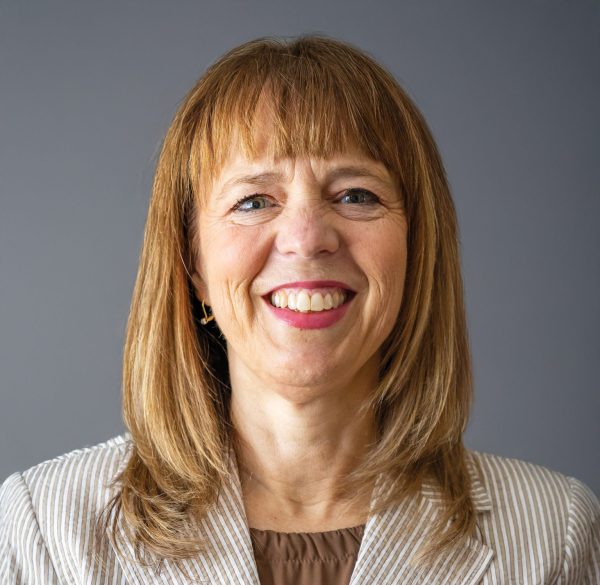
UTICA — The Community Foundation of Herkimer and Oneida Counties recently announced two new board of trustees’ members and new officers.
The two new members are Lydia Berez and Ryan Miller.
Berez is a senior VP at Utica National Insurance Group, where she serves as general counsel and compliance officer. After beginning her legal career in Boston, she returned to Utica in 2003 and has since been with Utica National, where she will celebrate 22 years of service in September 2025. In addition to her professional accomplishments, Berez has been an active community leader. She has served on the Holland Patent Central School District Board of Education for a decade, including two years as president, and recently concluded her long-standing board role with Hope House. Berez currently chairs the Screening Committee for the Utica National Foundation and serves on the board of GreenUtica.
Miller is the director of Mohawk Valley Community College’s thINCubator, a co-working and business incubator space in Utica dedicated to cultivating a strong culture of entrepreneurship. He has worked with more than 300 entrepreneurs, students, creatives, and business owners to help build ventures, solve problems, and create opportunities across the region. In addition to his role at thINCubator, Miller is the founder of Rust Belt Startup, where he develops websites, produces multimedia content, and crafts marketing strategies for small businesses and mission-driven organizations. He is also a co-founder of several local initiatives including TEDxUtica, the Utica Firefly Storytelling Series, and Detour Utica.
In addition to the two new trustee members, the Community Foundation of Herkimer and Oneida Counties board of trustees also approved new officers. Cheryl Minor will assume the role of board chair, RoAnn Destito is the chair-elect, Harrison J. Hummel IV is now the treasurer, and Kathryn Zongrone will serve as secretary.
Timothy Daly, AVP branch manager at Berkshire Bank and past treasurer of the Community Foundation board of trustees, has concluded his board service after eight years.
Founded in 1952, the Community Foundation of Herkimer and Oneida Counties says it envisions a vibrant region with opportunity for all. The foundation notes that it has transformed decades of donor generosity into $150 million invested in social-impact initiatives, collaborative leadership, and grantmaking.

BPAS has announced the appointment of Jennifer Weikel as associate general counsel. A highly respected ERISA attorney with more than two decades of experience in employee-benefits
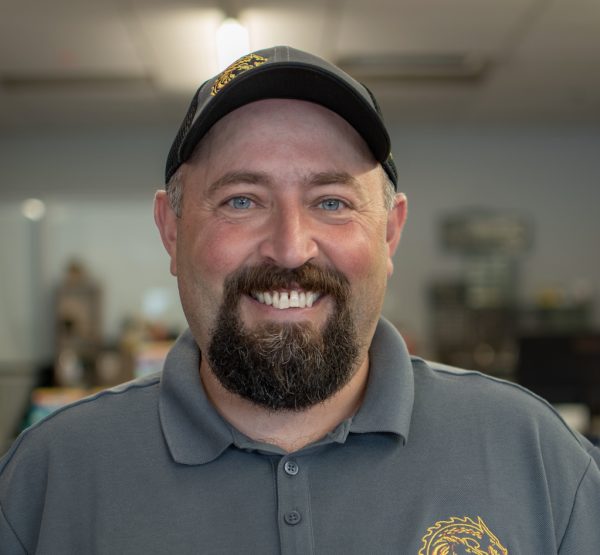
Chimera Integrations has announced the promotion of Shawn Wells to Plattsburgh Territory operations manager. In this leadership role, Wells will oversee daily operations, ensuring projects

One Big Beautiful Bill Extends Many Business-Friendly Tax Provisions
The One Big Beautiful Bill Act (OBBBA) includes numerous provisions affecting the tax liability of U.S. businesses. For many businesses, the favorable provisions outweigh the

Central New York Community Foundation closes on $490K deal for WCNY training program
SYRACUSE, N.Y. — A local impact-investing program at the Central New York Community Foundation has closed on a $490,000 deal for WCNY’s Entertainment Academy until

NBT Bank names commercial banking regional manager for CNY
SYRACUSE, N.Y. — NBT Bank has appointed Luke Fagan as commercial banking regional manager for the Central New York region. Fagan is based at NBT’s Syracuse financial center in the Post Building in downtown Syracuse, the Norwich–based bank announced. He will be tasked with helping lead and grow the bank’s team of local commercial bankers.
Become a Central New York Business Journal subscriber and get immediate access to all of our subscriber-only content and much more.
Click here to purchase a paywall bypass link for this article.
SYRACUSE, N.Y. — NBT Bank has appointed Luke Fagan as commercial banking regional manager for the Central New York region.
Fagan is based at NBT’s Syracuse financial center in the Post Building in downtown Syracuse, the Norwich–based bank announced. He will be tasked with helping lead and grow the bank’s team of local commercial bankers.
“Luke will be teaming up with Regional Commercial Banking Manager Bob Vertucci to lead our growing commercial team in Central NY, and we couldn’t ask for a better duo to champion growth in the region,” David Kavney, NBT Bank’s regional president of Central New York and the Mohawk Valley, said in an Aug. 20 announcement. “Luke’s knowledge of the Syracuse area and market combined with his extensive commercial banking experience makes him a great fit for his new role.”
Fagan joins NBT with more than 35 years of experience in commercial banking, most recently serving as senior VP and commercial credit officer at Five Star Bank in Syracuse for the last two years, according to his LinkedIn profile. Before that, Fagan was a senior VP & chief commercial credit officer for commercial banking at Community Bank, N.A.in the Syracuse area for more than 12 years. He also has previously worked as a commercial banking VP at HSBC and JPMorgan Chase, per the profile.
Fagan holds a bachelor’s degree in management science from SUNY Geneseo. He is also a 2017 graduate of the Emergent Leadership Training program. Among his community activities, Fagan serves on the board of directors for the Greater Syracuse Business Development Corporation.
Stay up-to-date on the companies, people and issues that impact businesses in Syracuse, Central New York and beyond.