Stay up-to-date on the companies, people and issues that impact businesses in Syracuse, Central New York and beyond.

OPINION: Political violence undermines our nation’s democracy
I was in Congress for 34 years. During that time, I attended scores, possibly hundreds of public events. They were held in all kinds of places, in nearly every circumstance that you can imagine. I can recall only one incident of potential violence. There were sometimes heated disagreements, but almost never did people reject the […]
Become a Central New York Business Journal subscriber and get immediate access to all of our subscriber-only content and much more.

Click here to purchase a paywall bypass link for this article.
I was in Congress for 34 years. During that time, I attended scores, possibly hundreds of public events. They were held in all kinds of places, in nearly every circumstance that you can imagine. I can recall only one incident of potential violence.
There were sometimes heated disagreements, but almost never did people reject the tradition of free speech and nonviolent discourse that our Constitution established. I think that record is a tribute to the people of Indiana, which I represented and where many of the events took place.
But that one threatening incident left an impression. Political violence is a problem in our country, and it is growing worse. Americans are deeply polarized and increasingly prone to see their political opponents as the enemy. Threats are becoming more common.
The incident that I refer to took place during a parade in a small Indiana town. I was riding in the back of a convertible, often jumping out to shake hands with voters as the car inched along the street. Suddenly, a middle-aged man emerged from the crowd and headed toward me. I could clearly see that he was carrying a knife. He was waving his hands and walking in a determined way toward the car in which I was riding. He had an angry look on his face and was shouting, but I couldn’t understand what he was saying.
As it happened, a police officer was right behind me in the parade. He saw the man and moved to intercept him and bring him to the ground. Other officers arrived promptly, and the parade went on without further incident. I never saw the assailant again. I thanked the police officer profusely, and I’m still grateful for what he did.
We have always had political violence in this country, of course. Four U.S. presidents were assassinated while in office. John F. Kennedy was killed shortly before I was first elected to Congress. Less than five years later, Robert Kennedy and Martin Luther King, Jr. were assassinated. President Ronald Reagan was nearly assassinated by a gunman in 1981. But those incidents were rare during my time in office. They didn’t change how you did the job.
Today, elected officials are often the targets of hateful messages on social media, which can escalate into violence. Town halls and public meetings can turn angry and chaotic. Researchers have documented a large increase in the frequency of attacks on politicians.
We can’t overlook Jan. 6, 2021, when supporters of Donald Trump stormed the Capitol to try to prevent Joe Biden from being certified as president; some of them chanted, “Hang Mike Pence.” In 2017, House Majority Whip Steve Scalise and three other people were wounded when a gunman fired at a group practicing for a congressional baseball game. In 2022, a man broke into the home of then House Speaker Nancy Pelosi and attacked her husband with a hammer. Trump faced two assassination attempts in 2024. Most recently, the conservative activist Charlie Kirk was killed during a speaking engagement on a college campus in Utah. Three months earlier, a man stalked and killed Minnesota legislator Melissa Hortman and her husband and targeted other lawmakers and advocates.
This violence is changing how elected officials behave. Some are fearful of attending events and mingling with the public. As a result, they are less likely to hear input and have less understanding of how issues affect their constituents. The quality of their representation suffers.
This problem deserves our focused attention, but many of our elected leaders are too busy pointing fingers to address it. Discussion of political violence devolves into debates over which side, the left or the right, is to blame.
It should go without saying that political violence is wrong, no matter who is responsible. It is wrong, and it is doing grave damage to our democracy.
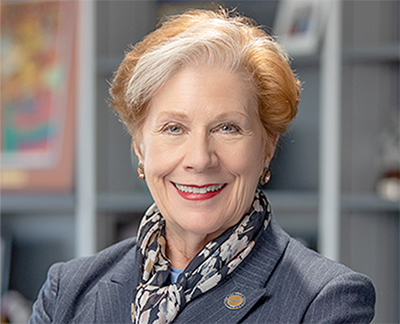
Lee Hamilton, 94, is a senior advisor for the Indiana University (IU) Center on Representative Government, distinguished scholar at the IU Hamilton Lugar School of Global and International Studies, and professor of practice at the IU O’Neill School of Public and Environmental Affairs. Hamilton, a Democrat, was a member of the U.S. House of Representatives for 34 years (1965-1999), representing a district in south-central Indiana.

Ask Rusty: Consider the “Wearing Out” Factor in Deciding When to Claim SS
Dear Rusty: I enjoyed your recent articles on claiming Social Security (SS) benefits. I feel, however, any decision making should also include what I call the “wearing out” factor. Yes, financial need, health, and longevity are definite criteria for a decision. The inevitable problem (I just turned 83) is the speed at which many of
Become a Central New York Business Journal subscriber and get immediate access to all of our subscriber-only content and much more.

Click here to purchase a paywall bypass link for this article.
Dear Rusty: I enjoyed your recent articles on claiming Social Security (SS) benefits. I feel, however, any decision making should also include what I call the “wearing out” factor. Yes, financial need, health, and longevity are definite criteria for a decision. The inevitable problem (I just turned 83) is the speed at which many of us descend down the back side of that hill after we hit around age 65. Yes, one might live to age 85-90 but as you age after 65, many physical limitations begin to appear. Only then does one realize their earlier retirement decision (waiting to max out SS) might not have been honestly evaluated to the extent needed. I speak from experience: after having reached 60 in excellent health, I took early retirement from work, then Social Security at 62, and glad I did so. I figure the degree of slope on the backside of that “hill” will increase with age (it did quickly for me). So, one should start enjoying a retirement life as soon as financially possible.
Signed: Glad I claimed at 62
Dear Glad I claimed at 62: Thank you very much for your excellent perspective on the “wearing out” factor. And please know that I wholeheartedly concur with your opinion that waiting for a higher Social Security benefit is not always the most prudent choice. For perspective, however, we have found that far too many people claim Social Security as soon as they are eligible at age 62 simply because “it is there,” without fully analyzing whether that is the best option considering their personal circumstances.
You are correct — enjoying your retirement life while you are still physically able is a valid consideration. And that is why we always suggest that evaluating both your financial needs as well as your health and life expectancy is important. Fulfilling one’s “bucket list” is, indeed, an important consideration and if claiming Social Security at age 62 (after evaluating all factors) enables one to do that, then that is exactly the right choice. It obviously was for you.
Age does, indeed, tend to slow us down, so if taking the SS money early means being able to enjoy life while you still can, then that is a good decision. But having more money as you age can also make your “golden years” a lot more comfortable.
As we have recently witnessed, inflation has an insidious way of reducing our financial comfort in retirement. Despite having a retirement pension from your primary working career, imagine how another 25 percent in your monthly Social Security payment — had you claimed at full retirement age instead of age 62 — would help make your senior years more comfortable.
The fact is that no one can predict how long they will live nor whether they will do so in good health. All we can do is evaluate all our options under varying circumstances and make our claiming decision based on that analysis. And that is precisely what we advocate for at the AMAC Foundation’s Social Security Service. In no way did I intend to say that claiming at 62 was never the right choice; only that everyone should look at their complete personal circumstances when deciding when to do so.
Russell Gloor is a national Social Security advisor at the AMAC Foundation, the nonprofit arm of the Association of Mature American Citizens (AMAC). The 2.4-million-member AMAC says it is a senior advocacy organization. Send your questions to: ssadvisor@amacfoundation.org.
Author’s note: This article is intended for information purposes only and does not represent legal or financial guidance. It presents the opinions and interpretations of the AMAC Foundation’s staff, trained, and accredited by the National Social Security Association (NSSA). The NSSA and the AMAC Foundation and its staff are not affiliated with or endorsed by the Social Security Administration (SSA) or any other governmental entity.

VIEWPOINT: Theory and Practice of Monetary Policy Implementation
The theme of [this article] is the theory and practice of monetary-policy implementation. Central banks differ in their objectives, strategies, and approaches to monetary-policy implementation — all of which influence how they supply reserves, manage balance sheets, and control short-term interest rates. But like Neapolitan and New York-style pizzas, central banks also share similarities. These
Become a Central New York Business Journal subscriber and get immediate access to all of our subscriber-only content and much more.
Click here to purchase a paywall bypass link for this article.
The theme of [this article] is the theory and practice of monetary-policy implementation. Central banks differ in their objectives, strategies, and approaches to monetary-policy implementation — all of which influence how they supply reserves, manage balance sheets, and control short-term interest rates.
But like Neapolitan and New York-style pizzas, central banks also share similarities. These were spotlighted in the ways they responded to the global financial crisis and the onset of the COVID-19 pandemic. Many central banks expanded their balance sheets through various quantitative-easing programs, funded in large part by increases in central-bank reserves.
These experiences fundamentally changed the ways many central banks approach the provision of reserves while maintaining control of short-term interest rates. As a result, central banks have reviewed, and [sometimes] modified, their strategies for supplying reserves and controlling interest rates in ways that reflect the unique features of their jurisdictions. Although their approaches differ in specifics, they share common elements that reflect the fundamental factors that shape the supply and demand for reserves.
I will [cover] the monetary-policy implementation frameworks that central banks use to manage the supply and demand for reserves, emphasizing the common features and mechanisms of these approaches. I’ll also discuss in more detail the Federal Reserve’s ample-reserves framework.
Monetary-policy implementation frameworks are [vital] to the conduct of monetary policy. They encapsulate the mechanisms and tools used to steer operational targets in line with the desired policy stance and provide liquidity to the financial sector.
In supplying reserves to the banking system, central banks have multiple goals that frequently involve trade-offs. First, they target a level of the policy interest rate and aim to minimize the variability of the policy rate around that target. In addition, they have objectives related to supporting financial stability and the smooth functioning of financial markets. For example, central banks may see advantages or disadvantages to interbank lending in money markets, as well as costs and benefits related to central-bank lending into markets.
The core of any operational framework is the central bank’s supply of reserves, which ranges from a low level, or “scarce,” to “ample” and “abundant.” The “price” of reserves is the spread between the market interest rate and the rate earned for holding reserves at the central bank. When reserves are scarce, the slope of the demand curve for reserves is steep. A small change in the quantity of reserves results in a meaningful change in the spread. When reserves are ample, the slope of the demand curve flattens but still slopes downward, so that small changes in the quantity of reserves have modest effects on the spread. And when reserves are abundant, the demand curve is essentially flat.
A central bank has two sets of tools it can use to supply reserves. First, it chooses an ex ante aggregate level of reserves to supply to the banking system. Second, it may make available a lending facility to the banking system that offers loans to financial institutions at an interest rate determined by the central bank. If the ex-ante supply of reserves is sufficiently low, the additional demand at [the lending facility interest rate] will be met by the lending facility. Note that both tools are a means to supply reserves. In the first, the supply is set in advance, while with the latter, it adjusts endogenously to market conditions.
Central banks deploy various combinations of tools depending on the institutional and market structures in their jurisdictions, as well as preferences over the trade-offs involved in their use. These choices represent different points among the set of options for using the two tools. Despite differences in tactics, each of the approaches can achieve the goals of strong interest-rate control and smooth market functioning. It is worth emphasizing that the two tools can be mutually reinforcing in achieving desired outcomes. For example, lending facilities limit upward movements in interest rates on days of high demand, thereby reducing the ex-ante supply of reserves needed to control short-term rates.
The European Central Bank, the Bank of England, and the Reserve Bank of Australia have chosen to operate with a relatively small amount of ex-ante reserves supply and provide additional reserves as demanded at a rate near the policy target rate. Counterparties can then draw upon as much or as little as they choose based on their needs, subject to their ability to provide eligible collateral. In this way, even with a smaller ex-ante supply of reserves, tight interest-rate control is maintained amid significant movements in the demand for reserves.
Like that of other central banks, the Fed’s operational framework has evolved over time, reflecting its experience with large balance sheets since the global financial crisis. In January 2019, when the decline in the Fed’s asset holdings implied that the quantity of reserves would soon fall below an “abundant” level, the FOMC formally adopted an ample-reserves strategy.
The FOMC has defined this framework as one in which “control over the level of the federal funds rate and other short-term interest rates is exercised primarily through the setting of the Federal Reserve’s administered rates, and in which active management of the supply of reserves is not required.” Accordingly, the ex-ante supply of reserves is chosen to be sufficiently large to meet the demand for reserves on most days.
One important tool the FOMC has established to ensure interest-rate control is the overnight reverse repo facility (ON RRP), which, alongside the interest paid on reserve balances (IORB), helps set a floor for the federal funds rate. Through the ON RRP, eligible counterparties “lend” to the Federal Reserve at the rate set by the FOMC, currently at the bottom of the target range for the federal funds rate. Usage of the ON RRP adjusts automatically to market conditions, rising and falling with supply and demand, which is important in a dynamic market.
The ON RRP has proven to be an effective, flexible tool to support interest-rate control to the downside. When Federal Reserve asset holdings push reserves above ample, the ON RRP relaxes the tight relationship between balance-sheet size and reserves and acts as a safety valve in supporting smooth transmission of monetary policy to markets. As the size of the balance sheet falls, market rates rise above the rate offered at the ON RRP and, as a result, usage of the ON RRP declines to low levels. The ON RRP was used extensively when it was economically sensible for the Fed’s counterparties to do so. By contrast, it has limited usage when repo rates are well above the ON RRP rate, as is the case today.
In 2021, the Federal Reserve introduced the Standing Repo Facility (SRF), which complements the ON RRP by providing interest-rate control to the upside. The SRF rate is set at the top of the FOMC’s target range for the federal funds rate. This combination of an ample supply of reserves and an SRF rate at the top of the target range reduces the day-to-day reliance on the facility except during periods of significant upward pressure on rates resulting from strong liquidity demand or market stress.
By ensuring that adequate liquidity will be available in a variety of circumstances, the SRF plays a critical role in capping temporary upward pressure on rates and assures markets of effective interest-rate control and smooth market functioning. It’s best thought of as a way of making sure that the overall market has adequate liquidity consistent with the FOMC’s desired level of interest rates. In that regard, it differs from other lending facilities — such as the discount window — that aim to provide individual banks with liquidity when the need arises.
The SRF has been effective as reserves have moved from abundant toward ample. Over the past two months, SRF usage has risen from essentially zero to having greater frequency and higher volume of take-up, especially on days of temporary repo-market pressures. Like the ON RRP facility, the SRF’s effectiveness relies on market participants availing themselves of the SRF based on market conditions, free of worries about stigma or other impediments.
At the onset of the pandemic, the Fed, along with central banks around the world, responded quickly to restore market functioning, causing reserves to rise well above ample, as they did in many jurisdictions.
In June 2022, the Fed began the process of reducing the size of its balance sheet to transition toward an ample level of reserves. The FOMC said it intended to stop balance-sheet runoff when it deemed reserves were somewhat above ample, and then allow reserves to decline further as other liabilities, such as currency, grow.
The process has worked according to plan. The Fed’s securities holdings have shrunk from a peak of about $8.5 trillion in 2022 to $6.25 trillion today. At its [Oct. 28-29] meeting, the FOMC decided it would conclude the reduction of its aggregate securities holdings on Dec. 1. This decision was based on clear market-based signs that we had met the test of reserves being somewhat above ample. In particular, repo rates have increased relative to administered rates and have exhibited more volatility on certain days. Accordingly, we have been seeing more frequent use of the SRF. And the effective federal funds rate has increased somewhat relative to the IORB after years of that spread being at a stable level. These developments were expected as the supply of reserves closed in on ample
Looking forward, the next step in our balance-sheet strategy will be to assess when the level of reserves has reached ample. It will then be time to begin the process of gradual purchases of assets that will maintain an ample level of reserves as the Fed’s other liabilities grow and underlying demand for reserves increases over time. Such reserve-management purchases will represent the natural next stage of the implementation of the FOMC’s ample-reserves strategy and in no way represent a change in the underlying stance of monetary policy.
Determining when we are at ample reserves is an inexact science. I am closely monitoring a variety of market indicators related to the fed-funds market, repo market, and payments to help assess the state of reserve-demand conditions. Based on recent sustained repo-market pressures and other growing signs of reserves moving from abundant to ample, I expect that it will not be long before we reach ample reserves.
The FOMC’s implementation framework combines an ample supply of reserves with facilities to maintain strong interest-rate control and flexibility regarding changes in the size of its balance sheet. This operational framework has proven to be highly effective — and it continues to work as designed.
John C. Williams is president and CEO of the Federal Reserve Bank of New York. This article is drawn (and edited for space) from a speech, as prepared for delivery, that he gave on Nov. 7 at the ECB Conference on Money Markets 2025, at the European Central Bank in Frankfurt, Germany. In his speech, Williams gave the standard Fed disclaimer that the views he expressed were his alone and do not necessarily reflect those of the FOMC or others in the Federal Reserve System. The full, unedited text of the speech is available at: https://www.newyorkfed.org/newsevents/speeches/2025/wil251107

Fire crews battle another fire at Novelis plant in Scriba
SCRIBA, N.Y. — Fire crews from across Oswego County responded to another fire at the Oswego operations of Novelis in the town of Scriba. Atlanta,

MMRI, MVHS, SUNY Poly form Mohawk Valley Biotech Collective
UTICA, N.Y. — Three Mohawk Valley Institutions on Wednesday formed the MV Biotech Collective, which is designed to “position the Mohawk Valley as a leader in biomedical innovation.” Representatives from the Masonic Medical Research Institute (MMRI), SUNY Polytechnic Institute (SUNY Poly), and Mohawk Valley Health System (MVHS) signed a memorandum of agreement to formally establish
Become a Central New York Business Journal subscriber and get immediate access to all of our subscriber-only content and much more.
Click here to purchase a paywall bypass link for this article.
UTICA, N.Y. — Three Mohawk Valley Institutions on Wednesday formed the MV Biotech Collective, which is designed to “position the Mohawk Valley as a leader in biomedical innovation.”
Representatives from the Masonic Medical Research Institute (MMRI), SUNY Polytechnic Institute (SUNY Poly), and Mohawk Valley Health System (MVHS) signed a memorandum of agreement to formally establish the alliance.
The MV Biotech Collective “unites the core strengths” of the three institutions: MMRI’s “foundational” scientific research, MVHS’s “critical clinical excellence” and SUNY Poly’s “advanced academic innovation,” the organizations contend.
“This signing is more than a formal agreement; it is the ignition point for a new era of scientific progress in New York State,” Maria Kontaridis, MMRI executive director, said. “By functioning as one unified team, we are able to accelerate scientific output, generate high-value IP, and drive economic development.”
Kontaridis is also the Gordon K. Moe professor and chair of biomedical research and translational medicine of MMRI.
Separately, the three organizations have been working on biotechnology projects within their own disciplines, MMRI said. The partnership will allow for easy cross-institutional collaboration, encouraging clinicians, scientists, faculty, and students to work together on shared projects.
The MV Biotech Collective’s primary goal is to foster a “one team” approach, enabling joint grant applications and strengthening established lines of research. It will allow the organizations to focus on artificial intelligence (AI) as a tool to “dramatically” accelerate the pace of discovery and create a biomedical hub in the region.
The Collective seeks to build entrepreneurship and innovation, supporting and growing new biomedical companies and “serving as a catalyst for regional economic growth,” MMRI said.
The Collective has plans to begin bringing the organizations together to form committees and create a three, five and 10-year strategic plan.

UTICA, N.Y. — The City of Utica is seeking state funding for downtown-improvement projects from two New York programs focusing on such projects. The city

Year-End Benefits Check: Is Your Team Getting the BOOST They Deserve for 2026?
As we close out 2025 and finalize employee benefits for the coming year, there’s one question every small to medium-sized business owner should ask: Are

Tompkins Financial Advisors’ chief investment officer to retire
ITHACA, N.Y. — Tompkins Financial Advisors announced that Geoff Blyth, senior VP and chief investment officer, has decided to retire in early 2026 from his role — after nearly seven years in the position. Tompkins Financial Advisors is the wealth-management arm of Tompkins Financial Corp. (NYSE: TMP), an Ithaca–based financial services holding company that is
Become a Central New York Business Journal subscriber and get immediate access to all of our subscriber-only content and much more.

Click here to purchase a paywall bypass link for this article.
ITHACA, N.Y. — Tompkins Financial Advisors announced that Geoff Blyth, senior VP and chief investment officer, has decided to retire in early 2026 from his role — after nearly seven years in the position.
Tompkins Financial Advisors is the wealth-management arm of Tompkins Financial Corp. (NYSE: TMP), an Ithaca–based financial services holding company that is also parent of Tompkins Community Bank.
As Blyth prepares to step away from his full-time role, he will support the company in its search for a successor in the coming months and helping with the transition.
Blyth is responsible for leading the Tompkins Financial Advisors’ Investment Committee, overseeing the team-oriented and collaborative approach to the firm’s overall investment process and strategy, and working closely with clients on their portfolio needs. With 30 years of portfolio and investment management experience, he previously served as chief investment officer at Genesee Valley Trust Company and senior investment strategist at CNB Wealth Management. Blythe is a graduate of Colgate University.
“Geoff’s outstanding leadership and dedication have left an indelible mark on Tompkins,” Eric Taylor, president of Tompkins Financial Advisors, said in the announcement. “He set a remarkable example through his commitment to our clients, our team and the communities we serve, setting the standard for excellence, integrity and confidence in our strategies that we will continue to uphold as Tompkins grows and evolves. We’re deeply grateful for his years of service and wish him all the best as he embarks on this next chapter.”

St. Joseph’s Health expands orthopedic, spine care with launch of new practice
SYRACUSE, N.Y. — St. Joseph’s Health has announced the upcoming opening of St. Joseph’s Health Orthopedic and Spine Care, which expands access to orthopedic and

Onondaga County reaches new contract agreement with deputy sheriff’s police association
SYRACUSE, N.Y. — Onondaga County on Wednesday announced a tentative contract agreement with the Onondaga County Deputy Sheriff’s Police Association (OCSPA). The four-year pact includes
Stay up-to-date on the companies, people and issues that impact businesses in Syracuse, Central New York and beyond.