
Stay up-to-date on the companies, people and issues that impact businesses in Syracuse, Central New York and beyond.

GROW Wealth Partners announced that Trevor Garlock, co-founder and private wealth management advisor, has been named among Forbes’ 2025 “Top Next-Generation Wealth Advisors,” a prestigious

OPINION: NYSERDA Public-Comment Schedule Ignores Needs of too Many New Yorkers
The New York State Energy Research and Development Authority (NYSERDA) is responsible for supporting New York’s energy goals. Recently, the agency released a draft energy plan that looks ahead to 2040, but its public-hearing schedule leaves out key regions of the state impacting millions of New Yorkers. With this plan impacting every single New Yorker,
Become a Central New York Business Journal subscriber and get immediate access to all of our subscriber-only content and much more.
Click here to purchase a paywall bypass link for this article.
The New York State Energy Research and Development Authority (NYSERDA) is responsible for supporting New York’s energy goals. Recently, the agency released a draft energy plan that looks ahead to 2040, but its public-hearing schedule leaves out key regions of the state impacting millions of New Yorkers.
With this plan impacting every single New Yorker, the New York State Assembly Minority Conference wants to give all our constituents a chance to voice the valid concerns they may have. In order to do so, we initiated a statewide media tour spearheaded by Assemblyman Phil Palmesano (R,C–Corning), the ranking Minority Conference member on the Energy Committee, along with our colleagues in the Senate Minority Conference.
Republican legislators recently joined together in Buffalo and Rochester to speak out against Democratic policies that will further burden families and communities already struggling with unsustainable tax and utility bills. We are calling for an extension of the public-comment period for an additional 90 days, giving New Yorkers ample time to review the energy policies being advanced, ensuring everyone is on the same page going forward.
The response at our first two events was significant. Our conference has called for greater accountability of Gov. Kathy Hochul’s energy plan — dictated by the disastrous Climate Leadership and Community Protection Act (CLCPA) — since it was pitched to the public. We are now seeing more residents come to terms with the realities of this plan. People are frustrated with the lack of financial accountability coming from proponents of the state’s energy plan, and their concerns have only been exacerbated by the absence of clear answers about how much more our rates will go up and how reliable the grid will be without dramatic changes to the plan.
Making matters worse, NYSERDA’s public-comment hearing schedule ignores major swaths of the state, and that means many New Yorkers will not be afforded a chance to publicly express to the administration how financially damaging these changes are. Giving residents a chance to show up in person to discuss their concerns is the least NYSERDA can do ahead of any potential hikes.
Sadly, there are no hearings scheduled for the Southern Tier, North Country, or anywhere in Central New York. This is unacceptable, and it seems like the state’s energy officials are content to ignore the real concerns about these hikes rather than face them head on. There will be seven hearings in the coming month. The Assembly Minority Conference will continue to press for greater transparency — our members will be there to make sure the voices of New Yorkers are represented. We are calling on NYSERDA to do right by our Upstate communities and give them a chance to be heard. Until they do, we will continue to give frustrated New Yorkers an avenue to express their concerns about these changes, as we have seen so many do recently.
William (Will) A. Barclay, 56, Republican, is the New York Assembly minority leader and represents the 120th New York Assembly District, which encompasses all of Oswego County, as well as parts of Jefferson and Cayuga counties.

OPINION: Are We Getting Close To Peak Unemployment?
The unemployment level reached 7.38 million in August, 1.6 million above its January 2023 low and its highest point since October 2021, according to the latest data from the Bureau of Labor Statistics, continuing a steady uptrend for more almost three years. The unemployment rate in August rose to 4.3 percent, its highest level since
Become a Central New York Business Journal subscriber and get immediate access to all of our subscriber-only content and much more.
Click here to purchase a paywall bypass link for this article.
The unemployment level reached 7.38 million in August, 1.6 million above its January 2023 low and its highest point since October 2021, according to the latest data from the Bureau of Labor Statistics, continuing a steady uptrend for more almost three years. The unemployment rate in August rose to 4.3 percent, its highest level since November 2021.
This is not unusual as the U.S. economy continues unwinding from the peak inflation that was seen in June 2022 at 9.1 percent under former President Joe Biden. Historically, on average, in the post-World War II era, moving from a low in unemployment to a high, usually during or after a recession correlating with periods of disinflation, typically takes about 21 months. Here are some examples:
• In May 1979, unemployment was at a low of 5.8 million and by July 1980 peaked at 8.36 million, or 7.8 percent, taking 14 months to get there.
• In July 1981, unemployment’s low was at 7.86 million and by December 1982 it peaked at 12 million, or 10.8 percent, over 17 months.
• In March 1989, unemployment’s low was reached at 6.2 million and by June 1992 it peaked at 10 million, or 7.8 percent, over 39 months — the longest period of increasing unemployment in the postwar period.
• In April 2000, unemployment’s low was hit at 5.48 million and by June 2003 it peaked at 9.26 million, or 6.3 percent, over 38 months.
• In October 2006, unemployment’s low was reached at 6.27 million and by October 2009 it peaked at 15.35 million, or 10.0 percent, over 36 months.
• And in September 2019 and February 2020, unemployment’s low was at 5.7 million and by April 2020 it peaked at 23.08 million, or 14.8 percent, over 7 months.
The end result of every single one of these cycles was a recession: 100 percent.
For the current period, again, unemployment’s low was experienced in January 2023 at 5.7 million and now has been increasing for 32 months to its current 7.38 million.
In every recession in the postwar period, unemployment always got over 5 percent, and we’re not there yet. On the other hand, sometimes greater shifts in unemployment can come toward the end of these cycles, and so there’s still room for it to go higher.
The good news … is that unemployment has been increasing for so long now that the uptick is bound to end sooner rather than later and that the overall unemployment rate, currently 4.3 percent, is historically low. But this too is unsurprising as about 900,000 Baby Boomers are leaving the labor force every single year as the retirement wave continues, fueling demand for more labor.
In about six months, we should have better clarity of where peak unemployment will be for this cycle, unless of course the current economy is determined to break the record for the longest slowly ripping off of the band-aid in history. The record is 39 months and we’re at 32 months now. Something’s got to give. Stay tuned.
Robert Romano is the executive director of Americans for Limited Government, a conservative 501(c)(4) nonprofit organization that says it is dedicated to restoring constitutionally limited government, allowing individuals to pursue life, liberty, and happiness.

Ask Rusty: How Do I Apply for Social Security and Receive My Payments?
Dear Rusty: I’m ready to apply for my Social Security (SS) benefits, and I’m aware of how my benefits are calculated. What I would like to know about is how the application process actually works and how my benefits are received Signed: Ready to Collect Dear Ready to Collect: Essentially, you have two main options
Become a Central New York Business Journal subscriber and get immediate access to all of our subscriber-only content and much more.

Click here to purchase a paywall bypass link for this article.
Dear Rusty: I’m ready to apply for my Social Security (SS) benefits, and I’m aware of how my benefits are calculated. What I would like to know about is how the application process actually works and how my benefits are received
Signed: Ready to Collect
Dear Ready to Collect: Essentially, you have two main options for applying for Social Security benefits, and also two separate options for receiving your payments.
To apply for benefits, you can either contact the Social Security Administration (SSA) at (800) 772-1213 to make a telephone appointment to complete your application while speaking to an SSA representative on the phone. Or, you can submit your application for SS benefits online.
When using the telephone option, you will be guided by an SSA agent while completing your application and can discuss your benefit options directly with that agent (just be sure to be available to receive SSA’s call at the scheduled time). You can also make an appointment by calling your local SS field office directly (get the number for your local SS office at this link: www.ssa.gov/locator). It is not usually necessary to visit your local SSA office in person to apply.
If you are reasonably proficient with computers, you can, instead, apply online, but you will first need to create your personal SSA account online at www.ssa.gov/myaccount. Once you have your personal account set up, you will be able to see your estimated benefit amount at different claim ages, which should help you decide when it is best to apply. Here is a link to a short video that explains the process for applying for benefits online: https://www.ssa.gov/hlp/video/iclaim_r01.htm.
If applying online, you can start your application at www.ssa.gov/apply and re-access it multiple times as needed until you are ready to submit it; just be sure to write down the “reentry code” which is provided when you begin your online application.
When you are ready to submit the application, just select “Submit” and your application will be sent to SSA’s application processing unit for review. They will contact you if there are any questions about your application, or if any additional documentation is needed. Note that it typically takes a couple of months for your payments to start and note that payment is made in the month following the month earned. For example, if you begin your benefits in August your first payment will be received in September (on either the 2nd, 3rd, or 4th Wednesday of each month thereafter, depending on your birthday).
For receiving your monthly SS payments: you will (on you application) be able to specify how you wish your monthly payments to be made. The preferred option used by most beneficiaries is to have your monthly Social Security payment deposited into a financial (e.g., bank) account, details for which you will specify when applying. However, you can also choose to receive your monthly payments in the form of a debit card (called “Direct Express”) which will be replenished monthly. If you choose to have your payment deposited in your bank account, be sure to have your bank-account information ready when you apply. Note that the SSA no longer issues payments via printed checks (except in rare circumstances).
Russell Gloor is a national Social Security advisor at the AMAC Foundation, the nonprofit arm of the Association of Mature American Citizens (AMAC). The 2.4-million-member AMAC says it is a senior advocacy organization. Send your questions to: ssadvisor@amacfoundation.org.
Author’s note: This article is intended for information purposes only and does not represent legal or financial guidance. It presents the opinions and interpretations of the AMAC Foundation’s staff, trained, and accredited by the National Social Security Association (NSSA). The NSSA and the AMAC Foundation and its staff are not affiliated with or endorsed by the Social Security Administration (SSA) or any other governmental entity.

Taco Bueno Selects PAR Technology to boost restaurant operations and scale growth
NEW HARTFORD, N.Y. — Taco Bueno, a popular quick-service Tex-Mex restaurant chain based in Texas, has selected PAR Technology Corp. (NYSE: PAR) as its unified technology provider. The company will implement PAR POS and PAR Hardware products across its 140 restaurant locations to modernize operations, enhance the guest experience, and support long-term growth, according to
Become a Central New York Business Journal subscriber and get immediate access to all of our subscriber-only content and much more.

Click here to purchase a paywall bypass link for this article.
NEW HARTFORD, N.Y. — Taco Bueno, a popular quick-service Tex-Mex restaurant chain based in Texas, has selected PAR Technology Corp. (NYSE: PAR) as its unified technology provider.
The company will implement PAR POS and PAR Hardware products across its 140 restaurant locations to modernize operations, enhance the guest experience, and support long-term growth, according to a recent PAR Technology announcement.
As Taco Bueno scales and streamlines operations across its expanding footprint, company management prioritized finding a technology partner that could provide both enterprise-grade capabilities and intuitive usability for in-store staff. PAR’s integrated solutions align with Taco Bueno’s existing tech stack, minimizing transition complexity, reducing total cost of ownership, and accelerating time-to-value with a flexible, easy-to-use solution built for scale, PAR contends.
Taco Bueno will deploy PAR’s POS and hardware to drive operational consistency, speed, and reliability across every guest interaction. By consolidating front-of-house technology under a single provider, Taco Bueno can accelerate deployment, simplify training, reduce downtime, and eliminate vendor friction — while also benefiting from aligned product roadmaps and faster access to innovation.
“Taco Bueno is a brand with deep roots and bold ambitions,” Savneet Singh, CEO of PAR Technology, said in the announcement. “With our solutions, Taco Bueno is getting a flexible, future-ready foundation that gives them unified control and visibility across operations. It’s built to simplify execution and scale confidently — without compromising stability.”
Founded in 1967 in Abilene, Texas, Taco Bueno is a privately held company that operates nearly 140 restaurants throughout the American South and Southwest — including Arkansas, Oklahoma, and Texas.
PAR Technology is a New Hartford–based foodservice-technology provider, including solutions for point-of-sale, digital ordering, loyalty, back-office, payments, and hardware.

2025 Best Places to Work Awards Supplement
Click here to view this year’s Best Places to Work and see who ranked #1!

Brenna Richardson has joined the William G. Pomeroy Foundation as director of operations, effective Sept. 2. She is responsible for guiding operations, human resources, finance,

Prevention Network moves to new headquarters, unveils rebranded logo
SYRACUSE, N.Y. — Prevention Network says it has moved to a new headquarters in Syracuse and unveiled a new logo. Prevention Network describes itself as
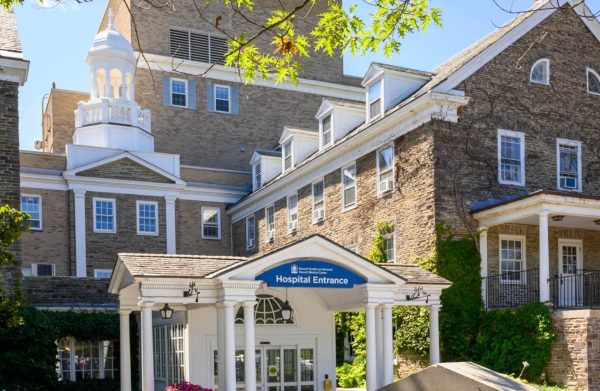
Bassett Research Institute awarded $12M in funding for national, multi-center clinical trial
COOPERSTOWN, N.Y. — Bassett Research Institute in Cooperstown will use about $12 million in grant funding to launch a study about the effects on the

Franchising —Why JRECK Subs Is a Smart Choice
Franchising is a business model that allows individuals to own and operate a location of an established brand. As a franchisee, you get the benefits
Stay up-to-date on the companies, people and issues that impact businesses in Syracuse, Central New York and beyond.