Stay up-to-date on the companies, people and issues that impact businesses in Syracuse, Central New York and beyond.

NYSDOT Central New York regional director retires
SYRACUSE, N.Y. — David Smith, Central New York regional director of the New York State Department of Transportation (NYSDOT), concluded 33 years of service with the department with his retirement on Aug. 1. Smith was among the officials providing information on the ongoing Interstate 81 viaduct-replacement project. Marie Therese Dominguez, NYSDOT commissioner, announced Smith’s retirement […]
Become a Central New York Business Journal subscriber and get immediate access to all of our subscriber-only content and much more.
Click here to purchase a paywall bypass link for this article.
SYRACUSE, N.Y. — David Smith, Central New York regional director of the New York State Department of Transportation (NYSDOT), concluded 33 years of service with the department with his retirement on Aug. 1.
Smith was among the officials providing information on the ongoing Interstate 81 viaduct-replacement project.
Marie Therese Dominguez, NYSDOT commissioner, announced Smith’s retirement on July 31.
“After 33 years of outstanding service to the Department of Transportation and the Central New York community, we wish Dave Smith the very best as he transitions into retirement after decades of exemplary service,” Dominguez said. “Dave has tirelessly guided operations for DOT in Central New York through an unprecedented period of growth, and his insight, knowledge, and exemplary direction have proven to be invaluable.”
Andy Stiles will serve as the acting regional director in Central New York until a permanent replacement is appointed. Stiles has worked for the NYSDOT for 27 years and has served as regional director in Binghamton since May 2024.
For the past nine years, Smith has led department operations in the six counties that make up region 3: Cayuga, Cortland, Onondaga, Oswego, Seneca, and Tompkins.
His duties have involved overseeing hundreds of staff and working on numerous projects that will have an impact on the region, including the I-81 project, which is described as the “largest undertaking in Department of Transportation history.”
“I have every confidence that our dedicated team will see Central New York’s projects through to successful completion,” Smith said in the NYSDOT announcement. “This community has long been my home, and I know the professionals that make up every component of the Department of Transportation in Central New York will continue to prioritize its needs, working to ensure our infrastructure remains modern, reliable, resilient, and safe for all. As I look forward to this next chapter, I do so with deep gratitude and pride in what we have accomplished together.”
Smith began his career with NYSDOT in 1992, working as a junior engineer in the Long Island traffic and safety group. Smith steadily advanced through the ranks before making the move to Central New York in 2003, where he served as resident engineer in Cayuga and Seneca counties, and later, Onondaga County. Smith was promoted to regional director of operations for Central New York in 2006 and was named Central New York regional director in 2016.

VIEWPOINT: N.Y.’s Hospital Quality Remains Among the Worst in the U.S.
The federal government recently updated its hospital quality ratings, and New York once again fell near the bottom. Among 132 New York hospitals that received a rating, the average grade was 2.5 out of 5 stars, which ranked 48th out of the 50 states. That marked a slight improvement from last year, when New York
Become a Central New York Business Journal subscriber and get immediate access to all of our subscriber-only content and much more.
Click here to purchase a paywall bypass link for this article.
The federal government recently updated its hospital quality ratings, and New York once again fell near the bottom.
Among 132 New York hospitals that received a rating, the average grade was 2.5 out of 5 stars, which ranked 48th out of the 50 states. That marked a slight improvement from last year, when New York ranked 49th with an average score of 2.4 stars.
The 2025 average puts New York just ahead of New Mexico and Mississippi and just behind Alabama, Arkansas and West Virginia — all of which are among the poorest states in the country.
New York boasts the highest gross state product per capita in the U.S., and spends at higher-than-average levels on health care generally and hospital care in particular. According to the most recent National Health Expenditures data, from 2020, New York per capita hospital expenditures were 43 percent higher than the national average.
Looking more closely at the latest ratings, New York’s share of hospitals receiving the highest rating of 5 stars, at 10.1 percent, was one point higher than the national average. However, the state had a relatively low numbers of hospitals receiving 4 stars, and relatively high numbers of facilities receiving 1 or 2 stars.
Broken down by ownership, the state’s eight veterans’ hospitals received the highest average of 3.5. Not-for-profit hospitals averaged 2.6 and government-owned hospitals averaged 1.7.
The latter group included ratings for 10 New York City Health + Hospitals facilities that received an average score of 1.5. Those city-owned hospitals handle a disproportionate share of low-income and uninsured patients, and the federal ratings are not adjusted for poverty.
Regionally, hospitals on Long Island and in the Mid-Hudson and Capital regions had the highest averages, while hospitals in the Finger Lakes, Mohawk Valley, and New York City had the lowest averages. Ratings for individual hospitals can be looked up on the Medicare.gov website.
New York has scored near the bottom in the federal hospital ratings — in other similar report cards — for at least the past decade, with the state taking little obvious action to draw attention to the problem or improve their performance.
However, that might soon change: The chairwoman of Gov. Kathy Hochul’s Commission on the Future of Health Care, Sherry Glied, has said the panel’s overdue report will include recommendations for tackling hospital quality.
“There are real deficiencies in hospital quality in New York … across the state,” Glied, dean of the NYU Wagner Graduate School of Public Service, told the Albany Times Union in June. “[It’s] really not acceptable. The state ought to be shifting its funding that it’s giving to hospitals in a way that really takes those quality considerations into account.”
The commission’s first round of recommendations was originally due in late 2024, but they have not yet been made public.
Bill Hammond is senior fellow for health policy at the Empire Center for Public Policy, which says it is an independent, nonpartisan, nonprofit think tank located in Albany that promotes public-policy reforms grounded in free-market principles, personal responsibility, and the ideals of effective and accountable government. Hammond tracks developments in New York’s health-care industry, with a focus on how decisions made in Albany and Washington, D.C. affect the well-being of patients, providers, taxpayers, and the state’s economy.

New York expands Veterans Tuition Awards program
SYRACUSE, N.Y. — Following an expansion, New York’s Veterans Tuition Awards program will enable more veterans to access financial aid for college. Under this expansion, all veterans who served at least four years on active-duty now qualify for full-tuition awards, Gov. Kathy Hochul announced in early July. Previously, only veterans who served in combat or
Become a Central New York Business Journal subscriber and get immediate access to all of our subscriber-only content and much more.
Click here to purchase a paywall bypass link for this article.
SYRACUSE, N.Y. — Following an expansion, New York’s Veterans Tuition Awards program will enable more veterans to access financial aid for college.
Under this expansion, all veterans who served at least four years on active-duty now qualify for full-tuition awards, Gov. Kathy Hochul announced in early July.
Previously, only veterans who served in combat or a specific combat theater were eligible to receive the Veterans Tuition Awards.
The Veterans Tuition Awards — administered by the New York State Higher Education Services Corporation — provide eligible veterans with up to the full cost of SUNY undergraduate tuition at approved colleges and vocational training programs across New York state.
For the 2024-25 academic year, the program award is equal to the average SUNY undergraduate tuition rate of $7,070 or actual tuition, whichever is less. For part-time study, awards will be prorated by credit hour.
Under the expanded program, veterans with a minimum of four years of active-duty service — or those who served in combat and were honorably discharged — can now qualify. Also, veterans pursuing either full-time or part-time education can now benefit.
In addition, veterans can maximize federal financial aid and GI Bill benefits and state support, as awards are not reduced by Montgomery GI Bill benefits or Pell Grants, Hochul’s office noted.
The expanded programs will also accept applications year-round “offering greater flexibility for veterans planning their education.”
For more information or to apply, the state recommends visiting the Veterans Tuition Awards website (https://hesc.ny.gov/vta).

Smith Brothers Insurance acquires independent Ithaca agency
ITHACA, N.Y. — Moscato & Associates of Ithaca is now under the ownership of Smith Brothers Insurance, LLC, a Connecticut–based firm with offices in Owego, Vestal, Waverly, and Albany. The deal closed on Aug. 1, Smith Brothers said in its Aug. 4 announcement. Moscato & Associates — an independent insurance agency specializing in employee benefits,
Become a Central New York Business Journal subscriber and get immediate access to all of our subscriber-only content and much more.

Click here to purchase a paywall bypass link for this article.
ITHACA, N.Y. — Moscato & Associates of Ithaca is now under the ownership of Smith Brothers Insurance, LLC, a Connecticut–based firm with offices in Owego, Vestal, Waverly, and Albany.
The deal closed on Aug. 1, Smith Brothers said in its Aug. 4 announcement.
Moscato & Associates — an independent insurance agency specializing in employee benefits, individual health, and Medicare policies — will maintain its location in Ithaca, per the Smith Brothers announcement.
The acquisition of Edward Moscato’s agency will add to Smith Brothers’ employee-benefits practice and expand its New York region further in the Southern Tier and into Central New York.
Smith Brothers Insurance has offices across Connecticut, Massachusetts, New Jersey, and New York.
“Ed and his team bring us great experience with small business and family health benefits and enhances our New York region,” Joe Smith, president and CEO of Smith Brothers Insurance, said in the announcement. “This geography is a desirable area for us to bring our Help Others purpose with its academic, agricultural, and manufacturing growth, and vibrant communities. The Moscato clients will now have access to all areas of insurance and risk management for their businesses and households in our Enterprise Risk Management and Family Confidant philosophy,”
Besides the Ithaca acquisition, Smith Brothers Insurance in 2025 has also added three additional insurance agencies to its company. They include The Reardon Agency of Waterford, Connecticut on April 1; J.A. Mariano Agency in Rosenhayn, New Jersey on May 1; and Charter Oak Agency in Westport and Derby, Connecticut on July 1, per the announcement.
Founded in Hartford, Connecticut in 1971 by brothers Bob and Brian Smith, Smith Brothers Insurance has expanded to more than 250 employees. Smith Brothers is licensed in every state in the U.S. It has offices throughout Connecticut, Massachusetts, New Jersey, and New York.

New leader of Schweinfurth Art Center starts duties
AUBURN, N.Y. — Syracuse native Catherine Underhill has started her new job as executive director of the Schweinfurth Art Center, a multi-arts facility in Auburn. Underhill, who began in her new role Aug. 25, most recently served as executive director of View Art Center in Old Forge. “I’ve spent my entire career in the arts,”
Become a Central New York Business Journal subscriber and get immediate access to all of our subscriber-only content and much more.
Click here to purchase a paywall bypass link for this article.
AUBURN, N.Y. — Syracuse native Catherine Underhill has started her new job as executive director of the Schweinfurth Art Center, a multi-arts facility in Auburn.
Underhill, who began in her new role Aug. 25, most recently served as executive director of View Art Center in Old Forge.
“I’ve spent my entire career in the arts,” Underhill said in the Aug. 13 announcement. “No matter what discipline — visual art, dance, music, theatre — the arts provide an important opportunity to inspire and engage community members of all ages. A core component of our work is to provide the tools to help people intersect with the art, because it’s here to inspire, to provoke thought, and to engage people.”
Underhill has held leadership positions in arts organizations in several locations. They’ve included Atlanta, Georgia and both Denver and Boulder in Colorado before returning to Central New York in 2013 to serve as managing director for Symphoria, which is now the Syracuse Orchestra.
She later served as director of development at Everson Museum of Art before taking over at View Art Center.
Early inspiration for Underhill’s career in the arts came from a year spent as a high school exchange student in Peru, the Schweinfurth Art Center said.
“The food, the architecture, the clothing, the music, all of the cultural indicators were so important in beginning to understand the people and the place and the history — especially early on when I didn’t speak Spanish,” she said. “So I think that’s where I got interested in art history.”
Underhill is planning to take the same approach with the Schweinfurth, the center noted. She plans to “immerse herself” in learning about the organization, its programs, audiences, and the communities it serves, and then work to expand its reach and standing.
“[Retiring Executive Director] Donna Lamb’s leadership over the last 25 years has been extraordinary, and the team now at Schweinfurth is very strong,” Underhill said. “I’m fortunate that both provide a platform for further growth. I’d like to explore strategies to build on this legacy and see what we can do to continue to expand and engage more people locally, regionally, and potentially nationally.”
Underhill has an undergraduate degree in art history from the University of New Hampshire, a masters in the same topic from the University of Colorado in Boulder, and a master’s in public administration from Harvard University.
The Schweinfurth Art Center, located at 205 Genesee St. in Auburn, says it hosts more than a dozen exhibitions a year, runs fine-arts classes, and is known nationally for its fiber-arts programming, including an annual conference.

Upstate names chair of Center for Bioethics and Humanities
SYRACUSE, N.Y. — Upstate Medical University recently announced that it has named Amy Caruso Brown chair of the Center for Bioethics and Humanities. She had served as interim chair of the center since September 2021. The Center for Bioethics and Humanities, a department of the College of Medicine, advances the scholarly and professional understanding of
Become a Central New York Business Journal subscriber and get immediate access to all of our subscriber-only content and much more.
Click here to purchase a paywall bypass link for this article.
SYRACUSE, N.Y. — Upstate Medical University recently announced that it has named Amy Caruso Brown chair of the Center for Bioethics and Humanities.
She had served as interim chair of the center since September 2021.
The Center for Bioethics and Humanities, a department of the College of Medicine, advances the scholarly and professional understanding of bioethics, law and health humanities and promotes health care and health policy that is patient-centered, compassionate, and just, Upstate said. The Healing Muse is a literary arts journal published by the Center each year.
Last year, Caruso Brown was appointed to serve as director-at-large of the board of the American Society for Bioethics and Humanities.
Caruso Brown joined Upstate Medical University in 2014. Her research focuses on the social, cultural, and legal dimensions of disagreements between families and clinicians in pediatrics and the development of just and equitable hospital policies, Upstate said. Her work has been published in numerous journals, including the American Journal of Bioethics (AJOB), Pediatrics, the Journal of the American Medical Association (JAMA) and the New England Journal of Medicine (NEJM), among others.
Caruso Brown earned her medical degree from Emory University and holds master’s degrees from the University of Colorado and the University of Oxford. She completed residency training in general pediatrics at Children’s Hospital of Philadelphia (2008-2009) and the University of Colorado (2009-2011). and fellowship training in pediatric hematology/oncology at the University of Colorado (2011-2014). She is board-certified in general pediatrics and pediatric hematology/oncology and is also certified in health-care ethics consultation (HEC-C). She is a member of Upstate’s Ethics Consultation Service.

Survey: 3 in 4 Gen Zers bring parents to job interviews
More than three out of four (77 percent) Gen Z workers reported that they had brought a parent along on a job interview, according to a recent survey from the job-seeker-resource website ResumeTemplates.com. The survey, commissioned by ResumeTemplates.com, was conducted by Pollfish in July 2025 among 831 Gen Z workers who are employed full time
Become a Central New York Business Journal subscriber and get immediate access to all of our subscriber-only content and much more.
Click here to purchase a paywall bypass link for this article.
More than three out of four (77 percent) Gen Z workers reported that they had brought a parent along on a job interview, according to a recent survey from the job-seeker-resource website ResumeTemplates.com.
The survey, commissioned by ResumeTemplates.com, was conducted by Pollfish in July 2025 among 831 Gen Z workers who are employed full time to gauge how involved their parents were in their most recent job search and their current role.
Findings from the study revealed a significant degree of parental involvement in not just the hiring process surrounding Gen Z workers but also their day-to-day job duties once employed. Almost three-quarters (73 percent) of the respondents reported that they had their parents help them complete work assignments and nearly half (45 percent) regularly have a parent talk to their current manager.
Other examples of parental involvement cited in the findings included the following:
• 90 percent of Gen Z respondents had their parents help them find jobs to apply for
• 31 percent had a parent write their entire resume
• 29 percent had their parents write their cover letters
• 53 percent had a parent speak with a hiring manager on their behalf
• 57 percent have brought a parent to their current workplace
• 86 percent have their parents review their performance reviews
• 83 percent have their parents pack their lunch for work
Julia Toothacre, a chief career strategist at ResumeTemplates.com, said of the findings, “I support parents helping with resumes, offering professional insights, or reviewing performance evaluations. These actions can give Gen Z a clearer understanding of the workplace and position parents as valuable mentors, especially if they’ve worked in similar fields.”
But Toothacre also cautioned, “Parents can be supportive behind the scenes, but they shouldn’t participate directly. It not only undermines the child’s credibility but also risks stunting their professional growth and ability to navigate challenging situations. Additionally, managers and coworkers may interpret this behavior as a lack of maturity, which can damage the employee’s reputation.”
A full summary of the survey’s findings are available at: https://www.resumetemplates.com/nearly-half-of-gen-zers-have-mom-regularly-talk-to-their-boss/

OPINION: How AI is impacting the monthly job numbers
For nearly a century, monthly job reports from the U.S. Bureau of Labor Statistics have functioned as the nation’s economic checkup. Policymakers, economists, and the public wait as the numbers come out each month and use them to predict the direction the economy is moving in. Historically, the indicators of a growing or failing economy
Become a Central New York Business Journal subscriber and get immediate access to all of our subscriber-only content and much more.
Click here to purchase a paywall bypass link for this article.
For nearly a century, monthly job reports from the U.S. Bureau of Labor Statistics have functioned as the nation’s economic checkup. Policymakers, economists, and the public wait as the numbers come out each month and use them to predict the direction the economy is moving in. Historically, the indicators of a growing or failing economy from the reports have been correct.
That was before artificial intelligence (AI). Today, AI is rapidly distorting the relationship between job growth and economic health.
By the numbers, the World Economic Forum predicts that 92 million jobs will be disrupted or replaced by AI by 2030. At the same time, AI is predicted to contribute to 170 million newly created jobs. In total, AI will likely result in a net growth of 78 million jobs. Big picture, the economic growth and job creation will be positive. That’s not to say we aren’t seeing negative signs early on.
The U.S. economy added 782,000 jobs in the first half of 2025, the slowest job growth in the United States since 2010, excluding the pandemic-impacted year of 2020. And although the unemployment rate currently sits at a relatively healthy 4.1%, growing fears of AI replacing human workers is causing a quiet panic among the workforce.
Citing artificial intelligence as the reason, U.S. companies cut nearly 78,000 tech-related jobs in just the first six months of 2025. Layoffs will continue. But soon enough, job titles such as AI officers, robotics technicians, AI trainers, and more will open up. Whether you are pro-AI or anti-AI, its impact on the job market is undeniable. The best way to protect yourself is to learn and familiarize yourself with AI.
Perhaps the most notable change from AI is the productivity paradox where less employees equals more results. With AI, companies can do more with fewer people. Microsoft’s AI tools now enable engineers to write more code in less time. At IBM, HR functions have been consolidated under chatbots. Canva cut entire departments of writers, relying instead on AI to generate documentation. These efficiencies aren’t boosting headcounts, they’re slashing them. But the resulting productivity gains make companies more profitable, masking the pain felt by workers and communities.
In a sign of how seriously we need to take AIs impact on the workforce, New York State recently updated its WARN Act to require companies to identify when layoffs are tied to AI. The more reporting and understanding we have on AI, the better picture we will be able to paint.
The future of work isn’t just about how many jobs we have, it’s about what kind of jobs they are, who gets to do them, and how long they last. Until our metrics evolve to reflect those realities, job numbers will continue to offer an incomplete picture of the economy.
We need new indicators to predict economic growth based on jobs: AI-displacement tracking, underemployment rates for degree holders, and labor productivity per employee. And we need to treat automation and AI disruption as macroeconomic forces, not niche tech trends.
The job market isn’t collapsing. But it is changing in ways never before seen. If we want an accurate understanding of where the economy is heading, we must stop treating job reports as a proxy of prosperity and do more in depth reporting and understanding of how AI continues to impact the workforce.
Zak Ali is the U.S. general manager of Finder, a global fintech company. He is an SEO and marketing expert analyzing the future of work as it pertains to artificial intelligence. Prior to Finder, Zak co-founded Rantt, Inc., a social media and news organization for private communities.

OPINION: Declining trust threatens democracy
Americans trust each other less than we used to, and that’s creating problems for our ability to govern ourselves. Ultimately, it raises questions about the future of our democracy. A recent report from the Pew Research Center explains the dilemma. Trust, it says, is “the oil that lubricates the frictions of daily life.” We need
Become a Central New York Business Journal subscriber and get immediate access to all of our subscriber-only content and much more.
Click here to purchase a paywall bypass link for this article.
Americans trust each other less than we used to, and that’s creating problems for our ability to govern ourselves. Ultimately, it raises questions about the future of our democracy.
A recent report from the Pew Research Center explains the dilemma. Trust, it says, is “the oil that lubricates the frictions of daily life.” We need trust to work together to solve problems. It keeps the economy functioning. It makes it easier to get along with neighbors. People who trust others are more likely to help strangers and volunteer to support the common good.
But surveys show that trust has been eroding for years. A generation or so ago, about half of Americans said in surveys that most people can be trusted. In recent years, the share who say most people can be trusted has dropped to one-third.
Our declining trust in each other leads to less trust in institutions, including government. When I was first elected to Congress, in 1964, four in five Americans trusted their elected leaders to do the right thing. Today, only 20 percent of us trust public officials. That makes it hard to govern.
Trust is essential in foreign policy. We need to be able to count on our allies, and they need to be able to count on us. We need to know that nations will honor their treaty obligations and follow through on commitments. The institutions that created a prosperous and largely peaceful world order after World War II were built on a foundation of trust. In dealing with adversaries, as President Ronald Reagan famously said, you “trust but verify.”
The reasons for our declining trust are many. Our divisive political climate is both a cause and an effect of the fact that we don’t trust each other. Partisanship has pushed Americans into warring camps, angry and suspicious. Democrats and Republicans think the worst of each other.
Changes in the news media have amplified distrust. Many of us remember how, in the 1960s and 1970s, CBS anchor Walter Cronkite was called the most trusted man in America. There were deep divisions over civil rights, the Vietnam War, and other topics, but we all watched the same news via the three TV networks. Today, we can seek out news and opinions that tell us what we want to hear, whether that’s CNN, Fox News, or NPR. Increasingly, we get information from unreliable sources, often shared on social media. Rumors, fake news, and disinformation spread online like viruses.
Economic insecurity and challenges with housing and health care can make people distrustful. The COVID-19 pandemic worsened the situation. For months, we stayed at home or wore masks and practiced social distancing in public. We lost connection with each other, and, with it, we lost trust. Health authorities struggled to explain the changing science. Trust in experts took a beating.
All this created fertile ground for politicians to capitalize on distrust. Donald Trump made his splash in politics by falsely suggesting that Barack Obama wasn’t born in America. As president, Trump has stoked distrust of migrants, government employees, his political opponents, and our international allies. He has used distrust to expand federal power.
It’s important to note that trust doesn’t mean agreement. We can disagree on issues and still trust each other to consider the facts, discuss them honestly, and work toward solutions. America’s founders, for example, differed about federal versus state power, individual liberties, slavery, and many other issues. But they trusted each other enough to create a new republic.
Our current leaders would do well to consider their example. The world is very different than it was 250 years ago, but we face our own difficult challenges. We all want the United States to continue as a prosperous and peaceful nation. We need to cultivate trust in each other for that to happen.
Lee Hamilton, 94, is a senior advisor for the Indiana University (IU) Center on Representative Government, distinguished scholar at the IU Hamilton Lugar School of Global and International Studies, and professor of practice at the IU O’Neill School of Public and Environmental Affairs. Hamilton, a Democrat, was a member of the U.S. House of Representatives for 34 years (1965-1999), representing a district in south-central Indiana.

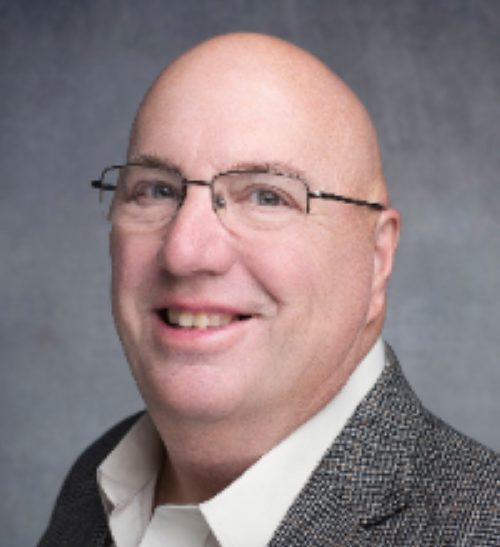
Tom Kinslow has been promoted to associate at HOLT Architects. He has been a practicing architect since 1978 and brings his extensive knowledge to his
Stay up-to-date on the companies, people and issues that impact businesses in Syracuse, Central New York and beyond.