Stay up-to-date on the companies, people and issues that impact businesses in Syracuse, Central New York and beyond.
UHS Chenango Memorial expands cardiology services with two new specialists
NORWICH — UHS Chenango Memorial Hospital says it is expanding its cardio-pulmonary program with the addition of two new cardiologists, seeking to improve access to

OPINION: There is No Place for Political Violence in America
The appalling assassination of conservative activist Charlie Kirk [on Sept. 10] shook the nation to its core and must be a wake-up call to all Americans. Political violence is a dire threat to us all, and endangers Americans everywhere, regardless of where they live or what they believe. For the sake of our families, our
Become a Central New York Business Journal subscriber and get immediate access to all of our subscriber-only content and much more.
Click here to purchase a paywall bypass link for this article.
The appalling assassination of conservative activist Charlie Kirk [on Sept. 10] shook the nation to its core and must be a wake-up call to all Americans. Political violence is a dire threat to us all, and endangers Americans everywhere, regardless of where they live or what they believe. For the sake of our families, our children, and future generations of Americans, we cannot tolerate it under any circumstances.
Charlie Kirk was a father, a husband, a devout Christian, and someone who loved his country. He held strong opinions on controversial topics, and actively engaged in conversations with those who disagreed with his perspectives. That was his right, and his appearances on college campuses embodied a core component of American democracy — civil discourse.
But one’s stance on controversial policies should never amount to a death sentence. Charlie Kirk once said, “What we have to get back to is being able to have a reasonable disagreement where violence is not an option.” I encourage all Americans to stand united in the face of the violence and choose unity, not vengeance, compassion, not cruelty.
We are at a crossroads today. Political temperatures and tensions are running extremely high, fueled in large part by rhetoric that is not just blatantly false, but highly dangerous. The images of the events in Utah were shocking beyond words. And the vile reactions seen online, coming from radical leftists publicly celebrating the death of Charlie Kirk, show how deranged some have become and the significant challenges we have in front of us.
It is our duty as Americans to find a way to overcome them together. We must not let this heinous act spark further division of an increasingly fractured electorate. We must not allow violence to continue to escalate in the name of ideology.
Charlie Kirk’s wife and children must find a way forward without him. That’s what political violence does; it brings nothing but endless pain, suffering, and despair to all in its wake. It is a disgraceful means to an end, and we have all seen firsthand the devastation it brings to families, communities, and countries.
Today, as you go about your business at home, in school, or at work, remember what makes America so special: We are a nation full of diverse ideas and opinions, and they make us stronger. We have a tremendous capacity to set aside our differences and confront hatred while united as Americans. We did it after 9/11, and, unfortunately, today we must do it again. I am calling on all New Yorkers to put peace and understanding ahead of hatred and anger. I believe that is the only way forward after the recent tragic events.
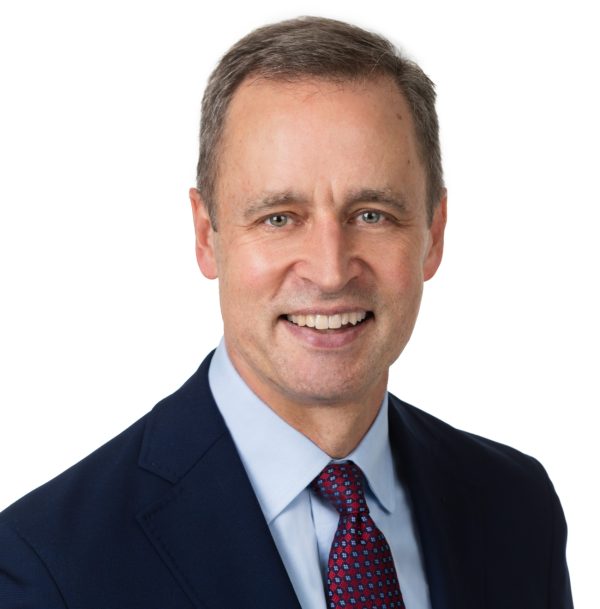
William (Will) A. Barclay, 56, Republican, is the New York Assembly minority leader and represents the 120th New York Assembly District, which encompasses all of Oswego County, as well as parts of Jefferson and Cayuga counties.

OPINION: Changes in Congress make governing less appealing
Do you want to run for Congress? That’s good to hear. There are few jobs that are more important. The work can be very rewarding. The institution badly needs more energetic, smart, and civic-minded members. I served in Congress for 34 years, and the thought never entered my head to quit. I enjoyed the job
Become a Central New York Business Journal subscriber and get immediate access to all of our subscriber-only content and much more.
Click here to purchase a paywall bypass link for this article.
Do you want to run for Congress? That’s good to hear. There are few jobs that are more important. The work can be very rewarding. The institution badly needs more energetic, smart, and civic-minded members.
I served in Congress for 34 years, and the thought never entered my head to quit. I enjoyed the job and the people, the dedicated professionals who make Capitol Hill work. I valued working with the marvelous individuals engaged in the enterprise of governing.
But I worry that the current atmosphere is discouraging good people from running. There are many factors making the job less appealing: Fierce clashes over votes. The expectation of intense partisanship. Overwhelming demands on your time. Constant conflict with the president. The loss of comity and bipartisanship.
I’m concerned that the most-talented people in America no longer see public service as their calling. Or, if they do, they run for local and state offices where they can get things done. Being one of 535 members of the House and Senate can seem like an exercise in frustration.
Congress, naturally, reflects society. Americans, divided by partisan news sources and social media, no longer trust each other the way we once did. A Pew Research Center analysis found that Democrats and Republicans are further apart, ideologically, than in the previous half century. Moderates have quit or lost in primary elections. There are only about two dozen moderates in Congress, compared to more than 160 in 1971-72.
Narrow majorities have become common, and members face intense pressure on their votes. President Donald Trump’s recent tax-and-spending bill was an example: Almost no Republicans voted against it, even though many expressed reservations, and Democrats were united in their opposition.
Serving in Congress has always been demanding. The hours are long, with committee hearings running for hours and crucial votes often taking place late at night. Travel is constant, not only for congressional duties but to spend time in members’ districts. Members face pressing expectations from constituents and interest groups. All this is tough on families.
Today, the pressure to raise funds for election campaigns is unrelenting. The practice of “dialing for dollars” turns members and candidates into glorified telemarketers. Unless you’re personally wealthy, there’s no choice but to spend a lot of time asking for money.
Conflicts with the president are another growing problem. America’s founders saw Congress as the first branch of government, the one closest to the people, but the executive branch increasingly calls the shots. Congress members who don’t fall in line can expect brutal pressure from the president and his supporters. Trump didn’t start this, but he has taken it to a new level.
In my view, the decline in positive relationships may be the most serious problem. When I served, working partnerships between Democrats and Republicans were common. On the House floor, you would often see a Democrat crossing to the Republican section to talk with a colleague, and vice versa. That doesn’t happen as much anymore. It’s as if the aisle between the parties is a wall.
Don’t get me wrong: I’m not suggesting Congress is a lost cause. You can still accomplish a lot, from serving constituents to working on issues with like-minded members. There are many ideas for reforming Congress that are worth pursuing, and some may make progress.
But there is no question this will be difficult. We have taken the wrong road in our politics for too long, and our democracy is under a lot of stress. Are you still thinking about running for Congress? The challenge is immense, but the work is essential. Only if we keep trying will we return Congress to its rightful role, responsive to the people and capable of governing effectively.
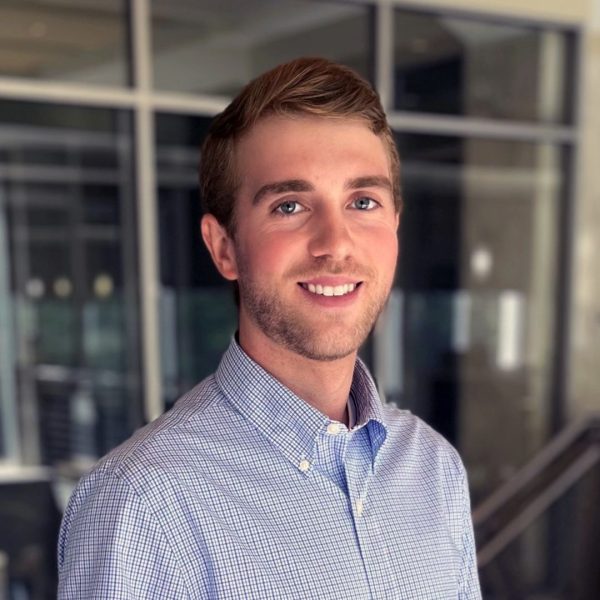
Lee Hamilton, 94, is a senior advisor for the Indiana University (IU) Center on Representative Government, distinguished scholar at the IU Hamilton Lugar School of Global and International Studies, and professor of practice at the IU O’Neill School of Public and Environmental Affairs. Hamilton, a Democrat, was a member of the U.S. House of Representatives for 34 years (1965-1999), representing a district in south-central Indiana.

Tynan Jones joins the Firm as a Tax Associate. Jones earned a B.S. in in Business Administration from SUNY Binghamton. He previously interned with the

Ask Rusty: I’m in Poor Health & Need to Know my SS Options
Dear Rusty: I plan to stop working soon. My health is not good. I am 66 years old, born in June 1959, so my full retirement age is 66 years and 10 months. My wife passed away in March 2024, and she was collecting Social Security (SS) benefits when she died. I have no dependent
Become a Central New York Business Journal subscriber and get immediate access to all of our subscriber-only content and much more.
Click here to purchase a paywall bypass link for this article.
Dear Rusty: I plan to stop working soon. My health is not good. I am 66 years old, born in June 1959, so my full retirement age is 66 years and 10 months. My wife passed away in March 2024, and she was collecting Social Security (SS) benefits when she died. I have no dependent children. In general, what benefits am I entitled to?
Signed: Unhealthy and Struggling
Dear Unhealthy and Struggling: Sorry to hear that your health is failing, and that you will need to stop working soon. But do not fear — Social Security will be there for you. Here is some info to help you decide your next possible steps.
Since you will not reach your full retirement age (FRA) until next year (in April 2026), your earnings limit from working for this year is $23,400 (or $1,950/month). The earnings limit will apply only if you decide to claim SS early (this year). If you decide to take Social Security this year, your earnings from before you take SS won’t count, but your monthly earnings for the remaining months of this year will be subject to the 2025 monthly limit ($1,950). If your monthly earnings exceed that amount, you won’t be entitled to SS benefits for that month, unless your total earnings for 2025 are less than $23,400). If you don’t exceed the annual limit, your 2025 Social Security benefits won’t be affected by your work earnings.
Next year, the year you attain your FRA, your earnings limit will be much higher (about 2.5 times more, or something more than about $63,000). If your 2026 earnings up through March do not exceed that limit, then you can claim your SS benefits a bit earlier in 2026 (before your FRA), and your benefits won’t be affected, except that your monthly benefit amount will be permanently reduced by 0.556 percent for each month you claim before your FRA. For example, if you were to claim for your SS to start in January 2026, you would get 98.3 percent of your FRA amount. So, provided your work earnings won’t exceed about $63,000 between January and March 2026, you could claim effective January 2026 without worrying about the Social Security earnings test. So, depending upon your health, you could claim SS to start in January 2026, likely without worry about the earnings test, and would get about 98.3 percent of your FRA benefit. Or, health permitting, you could wait to claim SS starting in April 2026 to get 100 percent of the benefit you’ve earned from a lifetime of working. Point is, you just need to be careful not to exceed the Social Security earnings tests prior to reaching your full retirement age, or the Social Security Administration (SSA) will take away some of your benefits. It “takes away” by withholding future monthly payments as long as needed to recover what you owe. Worse case penalty for exceeding the 2026 monthly limit would be no benefits for any month you exceed about $5,300, or a penalty of $1 for every $3 over the limit if you exceed the 2026 annual limit before your FRA.
You do, however, have another option as your wife’s surviving spouse — you can claim your benefit as a surviving spouse prior to claiming your own SS retirement amount. But the earnings test described above (if you claim before your FRA) would also apply to your survivor benefits. So, again, your plans for working enter this decision. If you decide to stop working this year, you could, for example, decide to claim your survivor benefit this year and collect that until you reach your FRA in April 2026 when you would get 100 percent of your personal SS retirement amount. In fact, you might even decide to collect your survivor benefit longer, allowing your own SS benefit to grow until you are 70, at which time you would get about 25 percent more than your FRA amount. Indeed, if your survivor benefit is higher than your personal age 70 amount, you can just continue to claim the higher amount.
I suggest that when you decide that you must stop working full time, you contact the SSA at (800) 772-1213 to discuss whether it is best to claim your survivor benefit from your wife first and delay claiming your own until a later time (to get a higher amount). You can make an appointment to discuss your options with the SSA over the phone, before deciding when (and what) to claim. And, of course, if you have any further questions, we are always here to assist you with your decision.
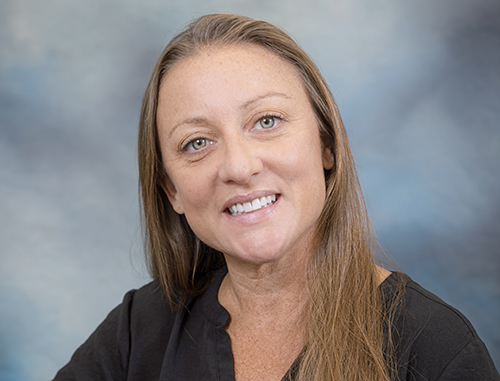
Russell Gloor is a national Social Security advisor at the AMAC Foundation, the nonprofit arm of the Association of Mature American Citizens (AMAC). The 2.4-million-member AMAC says it is a senior advocacy organization. Send your questions to: ssadvisor@amacfoundation.org.
Author’s note: This article is intended for information purposes only and does not represent legal or financial guidance. It presents the opinions and interpretations of the AMAC Foundation’s staff, trained, and accredited by the National Social Security Association (NSSA). The NSSA and the AMAC Foundation and its staff are not affiliated with or endorsed by the Social Security Administration (SSA) or any other governmental entity.
Oswego Health Foundation names two new members of board of directors
OSWEGO — The Oswego Health Foundation has announced the appointment of Darcy Antonucci and Pam Stephens as the two newest members of its board of directors. Antonucci currently serves as comptroller for the Broadwell Hospitality Group in Oswego, where she oversees the financial functions of nine growing corporations, as well as direct leadership of the
Become a Central New York Business Journal subscriber and get immediate access to all of our subscriber-only content and much more.
Click here to purchase a paywall bypass link for this article.
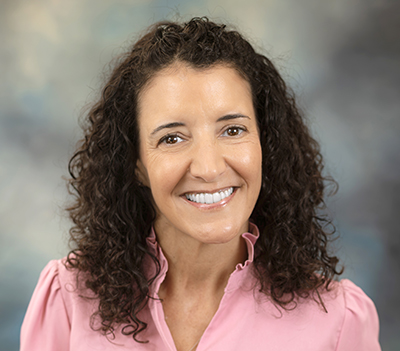
OSWEGO — The Oswego Health Foundation has announced the appointment of Darcy Antonucci and Pam Stephens as the two newest members of its board of directors.

Antonucci currently serves as comptroller for the Broadwell Hospitality Group in Oswego, where she oversees the financial functions of nine growing corporations, as well as direct leadership of the company’s administrative departments. She previously worked as the senior administrative director for a nonprofit human-services organization that supports people with disabilities.
Antonucci has a long history of community leadership, including seven years on the Compass Credit Union board of directors, where she now serves as vice chair, and as an active member of the Trinity Catholic school board. She has also been an active member of the Oswego Health Foundation Gala Committee since 2018. As a new board member, Antonucci will also serve as treasurer, according to the foundation.
In addition to her professional roles, Antonucci provides freelance financial and business services to several local small businesses. Her broad background in finance, human resources, and real estate will be a valuable asset to the Oswego Health Foundation board, the foundation contended.

Stephens brings extensive experience in community engagement, wellness, and nonprofit leadership. Originally from Oakville, Ontario (Canada), she graduated from Brock University with a degree in recreation and leisure management before traveling the world and eventually settling in Oswego with her husband, Dr. Micheal Stephens, in 2004, the announcement stated.
Stephens’ professional and volunteer work has been rooted in a commitment to serving others. She played a pivotal role in growing the Senior Circle Organization in Texas into a 400-member wellness program, worked as membership coordinator for the Oswego YMCA, and helped launch the Maples Assisted Living Facility in Fulton. She currently serves as member engagement coordinator at the Oswego YMCA and as a board member of the Human Concerns Food Pantry. Her deep passion for serving the community and connecting people with resources will be instrumental to the foundation’s mission, according to the announcement.
“Having well-rooted community members like Darcy and Pam join our Foundation Board is invaluable. Their deep connections and commitment to Oswego County will strengthen our efforts to ensure accessible, quality healthcare close to home. Together, we can continue to build a healthier future for our community,” Margaret Barclay, executive director of the Oswego Health Foundation, said in the announcement.
The Oswego Health Foundation says it exists to raise and manage philanthropic support for Oswego Health, a 144-year-old independent nonprofit health-care system.

Alexsander Yousuf, CPA re-joins the Firm as an Audit Manager. He brings a strong background in accounting, audit, and financial management, with experience spanning both

CenterState CEO formally opens the expanded INSPYRE Innovation Hub
SYRACUSE, N.Y. — CenterState CEO on Thursday formally opened the expanded INSPYRE Innovation Hub (the former Tech Garden) at 235 Harrison St. in Syracuse. The

Mohawk Valley Health System selects new president and CEO
UTICA, N.Y. — The board of directors of the Mohawk Valley Health System (MVHS) on Thursday announced the appointment of Dr. William LeCates as the

State selects Tompkins County farm for New York AEM-Leopold Conservation Award
NEWFIELD, N.Y. — The state has selected Oechsner Farms of Newfield in Tompkins County for the 2025 New York Agricultural Environmental Management (AEM)-Leopold Conservation Award. The award recognizes a farm and its nominating soil and water conservation district (SWCD) who have “gone above and beyond” in the management of soil health, water quality, and wildlife
Become a Central New York Business Journal subscriber and get immediate access to all of our subscriber-only content and much more.
Click here to purchase a paywall bypass link for this article.
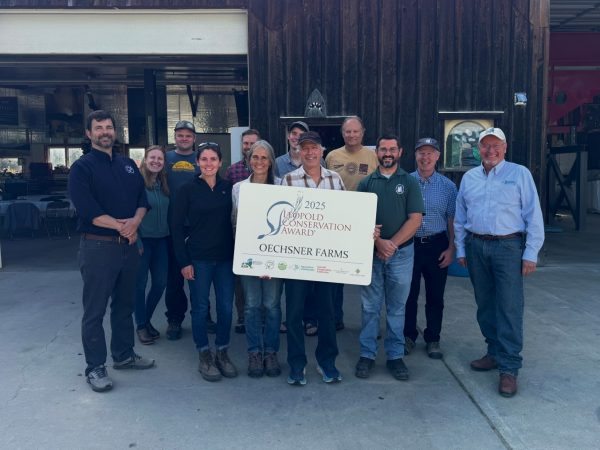
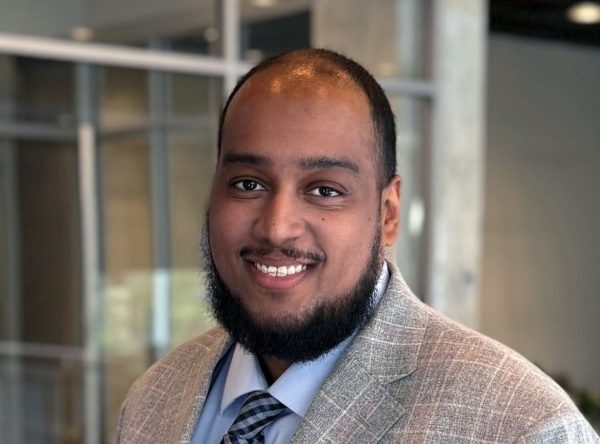
NEWFIELD, N.Y. — The state has selected Oechsner Farms of Newfield in Tompkins County for the 2025 New York Agricultural Environmental Management (AEM)-Leopold Conservation Award.
The award recognizes a farm and its nominating soil and water conservation district (SWCD) who have “gone above and beyond” in the management of soil health, water quality, and wildlife habitat on working land, per the Sept. 12 announcement.
Richard Ball, New York State agriculture commissioner, and partners from the Sand County Foundation visited Oechsner Farms to honor Thor Oechsner and Rachel Lodder, who own and operate the farm, during a special ceremony.
Oechsner Farm is a regenerative organic certified grain farm operated by Thor Oechsner and his team. Together, they farm more than 1,200 acres of hard red spring and winter wheats, hulless oats, common and tartary buckwheat, polenta type corn, rye, einkorn, grass/legume hay, and red clover as their main rotational crops, primarily for organic food-grade and craft-malt beverage markets.
“Farms like Oechsner Farms play a central role in feeding our families while also protecting soil and water quality in communities across New York State,” Richard Ball, New York State agriculture commissioner, said in the announcement. “On behalf of the Department and New York State, I congratulate the Oechsner family and their team on receiving the esteemed AEM-Leopold Conservation Award and the Tompkins County Soil and Water Conservation District for their work with farms in the county and Finger Lakes Region. Their innovation and pride in their work, as well as their commitment to biodiversity and preserving wildlife habitats, are exemplary of the AEM-Leopold mission and an inspiration to other farms following in their footsteps.”
The state made the announcement of ahead of Climate Week, the New York State Department of Agriculture and Markets said.
Sand County Foundation and national sponsor American Farmland Trust will present Leopold Conservation Awards to landowners in 28 states this year. Given in honor of renowned conservationist Aldo Leopold, the award recognizes farmers who inspire others with their dedication to environmental improvement, per the state’s announcement.
In his influential 1949 book, A Sand County Almanac, Leopold advocated for “a land ethic,” an ethical relationship between people and the land they own and manage.
New York’s longstanding Agricultural Environmental Management (AEM) Award paired with the Leopold Conservation Award program in 2020. In partnership with the New York State Department of Agriculture and Markets, the AEM-Leopold Conservation Award honors a farm and its nominating SWCD for their efforts to promote and protect the environment through the preservation of soil and water quality while helping to ensure farm viability for future generations.
Earlier this year, New York State SWCDs were encouraged to identify and nominate the best examples of conservation success in their district. Applications were reviewed by an independent panel of agricultural and conservation leaders from New York.
Stay up-to-date on the companies, people and issues that impact businesses in Syracuse, Central New York and beyond.