
Stay up-to-date on the companies, people and issues that impact businesses in Syracuse, Central New York and beyond.

Coach AI is first product in PAR Technology’s new PAR AI intelligence suite
NEW HARTFORD, N.Y. — PAR Technology Corp. (NYSE: PAR) describes its PAR AI as a new intelligence layer embedded directly into the PAR product suite. PAR AI introduced Coach AI, a purpose-built intelligent assistant designed for critical roles in restaurant operations, as described in the company’s Sept. 9 announcement. PAR Technology, based in New Hartford, […]
Become a Central New York Business Journal subscriber and get immediate access to all of our subscriber-only content and much more.
Click here to purchase a paywall bypass link for this article.
NEW HARTFORD, N.Y. — PAR Technology Corp. (NYSE: PAR) describes its PAR AI as a new intelligence layer embedded directly into the PAR product suite.
PAR AI introduced Coach AI, a purpose-built intelligent assistant designed for critical roles in restaurant operations, as described in the company’s Sept. 9 announcement.
PAR Technology, based in New Hartford, is a foodservice-technology provider.
PAR AI-powered features are built into the core of PAR’s products — spanning POS (point of service), back office, loyalty, drive-thru, and payments — with no technical training or new apps required. This embeds AI directly in an existing workflow to “deliver actionable insights seamlessly and create unique outcomes.”
“PAR AI marks a turning point in how we serve our customers,” Savneet Singh, CEO of PAR Technology, said in the announcement. “We’re going AI native, embedding it into everything we do. It’s not about building tools anymore — it’s about owning the workflows to drive new outcomes within existing processes. The result? Automation that’s not just efficient, but intelligent — driving unique outcomes that were unthinkable before Gen AI. Systems that don’t just respond — they anticipate, adapt, and evolve. PAR AI isn’t just powering tasks; it’s the foundation for running a smarter, faster, more agile business. Coach AI is just the beginning of a future where AI drives clarity, speed, and performance across the entire restaurant experience.”
PAR describes Coach AI as the operational intelligence assistant for corporate leaders, area coaches, and managers, embedded into the PAR OPS platform. Coach AI provides instant answers, eliminating manual data analysis and interpretation, and redirects valuable time to train staff or engage with guests.
Through simple, natural language questions, Coach AI pulls live data from POS, inventory, labor scheduling, and external disparate files to deliver clear visualizations, KPI grids, and actionable recommendations — all without platform-hopping, PAR said.
The company went on to say that coming this fall is a marketing-intelligence assistant for marketers, integrated into the PAR Engagement platform. It will “transform” campaigns and customer data into “instant, actionable” insights.
This conversational AI assistant will provide real-time analytics on loyalty program performance, digital ordering, and customer-engagement metrics, eliminating wait times for custom reports and manual feedback analysis, per the PAR Technology announcement.

MVCC hosts faculty from Dominican Republic, share STEM education practices
UTICA, N.Y. — Three faculty members from the Autonomous University of Santo Domingo (UASD) in the Dominican Republic visited Mohawk Valley Community College (MVCC) in early September to do some learning. The instructors traveled to Utica to explore MVCC’s approach to strengthening education in the areas of science, technology, engineering, and mathematics (STEM). Gladys Nunez,
Become a Central New York Business Journal subscriber and get immediate access to all of our subscriber-only content and much more.
Click here to purchase a paywall bypass link for this article.
UTICA, N.Y. — Three faculty members from the Autonomous University of Santo Domingo (UASD) in the Dominican Republic visited Mohawk Valley Community College (MVCC) in early September to do some learning.
The instructors traveled to Utica to explore MVCC’s approach to strengthening education in the areas of science, technology, engineering, and mathematics (STEM).
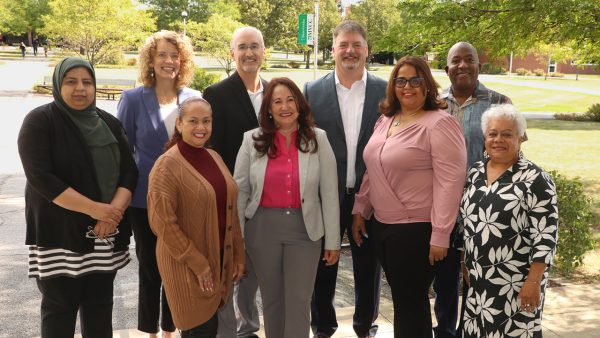
Gladys Nunez, Rosa Almonte, and Reina Raveras — all mathematicians and part of UASD’s STEAM education project — visited MVCC in Utica on Sept. 4 and Sept. 5. It was part of a UASD training program aimed at strengthening professors’ skills in implementing active, innovative, and contextualized methodologies from a STEM perspective.
While on campus, they were involved in a series of activities to highlight MVCC’s approach to STEM education and initiatives to enhance faculty skills.
The visit included tours of MVCC’s science laboratories and discussions about future facility developments.
It also included a tour of the Learning Commons with discussion and sharing of teaching methodologies and integrated learning supports in mathematics; a tour of the College-Community-Connection office, which helps students deal with non-academic challenges (like food insecurity and homelessness) so they can focus on completing their educational goals; and tours of technology and fabrication labs, paired with conversations on pedagogy and applied learning.
The visit additionally involved discussion of non-credit to credit pathways, including MVCC’s free FastTrack career program, and a discussion of STEM teaching methods, engagement strategies, and the strengths of MVCC’s Engineering and Engineering Technology programs.
The visit also included training approaches in advanced-manufacturing education.
MVCC faculty and staff also shared best practices, teaching resources, and innovative instruction models that have been developed to support student success and faculty excellence.
“This exchange underscores the importance of collaboration across borders to advance STEM education,” Randall VanWagoner, president of MVCC, said. “We are proud to showcase the work being done at MVCC to strengthen teaching and learning, and to learn from our colleagues at the Autonomous University of Santo Domingo.”

SRC wins $24M U.S. Air Force contract for AI, computing architecture development work
CICERO, N.Y. — SRC Inc. was recently awarded a nearly $24.3 million contract for innovative research and development of advanced efficient computing architectures and systems. The pact provides for development of robust algorithms and applications, in order to achieve orders of magnitude improvement in size, weight, and power, for deploying robust artificial intelligence and machine-learning
Become a Central New York Business Journal subscriber and get immediate access to all of our subscriber-only content and much more.
Click here to purchase a paywall bypass link for this article.
CICERO, N.Y. — SRC Inc. was recently awarded a nearly $24.3 million contract for innovative research and development of advanced efficient computing architectures and systems.
The pact provides for development of robust algorithms and applications, in order to achieve orders of magnitude improvement in size, weight, and power, for deploying robust artificial intelligence and machine-learning capabilities in an embedded computing environment for ground, air, and space domains. That’s according to a Sept. 26 contract announcement from the U.S. Department of War (formerly called the Department of Defense).
Work will be performed at SRC’s facility in Cicero and is expected to be completed by Nov. 26, 2028. This award is the result of a competitive acquisition, and two bids were received. Fiscal 2024 and fiscal 2025 research, development, test, and evaluation funds of $203,460 are being obligated at the time of award, per the contract announcement. The Air Force Research Laboratory in Rome is the contracting authority.
SRC is a not-for-profit research and development company that says it combines information, science, technology, and ingenuity to solve problems in the areas of defense, environment, and intelligence. It employs more than 1,400 people.

OPINION: Medicaid Waste is Another Example of N.Y. Being its Own Worst Enemy
New York State’s unrelenting taxes and a dwindling population — in addition to chronic fraud, abuse, and waste — continue to hinder economic growth. The last thing New Yorkers need is to see their own state government wasting money, but that is, unfortunately, what appears to have happened thanks to a newly uncovered Department of
Become a Central New York Business Journal subscriber and get immediate access to all of our subscriber-only content and much more.
Click here to purchase a paywall bypass link for this article.
New York State’s unrelenting taxes and a dwindling population — in addition to chronic fraud, abuse, and waste — continue to hinder economic growth. The last thing New Yorkers need is to see their own state government wasting money, but that is, unfortunately, what appears to have happened thanks to a newly uncovered Department of Health (DOH) oversight costing more than a billion dollars.
Reports from the Office of the New York State Comptroller indicate the state accidentally distributed $1.2 billion in Medicaid payments to managed-care companies for covering individuals who were residing out of state. The enormity of this error is both alarming and disturbing, and so is the fact that it could have been avoided if the DOH had basic vetting and verification practices in place to prevent it.
The improper payments were made despite the existence of a federal database known as the Public Assistance Reporting Information System, which is designed specifically to identify residents who may be receiving benefits payments from more than one state. Unfortunately for New Yorkers, the comptroller’s audit found DOH did not begin sending relevant data or conducting reviews on potential duplicate payments until after $1.5 billion had already been sent to unreviewed individuals.
Additionally, Comptroller Thomas DiNapoli’s office found the DOH failed to properly transfer individuals eligible for Medicare off Medicaid, which led to another errant $294.4 million in inappropriate spending, as well as other overpayments and improper expenditures. These are not rounding errors; these mistakes cost New Yorkers billions of dollars at a time when every dollar matters.
It is no secret New York has faced myriad waste and fraud issues in recent years, but the sheer magnitude of these errors threatens to further damage our already fragile health-care system. New York State already spends too much on Medicaid, among the most bloated programs in the nation, and we simply cannot afford to send a single dollar to anyone who is not rightfully eligible.
These mistakes must be cleaned up immediately. New Yorkers literally cannot afford any more incompetence.
William (Will) A. Barclay, 56, Republican, is the New York Assembly minority leader and represents the 120th New York Assembly District, which encompasses all of Oswego County, as well as parts of Jefferson and Cayuga counties.

OPINION: Congress Is No Longer an Equal Branch
Though Congress-watchers have been focused since the beginning of the year on the ever-shrinking power of Capitol Hill, the common wisdom finally seems to be catching up. The New York Times recently headlined the online version of a front-page story, “Trump Tramples Congress’s Power, With Little Challenge From G.O.P.” Two days later, the Wall Street
Become a Central New York Business Journal subscriber and get immediate access to all of our subscriber-only content and much more.

Click here to purchase a paywall bypass link for this article.
Though Congress-watchers have been focused since the beginning of the year on the ever-shrinking power of Capitol Hill, the common wisdom finally seems to be catching up. The New York Times recently headlined the online version of a front-page story, “Trump Tramples Congress’s Power, With Little Challenge From G.O.P.” Two days later, the Wall Street Journal took a different angle: “Cases on Trump’s Powers Raise Stakes for Congress: If president persuades courts on his expansive claims of authority, it would shrink the domain of the legislative branch.”
“Expansive claims of authority” is putting it mildly. We’re not even a quarter of the way through the second Trump administration, and the list of assaults on Congress’s prerogatives seems to grow every day. The White House is trying to claw back money Congress appropriated; it launched a military assault outside U.S. territorial waters without even notifying members; it is trying to cancel $5 billion in foreign aid approved by Congress; it’s pursued an economy-altering regime of tariffs — which the Constitution explicitly places in Congress’s domain; it’s repeatedly ousted administration officials just voted in by Congress; it has sought aggressively to block or at least control congressional oversight (another constitutional mandate)… By the time you read this, there will undoubtedly be more examples.
To some extent, this is simply a continuation of long-term trends. As New York Times reporters Julian E. Barnes and Catie Edmonson write, “For nearly a century, Democratic and Republican presidents alike have sought to amass more power, particularly to conduct foreign policy and military operations, and with a few exceptions, succeeded in chipping away at congressional influence.” Or to put it more succinctly, as former federal judge and current Stanford law professor Michael McConnell does in the Wall Street Journal, “When the president pushes the envelope, the other side of the envelope is Congress.”
And in certain arenas, most notably crafting the federal budget and war powers, Congress seemed content even before the first Trump administration to give the president more power. What seems different this time is the extent to which the leadership in both chambers has bowed to the administration’s wishes and avoided standing up for Congress’s authority.
I’ll be honest: I think this is misguided. I don’t think it’s an accident that the U.S. reached the apogee of its power at a time when Congress was a fully functioning, equal branch of government. There were plenty of reasons, ranging from the deep subject-matter expertise of prominent committee chairs and even rank-and-file members to policies that were more deliberative, representative, and sustainable because they often reflected compromise across regions, constituencies, and ideologies. Everything from the Social Security Act of 1935 to the Civil Rights Act of 1964 to the War Powers Resolution of 1973 came out of a Congress not just willing, but eminently capable of working collaboratively in a determination to flex its muscles.
Yet even I, an unabashed and enthusiastic proponent of congressional power, have to recognize that those days are likely done. Since the 1990s, deep partisan divides — stoked by leaders seeking to cement their power — have made it difficult (though not impossible) to reach compromises across the aisle. The centralization of power in leadership hands has robbed committees of their ability to deliberate on policy, hear from expert witnesses, and apply technical expertise to legislation. And perhaps more than anything else, several generations of members have lost the instinct of congressional power — and along with it, the knowledge and legislative skills necessary to sustain Congress as a co-equal branch. There are the occasional glimmers of a congressional pulse — the Epstein files are a good example — but they stand out because they’re so rare.
Still, while Congress may never return to its powerful heyday, let alone to the roles our founders envisioned for it, there is no question that it can re-assert some of its authority whenever its members choose to do so. They can hold meaningful oversight hearings; they can withhold funding for administration initiatives they dislike; they can challenge, in court, presidential attempts to steal their constitutional authority. They can even craft and then pass legislation they believe the country needs. Congress has the right; it’s just a matter of will.
Lee Hamilton, 94, is a senior advisor for the Indiana University (IU) Center on Representative Government, distinguished scholar at the IU Hamilton Lugar School of Global and International Studies, and professor of practice at the IU O’Neill School of Public and Environmental Affairs. Hamilton, a Democrat, was a member of the U.S. House of Representatives for 34 years (1965-1999), representing a district in south-central Indiana.
VIEWPOINT: Title VI Coordinator Mandate for N.Y. Universities Signed into Law
As colleges and universities across New York welcomed students back to campus this fall, New York State Gov. Kathy Hochul signed into law a new requirement for all New York higher-education institutions to appoint a Title VI coordinator and undertake related training and notifications to their communities. The law, which had bipartisan backing in both
Become a Central New York Business Journal subscriber and get immediate access to all of our subscriber-only content and much more.
Click here to purchase a paywall bypass link for this article.
As colleges and universities across New York welcomed students back to campus this fall, New York State Gov. Kathy Hochul signed into law a new requirement for all New York higher-education institutions to appoint a Title VI coordinator and undertake related training and notifications to their communities.
The law, which had bipartisan backing in both legislative chambers (Senate Bill S4559B / Assembly Bill A5448B) and was signed into law on Aug. 26, amends the New York Education Law by adding a new Section 6436-a to Article 129-A. The law is the first of its kind in the nation, going beyond even current federal mandates on Title VI of the Civil Rights Act of 1964, which do not, as of yet, specifically require all institutions to appoint a Title VI coordinator.
The law comes on the heels of increased focus on Title VI and particularly its application to antisemitic incidents on campuses. Indeed, Gov. Hochul specifically cited combating antisemitism in signing the bill, while also acknowledging other forms of bigotry. Title VI prohibits discrimination on the basis of race, color and national origin — including shared ancestry and ethnicity — in any program or activity of a federally funded school.
The new state law is not the first time New York has created requirements related to federal nondiscrimination law. Institutions are by now well familiar with the requirements of Article 129-B of the New York State Education Law, which covers institutional response to sexual assault, dating violence, domestic violence and stalking, thus overlapping with Title IX and the Violence Against Women Act (VAWA) amendments to the Clery Act.
Institutions must designate a Title VI coordinator to serve as the central point of contact for coordinating and overseeing a centralized process for compliance with Title VI, akin to the role of Title IX coordinators. The law does not prescribe the parameters on how the position is filled, but it permits the Title VI coordinator to also have other duties. Institutions will likely need to assess the following to determine how to structure the role, including whether a full-time appointment (and, possibly, additional roles) may be necessary:
• Historical incident volume;
• Capacity in existing roles;
• Reporting structures;
• Existing procedures;
• Alignment with processes for discrimination complaints involving other protected characteristics, as well as for employees; and
• the law’s other new obligations.
The law specifically permits the appointment of designees and collaboration with other institutional employees to assist in compliance with the new requirements, but vests ultimate responsibility for compliance with the Title VI coordinator. Although not specifically noted, designating one person to be both the Title IX and Title VI coordinator could be compliant with the law.
The Title VI coordinator has enumerated responsibilities under the new law once a discrimination or harassment report is received, which include:
• Offering supportive measures to complainants;
• Notifying students who report conduct that may implicate Title VI of the institution’s policies and procedures; and
• Ensuring there is a process for investigation and resolution of complaints consistent with obligations under both federal and state law.
The Title VI coordinator is also required to establish and maintain appropriate recordkeeping, including records related to assessments of reports and actions taken in response, as well as records related to trainings (see below).
Title VI coordinators must notify all students and employees of the institution’s policies and procedures for reporting discrimination and harassment each academic year. In crafting the annual notification and aligning with notifications on other covered forms of discrimination, institutions will need to ensure the annual notification covers each piece of information required by the new law, including:
• the college or university’s nondiscrimination policy statement;
• links to relevant reporting policies and procedures;
• the Title VI coordinator’s contact information; and
• any other information the Title VI coordinator and the institution deem necessary.
Additionally, institutions will be required to deliver annual training to all students and employees to “ensure institutional compliance.” The law directs the New York State Division of Human Rights to coordinate with higher-education institutions to develop a model training, though institutions will also be permitted to use their own equivalents. While this model training is being developed, institutions may wish to take stock of existing training requirements and the populations to whom such training is already delivered, as well as begin planning for the logistical aspects of delivering training to their communities.
Separately, Title VI coordinators and any designees are required to undergo training on Title VI and the responsibilities of the new state law.
The law becomes effective one year from its enactment (i.e., Aug. 26, 2026). Once effective, institutions have 90 days to appoint a Title VI coordinator. Training obligations begin the first full academic year after the effective date (i.e., academic year 2026-27). While this timeline provides a long runway for institutions to implement the law’s requirements, given the heightened enforcement focus on Title VI, institutions may wish to consider which elements of the law can be implemented sooner to help promote compliance with Title VI as well as state nondiscrimination laws.
Brittany Schoepp-Wong is a member (partner) in the New York City office of the Syracuse–based law firm Bond, Schoeneck & King PLLC. She advises colleges, universities, and other organizations on a wide range of complex legal issues, bringing more than a decade of experience as in-house counsel at leading higher-education institutions. Camisha Parkins is an associate attorney in Bond’s New York City office. She works with clients on a wide array of legal issues, including drafting employment-related policies, researching the latest developments in New York labor and employment law, and assisting in the preparation and resolution of pending litigation. This article is drawn from the law firm’s website.

Jack Pflanz has been hired by Erin’s Angels of CNY as its first-ever director of fund development and communications. This new leadership role, created in
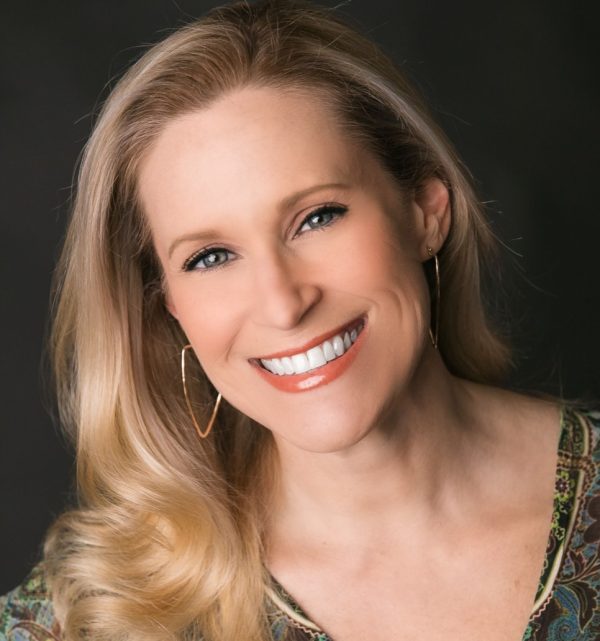
Vera House has announced the appointment of Rebecca Shiroff as senior director of strategic partnerships and intergovernmental affairs. She brings more than 30 years of leadership

Stewart Title has added Sherri Werchinski to the underwriting team in its Syracuse office. For more than 30 years, she has built a career in
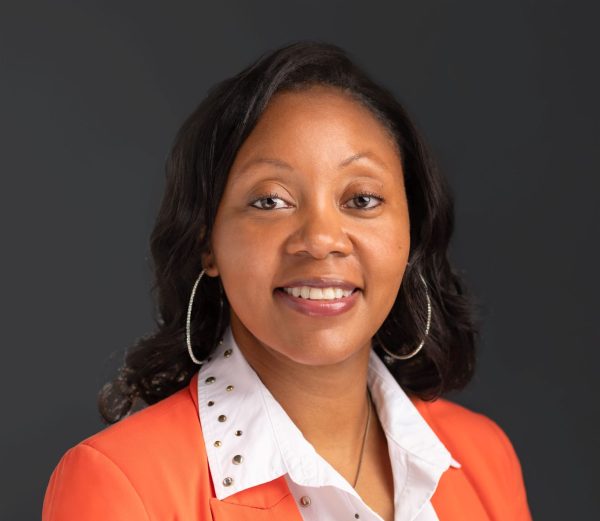
Community Bank, N.A. has appointed Latoya Allen as branch and community development manager of the bank’s newest Syracuse office at 4141 South Salina St. Allen will
Stay up-to-date on the companies, people and issues that impact businesses in Syracuse, Central New York and beyond.