
Get our email updates
Stay up-to-date on the companies, people and issues that impact businesses in Syracuse, Central New York and beyond.
What's New
Upcoming Events
CNYBJ Job Board
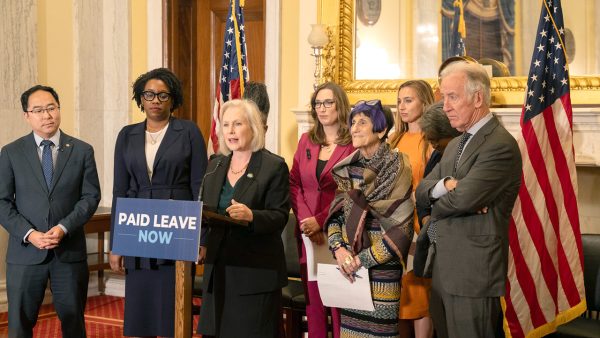
Gillibrand again pushes FAMILY Act for universal paid leave
The proposed Family and Medical Insurance Leave (FAMILY) Act, sponsored by Senator Kirsten Gillibrand (D–N.Y.) and other Democrats in Congress, would guarantee up to 12 weeks of partial income for workers who need to take leave for serious medical and family events. Paid medical and family leave is “especially helpful” for new parents and older […]
Get Instant Access to This Article
Become a Central New York Business Journal subscriber and get immediate access to all of our subscriber-only content and much more.
- Critical Central New York business news and analysis updated daily.
- Immediate access to all subscriber-only content on our website.
- Get a year’s worth of the Print Edition of The Central New York Business Journal.
- Special Feature Publications such as the Book of Lists and Revitalize Greater Binghamton, Mohawk Valley, and Syracuse Magazines
Click here to purchase a paywall bypass link for this article.
The proposed Family and Medical Insurance Leave (FAMILY) Act, sponsored by Senator Kirsten Gillibrand (D–N.Y.) and other Democrats in Congress, would guarantee up to 12 weeks of partial income for workers who need to take leave for serious medical and family events.
Paid medical and family leave is “especially helpful” for new parents and older Americans, who are more likely to have health issues or caregiving obligations for older relatives, per Gillibrand.
Both Gillibrand and U.S. Representative Rosa DeLauro (D–Conn.) on Sept. 16 held a press conference to announce the introduction of the proposed FAMILY Act.
“Without universal paid leave, millions of Americans are forced to make devastating choices between their livelihood and the health of themselves or their families,” Gillibrand said in the announcement. “By guaranteeing up to 12 weeks of paid leave for workers who have to take time off for a major life event, the FAMILY Act will end these impossible decisions. I am proud to have led the fight for paid leave alongside Representative DeLauro for over a decade, and I’ll continue fighting for this program for as long as it takes so we can give every worker the flexibility and dignity they deserve.”
Gillibrand also introduced the FAMILY Act in the Senate in May 2023 and February 2021, when Democrats controlled the Senate, and the legislation did not advance past committee, according to the website of Congress.gov. Republicans currently have the majority in the Senate. The legislation was first introduced as a bill sponsored by DeLauro in the House back in December 2013, per the website.
Gillibrand and DeLauro today argue the FAMILY Act delivers a “key solution to the country’s public health and economic challenges and is modeled on successful state programs,” Gillibrand’s office said. Currently, 73 percent of American workers do not have access to paid leave despite a large body of research showing that paid leave improves workers’ mental health; boosts employee retention and productivity; and helps businesses. Additionally, working families lose $22.5 billion per year in wages due to a lack of paid family and medical leave.
The proposed FAMILY Act would provide workers with paid leave for a range of major life events. They include recovering from their own serious health condition; caring for a family member with a serious health condition; and bonding with a new child — whether newborn, adopted, or placed through foster care.
The life events could also include handling responsibilities related to a family member’s military deployment; and taking “safe leave” to respond to domestic violence, sexual assault, or stalking.
Gillibrand and DeLauro were joined at the press conference by Senators Ron Wyden (D–Ore.) and Andy Kim (D–N.J.), as well as Reps. Richie Neal (D–Mass.), Lauren Underwood (D–Ill.), and Sarah McBride (D–Del.). The proposed legislation is also cosponsored by a number of other Democrat senators.
Former Durhamville Fire Dept. treasurer admits to $92K theft
DURHAMVILLE, N.Y. — Sentencing is set for Nov. 21 for the former treasurer of the Durhamville Fire Department in Oneida County, who recently pled guilty to stealing more than $92,000 from the fire department over a seven-year period. As part of the plea, Kimberly Simchik, 62, of Durhamville will pay restitution of just over $92,000
Get Instant Access to This Article
Become a Central New York Business Journal subscriber and get immediate access to all of our subscriber-only content and much more.
- Critical Central New York business news and analysis updated daily.
- Immediate access to all subscriber-only content on our website.
- Get a year’s worth of the Print Edition of The Central New York Business Journal.
- Special Feature Publications such as the Book of Lists and Revitalize Greater Binghamton, Mohawk Valley, and Syracuse Magazines
Click here to purchase a paywall bypass link for this article.
DURHAMVILLE, N.Y. — Sentencing is set for Nov. 21 for the former treasurer of the Durhamville Fire Department in Oneida County, who recently pled guilty to stealing more than $92,000 from the fire department over a seven-year period.
As part of the plea, Kimberly Simchik, 62, of Durhamville will pay restitution of just over $92,000 and faces one to three years in jail at sentencing.
Simchik pled guilty to grand larceny in the second degree and corrupting the government in the second degree before Judge Michael Nolan in Oneida County Court.
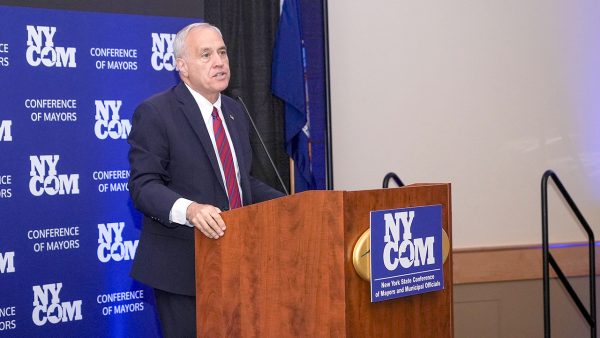
New York State Comptroller Thomas DiNapoli, Oneida County District Attorney Todd Carville, and New York State Police Superintendent Steven James announced Simchik’s guilty plea on Sept. 24.
“Kimberly Simchik diverted fire department resources to bankroll her personal life, betraying the trust of the community she served,” DiNapoli said in the announcement. “My thanks to Oneida County District Attorney Carville and the New York State Police for their partnership in holding her accountable.”
DiNapoli’s office explained that Simchik stole over $90,000 in fire department funds by using the department’s debit card to make payments at local casinos and by diverting checks made out to the department into her personal account. She also spent department funds on plane tickets, spas, and nail salons.
The theft was discovered when a fire department member attempted to make a deposit and was informed by the bank that the department account had been closed due to a negative balance. The fire department subsequently reached out to the New York State Police, who partnered with DiNapoli’s office to conduct an investigation and forensic analysis. Simchik has since resigned from the fire department.
“The Oneida County District Attorney’s Office would like to thank the New York State Police and the New York State Comptroller’s Office for their assistance in bringing the defendant to justice,” Carville said in the DiNapoli announcement. “This reprehensible act has no place in our society. Stealing from our volunteer service, the great men and women who dedicate their time and talent to the Durhamville Fire Department, is wholly unacceptable and inexcusable. I would like to thank my Assistant, Assistant District Attorney Kurt Schultz, for holding Ms. Simchik accountable for her actions.”

Barclay Damon forms practice handling pharmacy matters
SYRACUSE, N.Y. — Barclay Damon, LLP says it has a multidisciplinary group of attorneys providing legal services across the pharmacy, pharmaceutical, and health-innovation industries. Its national pharmacy team builds on decades of experience advising retail, specialty, compounding, infusion, long-term care, and 340B pharmacies as well as wholesalers, manufacturers, investors, and startups into a nationally focused,
Get Instant Access to This Article
Become a Central New York Business Journal subscriber and get immediate access to all of our subscriber-only content and much more.
- Critical Central New York business news and analysis updated daily.
- Immediate access to all subscriber-only content on our website.
- Get a year’s worth of the Print Edition of The Central New York Business Journal.
- Special Feature Publications such as the Book of Lists and Revitalize Greater Binghamton, Mohawk Valley, and Syracuse Magazines
Click here to purchase a paywall bypass link for this article.
SYRACUSE, N.Y. — Barclay Damon, LLP says it has a multidisciplinary group of attorneys providing legal services across the pharmacy, pharmaceutical, and health-innovation industries.
Its national pharmacy team builds on decades of experience advising retail, specialty, compounding, infusion, long-term care, and 340B pharmacies as well as wholesalers, manufacturers, investors, and startups into a nationally focused, industry-specific practice, the Syracuse–based law firm said in a Sept. 9 announcement.
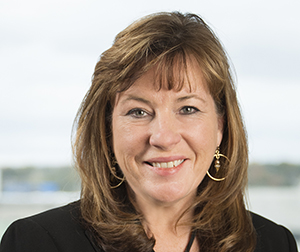
“We’ve advised pharmacy clients through every stage of growth and challenge,” Linda Clark, co-chair of the law firm’s pharmacy team, said in the announcement. “This launch reflects Barclay Damon’s commitment to delivering coordinated, industry-specific counsel that helps our clients stay compliant, protect their businesses, and seize opportunities in a complex regulatory and contractual environment.”
This group of attorneys has experience in key practice areas that include regulatory compliance and PBM enrollment, audits, investigations, and terminations. The practice areas also include government investigations and enforcement defense; licensing and operational strategy; corporate transactions, investments, and rollups; data security, HIPAA compliance, and digital health; intellectual property, trademarks, and tech licensing; employment, workforce strategy, and tax planning; and real estate and pharmacy-site development.

“Our attorneys don’t just know the law, we understand how pharmacy businesses actually operate,” Brad Gallagher, pharmacy team co-chair, said. “Whether we’re advising a startup or defending a multistate provider, our focus is always on delivering clarity, minimizing risk, and driving results.”
The pharmacy attorneys provide legal counsel to individuals and entities across the entire supply chain. That includes retail, specialty, compounding, infusion, long-term care, and 340B pharmacies; pharmacy owners, executives, and licensed pharmacists; and wholesalers, distributors, and pharmaceutical manufacturers.
They also provide legal counsel for private-equity firms and other strategic investors; health-care startups, digital health companies, and technology innovators; and consultants, vendors, and service providers supporting the pharmacy sector, the firm said.
The pharmacy attorneys will deal with representative matters that include recovering reimbursements and reversing PBM (pharmacy benefit manager) terminations and enrollment denials, including through litigation and emergency injunctions.
They’ll also defend clients in complex federal and state audits and investigations, including those led by the U.S. Department of Justice (DOJ); Drug Enforcement Agency (DEA); Office of the Inspector General, and Office of the Medicaid Inspector General.
The attorneys can additionally advise startups and innovators on tech licensing, HIPAA compliance, funding, and go-to-market strategies.
With about 300 attorneys, Barclay Damon describes itself as a regional law firm that operates New York offices in Syracuse (headquarters), Albany, Buffalo. Rochester, and New York City; along with New Haven, Connecticut; Boston, Massachusetts; Washington, D.C.; and Toronto, Ontario.
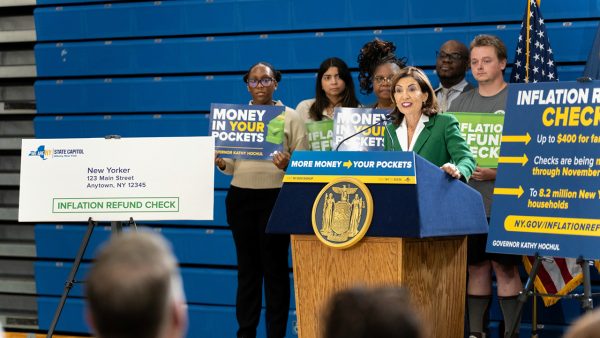
New York’s inflation-refund checks are on the way
State warns of scammers ALBANY — Inflation-refund checks of up to $400 are coming to 8.2 million households across New York. The process started Sept. 26, and the state is mailing checks directly to eligible New Yorkers, with deliveries to continue throughout October and November, Gov. Kathy Hochul announced that day. Residents
Get Instant Access to This Article
Become a Central New York Business Journal subscriber and get immediate access to all of our subscriber-only content and much more.
- Critical Central New York business news and analysis updated daily.
- Immediate access to all subscriber-only content on our website.
- Get a year’s worth of the Print Edition of The Central New York Business Journal.
- Special Feature Publications such as the Book of Lists and Revitalize Greater Binghamton, Mohawk Valley, and Syracuse Magazines
Click here to purchase a paywall bypass link for this article.
State warns of scammers
ALBANY — Inflation-refund checks of up to $400 are coming to 8.2 million households across New York.
The process started Sept. 26, and the state is mailing checks directly to eligible New Yorkers, with deliveries to continue throughout October and November, Gov. Kathy Hochul announced that day.
Residents don’t need to apply, sign up, or do anything to receive a check.
“Starting today, we’re sending inflation refund checks to over 8 million New Yorkers because it’s simple — this is your money and we’re putting it back in your pockets,” Hochul said in the announcement.
On Sept. 28, Hochul’s office also warned New York residents to be aware of scams related to the inflation-refund checks.
The governor warned New Yorkers of scammers who are sending text messages, voice messages, emails, and direct mail to taxpayers in an attempt to spread false information about the checks.
The messages falsely claim that New Yorkers must submit accurate payment information in order to receive an inflation-refund check, supposedly so revenue agencies can deposit money into a taxpayer’s bank account. The New York State Department of Taxation and Finance and the IRS will not call or text New Yorkers with requests for any personal information.
Who’s eligible
You are eligible for an inflation refund check if, for tax year 2023, you filed form IT-201, the New York State resident income tax return; reported income within the qualifying thresholds below; and were not claimed as a dependent on another taxpayer’s return.
Joint tax filers with income up to $150,000 will receive a $400 check, and joint tax filers with income over $150,000 but no greater than $300,000 will receive a $300 check.
Single tax filers with income up to $75,000 will receive a $200 check, and single tax filers with incomes over $75,000 but no greater than $150,000 will receive a $150 check.
The state didn’t place any age restrictions on this process. If you filed a tax return, are below the income thresholds, and no one else claimed you as a dependent, you will receive a check, Hochul’s office said.
Herkimer College names director of campus safety
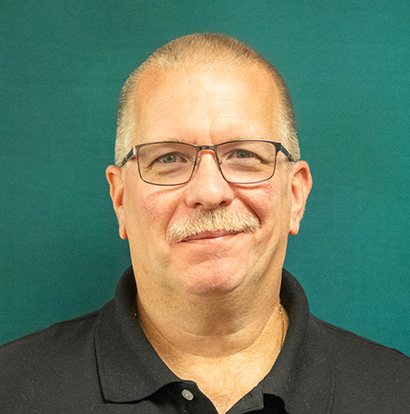
HERKIMER, N.Y. — Herkimer County Community College recently announced it has appointed Michael J. Jory, of Herkimer, as its director of campus safety. Jory has served as chief of police at the Herkimer Police Department since January 2017. In this role, he was responsible for overseeing all police operations, personnel, and resources, setting departmental policies,
Get Instant Access to This Article
Become a Central New York Business Journal subscriber and get immediate access to all of our subscriber-only content and much more.
- Critical Central New York business news and analysis updated daily.
- Immediate access to all subscriber-only content on our website.
- Get a year’s worth of the Print Edition of The Central New York Business Journal.
- Special Feature Publications such as the Book of Lists and Revitalize Greater Binghamton, Mohawk Valley, and Syracuse Magazines
Click here to purchase a paywall bypass link for this article.
HERKIMER, N.Y. — Herkimer County Community College recently announced it has appointed Michael J. Jory, of Herkimer, as its director of campus safety.
Jory has served as chief of police at the Herkimer Police Department since January 2017. In this role, he was responsible for overseeing all police operations, personnel, and resources, setting departmental policies, ensuring public safety, managing budgets, ensuring compliance with laws and regulations to maintain effective and ethical policing, and fostering community relationships.
Jory previously served in several roles, including officer, detective, detective sergeant, and captain of detectives for the Gloversville Police Department from 1995 through 2016, per the announcement. He was also a deputy sheriff for Herkimer County from 1989 to 1995.
Jory holds a bachelor’s degree in criminal justice from Buffalo State College. He has received several awards, including the NYS Fire Investigators Arson Investigation of the Year Award in 2010 and the Catholic Charities Window of Hope Award in 2019, the college said.
Located just off New York State Thruway exit 30, Herkimer College is one of 30 community colleges in the SUNY system.

State audit finds improved accuracy in Thruway toll collections
ALBANY, N.Y. — When it comes to Thruway tolls, the New York State Thruway Authority is generally accurate with its billing process, although a recent review identified some exceptions and recommended better monitoring and corrective actions. That’s according to an audit that New York State Comptroller Thomas DiNapoli released Sept. 23. “The Thruway Authority has
Get Instant Access to This Article
Become a Central New York Business Journal subscriber and get immediate access to all of our subscriber-only content and much more.
- Critical Central New York business news and analysis updated daily.
- Immediate access to all subscriber-only content on our website.
- Get a year’s worth of the Print Edition of The Central New York Business Journal.
- Special Feature Publications such as the Book of Lists and Revitalize Greater Binghamton, Mohawk Valley, and Syracuse Magazines
Click here to purchase a paywall bypass link for this article.
ALBANY, N.Y. — When it comes to Thruway tolls, the New York State Thruway Authority is generally accurate with its billing process, although a recent review identified some exceptions and recommended better monitoring and corrective actions.
That’s according to an audit that New York State Comptroller Thomas DiNapoli released Sept. 23.
“The Thruway Authority has come a long way since it first introduced cashless tolls, but some problems remain,” DiNapoli said in the announcement. “Even a smaller percentage of unreadable or inaccurate tolls can mean loss of revenue to the state or aggravation for New Yorkers facing incorrect bills. I appreciate the efforts the Authority has undertaken to fix the issues we identified.”
A few findings
In 2024, Thruway reported $1 billion in toll and related revenues, up from $804 million in 2021, DiNapoli’s office said. E-Z Pass accounts for 95 percent of all tolls collected last year. The comptroller’s previous audit from May 2023 found the Thruway Authority needed to improve its collections process.
The latest audit found improvements but also work that still needs to be done, DiNapoli’s office said. For example, auditors looked at collections over a three-week period and found 92,000 tolls couldn’t be charged because vehicles’ license plates were not readable. At one exit, interchange 25A near Schenectady, some 36,000 tolls were incorrectly charged and another 8,000 that should have been charged but were not, for an error rate of about 5 percent.
The audit also found the Thruway Authority needed to provide stronger oversight of the more than 12,000 non-revenue E-Z Pass tags that do not get charged, as well as the toll discounts it gives to certain drivers.
In looking at a random sample of 75 non-revenue tags, the Thruway Authority was unable to provide supporting documentation for the eligibility of 46 (61 percent) tags, “making it unclear whether eligible individuals were using them.
DiNapoli’s office went on to say that the Thruway Authority created the Office of the Toll Payer Advocate (TPA) in December 2019 to help customers resolve toll-related issues, using guidelines with a set of criteria to address the most common issue, reducing violation fees.
Auditors found that the Thruway Authority “did not always follow its own guidelines,” DiNapoli’s office said.
In an examination of 50 cases, 20 were for toll-related issues on the Thruway. Of those, 12 received fee reductions that exceeded the amounts allowed by the criteria. The Thruway Authority has the authority to give reductions over its own guidelines, but the audit determined that it should document and explain why it’s doing so to “ensure a fair and responsive process for everyone.”
The Authority doesn’t have a workable method for dealing with undeliverable mail. Auditors looked at 48 toll bills or past-due notices mailed out by the Authority’s vendor and found 25 were undeliverable. Of those, 21 were for New York and Massachusetts plates and instead of resolving the problem, the vendor continued to send mail to the undeliverable addresses.
For toll payers to be treated fairly, they must be notified of the amount of payment due to enable them to avoid accruing penalties, DiNapoli’s office said.
The audit made nine recommendations for improving toll collections and customer service including a review of collections at Exit 25A to ensure charges are accurate, a periodic review of transactions to identify inaccuracies and their cause to prevent them from recurring, a review of non-revenue and discount tags to ensure eligibility, and documentation of toll settlements that are outside of guidelines.
Thruway Authority response
The comptroller’s office noted that the Thruway Authority generally agreed with the audit findings and said it has already taken steps to implement some of the recommendations.
The DiNapoli audit included a letter to the state comptroller’s office from Frank Hoare, executive director of the New York State Thruway Authority, reacting to the recommendations in the audit.
One such recommendation reads, “Periodically review transactions to ensure tolls were correctly charged, identify the cause of incorrect charges, take appropriate action to prevent it from recurring, and document those where no action is deemed necessary.”
In response, the Thruway Authority said, “The Authority agrees with OSC’s (Office of the State Comptroller) finding that tolls are accurately charged, with a limited number of exceptions. The Authority routinely conducts reviews of toll transactions to ensure the integrity of the tolling system but it agrees it should continuously improve the quality assurance process to further mitigate incorrect tolls being charged.”
New York DFS readies for leadership transition
ALBANY, N.Y. — The New York State Department of Financial Services (DFS) will soon have new leadership. Gov. Kathy Hochul on Sept. 29 announced that Adrienne Harris, who has served as superintendent of the New York State Department of Financial Services (DFS) for four years, is leaving the state’s top financial regulatory agency. As for
Get Instant Access to This Article
Become a Central New York Business Journal subscriber and get immediate access to all of our subscriber-only content and much more.
- Critical Central New York business news and analysis updated daily.
- Immediate access to all subscriber-only content on our website.
- Get a year’s worth of the Print Edition of The Central New York Business Journal.
- Special Feature Publications such as the Book of Lists and Revitalize Greater Binghamton, Mohawk Valley, and Syracuse Magazines
Click here to purchase a paywall bypass link for this article.
ALBANY, N.Y. — The New York State Department of Financial Services (DFS) will soon have new leadership.
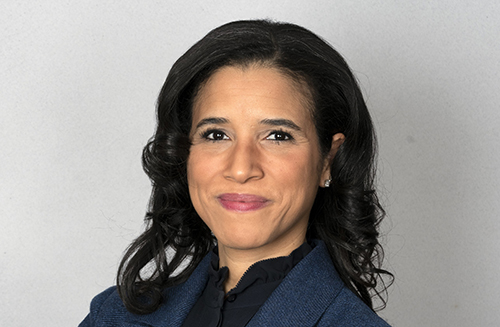
Gov. Kathy Hochul on Sept. 29 announced that Adrienne Harris, who has served as superintendent of the New York State Department of Financial Services (DFS) for four years, is leaving the state’s top financial regulatory agency.
As for why Harris is leaving the role, DFS provided CNYBJ with the following response from her.
“I’m proud of what we have accomplished at DFS over the last four years, working together to build an equitable, transparent, and resilient financial system that benefits individuals and supports business,” Harris said in the statement. “I am taking some time to reflect and think through what comes next and look forward to the possibilities ahead.”

The governor is appointing Kaitlin Asrow as acting superintendent of the DFS, effective Oct. 18.
“I’d like to thank Superintendent Harris for her four years of service at DFS, working every day to make our financial system work for New Yorkers, while also rebuilding the Department into a regulator fit for the financial capital of the world,” Hochul said in the announcement. “Between her time at the Federal Reserve, Financial Health Network, and within DFS, Kaitlin is well suited to lead the Department into the future, expanding access to affordable financial services for all New Yorkers while ensuring our great state continues to be a center for responsible innovation.”
Hochul nominated Harris to lead DFS in August 2021. As the longest-serving superintendent, Harris led efforts to rebuild the department to better protect New Yorkers, regulated entities, and the global financial system, per the governor’s office. Since August 2021, DFS has recovered more than $725 million in restitution for New Yorkers. Harris and DFS also played a big role in regulating the cryptocurrency industry.
“It has been a privilege and an honor to serve New Yorkers, delivering positive outcomes for consumers; cementing DFS as a global regulatory leader; and transforming the Department’s operations,” Harris contended in the governor’s announcement. “I want to express my deep gratitude to Governor Hochul, and to the DFS team for the excellent work they do every day to create a more equitable, transparent, and resilient financial system.”
Acting leader
Asrow has worked at DFS for the past four years as executive deputy superintendent of the research & innovation division. In that role, she oversaw the regulation of virtual currency companies, “building one of the largest and most sophisticated” virtual currency regulatory teams in the world. She is also responsible for the department’s policy work around innovation and financial inclusion.
“I am humbled by the opportunity to continue working in service of New Yorkers under Governor Hochul’s leadership,” Asrow said. “I am committed to ensuring that New York remains the global financial capital, a leader in consumer protection, and a hub for responsible financial innovation.”
$200M available in next round of DRI, New York Forward
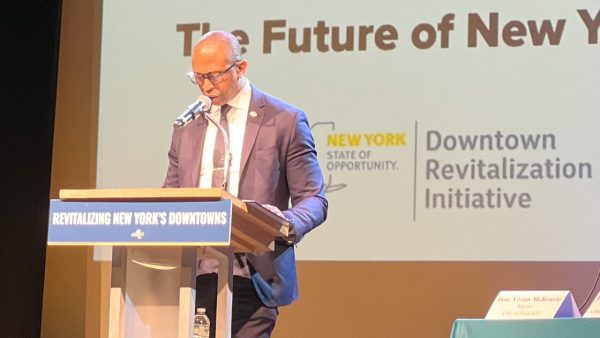
Nov. 7 application deadline ALBANY — Communities interested in applying for funding through New York State’s signature downtown-revitalization and economic-development programs have until early November to apply. The state says a total of $200 million is available in the next round of funding. That is comprised of $100 million each for round 9 of
Get Instant Access to This Article
Become a Central New York Business Journal subscriber and get immediate access to all of our subscriber-only content and much more.
- Critical Central New York business news and analysis updated daily.
- Immediate access to all subscriber-only content on our website.
- Get a year’s worth of the Print Edition of The Central New York Business Journal.
- Special Feature Publications such as the Book of Lists and Revitalize Greater Binghamton, Mohawk Valley, and Syracuse Magazines
Click here to purchase a paywall bypass link for this article.
Nov. 7 application deadline
ALBANY — Communities interested in applying for funding through New York State’s signature downtown-revitalization and economic-development programs have until early November to apply.
The state says a total of $200 million is available in the next round of funding. That is comprised of $100 million each for round 9 of the Downtown Revitalization Initiative (DRI) and Round 4 of the NY Forward program, which focuses on revitalizing smaller and rural downtowns, the office of Gov. Kathy Hochul said in the Sept. 3 announcement.
The similarities and differences between the DRI and NY Forward programs are further described in an educational brochure, which is available on the DRI and NY Forward websites. Together, the two programs have awarded $1.2 billion in funding to 151 communities across every region of the state.
Applications are now available through the state’s consolidated funding application portal. The deadline to apply is Nov. 7, 2025 at 4 p.m.
“The Downtown Revitalization Initiative and NY Forward program give communities the tools and resources they need to reimagine their futures and drive meaningful change,” New York Secretary of State Walter Mosley said in the announcement. “Through coupling significant investment with smart planning by the community and for the community, these programs deliver real results that improve the quality of life for residents, attract new businesses and spur additional private investment. We encourage all communities, no matter how small, to apply so we can help bring their visions to life.”
The Downtown Revitalization Initiative was launched in 2016 to accelerate and bolster the revitalization of downtowns and neighborhoods in all 10 regions of the state to serve as centers of activity and catalysts for increased local investments.
First announced as part of the 2022 budget, Hochul created the NY Forward program to build on the momentum created by the DRI. The program, which is funded at $100 million in this year’s enacted state budget, supports a more equitable downtown recovery for New York’s smaller and rural communities with a focus on hamlets and villages, the state says.

VIEWPOINT: Prepare for the Unexpected
A key lesson of the past 20 years is to expect the unexpected. Over that period, we’ve faced the global financial crisis, the euro crisis, the long period of zero or even negative interest rates, the COVID-19 pandemic, Russia’s war on Ukraine, and most recently, seismic shifts in the global trade and geopolitical environment. Unpredictable
Get Instant Access to This Article
Become a Central New York Business Journal subscriber and get immediate access to all of our subscriber-only content and much more.
- Critical Central New York business news and analysis updated daily.
- Immediate access to all subscriber-only content on our website.
- Get a year’s worth of the Print Edition of The Central New York Business Journal.
- Special Feature Publications such as the Book of Lists and Revitalize Greater Binghamton, Mohawk Valley, and Syracuse Magazines
Click here to purchase a paywall bypass link for this article.
A key lesson of the past 20 years is to expect the unexpected. Over that period, we’ve faced the global financial crisis, the euro crisis, the long period of zero or even negative interest rates, the COVID-19 pandemic, Russia’s war on Ukraine, and most recently, seismic shifts in the global trade and geopolitical environment.
Unpredictable change and uncertainty will certainly continue to be with us for the foreseeable future. Consider, for example, the effects of ongoing global demographic shifts, artificial intelligence (AI), and potentially transformative innovations in our financial systems.
If history teaches us to expect the unexpected, then what does that mean for monetary policy? First and foremost, it underscores the need for principles and strategies that provide the foundation for decision-making across a wide range of circumstances. This does not mean a playbook for every conceivable situation — that is doomed to fail. Instead, it is a consistent overarching strategy that shapes and informs decision-making. Second, it means having the ability and readiness to act as needed for any situation that arises. Third, it implies being clear-eyed and disciplined in adapting to and communicating the changing economic landscape and resulting policy trade-offs and decisions. It’s important to be nimble in execution even as one is steady in strategy.
I am happy to say that all three of these features are foundational to the recent reviews of monetary policy frameworks conducted by the European Central Bank (ECB) and the Federal Reserve (Fed), as well as policy frameworks used by many other central banks.
So far, I have stayed at a high level. I will now get into some specifics of how these observations translate into real-world practice. I will organize this discussion across three broad categories, corresponding to three key principles of successful monetary policy: accountability, transparency, and well-anchored inflation expectations.
Owning the Responsibility
I will start with accountability: Central banks must own the responsibility to deliver price stability and have the independence of action and the ability to achieve it.
In the distant past, many central bankers believed that monetary policy could only play a minor role in reducing inflation, while others thought that inflation was completely outside of their control. The result was persistently high inflation and economic stagnation. History has taught us that central banks can be more successful at delivering sustainably low inflation when they are accountable for their decisions and can act independently. Today, central bankers around the world recognize that attaining and maintaining price stability is their job to do.
But it is not enough to be accountable and independent: central banks must have the appropriate tools to carry out their mandates. Outside of the hallways of central banks, monetary policy is commonly understood through the overly narrow lens of setting the current short-term interest rate. All the attention is on what the ECB, the Fed, or another central bank will “do” at its next policy meeting.
Of course, this focus is not entirely surprising since central banks generally use the short-term interest rate as the primary policy instrument. And the academic literature, including the Taylor Rule and all its variants, has reinforced this notion that equates monetary policy to setting of the short-term rate. Indeed, there even has been a label attached to it: “conventional monetary policy.” By implication, other monetary policy actions that have been used — such as forward guidance and balance sheet policies — are deemed “unconventional,” and therefore somewhat suspect.
However, this narrow understanding of monetary policy is alien to the history of monetary economics and central bank practice. A reading of Milton Friedman and Anna Schwartz’s pathbreaking history of the Federal Reserve during the Great Depression dispels the notion that monetary policy is limited to setting the short-term rate and instead emphasizes broader measures of liquidity and longer-term interest rates. The same is true for Alan Meltzer’s detailed history of the Federal Reserve.
In this regard, I am reminded of Ben Bernanke’s speech from 2002, titled “On Milton Friedman’s Ninetieth Birthday.” In it, Bernanke provided a clear and succinct overview of the Friedman and Schwartz critique of Federal Reserve policy during the Great Depression. Of particular note is the example of the spring of 1932, when the Fed briefly engaged in open-market purchases to support broad liquidity, which was beginning to have an effect on the economy. But this policy was soon abandoned, as the Fed reverted to the view that the low level of nominal interest rates indicated an expansionary monetary policy. Ben famously finished the speech by acknowledging these mistakes. And he promised not to repeat them — a vow he would soon uphold through leading the Fed’s actions during the global financial crisis.
Around the same time, and well before “unconventional” policies had that name, monetary economists from different schools of thought — including Ben McCallum, Athanasios Orphanides and Volker Wieland, Gauti Eggertsson and Mike Woodford, Ben Bernanke and Vicent Reinhart, Alan Auerbach and Maury Obstfeld, and my own work with Dave Reifschneider — described how monetary policy could be effective even in situations where nominal short-term rates were very low. These are not “emergency,” “crisis,” or “break-the-glass” policies, but those that are well within the long tradition of monetary theory and practice. Of course, how and when to use policies depends on the circumstances and the risks policymakers are facing. But this is a matter of tactics and implementation, not of principle or strategy.
Commitment to Transparency
The second principle is transparency — including the clear communication of a central bank’s framework, an explicit numerical longer-run inflation target, and the reasoning behind policy decisions.
For central banks, transparency enhances accountability and keeps them clearly focused on achieving their goals. For households and businesses, an explicit and credible inflation target helps take some of the uncertainty off the table so they can focus on planning for their future. By improving the public’s understanding of a central bank’s goals and actions, the central bank can enhance the effectiveness of monetary policy at stabilizing inflation and the economy. Based on a foundation of clear goals and strategy, central banks are better able to communicate their thinking behind policy decisions and how they relate to policy goals.
This is often done through economic forecasts, reports, and speeches. Transparency around the factors that influence policy decisions can, in turn, improve the public’s understanding of the policy reaction function, thereby enhancing the effectiveness of policy. Indeed, many central banks have increasingly provided detailed macroeconomic analyses of factors relevant for monetary policy, including staff or policymaker estimates of the output gap and the natural rate of interest.
There is no single best way to achieve transparency — this is not one size fits all. Instead, the approach must conform to the institutional structures and practical realities of each jurisdiction. The Monetary Policy Reports of the Riksbank and Norges Bank, to name two examples, provide very clear summaries of the views of their policy committees, including their assessments of the distribution of the path of future interest rates. In contrast, central banks with large committees or a mix of internal and external members have not done so. Such differences across central banks may be more a feature than a bug: One of the benefits of greater transparency and the variety of different practices is that we can all learn from each other’s experiences as we strive to further improve communications consistent with our institutional structures and needs.
Importance of Inflation Expectations
The third key principle of successful monetary policy is well-anchored inflation expectations. This principle has become a bedrock of modern central banking, as economic analysis and history have shown that anchoring inflation expectations is important in maintaining low and stable inflation.
Well-anchored inflation expectations short-circuit so-called second-round effects in wage and price setting that exacerbate and prolong the impacts of the kinds of shocks we saw during the 1970s. They also create a more favorable short-run trade-off in achieving inflation and employment objectives.
Central banks help anchor expectations by owning the responsibility to deliver price stability, publicly committing to an explicit inflation target, and taking the actions needed to ensure price stability. The connections between policy communications and actions, inflation outcomes, and expectations are at the core of robust policy strategies.
Unlike the stylized textbook model of monetary policy, a robust policy approach recognizes that the economy is changing and uncertain. It also views the anchoring of expectations, or the lack thereof, as the outcome of monetary policy actions and communications, not an assumed fact.
When the Facts Change
I have talked about the importance of three key principles: ownership of price stability and independence of action, transparency about goals and strategy, and a focus on anchored inflation expectations. But like that family of black bears on the Snake River, the unexpected is always waiting around the bend. These principles and lessons provide a strong foundation for monetary policy that prepares us for the unexpected challenges and uncertainties we face ahead.
John C. Williams is president and CEO of the Federal Reserve Bank of New York. This article is drawn (and edited for space) from a speech, as prepared for delivery, that he gave on Oct. 3 at the Klaas Knot Farewell Symposium, at De Nederlandsche Bank (DNB) in Amsterdam, Netherlands. In his speech, Williams gave the standard Fed disclaimer that the views he expressed were his alone and do not necessarily reflect those of the FOMC or others in the Federal Reserve System. The full, unedited text of the speech is available at: https://www.newyorkfed.org/newsevents/speeches/2025/wil251003

Ask Rusty: I’d like to retire early, but don’t want my Social Security cut
Dear Rusty: I will turn 65 [soon] and my husband is age 72 (he retired in 2019 at age 66). I would like to retire and enjoy some time with him before he gets too much older. I do not want to have my Social Security (SS) benefits reduced by retiring earlier, but I don’t
Get Instant Access to This Article
Become a Central New York Business Journal subscriber and get immediate access to all of our subscriber-only content and much more.
- Critical Central New York business news and analysis updated daily.
- Immediate access to all subscriber-only content on our website.
- Get a year’s worth of the Print Edition of The Central New York Business Journal.
- Special Feature Publications such as the Book of Lists and Revitalize Greater Binghamton, Mohawk Valley, and Syracuse Magazines
Click here to purchase a paywall bypass link for this article.
Dear Rusty: I will turn 65 [soon] and my husband is age 72 (he retired in 2019 at age 66). I would like to retire and enjoy some time with him before he gets too much older. I do not want to have my Social Security (SS) benefits reduced by retiring earlier, but I don’t see a way to be able to accomplish that. My SS benefit will be $1,343 at my full retirement age (FRA). If I took half his retirement when he retired, it would be less than mine. If I take early retirement and he passes away before me, would I get his full benefit as his survivor, or will it be cut? We are trying to figure this out. His current benefit (before Medicare Part B) is $2,978. It’s very confusing.
Signed: Confused and Wondering
Dear Confused: Whenever any Social Security benefit is claimed earlier than full retirement age, the monthly amount is permanently reduced. If you were to retire at age 65, your Social Security benefit would be reduced by about 13 percent — in other words, if your FRA (age 67) amount is $1,343, at age 65 you would get about $1,164. And at age 66 you would receive about $1,253 per month.
Whether you would be entitled to a “spousal boost” from your husband depends on how your FRA amount compares to 50 percent of his FRA entitlement. If your FRA amount is less than 50 percent of his FRA amount, then you would get a “spousal boost,” but the amount of that boost would also be reduced if you claim before your FRA. (Note: from the numbers you provided, you may be entitled to a spousal boost and, if so, it would be applied by Social Security when you claim).
Also, FYI, if you take SS before your FRA and are still working, the Social Security Administration (SSA) has an annual earnings test that limits how much you can earn while collecting early benefits. If you earn more than $23,400 in 2025, you will likely not get all of your monthly SS payments (the SSA will take away some monthly benefits if you exceed the earnings limit). Of course, if you retire from working, this will not be a problem, because earnings before you claim SS won’t count toward the limit.
When you claim your SS retirement benefit now will not affect your survivor benefit from your husband later. If your husband dies first, your benefit as a surviving spouse would be based on the amount your husband was receiving at his death. But if you were to claim your widow’s benefit prior to your FRA, your survivor benefit would also be reduced (the amount of reduction depends on how much before your FRA you claim your survivor benefit). If you claim your widow’s benefit at or after you FRA, you will get 100 percent of the amount your husband was receiving at his death (instead of your own smaller amount). It will only be reduced if you claim before your full retirement age.
Russell Gloor is a national Social Security advisor at the AMAC Foundation, the nonprofit arm of the Association of Mature American Citizens (AMAC). The 2.4-million-member AMAC says it is a senior advocacy organization. Send your questions to: ssadvisor@amacfoundation.org.
Author’s note: This article is intended for information purposes only and does not represent legal or financial guidance. It presents the opinions and interpretations of the AMAC Foundation’s staff, trained, and accredited by the National Social Security Association (NSSA). The NSSA and the AMAC Foundation and its staff are not affiliated with or endorsed by the Social Security Administration (SSA) or any other governmental entity.
Get our email updates
Stay up-to-date on the companies, people and issues that impact businesses in Syracuse, Central New York and beyond.