Stay up-to-date on the companies, people and issues that impact businesses in Syracuse, Central New York and beyond.
New York DFS readies for leadership transition
ALBANY, N.Y. — The New York State Department of Financial Services (DFS) will soon have new leadership. Gov. Kathy Hochul on Sept. 29 announced that Adrienne Harris, who has served as superintendent of the New York State Department of Financial Services (DFS) for four years, is leaving the state’s top financial regulatory agency. As for […]
Become a Central New York Business Journal subscriber and get immediate access to all of our subscriber-only content and much more.

Click here to purchase a paywall bypass link for this article.
ALBANY, N.Y. — The New York State Department of Financial Services (DFS) will soon have new leadership.

Gov. Kathy Hochul on Sept. 29 announced that Adrienne Harris, who has served as superintendent of the New York State Department of Financial Services (DFS) for four years, is leaving the state’s top financial regulatory agency.
As for why Harris is leaving the role, DFS provided CNYBJ with the following response from her.
“I’m proud of what we have accomplished at DFS over the last four years, working together to build an equitable, transparent, and resilient financial system that benefits individuals and supports business,” Harris said in the statement. “I am taking some time to reflect and think through what comes next and look forward to the possibilities ahead.”

The governor is appointing Kaitlin Asrow as acting superintendent of the DFS, effective Oct. 18.
“I’d like to thank Superintendent Harris for her four years of service at DFS, working every day to make our financial system work for New Yorkers, while also rebuilding the Department into a regulator fit for the financial capital of the world,” Hochul said in the announcement. “Between her time at the Federal Reserve, Financial Health Network, and within DFS, Kaitlin is well suited to lead the Department into the future, expanding access to affordable financial services for all New Yorkers while ensuring our great state continues to be a center for responsible innovation.”
Hochul nominated Harris to lead DFS in August 2021. As the longest-serving superintendent, Harris led efforts to rebuild the department to better protect New Yorkers, regulated entities, and the global financial system, per the governor’s office. Since August 2021, DFS has recovered more than $725 million in restitution for New Yorkers. Harris and DFS also played a big role in regulating the cryptocurrency industry.
“It has been a privilege and an honor to serve New Yorkers, delivering positive outcomes for consumers; cementing DFS as a global regulatory leader; and transforming the Department’s operations,” Harris contended in the governor’s announcement. “I want to express my deep gratitude to Governor Hochul, and to the DFS team for the excellent work they do every day to create a more equitable, transparent, and resilient financial system.”
Asrow has worked at DFS for the past four years as executive deputy superintendent of the research & innovation division. In that role, she oversaw the regulation of virtual currency companies, “building one of the largest and most sophisticated” virtual currency regulatory teams in the world. She is also responsible for the department’s policy work around innovation and financial inclusion.
“I am humbled by the opportunity to continue working in service of New Yorkers under Governor Hochul’s leadership,” Asrow said. “I am committed to ensuring that New York remains the global financial capital, a leader in consumer protection, and a hub for responsible financial innovation.”

$200M available in next round of DRI, New York Forward
Nov. 7 application deadline ALBANY — Communities interested in applying for funding through New York State’s signature downtown-revitalization and economic-development programs have until early November to apply. The state says a total of $200 million is available in the next round of funding. That is comprised of $100 million each for round 9 of
Become a Central New York Business Journal subscriber and get immediate access to all of our subscriber-only content and much more.

Click here to purchase a paywall bypass link for this article.
ALBANY — Communities interested in applying for funding through New York State’s signature downtown-revitalization and economic-development programs have until early November to apply.
The state says a total of $200 million is available in the next round of funding. That is comprised of $100 million each for round 9 of the Downtown Revitalization Initiative (DRI) and Round 4 of the NY Forward program, which focuses on revitalizing smaller and rural downtowns, the office of Gov. Kathy Hochul said in the Sept. 3 announcement.
The similarities and differences between the DRI and NY Forward programs are further described in an educational brochure, which is available on the DRI and NY Forward websites. Together, the two programs have awarded $1.2 billion in funding to 151 communities across every region of the state.
Applications are now available through the state’s consolidated funding application portal. The deadline to apply is Nov. 7, 2025 at 4 p.m.
“The Downtown Revitalization Initiative and NY Forward program give communities the tools and resources they need to reimagine their futures and drive meaningful change,” New York Secretary of State Walter Mosley said in the announcement. “Through coupling significant investment with smart planning by the community and for the community, these programs deliver real results that improve the quality of life for residents, attract new businesses and spur additional private investment. We encourage all communities, no matter how small, to apply so we can help bring their visions to life.”
The Downtown Revitalization Initiative was launched in 2016 to accelerate and bolster the revitalization of downtowns and neighborhoods in all 10 regions of the state to serve as centers of activity and catalysts for increased local investments.
First announced as part of the 2022 budget, Hochul created the NY Forward program to build on the momentum created by the DRI. The program, which is funded at $100 million in this year’s enacted state budget, supports a more equitable downtown recovery for New York’s smaller and rural communities with a focus on hamlets and villages, the state says.

VIEWPOINT: Prepare for the Unexpected
A key lesson of the past 20 years is to expect the unexpected. Over that period, we’ve faced the global financial crisis, the euro crisis, the long period of zero or even negative interest rates, the COVID-19 pandemic, Russia’s war on Ukraine, and most recently, seismic shifts in the global trade and geopolitical environment. Unpredictable
Become a Central New York Business Journal subscriber and get immediate access to all of our subscriber-only content and much more.

Click here to purchase a paywall bypass link for this article.
A key lesson of the past 20 years is to expect the unexpected. Over that period, we’ve faced the global financial crisis, the euro crisis, the long period of zero or even negative interest rates, the COVID-19 pandemic, Russia’s war on Ukraine, and most recently, seismic shifts in the global trade and geopolitical environment.
Unpredictable change and uncertainty will certainly continue to be with us for the foreseeable future. Consider, for example, the effects of ongoing global demographic shifts, artificial intelligence (AI), and potentially transformative innovations in our financial systems.
If history teaches us to expect the unexpected, then what does that mean for monetary policy? First and foremost, it underscores the need for principles and strategies that provide the foundation for decision-making across a wide range of circumstances. This does not mean a playbook for every conceivable situation — that is doomed to fail. Instead, it is a consistent overarching strategy that shapes and informs decision-making. Second, it means having the ability and readiness to act as needed for any situation that arises. Third, it implies being clear-eyed and disciplined in adapting to and communicating the changing economic landscape and resulting policy trade-offs and decisions. It’s important to be nimble in execution even as one is steady in strategy.
I am happy to say that all three of these features are foundational to the recent reviews of monetary policy frameworks conducted by the European Central Bank (ECB) and the Federal Reserve (Fed), as well as policy frameworks used by many other central banks.
So far, I have stayed at a high level. I will now get into some specifics of how these observations translate into real-world practice. I will organize this discussion across three broad categories, corresponding to three key principles of successful monetary policy: accountability, transparency, and well-anchored inflation expectations.
I will start with accountability: Central banks must own the responsibility to deliver price stability and have the independence of action and the ability to achieve it.
In the distant past, many central bankers believed that monetary policy could only play a minor role in reducing inflation, while others thought that inflation was completely outside of their control. The result was persistently high inflation and economic stagnation. History has taught us that central banks can be more successful at delivering sustainably low inflation when they are accountable for their decisions and can act independently. Today, central bankers around the world recognize that attaining and maintaining price stability is their job to do.
But it is not enough to be accountable and independent: central banks must have the appropriate tools to carry out their mandates. Outside of the hallways of central banks, monetary policy is commonly understood through the overly narrow lens of setting the current short-term interest rate. All the attention is on what the ECB, the Fed, or another central bank will “do” at its next policy meeting.
Of course, this focus is not entirely surprising since central banks generally use the short-term interest rate as the primary policy instrument. And the academic literature, including the Taylor Rule and all its variants, has reinforced this notion that equates monetary policy to setting of the short-term rate. Indeed, there even has been a label attached to it: “conventional monetary policy.” By implication, other monetary policy actions that have been used — such as forward guidance and balance sheet policies — are deemed “unconventional,” and therefore somewhat suspect.
However, this narrow understanding of monetary policy is alien to the history of monetary economics and central bank practice. A reading of Milton Friedman and Anna Schwartz’s pathbreaking history of the Federal Reserve during the Great Depression dispels the notion that monetary policy is limited to setting the short-term rate and instead emphasizes broader measures of liquidity and longer-term interest rates. The same is true for Alan Meltzer’s detailed history of the Federal Reserve.
In this regard, I am reminded of Ben Bernanke’s speech from 2002, titled “On Milton Friedman’s Ninetieth Birthday.” In it, Bernanke provided a clear and succinct overview of the Friedman and Schwartz critique of Federal Reserve policy during the Great Depression. Of particular note is the example of the spring of 1932, when the Fed briefly engaged in open-market purchases to support broad liquidity, which was beginning to have an effect on the economy. But this policy was soon abandoned, as the Fed reverted to the view that the low level of nominal interest rates indicated an expansionary monetary policy. Ben famously finished the speech by acknowledging these mistakes. And he promised not to repeat them — a vow he would soon uphold through leading the Fed’s actions during the global financial crisis.
Around the same time, and well before “unconventional” policies had that name, monetary economists from different schools of thought — including Ben McCallum, Athanasios Orphanides and Volker Wieland, Gauti Eggertsson and Mike Woodford, Ben Bernanke and Vicent Reinhart, Alan Auerbach and Maury Obstfeld, and my own work with Dave Reifschneider — described how monetary policy could be effective even in situations where nominal short-term rates were very low. These are not “emergency,” “crisis,” or “break-the-glass” policies, but those that are well within the long tradition of monetary theory and practice. Of course, how and when to use policies depends on the circumstances and the risks policymakers are facing. But this is a matter of tactics and implementation, not of principle or strategy.
The second principle is transparency — including the clear communication of a central bank’s framework, an explicit numerical longer-run inflation target, and the reasoning behind policy decisions.
For central banks, transparency enhances accountability and keeps them clearly focused on achieving their goals. For households and businesses, an explicit and credible inflation target helps take some of the uncertainty off the table so they can focus on planning for their future. By improving the public’s understanding of a central bank’s goals and actions, the central bank can enhance the effectiveness of monetary policy at stabilizing inflation and the economy. Based on a foundation of clear goals and strategy, central banks are better able to communicate their thinking behind policy decisions and how they relate to policy goals.
This is often done through economic forecasts, reports, and speeches. Transparency around the factors that influence policy decisions can, in turn, improve the public’s understanding of the policy reaction function, thereby enhancing the effectiveness of policy. Indeed, many central banks have increasingly provided detailed macroeconomic analyses of factors relevant for monetary policy, including staff or policymaker estimates of the output gap and the natural rate of interest.
There is no single best way to achieve transparency — this is not one size fits all. Instead, the approach must conform to the institutional structures and practical realities of each jurisdiction. The Monetary Policy Reports of the Riksbank and Norges Bank, to name two examples, provide very clear summaries of the views of their policy committees, including their assessments of the distribution of the path of future interest rates. In contrast, central banks with large committees or a mix of internal and external members have not done so. Such differences across central banks may be more a feature than a bug: One of the benefits of greater transparency and the variety of different practices is that we can all learn from each other’s experiences as we strive to further improve communications consistent with our institutional structures and needs.
The third key principle of successful monetary policy is well-anchored inflation expectations. This principle has become a bedrock of modern central banking, as economic analysis and history have shown that anchoring inflation expectations is important in maintaining low and stable inflation.
Well-anchored inflation expectations short-circuit so-called second-round effects in wage and price setting that exacerbate and prolong the impacts of the kinds of shocks we saw during the 1970s. They also create a more favorable short-run trade-off in achieving inflation and employment objectives.
Central banks help anchor expectations by owning the responsibility to deliver price stability, publicly committing to an explicit inflation target, and taking the actions needed to ensure price stability. The connections between policy communications and actions, inflation outcomes, and expectations are at the core of robust policy strategies.
Unlike the stylized textbook model of monetary policy, a robust policy approach recognizes that the economy is changing and uncertain. It also views the anchoring of expectations, or the lack thereof, as the outcome of monetary policy actions and communications, not an assumed fact.
I have talked about the importance of three key principles: ownership of price stability and independence of action, transparency about goals and strategy, and a focus on anchored inflation expectations. But like that family of black bears on the Snake River, the unexpected is always waiting around the bend. These principles and lessons provide a strong foundation for monetary policy that prepares us for the unexpected challenges and uncertainties we face ahead.
John C. Williams is president and CEO of the Federal Reserve Bank of New York. This article is drawn (and edited for space) from a speech, as prepared for delivery, that he gave on Oct. 3 at the Klaas Knot Farewell Symposium, at De Nederlandsche Bank (DNB) in Amsterdam, Netherlands. In his speech, Williams gave the standard Fed disclaimer that the views he expressed were his alone and do not necessarily reflect those of the FOMC or others in the Federal Reserve System. The full, unedited text of the speech is available at: https://www.newyorkfed.org/newsevents/speeches/2025/wil251003

Ask Rusty: I’d like to retire early, but don’t want my Social Security cut
Dear Rusty: I will turn 65 [soon] and my husband is age 72 (he retired in 2019 at age 66). I would like to retire and enjoy some time with him before he gets too much older. I do not want to have my Social Security (SS) benefits reduced by retiring earlier, but I don’t
Become a Central New York Business Journal subscriber and get immediate access to all of our subscriber-only content and much more.

Click here to purchase a paywall bypass link for this article.
Dear Rusty: I will turn 65 [soon] and my husband is age 72 (he retired in 2019 at age 66). I would like to retire and enjoy some time with him before he gets too much older. I do not want to have my Social Security (SS) benefits reduced by retiring earlier, but I don’t see a way to be able to accomplish that. My SS benefit will be $1,343 at my full retirement age (FRA). If I took half his retirement when he retired, it would be less than mine. If I take early retirement and he passes away before me, would I get his full benefit as his survivor, or will it be cut? We are trying to figure this out. His current benefit (before Medicare Part B) is $2,978. It’s very confusing.
Signed: Confused and Wondering
Dear Confused: Whenever any Social Security benefit is claimed earlier than full retirement age, the monthly amount is permanently reduced. If you were to retire at age 65, your Social Security benefit would be reduced by about 13 percent — in other words, if your FRA (age 67) amount is $1,343, at age 65 you would get about $1,164. And at age 66 you would receive about $1,253 per month.
Whether you would be entitled to a “spousal boost” from your husband depends on how your FRA amount compares to 50 percent of his FRA entitlement. If your FRA amount is less than 50 percent of his FRA amount, then you would get a “spousal boost,” but the amount of that boost would also be reduced if you claim before your FRA. (Note: from the numbers you provided, you may be entitled to a spousal boost and, if so, it would be applied by Social Security when you claim).
Also, FYI, if you take SS before your FRA and are still working, the Social Security Administration (SSA) has an annual earnings test that limits how much you can earn while collecting early benefits. If you earn more than $23,400 in 2025, you will likely not get all of your monthly SS payments (the SSA will take away some monthly benefits if you exceed the earnings limit). Of course, if you retire from working, this will not be a problem, because earnings before you claim SS won’t count toward the limit.
When you claim your SS retirement benefit now will not affect your survivor benefit from your husband later. If your husband dies first, your benefit as a surviving spouse would be based on the amount your husband was receiving at his death. But if you were to claim your widow’s benefit prior to your FRA, your survivor benefit would also be reduced (the amount of reduction depends on how much before your FRA you claim your survivor benefit). If you claim your widow’s benefit at or after you FRA, you will get 100 percent of the amount your husband was receiving at his death (instead of your own smaller amount). It will only be reduced if you claim before your full retirement age.
Russell Gloor is a national Social Security advisor at the AMAC Foundation, the nonprofit arm of the Association of Mature American Citizens (AMAC). The 2.4-million-member AMAC says it is a senior advocacy organization. Send your questions to: ssadvisor@amacfoundation.org.
Author’s note: This article is intended for information purposes only and does not represent legal or financial guidance. It presents the opinions and interpretations of the AMAC Foundation’s staff, trained, and accredited by the National Social Security Association (NSSA). The NSSA and the AMAC Foundation and its staff are not affiliated with or endorsed by the Social Security Administration (SSA) or any other governmental entity.

VIEWPOINT: Why New York’s Health Premiums Keep Going Up
New Yorkers continue to face some of the costliest health-insurance premiums in the U.S., and the insurance industry’s recently finalized rate applications shed light on why that is. In summaries filed with the state regulators, insurers attributed their price hikes to rising costs — including state-specific factors, such as insurance taxes and coverage mandates, as
Become a Central New York Business Journal subscriber and get immediate access to all of our subscriber-only content and much more.

Click here to purchase a paywall bypass link for this article.
New Yorkers continue to face some of the costliest health-insurance premiums in the U.S., and the insurance industry’s recently finalized rate applications shed light on why that is.
In summaries filed with the state regulators, insurers attributed their price hikes to rising costs — including state-specific factors, such as insurance taxes and coverage mandates, as well as broad national trends, such as surging hospital and drug claims.
These and other forces have pushed New York’s premiums to the top of the national price range.
According to a federal survey of employer-sponsored insurance, the Empire State’s businesses and consumers paid an average of $9,589 for single coverage in 2024, which was the highest in the country and $1,100 or 13 percent above the national average.
New York was also No. 1 for employee-plus-one coverage, with an average cost of $19,431, and No. 5 for family coverage, at $27,188.
Those averages are likely to continue climbing. In early September, the state Department of Financial Services announced higher-than-inflation premium increases for plans covering some 900,000 New Yorkers, or about one-eighth of the commercial market.
DFS approved premium hikes averaging 7 percent for individuals directly purchasing coverage and 13 percent for small employers. Those hikes were 2.4 times and 4.5 times the inflation rate, respectively. (Premiums for most companies with 100 or more employees are not subject to state regulation.)
Although premiums in the regulated categories will be going up by about $1 billion, DFS headlined its news release with a claim that it had “saved” consumers $959 million. This is because insurers initially asked for even larger hikes, which the department cut roughly in half.
The cost drivers cited in rate applications varied from plan to plan, but certain themes emerged.
The major factor mentioned by most companies was surging claims — a combination of an aging customer base needing more medical care, and hospitals and doctors charging higher prices for their services.
For example, New York City–based Healthfirst said its hospital and physician claims were up 10 percent and its prescription-drug claims were up 16 percent.
Other plans mentioned federal-policy shifts, especially the looming expiration of enhanced Affordable Care Act (ACA) tax credits. The enhanced credits, enacted during the pandemic, reduced the net cost of coverage purchased by individuals through ACA insurance exchanges — which has encouraged more people to sign up. If they expire as scheduled on Dec. 31, enrollment in the ACA market is expected to decline — especially among healthier people with less need for coverage — which will result in a sicker risk pool and higher costs for the remaining buyers.
These trends help to explain why premiums are rising nationwide. Other factors cited in the regulatory filings are unique to New York — and therefore explain why its premiums are costlier than in other states.
One such issue is taxes on health insurance, which are unusually heavy in New York — and which were itemized in a filing by the insurer Anthem:
Rochester–based Excellus estimated in its filing that these taxes, taken together, add 5 percent to the cost of health coverage statewide. That would amount to about $500 for individual coverage or $1,400 for family coverage.
Not mentioned in this list is New York’s newly enacted tax on managed-care organizations, or MCOs. Although this tax falls most heavily on Medicaid plans as a strategy for maximizing federal matching funds, it also applies to commercial coverage at a rate of $1.50 to $2 per member per month.
The MCO tax took effect in January, but federal officials have since moved to cancel its approval — meaning it’s likely to expire in the months ahead.
Another state-specific factor cited by some health plans is coverage mandates. These are laws requiring insurers to pay for certain services regardless of whether plans consider them to be medically necessary — or to limit or eliminate cost-sharing for certain types of claims.
MVP Health Plan attributed 0.1 points of its 8 percent requested rate hike to newly imposed mandates, but did not specify which ones.
A 2003 study commissioned by the Employer Alliance for Affordable Health Care estimated that mandates in force at the time added 12.2 percent to the cost of insurance — and the New York Legislature has enacted dozens more since then.
In 2024 alone, the legislature passed — and Gov. Kathy Hochul signed — laws requiring insurers to pay for prenatal vitamins, to cover the cost of scalp cooling (to prevent hair loss during cancer treatment), and to cap copayments for EpiPens (an emergency treatment for allergic reactions).
Among the mandates approved by the legislature in 2025 — and awaiting the governor’s signature — include bills that would require insurers to cover creative-arts therapy services, to cover speech therapy for stuttering, and to provide a minimum number of inhalers for asthma patients without cost-sharing.
While not the only cause of New York’s high health premiums, state-imposed taxes and mandates are clearly contributing factors — and fully within the Albany’s power to control.
If they want health coverage to be more affordable and accessible, Gov. Hochul and other elected officials should look to roll back or repeal insurance taxes and mandates instead of continually adding more.
Bill Hammond is senior fellow for health policy at the Empire Center for Public Policy, which says it is an independent, nonpartisan, nonprofit think tank located in Albany that promotes public-policy reforms grounded in free-market principles, personal responsibility, and the ideals of effective and accountable government. Hammond tracks developments in New York’s health-care industry, with a focus on how decisions made in Albany and Washington, D.C. affect the well-being of patients, providers, taxpayers, and the state’s economy.

VIEWPOINT: Accurate ROI measurement
Solving for B2B performance marketing’s greatest challenge Necessity is famously the mother of invention. With uncertainty surrounding marketing budgets big and small, the current need for business-to-business (B2B) marketers is almost universal: the ability to accurately measure return on investment (ROI), justifying every line-item to the penny. Here’s a wide-angle look at the trends shaping
Become a Central New York Business Journal subscriber and get immediate access to all of our subscriber-only content and much more.

Click here to purchase a paywall bypass link for this article.
Necessity is famously the mother of invention. With uncertainty surrounding marketing budgets big and small, the current need for business-to-business (B2B) marketers is almost universal: the ability to accurately measure return on investment (ROI), justifying every line-item to the penny.
Here’s a wide-angle look at the trends shaping the quest for more accurate ROI measurement.
Looking at a campaign broadly from start to finish, which elements are driving people to your website? Can you identify which element played a role in which sale by getting a customer to our website? Answering those questions is key to accurately determining ROI.
A marketing-automation platform (MAP) or customer-relationship management (CRM) platform is uniquely positioned to collect the following data on an individual level:
The broader idea behind collecting and analyzing each of these data points is to relate a specific conversion or sale by an individual to the steps that led to that sale. While there are opportunities to include traditional marketing methods such as television, billboards, and even word-of-mouth marketing to assess their value, this article will focus on less nuanced data from your digital platforms.
Drilling down even further: If the purpose of cross-channel marketing is to get users to your website and volunteer their contact information, how effective is each element of your website toward achieving that goal?
In the quest to identify where ROI is lagging, you will identify bottlenecks in your sales process. A poor marketing strategy can act like a dam in a river. If one tactic becomes a barrier for leads, it could dry up every other tactic that follows. When that happens, it’s hard to assess any one tactic’s value. If potential leads are stalling at the same step along the path to conversion, you might have identified a clog in the sales funnel.
Start with your website. Which pages on your website are generating the most page views and engagement time? Which videos are visitors spending the most time watching? Which assets are they downloading most often?
Tracking the customer journey through your website can generate other useful data points. Knowing what product page a customer viewed gives you an idea about the specific solution/service they’re looking for, a relative idea of their budget for a solution, and what timeframe they might be working with to find a solution.
To the latter point: because B2B conversions require more time than business to consumer (B2C), patience is key. You might have run a campaign a long time ago and forgotten about it, yet that campaign resulted in a recent big sale. This can significantly alter that campaign’s ROI. Longer sales cycles also mean you need to hold attention longer. Politely nurturing leads allows your brand to stay top of mind — don’t let them forget about you and your value.
MAPs, CRMs, SEO, Meta, LinkedIn, and whatever solution you’re using for display ads all yield actionable data. Tying it together is a challenge. A data analyst can help analyze the data and bring it all together in a way that adds practical value.
A good analyst will be able to communicate, in terms of an understandable story, what the data is telling you. That story should fit a recognizable template — for example, “here’s how customers, clients, and leads are interacting with your brand,” or “this is what your potential customers want from you.” The analyst can also tell you what tactics you pay for but perform poorly, effectively hamstringing your marketing budget and costing time as well. This can also potentially remove an impediment to getting the maximum ROI.
The strength of the story the data paints isn’t merely dependent on the quality of your analyst — it’s dependent on the blind spots of the data itself. Unless you have all the pieces in one place, and they can talk to each other, maximizing your ROI will be impossible. Worse yet, if key data points are missing or left unconsidered, it might heavily skew your conclusions in a false direction.
Wrangling all the disparate data points generated by any marketing campaign to determine ROI can be a challenge — one of the largest challenges that cuts across industries today. However, it’s worth the effort. With the correct tools and personnel, measuring ROI can help yield insights that will make your next campaign more successful than your last.
Erik Michal provides email and marketing automation leadership for ddm marketing + communications, a B2B digital-marketing agency for highly complex and highly regulated industries.

OPINION: HALT Act Recommendations a Good Start, but More Needed for NY Prison Safety
New York’s prison system is broken, and changes recommended by the New York State Department of Corrections and Community Supervision (DOCCS) to address some of its biggest shortcomings represent a great start to repairing that broken system. But until the Humane Alternatives to Long-Term Solitary Confinement (HALT) Act, which drastically limits correctional officers’ ability to
Become a Central New York Business Journal subscriber and get immediate access to all of our subscriber-only content and much more.
Click here to purchase a paywall bypass link for this article.
New York’s prison system is broken, and changes recommended by the New York State Department of Corrections and Community Supervision (DOCCS) to address some of its biggest shortcomings represent a great start to repairing that broken system. But until the Humane Alternatives to Long-Term Solitary Confinement (HALT) Act, which drastically limits correctional officers’ ability to isolate dangerous prisoners, is repealed, both prisoners and correctional facility staff will continue to be needlessly put in danger.
Considering the state of our prison system, I am encouraged by several of the recommendations included in the recently published DOCCS report. As I said earlier, these changes would restore some accountability and discipline where they were sorely lacking. Simply stated, violent criminals who are not forced to face the consequences of their actions pose a grave threat to our state’s correctional officers.
Explicitly including ”sexual harassment and lewd conduct” and “patterns of extortion in connection with a gang or criminal enterprise” in the behaviors that make one eligible for segregated confinement are particularly noteworthy. Still, more must be done to protect and support New York state’s correctional officers, who, too often, are treated with less respect than they deserve, as well as the prisoners whom they oversee.
It’s no secret recruitment and retention are major hurdles in the prison system. Even before Gov. Kathy Hochul fired 2,000 correctional officers who refused to work under the hazardous conditions created by HALT, staffing was a major concern. Prior to the terminations, there were just shy of 13,500 officers and sergeants working in state prisons despite a staffing plan calling for 14,600 officers and sergeants. These are alarming numbers, and we should be doing everything we can to support the brave men and women who work in these facilities, so we can ensure all our prisons are properly staffed and secure.
State correctional facilities and those involved in their operation are facing unprecedented challenges from Gov. Hochul’s administration. They have been for years. The constant threat of near-immediate closure for prisons in every region of the state, incessant drug smuggling, disciplinary limitations, and myriad other obstacles have contributed to dangerously low morale. We need to do things differently. The recommendations from DOCCS are a step in the right direction, and I am eager to continue working toward a better criminal-justice system. The Assembly Minority Conference knows that is the only way to keep all New Yorkers safe — prisoners, officers, and residents, alike.
William (Will) A. Barclay, 56, Republican, is the New York Assembly minority leader and represents the 120th New York Assembly District, which encompasses all of Oswego County, as well as parts of Jefferson and Cayuga counties.

OPINION: Renaming Department of Defense sends the wrong message
Congress created the United States Department of Defense in 1949 as part of a comprehensive effort to modernize the military and adapt to the international order that was taking shape after World War II. Now President Donald Trump wants to change its name to the Department of War, its former name. That’s a mistake, [I
Become a Central New York Business Journal subscriber and get immediate access to all of our subscriber-only content and much more.
Click here to purchase a paywall bypass link for this article.
Congress created the United States Department of Defense in 1949 as part of a comprehensive effort to modernize the military and adapt to the international order that was taking shape after World War II. Now President Donald Trump wants to change its name to the Department of War, its former name. That’s a mistake, [I believe].
National defense is and should be the primary mission of our military. Projecting strength, working with our allies, and countering our adversaries through diplomacy has helped keep us safe and prosperous. That’s a legacy that we should affirm, not abandon.
When the Defense Department was established, the Soviet Union was expanding its influence rapidly, leading to the creation of NATO; the Soviets were about to detonate a nuclear bomb. Mao Zedong was declaring the People’s Republic of China.
“It was a terrifying time for Americans,” David Sanger writes in the New York Times, “and the new name was intended to reflect an era in which deterrence was critical — because war, if it broke out among the superpowers, could be planet-ending.”
Deterrence, a key strategy for defense, was effective, and it remains critical. The Cold War ended, but Russia and China still threaten their neighbors. Instead of two nations with nuclear weapons, there are nine, and the weapons are more dangerous. Threats to the planet continue.
The Trump Administration has begun using the new [Department of War] name; but, ultimately, changing the Defense Department’s name is up to Congress. The legislative branch has shown an unfortunate tendency to defer to the president. This is a chance for it to assert its authority.
Trump likes the name War Department because it has “a stronger sound.” It evokes an era when the United States “won everything,” by which he means two world wars. He signed an executive order declaring that the department should be called the Department of War and its leader, Pete Hegseth, would be the secretary of war.
But the department’s history is not straightforward. Congress established the War Department in 1789. A few years later, it created a separate Navy Department. For much of American history, the Army and Navy were administered separately, causing rivalries. Creating the Defense Department with civilian leadership brought greater coordination.
Renaming the Defense Department can be seen as an exercise in branding — the idea that you can increase the value of a product or property by giving it a new name. It sends a message, like declaring the Gulf of Mexico is the Gulf of America and restoring the names of Confederate generals to military bases. It aligns with Trump’s America First philosophy and his disdain for soft power exercised through diplomacy and engagement. It suggests we’ve grown less committed to practicing defense.
It also plays in the hands of Russia and China, which portray America as an aggressive power that other nations shouldn’t trust. Trump’s executive order says the U.S. will “wage war to secure what is ours.” Some countries will take that as a threat.
The name War Department may have nostalgic appeal, hearkening back to an era before the frustrations of our military entanglements in Korea, Vietnam, Iraq, and Afghanistan. We are right to celebrate our military victories in World War I and World War II and to take pride in America’s crucial role in those conflicts. But we shouldn’t ignore that those wars were incredibly costly, causing tens of millions of deaths.
There’s an aphorism attributed to Sun Tzu, the legendary Chinese military strategist: The best battle, he wrote, is the one that you don’t have to fight. By that standard, the Defense Department has done its job well. Yes, America must be prepared to fight wars if necessary. But it’s much better to use our military strength and the power of our defense to prevent wars that aren’t necessary.
Lee Hamilton, 94, is a senior advisor for the Indiana University (IU) Center on Representative Government, distinguished scholar at the IU Hamilton Lugar School of Global and International Studies, and professor of practice at the IU O’Neill School of Public and Environmental Affairs. Hamilton, a Democrat, was a member of the U.S. House of Representatives for 34 years (1965-1999), representing a district in south-central Indiana.a
Excellus offers customer support at new community resource center in Clay
CLAY, N.Y. — Excellus BlueCross BlueShield’s new community resource center is now operating in the Glenn Crossing Plaza at 7421 Oswego Road (Route 57) in the town of Clay. The Rochester–based health-insurance provider formally opened the CNY Liverpool Resource Center on Sept. 12. The new center is designed to provide personalized, in-person support for individuals
Become a Central New York Business Journal subscriber and get immediate access to all of our subscriber-only content and much more.
Click here to purchase a paywall bypass link for this article.
CLAY, N.Y. — Excellus BlueCross BlueShield’s new community resource center is now operating in the Glenn Crossing Plaza at 7421 Oswego Road (Route 57) in the town of Clay.
The Rochester–based health-insurance provider formally opened the CNY Liverpool Resource Center on Sept. 12. The new center is designed to provide personalized, in-person support for individuals and families navigating their health-insurance options, per the Excellus announcement.
The center is open Monday through Friday, 9:00 a.m. to 4:30 p.m. and offers customer support for individuals seeking health-insurance coverage.
Excellus BlueCross BlueShield is Central New York’s largest health insurer.
Retail-sales consultants are available to help with enrollment in Medicare Advantage plans, Medicare Supplement plans, prescription drug plans, and individual products on or off the NY State of Health Marketplace including qualified health plans, the Essential Plan, Child Health Plus, and Medicaid Managed Care, Excellus said.
Customer-care advocates are also available to help members with claims, billing, benefits, and other questions.
“As a local, nonprofit health plan, we’re committed to being present in the communities we serve,” Mark Muthumbi, Central New York and Southern Tier regional president at Excellus BlueCross BlueShield, said in the announcement. “This new center gives our neighbors a place where they can sit down face-to-face with someone who understands their needs and can help them navigate their health coverage options.”

Tompkins Financial appoints CFO to its Central New York market board
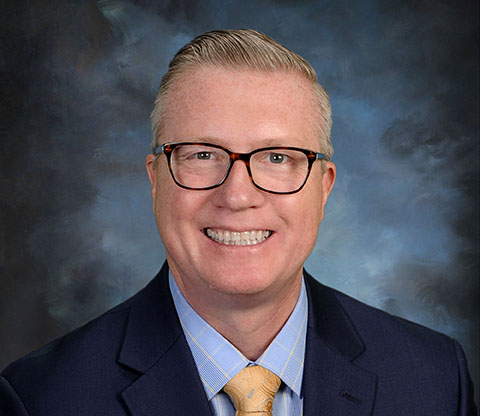
ITHACA, N.Y. — Tompkins Financial Corp. (NYSE: TMP) recently announced that Matthew Tomazin, its executive VP, chief financial officer (CFO), and treasurer, has been appointed to its market-based board serving the Central New York region. His expertise will help ensure that Tompkins continues to effectively reach its regional clients and deepen its commitment to the
Become a Central New York Business Journal subscriber and get immediate access to all of our subscriber-only content and much more.
Click here to purchase a paywall bypass link for this article.
ITHACA, N.Y. — Tompkins Financial Corp. (NYSE: TMP) recently announced that Matthew Tomazin, its executive VP, chief financial officer (CFO), and treasurer, has been appointed to its market-based board serving the Central New York region.
His expertise will help ensure that Tompkins continues to effectively reach its regional clients and deepen its commitment to the communities it serves, the Ithaca–based banking and financial-services company said in the Aug. 18 announcement.
“With an impressive tenure at Tompkins Financial, Matt’s experience as a leader in financial management makes him well-positioned to advise the company in guiding clients toward lasting financial success,” Steve Romaine, president and CEO of Tompkins Financial, said. “We’ve witnessed Matt’s business acumen and thoughtful approach to complex financial issues earn the trust of clients and colleagues alike. His leadership, strategic insight, and commitment to excellence make him an invaluable asset to our team and the Central New York board.”
Appointed as CFO of Tompkins in October 2023, Tomazin is an expert in bank financial management, with extensive experience in financial modeling, asset and liability (ALCO) management, profitability modeling, governance and controls and strategic planning and execution, the company contends. He is the senior executive responsible for managing the financial performance of Tompkins by providing strategic guidance, overseeing financial operations, and making informed decisions to drive the company’s growth and profitability.
Tomazin is a 2007 graduate of Binghamton University and 2014 graduate of the Darden/SNL Executive Program in Bank Financial Leadership.
Tompkins Financial Corp. serves the Central, Western, and Hudson Valley regions of New York and the Southeastern region of Pennsylvania. It is parent to Tompkins Community Bank, Tompkins Insurance Agencies, Inc., and offers wealth-management services through Tompkins Financial Advisors.
Stay up-to-date on the companies, people and issues that impact businesses in Syracuse, Central New York and beyond.