Stay up-to-date on the companies, people and issues that impact businesses in Syracuse, Central New York and beyond.

OPINION: The United Nations needs American leadership
President Donald Trump got one thing right in his combative speech to the United Nations General Assembly [on Sept. 23]. The UN, he said, had such great promise, but it has failed to live up to its potential. Few reasonable people would disagree. But Trump’s approach to the organization’s perceived failures is exactly wrong. Insulting […]
Become a Central New York Business Journal subscriber and get immediate access to all of our subscriber-only content and much more.
Click here to purchase a paywall bypass link for this article.
President Donald Trump got one thing right in his combative speech to the United Nations General Assembly [on Sept. 23]. The UN, he said, had such great promise, but it has failed to live up to its potential. Few reasonable people would disagree.
But Trump’s approach to the organization’s perceived failures is exactly wrong. Insulting its members, rejecting its priorities, and dismissing its achievements sends a message that America will not be a reliable partner in addressing the world’s problems.
The UN needs U.S. engagement and strong American leadership. And the United States needs an effective United Nations, the one body that brings together all the world’s governments to resolve conflicts and support democracy and human rights.
The United Nations came into being 80 years ago, when a majority of members ratified the charter that delegates had drafted at a meeting in San Francisco. Its founders were determined to avoid what happened after World War I, when the League of Nations, without U.S. membership, failed to prevent conflicts that again led to global war.
The UN has always faced criticism and even outright opposition. Many Americans worried we would concede it too much power, undermining national sovereignty. At the same time, the UN can be ponderous and slow to act. Veto power granted the five permanent members of the Security Council — the U.S., China, France, Russia, and the United Kingdom — blocks actions that are counter to any of their interests. There are legitimate concerns about the size and inefficiency of the bureaucracy. The organization is sometimes accused of being biased against America and our allies, notably Israel.
But the UN has played an important role in protecting human rights, delivering humanitarian aid, promoting development and upholding international law. Most importantly, it deserves some credit for preventing a third world war. NATO peacekeepers, now deployed in 11 missions, have helped contain local conflicts. Americans appreciate this work. A survey this year by the Pew Research Center found that 57 percent have a favorable view of the UN while only 41 percent have an unfavorable view.
From those findings, Trump’s address to the General Assembly was out of synch with public opinion. The hour-long speech was typical Trump: a mix of boasts, insults, and exaggeration. He bashed immigration, called climate change a hoax, faulted Europe for buying Russian oil, and bragged about the U.S. economy. “Your countries are going to hell,” he told his audience.
Afterward, however, Trump told Secretary-General Antonio Guterres that he supports the UN because “the potential for peace at this institution is great.” He signaled greater support for Ukraine in its war with Russia and had a friendly encounter with Brazil President Luiz Inacio Lula da Silva, the kind of dialogue UN gatherings should promote.
Trump often contradicts himself, and actions matter more than words. He has withdrawn from several UN bodies, including the World Health Organization, the Human Rights Council and UNESCO. The U.S. has cut or is proposing to cut billions of dollars in funding.
The sensible answer to the United Nations’ failings is reform, not rejection. In fact, Guterres, who has been secretary-general since 2017, has instituted reforms and focused on finances. Withholding U.S. support will make the work harder.
Several years ago, Illinois Congressman David Dreier and I co-chaired a Council on Foreign Relations task force on enhancing U.S. leadership at the United Nations. We called for working with other democratic members to strengthen the organization’s promotion of democracy. We also recommended more consistent support of human rights, with sanctions for egregious violations, and efforts to strengthen counterterrorism.
The priorities in that report could guide robust U.S. engagement that would make the UN more effective and better aligned with our values and interests. The United Nations has great potential, no less today than when it was founded. It’s more likely to achieve success with strong and supportive American leadership.
Lee Hamilton, 94, is a senior advisor for the Indiana University (IU) Center on Representative Government, distinguished scholar at the IU Hamilton Lugar School of Global and International Studies, and professor of practice at the IU O’Neill School of Public and Environmental Affairs. Hamilton, a Democrat, was a member of the U.S. House of Representatives for 34 years (1965-1999), representing a district in south-central Indiana.
VIEWPOINT: New York State’s MWBE Program: New Updates and Continuing Complexities
On May 9, 2025, New York State enacted legislation, as part of the FY 2025-26 New York State budget, extending and adding certain provisions to the New York State Minority and Women-Owned Business Enterprise (MWBE) program. Although program eligibility and requirements for participants remain the same — maintaining consistency for businesses, at least, for now
Become a Central New York Business Journal subscriber and get immediate access to all of our subscriber-only content and much more.

Click here to purchase a paywall bypass link for this article.
On May 9, 2025, New York State enacted legislation, as part of the FY 2025-26 New York State budget, extending and adding certain provisions to the New York State Minority and Women-Owned Business Enterprise (MWBE) program. Although program eligibility and requirements for participants remain the same — maintaining consistency for businesses, at least, for now — some of the added provisions may lead to significant program adjustments in the future.
The recently enacted updates to the MWBE program are as follows:
• Program Extension: The MWBE program was set to expire on July 1, 2025, but has been extended to July 1, 2028.
• Discretionary Threshold Increase: The state agency discretionary purchasing threshold for MWBEs, which allows state agencies to make purchases from MWBEs up to a certain amount without a formal competitive bid process, has increased from $750,000 to $1.5 million.
• Annual Report: State agency annual reports to the director of the Division of Minority and Women’s Business Development (the Division) must now include, among other things, the total number of contracts awarded to MWBEs each year, the total value of contracts awarded to MWBEs each year, the participation rate, and the percentage of contracts awarded to MWBEs over the total contracts for all commodities, services, and services purchases — all in comparison to various measurements from the prior year.
• Policy Study: The director of the Division is required to commission a policy study analyzing potential ways to improve the effectiveness of the MWBE program. The study must be prepared by an entity independent of the Department of Economic Development and the purpose is to provide recommendations to further strengthen and increase the effectiveness of the MWBE program. The policy study is due by May 1, 2027 and must be made publicly available.
Despite these updates, MWBE program eligibility and requirements for participants remain unchanged. As a brief reminder, some of the general requirements for the program are:
• Ownership: The minority group members or women upon which certification relies must have real, substantial, and continuing majority ownership of the business enterprise. In evaluating this requirement, the Division looks at, among other things, the minority group members’ or women’s percentage ownership, capital contribution, and risk and profit sharing of the business enterprise.
• Operation: The minority group members or women upon which certification relies must make day-to-day decisions concerning the operation of the business enterprise. In evaluating this requirement, the Division looks at, among other things, the minority group members’ or women’s experience in the industry, operational decision-making, and time devoted to the business enterprise.
• Control: The minority group members or women upon which certification relies must have the power to control the business enterprise. In evaluating this requirement, the Division looks at, among other things, the minority group members’ or women’s control of business management and control of business negotiations.
• Independence: The business enterprise must operate independently. In evaluating this requirement, the Division looks at, among other things, whether the business enterprise shares resources with another entity, transacts business primarily with only one other entity, and receives tangible benefits because of a connection to another entity and, if so, if those benefits are consistent with industry practice.
That said, even if a business enterprise meets the above-described requirements, below are a few limitations, among others, to keep in mind that may affect the ability to obtain MWBE status:
• Personal Net Worth: The minority group members’ or women’s personal net worth must not exceed $15 million, adjusted for inflation, subject to certain exclusions.
• Small Business: The business enterprise must have no more than 300 total employees, calculated as an average of the immediately preceding four calendar quarters.
• Time of Operation: The business enterprise must be in operation for at least one year.
• Doing Business in New York State: The business enterprise must have the authority to conduct business in the state of New York and actually conduct business in the state.
Navigating the MWBE program can be complex despite the seemingly simple rules. Businesses seeking MWBE status should carefully consider application of the rules to the particular facts at hand when applying for initial certification, re-certification, or an appeal of a denial of either.
Jessica M. Blanchette is an associate attorney in the Albany office of Syracuse–based Bond, Schoeneck & King PLLC. Contact Blanchette at jblanchette@bsk.com. Lyndon E. Hall is an associate attorney in Bond’s Syracuse office. Contact Hall at lhall@bsk.com. This article is drawn and edited from the law firm’s website.

Lockheed Martin produces higher profit, sales in Q3
Lockheed Martin Corp. (NYSE: LMT) generated a third-quarter profit of $1.6 billion, or $6.95 per share, compared to $1.6 billion, or $6.80 a share, during the same quarter in 2024. That’s according to the earnings report it issued on Oct. 21. The company’s profit result beat the consensus analyst’s estimate of $6.33 per share, according
Become a Central New York Business Journal subscriber and get immediate access to all of our subscriber-only content and much more.
Click here to purchase a paywall bypass link for this article.
Lockheed Martin Corp. (NYSE: LMT) generated a third-quarter profit of $1.6 billion, or $6.95 per share, compared to $1.6 billion, or $6.80 a share, during the same quarter in 2024.
That’s according to the earnings report it issued on Oct. 21. The company’s profit result beat the consensus analyst’s estimate of $6.33 per share, according to Zacks Equity Research.
Lockheed Martin, a defense contractor based in Bethesda, Maryland, operates a Syracuse–area plant in the town of Salina and another plant in Owego in Tioga County. It employs a total of 5,100 people at those two Central New York facilities, according to the latest data the company submitted to CNYBJ Research.
The global defense technology company reported sales of $18.6 billion in this year’s third quarter, up about 9 percent from $17.1 billion in the year-ago earnings period.
In its earnings announcement, Lockheed Martin also said its cash from operations totaled $3.7 billion in the third quarter of 2025, compared to $2.4 billion for the third quarter of 2024. Free cash flow was $3.3 billion in this year’s third quarter, compared to $2.1 billion in the year-prior period.
Lockheed Martin’s top executive was upbeat about the aerospace company’s outlook.
“Looking ahead, we are investing aggressively in both new digital technologies and physical production capacity needed to meet the top defense priorities of the United States and its allies — and we are doing so in partnership with a number of leading technology partners, large and small. Major national defense initiatives like the Golden Dome for America demand proven leadership in a wide range of skills, including integrated air and missile defense, space warfare and highly secure command and control systems,” Lockheed Martin Chairman, President, and CEO Jim Taiclet said in the earnings report. “Lockheed Martin is the capable leader and integrator across industry for these types of initiatives. Moreover, our disciplined capital deployment continues to provide robust, reliable rewards for our shareholders, highlighted by 23 consecutive years of dividend increases. Together, these results reflect a company built for performance today and poised for growth tomorrow.”
Lockheed Martin said it expects its full-year earnings to come in at between $22.15 and $22.35 per share, with annual revenue anticipated to be in a range between $74.25 billion and $74.75 billion.

Barclay Damon has elected David Burch as its deputy managing partner, effective Jan. 1, 2026. He will work closely with Connie Cahill, managing partner, to

Ask the Expert: How Companies Can Future-Proof Their Workforce
In today’s landscape, workforce challenges are more pressing than ever. Across New York and beyond, companies are grappling with unfilled positions, skills gaps, and increasing

The OBBBA Resurrects the Immediate R&E Expense Deduction
Under the Tax Cuts and Jobs Act (TCJA), businesses, including manufacturers, have been required since 2022 to amortize domestic Section 174 research and experimental (R&E)

State breaks ground on Principle Hotel in downtown Norwich, as part of DRI projects
NORWICH, N.Y. — Officials in Norwich held a Thursday, Oct. 23 groundbreaking for the upcoming Principle Hotel, an $8.3 million boutique hotel as part of
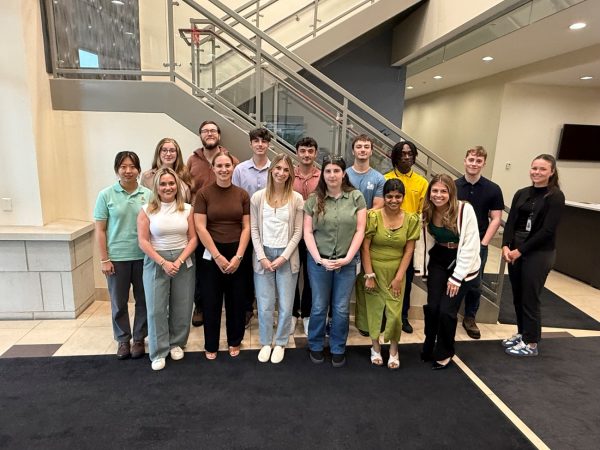
Indium Corp. accepting applications for its DIY internship program
CLINTON, N.Y. — Indium Corporation is now accepting applications for its 2026 internship program, which will be a do-it-yourself (DIY) format. It allows students to

SYRACUSE, N.Y. — Three speakers discussed history and storytelling during the Downtown Committee of Syracuse, Inc.’s fall progress breakfast held Thursday morning, Oct. 23, at

Alcoa, NYPA ink new power-supply contract in Massena, supporting 500 jobs
MASSENA, N.Y. — Alcoa Corp. (NYSE: AA) and the New York Power Authority (NYPA) have signed a new power-supply contract for Alcoa’s Massena smelting-plant operations
Stay up-to-date on the companies, people and issues that impact businesses in Syracuse, Central New York and beyond.