Stay up-to-date on the companies, people and issues that impact businesses in Syracuse, Central New York and beyond.

OPINION: Any Plans to Raise New York’s Taxes Must Be Wholly Rejected
New York State’s economic climate is toxic, and any talk about exacerbating our existing tax burden must be met with fervent skepticism. Since New York City elected socialist Zohran Mamdani to be mayor, Gov. Kathy Hochul’s tone on taxes has become suspiciously ambiguous. Despite making claims to the contrary, it is clear the door is […]
Become a Central New York Business Journal subscriber and get immediate access to all of our subscriber-only content and much more.
Click here to purchase a paywall bypass link for this article.
New York State’s economic climate is toxic, and any talk about exacerbating our existing tax burden must be met with fervent skepticism. Since New York City elected socialist Zohran Mamdani to be mayor, Gov. Kathy Hochul’s tone on taxes has become suspiciously ambiguous. Despite making claims to the contrary, it is clear the door is open for a tax hike.
The progressive wing of the state’s Democratic Party is quick to point out their tax plans are aimed at wealthy New Yorkers, and the dialogue around any potential tax hike appears to be limited to corporations. Don’t be fooled, though. It’s already a massive uphill battle attracting and retaining job-creating businesses here, and as outmigration continues to plague our tax base, revenue-hungry progressives will turn to everyday New Yorkers to make up the difference while businesses inevitably flee. The number of residents moving out of New York state exceeded the number of those moving in by about 900,000 from 2021 to 2024, which included net losses of close to 300,000 each in 2021 and 2022.
It is beyond brazen for the liberal Democrat camp to even insinuate a tax hike, considering New York’s cartoonishly broken tax system. According to the Tax Foundation, the Empire State ranks dead last in overall tax competitiveness. This is likely due to the fact that New York suffers the worst individual income-tax rates, 47th worst property-tax rates and 42nd worst sales-tax rates. How could you even begin to consider compounding this crisis with additional tax hikes? It is ridiculous to even entertain the notion.
The Assembly Minority Conference wholly rejects Albany’s tax-and-spend mentality. That’s why I introduced bill A.7417, which eliminates the state’s portion of sales tax on motor fuel and diesel fuel, exempts household products from state sales tax, exempts personal-care products from state sales tax and exempts ready-to-eat foods sold at grocery stores, restaurants, diners, taverns, food trucks, catered food, and food sold at food courts from state sales tax. Under my bill, localities would also be permitted to follow suit.
Additionally, Assemblyman Ra, our conference’s ranking member on the Ways and Means Committee, sponsors bill A.8752, which would exempt the first $50,000 of income for businesses that employ fewer than 20 employees from being taxed.
To us, affordability is more than a buzzword. The governor is quick to toss that word around, but her actions do little to back up her words. New York, by most every measure, is not affordable. If we are going to restore our state to the financial capital of the world, we should start by making it desirable for residents, visitors, investors, and businesses, alike. Right now, it is far from it, and the governor is doing little to change that unfortunate reality.
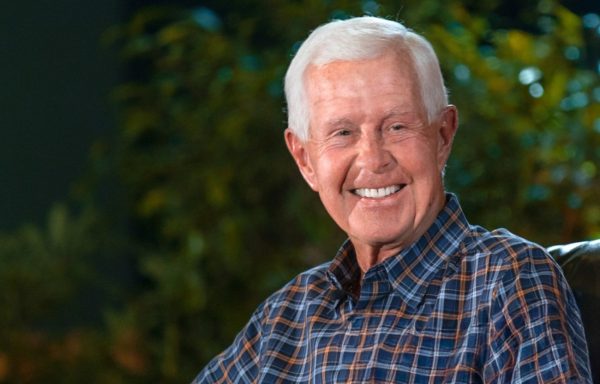
William (Will) A. Barclay, 56, Republican, is the New York Assembly minority leader and represents the 120th New York Assembly District, which encompasses all of Oswego County, as well as parts of Jefferson and Cayuga counties.
OPINION: Our system of checks and balances needs attention
Checks and balances are essential to our representative democracy. Under our system of government, the legislative, executive, and judicial branches provide balance and prevent each other from growing too powerful. The American people have supported this arrangement. My concern is that the checks and balances have eroded. The system is under strain, and this feature
Become a Central New York Business Journal subscriber and get immediate access to all of our subscriber-only content and much more.

Click here to purchase a paywall bypass link for this article.
Checks and balances are essential to our representative democracy. Under our system of government, the legislative, executive, and judicial branches provide balance and prevent each other from growing too powerful. The American people have supported this arrangement.
My concern is that the checks and balances have eroded. The system is under strain, and this feature of our government requires more attention than it gets.
The battle is not lost; we still have three branches of government. Congress and the courts sometimes rise to the occasion and limit what the executive branch can do. But the growing power of the presidency has become a real problem. It’s time to raise an alarm flag about the direction in which our nation is going.
America’s founders were learned men who thought seriously about the purpose and structure of government. Drawing on the work of French political theorist Montesquieu and others, they crafted a constitution that assigns the powers of government to distinct executive, legislative, and judicial branches.
But separation of powers wasn’t enough to ensure liberty, James Madison wrote in one of his influential essays known as the Federalist Papers, and each branch of government needed to check the others. “Ambition must be made to counteract ambition,” he wrote, recognizing that presidents, legislators, and judges would try to expand their power.
Under the Constitution, the president can check the legislative branch by vetoing legislation. Congress can override the veto with a two-thirds vote. Courts can declare legislation and executive action unconstitutional. The president appoints judges, and the Senate confirms them. Congress can approve or reject spending.
Congress also has an important role in overseeing the executive branch. As I explained in a recent commentary, congressional oversight can inform the American people about the workings of government, establish guardrails against presidential overreach, and expose misconduct. Unfortunately, that kind of oversight has too often become an afterthought.
The system of checks and balances has served us well, but it has always been a source of tension. New presidents take office with big ideas. They want to get things done, and they don’t want Congress and the courts to put up roadblocks. The growing importance of foreign affairs and other factors has increased presidential power, a trend the historian Arthur Schlesinger wrote about 50 years ago in his book “The Imperial Presidency.”
It’s true that, in today’s world, events sometimes call for a quick response, and the executive branch is best suited for that. But we shouldn’t forget that the Constitution gives the legislative branch an important role in foreign affairs. Congress enacts laws and provides funding for military action and diplomacy. The Senate must ratify treaties. Importantly, only Congress can declare war. The founders put Congress first in the Constitution because it would be the branch that would be closest to the people.
President Donald Trump has challenged our system of checks and balances. He shows little appreciation for Congress and the courts and seems to expect them to defer to him. He governs by executive order, uses government to punish his adversaries, and acts audaciously without consulting Congress.
With Trump’s fellow Republicans in the majority, the legislative branch often puts up little resistance. The Supreme Court has also been deferential, often using its so-called shadow docket to greenlight the president’s actions. Fortunately, we’re starting to see signs that Congress has its limits and will push back. Hopefully, it will see the current situation not just as a challenge but as an opportunity to assert itself.
Madison wrote that concentrating power in a few hands is “the very definition of tyranny.” It’s up to Congress to check the power of the executive branch, and it’s up to the American people to ensure Congress does its job.
Lee Hamilton, 94, is a senior advisor for the Indiana University (IU) Center on Representative Government, distinguished scholar at the IU Hamilton Lugar School of Global and International Studies, and professor of practice at the IU O’Neill School of Public and Environmental Affairs. Hamilton, a Democrat, was a member of the U.S. House of Representatives for 34 years (1965-1999), representing a district in south-central Indiana.
Ask Rusty: Is Social Security really a “good deal”?
Dear Rusty: You have said in the past that most people recoup their Social Security (SS) contributions within five years of starting benefits, thus Social Security “is an exceptionally good deal.” Your calculation is correct but misleading; if it were not, SS would have been insolvent long ago. I will, in fact, get “my” contributions
Become a Central New York Business Journal subscriber and get immediate access to all of our subscriber-only content and much more.
Click here to purchase a paywall bypass link for this article.
Dear Rusty: You have said in the past that most people recoup their Social Security (SS) contributions within five years of starting benefits, thus Social Security “is an exceptionally good deal.” Your calculation is correct but misleading; if it were not, SS would have been insolvent long ago. I will, in fact, get “my” contributions back in about five years, but my employer’s contributions will take another five years, and that is money that my employer could have been paying me, so they are really “my” contributions. But even that ignores the time value of money. I did a calculation as if my contributions, along with those of my employer, were invested in an account earning 5 percent per year. That would provide me the equivalent of SS income for 24 years, approximately what my life expectancy was when I retired. So, it’s not a bad deal, but it is hardly exceptional. It is roughly the equivalent of me investing that money throughout my career and using the total to buy an annuity. Of course, Social Security does have the advantage of certainty, at least until it goes broke. My portfolio would not earn a steady 5 percent every year, though that is at the low end of what financial managers would expect over a long period. And it does force people to save, many of whom would otherwise make no provision for retirement.
Signed: Realistic Senior
Dear Realistic Senior: Thank you very much for your feedback on my previous article. I think it’s important to draw a distinction for SS contributions made by an employer, because that is not money the individual personally pays, but rather an obligation for employers to help fund the Social Security program. Without that federal obligation, it is doubtful that employers would, instead, provide employees with equivalent additional compensation, so the thought that these are really your contributions is not a fair assessment. Indeed, they are contributions which happen to be tied to your earnings level (to a cap), for which employers receive relief on their corporate income tax, and likely would not make if not required by law.
As you have noted, Social Security has the advantage of certainty, something which is lacking when it comes to investing the equivalent amounts in the financial markets. And, as you have hinted, there exists a substantial failure by future American retirees to save adequately for their retirement, a problem well known in most financial circles. Thus, the certainty of Social Security makes it a crucial part of everyone’s retirement planning —and it will be there! Despite all the angst attributed to the current financial issues facing the program, there is little doubt that Social Security is here to stay. The question is: what reform is needed to make the program fully solvent for generations of future Americans? The Association of Mature American Citizens (AMAC) has developed a proposal to sensibly reform Social Security and avoid the currently projected 2033 date that the SS Trust Funds are expected to be depleted (which will necessitate an across-the-board cut for everyone). We have little doubt that the reform needed will happen (it would be political suicide for Congress if it did not), and hopefully soon. You can read about AMAC’s proposed solution at this link: www.amac.us/social-security-guarantee.
Again, thank you for your feedback and commentary. Please know that we very much appreciate your thoughts and are always willing to discuss these issues.
Russell Gloor is a national Social Security advisor at the AMAC Foundation, the nonprofit arm of the Association of Mature American Citizens (AMAC). The 2.4-million-member AMAC says it is a senior advocacy organization. Send your questions to: ssadvisor@amacfoundation.org.
Author’s note: This article is intended for information purposes only and does not represent legal or financial guidance. It presents the opinions and interpretations of the AMAC Foundation’s staff, trained, and accredited by the National Social Security Association (NSSA). The NSSA and the AMAC Foundation and its staff are not affiliated with or endorsed by the Social Security Administration (SSA) or any other governmental entity.
Ithaca College expands public electric-vehicle charging network
ITHACA, N.Y. — Ithaca College (IC) says it has completed a project to “dramatically” expand electric-vehicle (EV) charging infrastructure across its South Hill campus. The
Excellus announces recipients of 2025 Health Equity Innovation Awards
A total of 22 Upstate nonprofit organizations are the recipients of 2025 Health Equity Innovation Awards from Rochester–based health insurer Excellus BlueCross BlueShield. Excellus describes the grants as an annual funding opportunity that supports nonprofit organizations working to eliminate health disparities and improve health outcomes across upstate New York. Twenty-two nonprofit organizations in the Central
Become a Central New York Business Journal subscriber and get immediate access to all of our subscriber-only content and much more.
Click here to purchase a paywall bypass link for this article.
A total of 22 Upstate nonprofit organizations are the recipients of 2025 Health Equity Innovation Awards from Rochester–based health insurer Excellus BlueCross BlueShield.
Excellus describes the grants as an annual funding opportunity that supports nonprofit organizations working to eliminate health disparities and improve health outcomes across upstate New York.
Twenty-two nonprofit organizations in the Central New York/Southern Tier, Rochester, and Utica/North Country regions were chosen from a competitive pool of nearly 300 applicants.
The selected organizations are leading efforts to “close gaps in care through innovative, community-driven solutions tailored to the unique needs of the people they serve,” per the Excellus announcement.
Focus areas for funding in each region were strategically identified through community needs assessments, which helped pinpoint the most pressing health challenges and disparities affecting local populations, the health insurer noted.
The Health Equity Innovation Awards will help advance a wide range of initiatives, including community-centered mental health and wellness programs; community-based chronic disease prevention and education; maternal and child-health support services; food access and nutrition initiatives; and workforce development and training in health-related fields.
Regional recipients, projects
CENTRAL NEW YORK REGION
UTICA REGION
SOUTHERN TIER
SUNY ESF students seek timber-bridge project for next semester
SYRACUSE, N.Y. — Students in the construction-management program at the SUNY College of Environmental Science and Forestry (ESF) are seeking a client for a timber-bridge
Lockheed Martin plans for $51 million expansion project at Owego plant
OWEGO, N.Y. — Lockheed Martin Corp. (NYSE: LMT) has plans for a $51 million expansion project at its plant in Owego. The project would involve
Community Bank appoints head of business banking credit and operations
ALBANY, N.Y. — Community Bank, N.A. announced it has hired Jeff Connolly as SVP, head of business banking credit & operations. Based in Albany, Connolly will lead Community Bank’s business-banking credit efforts. He will oversee the strategic direction and execution of credit-risk management and operational processes within the business banking division for the bank’s New
Become a Central New York Business Journal subscriber and get immediate access to all of our subscriber-only content and much more.
Click here to purchase a paywall bypass link for this article.
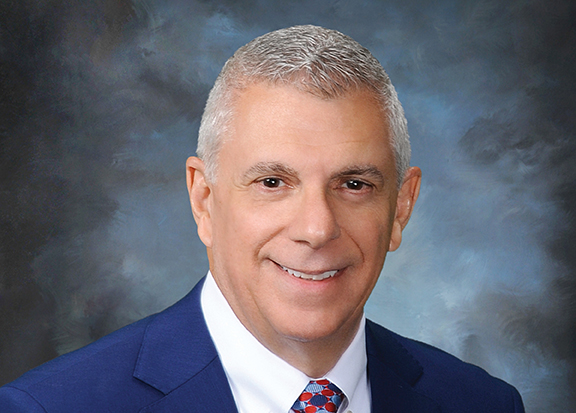
ALBANY, N.Y. — Community Bank, N.A. announced it has hired Jeff Connolly as SVP, head of business banking credit & operations.
Based in Albany, Connolly will lead Community Bank’s business-banking credit efforts. He will oversee the strategic direction and execution of credit-risk management and operational processes within the business banking division for the bank’s New York state footprint and operations, including Central New York, the bank says.
Connolly brings expertise in commercial lending and operation best practices. With more than 15 years of experience in the financial industry, he has led teams in credit administration, portfolio management, and underwriting, according to Community Bank.
Connolly will focus on driving sustainable portfolio growth through sound credit practices, regulatory compliance, and process optimization. He will seek to ensure efficiency and long-term business success leading a high-performing team, spearheading initiatives that enhance credit quality, and streamline operations by leveraging technology to support future growth, the bank adds.
Community Bank, N.A. is a unit of Community Financial System, Inc. (NYSE: CBU), a diversified financial-services company that is based in DeWitt and focused on four main business lines: banking, employee-benefit services, insurance services, and wealth-management services. Community Bank is among the nation’s 100 largest banks, with more than $16 billion in assets. It operates about 200 branches across upstate New York, northeastern Pennsylvania, Vermont, and western Massachusetts.
Guthrie Lourdes Hospital in Binghamton says its Johnson City surgery center is nearing completion
BINGHAMTON, N.Y. — Guthrie Lourdes Hospital in Binghamton says construction of a new ambulatory surgery center (ASC) is nearing completion in Johnson City. Located in
SU’s Whitman School launches Orange Business Angel Network
SYRACUSE, N.Y. — The Martin J. Whitman School of Management at Syracuse University (SU) is announcing the start of the Orange Business Angel Network (OBAN).
Stay up-to-date on the companies, people and issues that impact businesses in Syracuse, Central New York and beyond.