Stay up-to-date on the companies, people and issues that impact businesses in Syracuse, Central New York and beyond.

Click here to read about the companies featured in the 2025 Manufacturing Directory
Become a Central New York Business Journal subscriber and get immediate access to all of our subscriber-only content and much more.
Click here to purchase a paywall bypass link for this article.

SUNY Oneonta manufacturing bootcamp readies workers
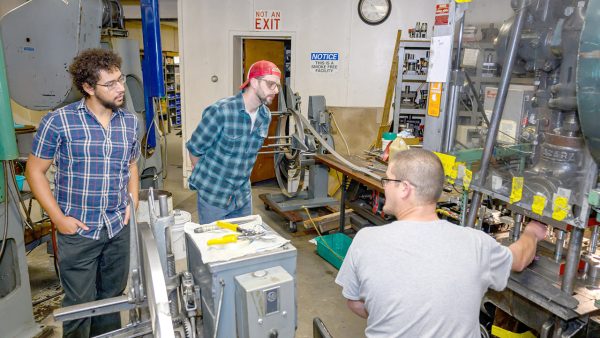
ONEONTA, N.Y. — Nine residents of Otsego and Delaware counties earned a microcredential from their involvement in a recent manufacturing bootcamp through SUNY Oneonta’s Extended and Community Learning (ExCL) Center. The school held an Oct. 2 ceremony following the program, which is described as an intensive four-week effort designed to prepare workers for local manufacturing
Become a Central New York Business Journal subscriber and get immediate access to all of our subscriber-only content and much more.
Click here to purchase a paywall bypass link for this article.
ONEONTA, N.Y. — Nine residents of Otsego and Delaware counties earned a microcredential from their involvement in a recent manufacturing bootcamp through SUNY Oneonta’s Extended and Community Learning (ExCL) Center.
The school held an Oct. 2 ceremony following the program, which is described as an intensive four-week effort designed to prepare workers for local manufacturing jobs, per the SUNY Oneonta announcement.
“I saw an opportunity to get out into the workforce and find a long-term career without having to move outside my community,” Jayden Trask, a Sidney resident who completed the program, said in the school’s announcement. “The program taught me more than I expected. My goal now is to find a job where I can be my best … maybe operate a CNC machine and become a programmer in the future.”
Under the manufacturing bootcamp, students completed 100 hours of classroom instruction at the ExCL Center; 20 hours of hands-on instruction at local manufacturing facilities; and two days of resume writing and mock interviewing with the SUNY Oneonta Career Planning and Networking Center.
Students also toured five local manufacturing companies to learn more about their products and production.
“My favorite part of the training program was getting out in the community to tour manufacturing facilities,” said Dawn Rowe, a Unadilla resident and manufacturing bootcamp participant. “It gave me a greater sense of what they do and what they are seeking from their employees. I was impressed with how many important products are manufactured right here in our area, and I hope to find a manufacturing job soon.”
“SUNY Oneonta’s Advanced Manufacturing Training is an accelerated program with a clear end goal,” Misty Fields, director of the SUNY Oneonta Extended and Community Learning (ExCL) Center, said. “Since its ribbon cutting last year, the SUNY Oneonta ExCL Center has actively pursued opportunities to deliver workforce development initiatives tailored to the needs of our regional industries. This program was designed with flexible instruction and applied learning experiences to directly address the priorities of our local employers. As a result, participants are now prepared for manufacturing careers or registered apprenticeship programs.”
In-person and hands-on classes covered a wide-range of instruction from technical writing to manufacturing safety, blueprint reading, measuring devices, hand tools, battery assembly, soldering and shop-floor math. Local manufacturers — Brooks Manufacturing in Unadilla, Ioxus in Oneonta, and Custom Electronics — hosted students in their facilities for tours and more direct instruction alongside manufacturing professionals, the school said.
“I don’t believe most people realize just how many manufacturers are here in our region, or the fact that we are all seeking qualified employees,” said Bradford Brooks, president of Brooks’ Machine Products in Unadilla. “Training programs like this one can help us build that needed awareness and inspire more people to consider pursuing manufacturing careers here in Otsego County.”
Upon successful completion, the training program offered participants a $1,000 stipend, transportation assistance, a laptop, job interviews and placement support.
“Ioxus was glad to be a part of the manufacturing training program, as it allowed us to take people from the community to give them hands-on training, which they can take with them to any job, or can help them be hired with Ioxus,” Chad Hall, co-founder and president of Ioxus in Oneonta, said.
The workforce-development initiative was made possible through the combined efforts and funding of SUNY Oneonta, SUNY Broome, SUNY Pre-Apprenticeship Program, the New York State Department of Labor RADAR Grant program, the Oneonta Working Solutions office and the workforce development board of Herkimer, Madison and Oneida counties.

VIEWPOINT: The Success Engine: Strategic Planning and Goal Alignment
Strategic planning, when coupled with goal alignment, is the engine that drives organizations to successfully achieve their goals. Whether your strategic goals include organic growth through capturing more market share, acquisitions, expanding into new markets, adapting to changing market demands, expanding facilities, or succession planning (or some combination of these and others), creating alignment from
Become a Central New York Business Journal subscriber and get immediate access to all of our subscriber-only content and much more.
Click here to purchase a paywall bypass link for this article.
Strategic planning, when coupled with goal alignment, is the engine that drives organizations to successfully achieve their goals. Whether your strategic goals include organic growth through capturing more market share, acquisitions, expanding into new markets, adapting to changing market demands, expanding facilities, or succession planning (or some combination of these and others), creating alignment from these top-level goals throughout your organization to each individual is the basis of ongoing success.
Let’s start with the strategic-planning process. There are various approaches to developing a strong strategic plan. The one I prefer is one I have used many times with excellent results, both while working within companies as an operations leader and working with clients as a facilitator. The key will be to develop the plan together with the senior leadership group leading the way. Senior leadership must engage key leaders and team members across the organization throughout the process as well. I’m sure many of us can relate to working for a company and having new posters put up around the company with a “new” “vision” and “mission.” Or perhaps. You have been handed your annual goals in a “previous life” with no input whatsoever from you in developing them. It’s simple: the more engaged your team is in the development of the plan, the more vested they are in the success of the plan. Now, more about the planning process.
This statement should describe what or where the organization will be in a predetermined time frame that is appropriate for the organization. It is a “becoming statement;” it’s not who or what you are today, but rather what or who you aspire to be. You may want to view your vision in terms of a two- or three-year plan. That’s because it may be difficult to project much further as market dynamics, technology, and other externalities can change so quickly. This statement need not be specific. It does need to set a clear direction by describing something your organization currently is not but intends to become.
This is a brief statement, again in general terms, of what must be achieved in the next year to make significant strides in the direction of achieving the vision. What does your organization need to achieve in the first year to get a healthy start on achieving the vision in two or three years? The mission statement is usually longer than the vision statement, although it should still be brief and to the point.
These are the things both necessary and sufficient to achieve the mission. As the mission is a one-year focus, so too should be the critical-goal categories. These are usually limited to between four and eight. They should be more specific than the mission, but not as specific as goal statements.
These should meet the “SMART” criteria: specific, measurable, attainable, realistically high, and time sensitive. These again should be necessary and sufficient to accomplish the goal category.
These will define what actions need to be taken, by whom, and when they must be completed. There is a detailed process to go from goal statement to defined-action steps to best ensure the goal is met. The focus of this process is to define all obstacles to achieving the goal, then defining action steps to overcome the obstacles.
If the senior leaders have done a good job of aligning on the plan throughout this process themselves while bringing in key leaders from across the organization to get their input during the process as well, then the organization is on its way to goal alignment. As an example, a VP of operations for a manufacturer would have involved its director of operations, director of procurement, director of planning, and director of logistics at the detail level throughout this process. Each of these directors should also be involving their direct reports in detailed discussions during the process, right through to the front-line workers. By asking for and hearing the input from all and then using this as the plan is developed and refined, everyone has a stake in the plan. This is more time-consuming and, especially at the beginning, may require more effort, but the result will be a plan that all employees have a stake in and understand.
Another key to goal alignment is to assist all employees to see how the organization’s goals align with their personal goals and aspirations. This is vital to tapping into each person’s motivation. Real motivation comes from within. Leaders at every level of the organization must understand their employees’ personal goals and aspirations. This only happens when relationships are based on trust. Leaders that understand this and are capable of forming these types of working relationships throughout the organization at all levels is what will enable true goal alignment. Imagine what your organization could achieve with this level of alignment!
No sustainable positive behavior change (and therefore no sustainable positive result) is possible without the right attitudes. This is why initiatives fail so many times in all kinds of organizations. Most people have negative attitudes about change and uncertainty. Most people are not goal setters and achievers by habit. How then can leaders habituate goal planning and achievement in their organizations?
The answer is to implement a goal planning and achievement process. This will create an “I can / We can” attitude that becomes part of everyone’s regular routine. It becomes part of the culture.
Mark A. O’Donnell is founder and owner of Operations Excellence, LLC, a consulting firm that helps small- to mid-sized businesses and organizations with anything from boosting productivity to planning leadership transitions. He is a certified business coach.

Students get up-close look at area manufacturing plants
DeWITT, N.Y. — Area manufacturers hosted facility tours for students and educators across the region during October. MACNY, The Manufacturers Association, and its affiliate, Partners for Education & Business, Inc. (PEB), organized the tours. Throughout October, more than 450 students from 11 school districts in Central New York and the Mohawk Valley got a look
Become a Central New York Business Journal subscriber and get immediate access to all of our subscriber-only content and much more.

Click here to purchase a paywall bypass link for this article.
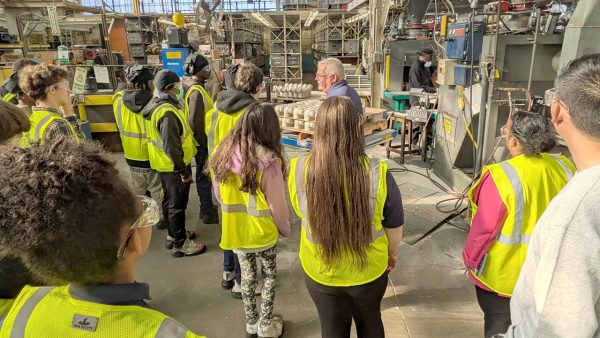
DeWITT, N.Y. — Area manufacturers hosted facility tours for students and educators across the region during October.
MACNY, The Manufacturers Association, and its affiliate, Partners for Education & Business, Inc. (PEB), organized the tours.
Throughout October, more than 450 students from 11 school districts in Central New York and the Mohawk Valley got a look at modern manufacturing and potential career opportunities. The objective of the facility tours is to show real-world examples of high-tech, high-demand manufacturing careers for students who may want to pursue that kind of work.
October is New York State’s official acknowledgement of Manufacturing Month, DeWitt–based MACNY noted.
“Manufacturing Month is about inspiring the next generation and showing them the exciting, meaningful careers available right here in New York,” Randy Wolken, president & CEO of MACNY, the Manufacturers Association, said in the announcement. “By opening their doors, manufacturers are not only highlighting advanced technologies and innovation, but also their vital role in building strong communities. We’re proud to partner with educators and industry leaders to create pathways for students to join this dynamic and growing sector.”
Groups toured facilities such as Gardall Safe Corporation of Syracuse; Golden Artist Colors in New Berlin; TTM Technologies of DeWitt; Inficon in DeWitt; Belden in DeWitt; Byrne Dairy; Eaton of Syracuse; JPW Structural Contracting, Inc. of DeWitt; Morse Manufacturing of Salina; Haun Welding Supply & Specialty Gases; OCWA – Central New York’s Water Authority; and Ralph W. Earl Co. Inc. of DeWitt.
“MACNY’s celebration of Manufacturing Month is a reminder that collaboration can shape the future of our region’s workforce,” Scott Walker, VP of operations for Inficon, said in the MACNY announcement. “INFICON is proud to show students and teachers that today’s manufacturing is driven by innovation, precision, and advanced technology. Our cleanrooms are high-tech and dynamic; it’s exactly the kind of exposure that can spark interest in a manufacturing career.”
During the tours, students were able to see up-close modern manufacturing and advanced technologies, such as precision metalwork and large-scale fabrication to high-tech electronics, and specialty products. Throughout the visits, students met with employees, asked questions about career paths, and watched demonstrations of the creativity and collaboration involved in manufacturing careers.
“These tours give students the unique opportunity to see modern manufacturing in action — from the equipment and processes to the people who make it all possible. For many, it’s their first time stepping inside a facility and envisioning themselves in a future career. Manufacturing Month allows us to connect education with industry in powerful ways, helping young people explore career options while strengthening our region’s workforce pipeline,” Emily Langan, manager of PEB, said.

National Grid to build transmission line connecting to Micron campus
CLAY, N.Y. — National Grid plans to build a two-mile, 345-kilovolt transmission-service line underground between an existing substation and the proposed Micron Technology (NASDAQ: MU) fabrication areas in the town of Clay. The New York State Public Service Commission (PSC) adopted the terms of a joint proposal during its meeting on Oct. 16, the office
Become a Central New York Business Journal subscriber and get immediate access to all of our subscriber-only content and much more.
Click here to purchase a paywall bypass link for this article.
CLAY, N.Y. — National Grid plans to build a two-mile, 345-kilovolt transmission-service line underground between an existing substation and the proposed Micron Technology (NASDAQ: MU) fabrication areas in the town of Clay.
The New York State Public Service Commission (PSC) adopted the terms of a joint proposal during its meeting on Oct. 16, the office of Gov. Kathy Hochul said in an announcement that day.
The PSC also approved National Grid’s environmental management and construction plan for the first phase of construction activities. It involves the installation of the eastern expansion of the Clay substation, and installation of equipment from the Clay substation to the Micron campus.
The joint proposal was signed by National Grid (NYSE: NGG), the New York State Department of Public Service staff, and the New York State Department of Environmental Conservation.
“For a project as large and transformational as Micron’s, every government agency involved must play its part to ensure its success,” Rory Christian, chairman of the PSC, said. “We are pleased that for our part, no party opposed the transmission or infrastructure application or the terms of the joint proposal, and the certificate conditions are adequate to protect the public interest and to ensure potential significant negative impacts of the project are avoided or minimized.”
In addition to approving the transmission connections, the PSC also okayed the utility’s plans regarding receiving and addressing public complaints, addressing environmental concerns such as waterbody and wildlife protection, and where and when construction activities would occur. It also seeks to “identify and minimize” the disruptive effects of construction and describes cleanup and restoration following construction, per Hochul’s office.
“One of the main reasons Micron chose Onondaga County was access to abundant and reliable power,” Onondaga County Executive Ryan McMahon said in the state’s announcement. “Now with approvals from the PSC, today marks yet another important step forward as Micron prepares to make the largest private sector investment in the history of our country and make Onondaga County and Central New York the hub for semiconductor manufacturing in North America.”
It was just over three years ago that Micron announced plans to build a massive semiconductor campus at the White Pines Commerce Park in the town of Clay. Micron says the project will create the largest-ever cleanroom space announced in the U.S., creating nearly 50,000 New York jobs over more than 20 years. That includes 9,000 high-paying Micron jobs.

MACNY’s Oct. 15 event covered workforce, energy issues, & more
DeWITT, N.Y. — MACNY, The Manufacturers Association, on Oct. 15 hosted its annual legislative breakfast at the DoubleTree by Hilton Hotel Syracuse, near Carrier Circle in the town of DeWitt. Those attending included key stakeholders, industry leaders, and legislators. It was an event that included a panel discussion on workforce, economic development, and energy issues.
Become a Central New York Business Journal subscriber and get immediate access to all of our subscriber-only content and much more.
Click here to purchase a paywall bypass link for this article.
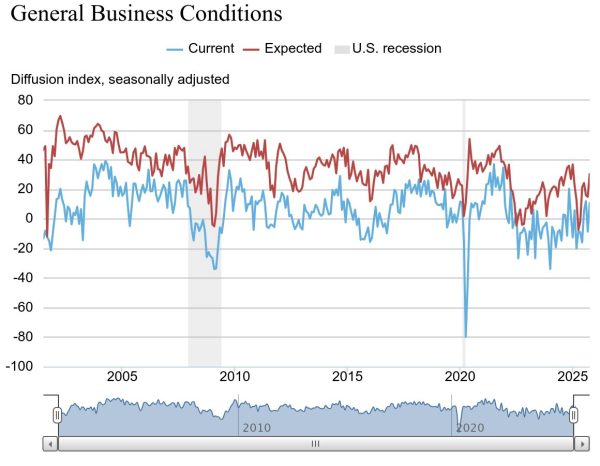
DeWITT, N.Y. — MACNY, The Manufacturers Association, on Oct. 15 hosted its annual legislative breakfast at the DoubleTree by Hilton Hotel Syracuse, near Carrier Circle in the town of DeWitt.
Those attending included key stakeholders, industry leaders, and legislators. It was an event that included a panel discussion on workforce, economic development, and energy issues.
The panelists included Alberto Bianchetti, National Grid’s regional director of external and customer affairs in Central New York; Susan Cole, state government affairs specialist at Novelis North America; Joanne Fernandez, director of U.S. state government affairs at Corning Incorporated; and Vlad Gutman-Britten, director of policy and analysis at NYSERDA.
“Manufacturers are the backbone of New York’s economy, and energy is central to their ability to remain competitive and grow,” Randy Wolken, president & CEO of MACNY, said in an announcement about the breakfast. “Today’s discussion brought together industry leaders, policymakers, and experts to address the challenges and opportunities we face around workforce, economic development, and energy policy. By working collaboratively with our elected officials, we can ensure that manufacturers continue to innovate, invest, and create jobs that strengthen communities across our state.”
The event also included a meet-and-greet with state and federal elected officials, a presentation on MACNY’s key legislative priorities, and an energy-focused panel discussion.
MACNY also noted that the primary objective of the event is to share success stories and highlight legislative and policy issues impacting the manufacturing industry in Central New York and beyond.

Empire State Manufacturing Survey index is back in positive territory
Firms responding to October’s Empire State Manufacturing Survey exhibited optimism that points to expansion in the state’s manufacturing industry. The survey’s general-business conditions index climbed more than 19 points to 10.7 in October, representing its third positive reading in the past four months. The index had dropped 21 points to -8.7 in September, its first
Become a Central New York Business Journal subscriber and get immediate access to all of our subscriber-only content and much more.
Click here to purchase a paywall bypass link for this article.
Firms responding to October’s Empire State Manufacturing Survey exhibited optimism that points to expansion in the state’s manufacturing industry.
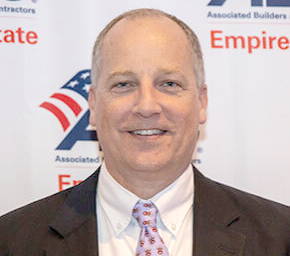
The survey’s general-business conditions index climbed more than 19 points to 10.7 in October, representing its third positive reading in the past four months. The index had dropped 21 points to -8.7 in September, its first negative measurement since June.
Based on manufacturers responding to the survey, the October reading indicates business activity “increased modestly” in New York state, the Federal Reserve Bank of New York said in its Oct. 15 report.
A positive index number indicates expansion or growth in manufacturing activity, while a negative reading on the index points to a decline in the sector.
The October Empire State Survey report’s results easily beat economists’ forecasts for a reading of nearly -2, according to Seeking Alpha.
The survey found new orders edged higher and shipments increased, the New York Fed said. Supply availability continued to “worsen somewhat,” and inventories were little changed.
Manufacturers grew more optimistic about the outlook, with close to half expecting conditions to improve in the months ahead.
After plunging in September, both new orders and shipments increased, with the new-orders index rising to 3.7 and the shipments index climbing to 14.4.
The inventories index hit -1.0, indicating that business inventories were little changed. The delivery-times index rose to 3.9, and the supply-availability index came in at -10.7, pointing to somewhat longer delivery times and worsening supply availability, the New York Fed said.
The index for number of employees moved up to 6.2, suggesting employment increased modestly, while the average-workweek index remained negative at -4.1, suggesting a small decline in hours worked.
Both price indexes remained elevated and moved higher: the prices-paid index rose 6 points to 52.4, and the prices-received index climbed 6 points to 27.2.
The index for future general business conditions rose to its highest level in several months, suggesting that firms expect conditions to improve in the months ahead. New orders and shipments are expected to increase, and supply availability is expected to be little changed. Firms anticipate ongoing price increases. Capital-spending plans remained soft.
The New York Fed distributes the Empire State Manufacturing Survey on the first day of each month to the same pool of about 200 manufacturing executives in the state. On average, about 100 executives return responses.

OPINION: The Case Against Prevailing-Wage Mandates on Brownfield Projects
The Empire State Chapter of the Associated Builders and Contractors (ABC), representing more than 450 merit-shop contractors and subcontractors employing hundreds of thousands of workers throughout New York state, is calling on Gov. Kathy Hochul to reject the proposed prevailing-wage mandates on Brownfield Cleanup Program (BCP) projects. Since the early 2000s, the BCP has provided
Become a Central New York Business Journal subscriber and get immediate access to all of our subscriber-only content and much more.
Click here to purchase a paywall bypass link for this article.
The Empire State Chapter of the Associated Builders and Contractors (ABC), representing more than 450 merit-shop contractors and subcontractors employing hundreds of thousands of workers throughout New York state, is calling on Gov. Kathy Hochul to reject the proposed prevailing-wage mandates on Brownfield Cleanup Program (BCP) projects.
Since the early 2000s, the BCP has provided developers with much-needed incentives to remediate and revitalize environmentally contaminated sites. This program led to hundreds of contaminated sites, more than half of which are in economically disadvantaged areas, to be cleaned up and developed. These developments create much-needed housing and jobs in the local communities. The legislature clearly sees the value in the program — if not it wouldn’t have been recently extended for another decade.
Mandating prevailing wages on BCP projects will make them financially impossible for most owners/developers across the state. Prevailing-wage projects cost about 28 percent more than non-prevailing wage projects, according to the Center for Governmental Research. In addition to this study, the Empire Center for Public Policy found that construction costs are inflated by between 13 percent and 25 percent due to New York’s prevailing-wage law.
This cost increase would be added to the already expensive task of environmental remediation for these sites. Prevailing-wage mandates would ensure that instead of communities and landscapes being revitalized, BCP sites remain idle and contaminated eyesores. Despite the irresponsible calls by some legislators to alter this successful program, our members continue to do great work remediating hazardous sites and building key parts of their communities.
A recent example of this is seen in Ruby Square, a 713,000-square-foot mixed-use development in New York City’s Jamaica, Queens. The site was redeveloped under the New York State BCP; environmental remediation included the removal of 114,000 tons of contaminated soil. Without the BCP, this site would have remained a rarely used parking lot on toxic soil.
Another BCP success story has been the 199–203 Park Club Lane Campus Expansion and Tenant Improvements. This marks a pivotal enhancement in the Roswell Park Comprehensive Cancer Center’s commitment to delivering accessible, world-class cancer care in Western New York. This new facility will increase convenience and reduce stress on some of our most-vulnerable residents. This
$23 million renovation wouldn’t have been possible without the current BCP.
These projects represent a new start for these previously contaminated sites, allowing communities to flourish and creating jobs for members of those same communities. The BCP has an enormous impact across the state — since its inception, almost 1,800 projects have utilized this program. A prevailing-wage mandate attached to these projects means that they won’t get done — it’s that simple.
Maybe the legislators that push for this mandate every year don’t understand the massive negative impact this would have; or maybe they don’t care because scoring rhetorical victories is more important than the material conditions of their voters. That’s a joke to be sure; they know very well the negative impact this change would have because they specifically exempted affordable-housing projects from being affected.
The BCP has a positive impact across New York state It is a key factor in rebuilding everything from schools, to housing, to medical facilities. It creates jobs, opportunities, and safer and better-looking communities for us all to enjoy. The BCP works extremely well, but in typical Albany fashion a problem has to be invented to justify a “solution.” Gov. Hochul, we are calling on you to reject these foolish calls for prevailing-wage mandates on BCP projects.
Brian Sampson is president of the Empire State Chapter of the Associated Builders & Contractors.

OPINION: The United Nations needs American leadership
President Donald Trump got one thing right in his combative speech to the United Nations General Assembly [on Sept. 23]. The UN, he said, had such great promise, but it has failed to live up to its potential. Few reasonable people would disagree. But Trump’s approach to the organization’s perceived failures is exactly wrong. Insulting
Become a Central New York Business Journal subscriber and get immediate access to all of our subscriber-only content and much more.
Click here to purchase a paywall bypass link for this article.
President Donald Trump got one thing right in his combative speech to the United Nations General Assembly [on Sept. 23]. The UN, he said, had such great promise, but it has failed to live up to its potential. Few reasonable people would disagree.
But Trump’s approach to the organization’s perceived failures is exactly wrong. Insulting its members, rejecting its priorities, and dismissing its achievements sends a message that America will not be a reliable partner in addressing the world’s problems.
The UN needs U.S. engagement and strong American leadership. And the United States needs an effective United Nations, the one body that brings together all the world’s governments to resolve conflicts and support democracy and human rights.
The United Nations came into being 80 years ago, when a majority of members ratified the charter that delegates had drafted at a meeting in San Francisco. Its founders were determined to avoid what happened after World War I, when the League of Nations, without U.S. membership, failed to prevent conflicts that again led to global war.
The UN has always faced criticism and even outright opposition. Many Americans worried we would concede it too much power, undermining national sovereignty. At the same time, the UN can be ponderous and slow to act. Veto power granted the five permanent members of the Security Council — the U.S., China, France, Russia, and the United Kingdom — blocks actions that are counter to any of their interests. There are legitimate concerns about the size and inefficiency of the bureaucracy. The organization is sometimes accused of being biased against America and our allies, notably Israel.
But the UN has played an important role in protecting human rights, delivering humanitarian aid, promoting development and upholding international law. Most importantly, it deserves some credit for preventing a third world war. NATO peacekeepers, now deployed in 11 missions, have helped contain local conflicts. Americans appreciate this work. A survey this year by the Pew Research Center found that 57 percent have a favorable view of the UN while only 41 percent have an unfavorable view.
From those findings, Trump’s address to the General Assembly was out of synch with public opinion. The hour-long speech was typical Trump: a mix of boasts, insults, and exaggeration. He bashed immigration, called climate change a hoax, faulted Europe for buying Russian oil, and bragged about the U.S. economy. “Your countries are going to hell,” he told his audience.
Afterward, however, Trump told Secretary-General Antonio Guterres that he supports the UN because “the potential for peace at this institution is great.” He signaled greater support for Ukraine in its war with Russia and had a friendly encounter with Brazil President Luiz Inacio Lula da Silva, the kind of dialogue UN gatherings should promote.
Trump often contradicts himself, and actions matter more than words. He has withdrawn from several UN bodies, including the World Health Organization, the Human Rights Council and UNESCO. The U.S. has cut or is proposing to cut billions of dollars in funding.
The sensible answer to the United Nations’ failings is reform, not rejection. In fact, Guterres, who has been secretary-general since 2017, has instituted reforms and focused on finances. Withholding U.S. support will make the work harder.
Several years ago, Illinois Congressman David Dreier and I co-chaired a Council on Foreign Relations task force on enhancing U.S. leadership at the United Nations. We called for working with other democratic members to strengthen the organization’s promotion of democracy. We also recommended more consistent support of human rights, with sanctions for egregious violations, and efforts to strengthen counterterrorism.
The priorities in that report could guide robust U.S. engagement that would make the UN more effective and better aligned with our values and interests. The United Nations has great potential, no less today than when it was founded. It’s more likely to achieve success with strong and supportive American leadership.
Lee Hamilton, 94, is a senior advisor for the Indiana University (IU) Center on Representative Government, distinguished scholar at the IU Hamilton Lugar School of Global and International Studies, and professor of practice at the IU O’Neill School of Public and Environmental Affairs. Hamilton, a Democrat, was a member of the U.S. House of Representatives for 34 years (1965-1999), representing a district in south-central Indiana.
VIEWPOINT: New York State’s MWBE Program: New Updates and Continuing Complexities
On May 9, 2025, New York State enacted legislation, as part of the FY 2025-26 New York State budget, extending and adding certain provisions to the New York State Minority and Women-Owned Business Enterprise (MWBE) program. Although program eligibility and requirements for participants remain the same — maintaining consistency for businesses, at least, for now
Become a Central New York Business Journal subscriber and get immediate access to all of our subscriber-only content and much more.
Click here to purchase a paywall bypass link for this article.
On May 9, 2025, New York State enacted legislation, as part of the FY 2025-26 New York State budget, extending and adding certain provisions to the New York State Minority and Women-Owned Business Enterprise (MWBE) program. Although program eligibility and requirements for participants remain the same — maintaining consistency for businesses, at least, for now — some of the added provisions may lead to significant program adjustments in the future.
The recently enacted updates to the MWBE program are as follows:
• Program Extension: The MWBE program was set to expire on July 1, 2025, but has been extended to July 1, 2028.
• Discretionary Threshold Increase: The state agency discretionary purchasing threshold for MWBEs, which allows state agencies to make purchases from MWBEs up to a certain amount without a formal competitive bid process, has increased from $750,000 to $1.5 million.
• Annual Report: State agency annual reports to the director of the Division of Minority and Women’s Business Development (the Division) must now include, among other things, the total number of contracts awarded to MWBEs each year, the total value of contracts awarded to MWBEs each year, the participation rate, and the percentage of contracts awarded to MWBEs over the total contracts for all commodities, services, and services purchases — all in comparison to various measurements from the prior year.
• Policy Study: The director of the Division is required to commission a policy study analyzing potential ways to improve the effectiveness of the MWBE program. The study must be prepared by an entity independent of the Department of Economic Development and the purpose is to provide recommendations to further strengthen and increase the effectiveness of the MWBE program. The policy study is due by May 1, 2027 and must be made publicly available.
Despite these updates, MWBE program eligibility and requirements for participants remain unchanged. As a brief reminder, some of the general requirements for the program are:
• Ownership: The minority group members or women upon which certification relies must have real, substantial, and continuing majority ownership of the business enterprise. In evaluating this requirement, the Division looks at, among other things, the minority group members’ or women’s percentage ownership, capital contribution, and risk and profit sharing of the business enterprise.
• Operation: The minority group members or women upon which certification relies must make day-to-day decisions concerning the operation of the business enterprise. In evaluating this requirement, the Division looks at, among other things, the minority group members’ or women’s experience in the industry, operational decision-making, and time devoted to the business enterprise.
• Control: The minority group members or women upon which certification relies must have the power to control the business enterprise. In evaluating this requirement, the Division looks at, among other things, the minority group members’ or women’s control of business management and control of business negotiations.
• Independence: The business enterprise must operate independently. In evaluating this requirement, the Division looks at, among other things, whether the business enterprise shares resources with another entity, transacts business primarily with only one other entity, and receives tangible benefits because of a connection to another entity and, if so, if those benefits are consistent with industry practice.
That said, even if a business enterprise meets the above-described requirements, below are a few limitations, among others, to keep in mind that may affect the ability to obtain MWBE status:
• Personal Net Worth: The minority group members’ or women’s personal net worth must not exceed $15 million, adjusted for inflation, subject to certain exclusions.
• Small Business: The business enterprise must have no more than 300 total employees, calculated as an average of the immediately preceding four calendar quarters.
• Time of Operation: The business enterprise must be in operation for at least one year.
• Doing Business in New York State: The business enterprise must have the authority to conduct business in the state of New York and actually conduct business in the state.
Navigating the MWBE program can be complex despite the seemingly simple rules. Businesses seeking MWBE status should carefully consider application of the rules to the particular facts at hand when applying for initial certification, re-certification, or an appeal of a denial of either.
Jessica M. Blanchette is an associate attorney in the Albany office of Syracuse–based Bond, Schoeneck & King PLLC. Contact Blanchette at jblanchette@bsk.com. Lyndon E. Hall is an associate attorney in Bond’s Syracuse office. Contact Hall at lhall@bsk.com. This article is drawn and edited from the law firm’s website.
Stay up-to-date on the companies, people and issues that impact businesses in Syracuse, Central New York and beyond.