Stay up-to-date on the companies, people and issues that impact businesses in Syracuse, Central New York and beyond.

Former fire chief in Wayne County sentenced for $101,000 theft from department
NEWARK — William Storrs, the former chief and treasurer of the Marbletown Volunteer Fire Department in Newark in Wayne County, was recently sentenced to four months of weekends in the Wayne County Jail and five years of probation for stealing more than $101,000 from the department. Storrs was also ordered to pay a total of […]
Become a Central New York Business Journal subscriber and get immediate access to all of our subscriber-only content and much more.
Click here to purchase a paywall bypass link for this article.
NEWARK — William Storrs, the former chief and treasurer of the Marbletown Volunteer Fire Department in Newark in Wayne County, was recently sentenced to four months of weekends in the Wayne County Jail and five years of probation for stealing more than $101,000 from the department.
Storrs was also ordered to pay a total of $101,394.50 in restitution, according to a Sept. 3 announcement from New York State Comptroller Thomas P. DiNapoli, Wayne County District Attorney Christine Callanan, and New York State Police Superintendent Steven G. James.
“William Storrs abused the trust of the community he was sworn to serve and protect by stealing over $100,000 in fire department funds for his own profit,” the comptroller said. “Thanks to our partnership with the New York State Police and District Attorney Callanan, he has been held accountable for his crimes and the money he stole will be recovered.”
DiNapoli’s office and the New York State Police launched a joint investigation into the Marbletown Fire Department in 2024, looking into allegations of theft. They found Storrs used his position as treasurer and then later as chief to steal $101,000-plus over four years. From January 2020 to July 2024, he made numerous personal purchases with the fire department’s debit cards and made direct payments from the department’s bank accounts to his personal accounts. Storrs also made payments to his wife’s credit card and purchased items from various retailers, per the announcement.
The theft was discovered when a member of the Marbletown Volunteer Fire Department attempted to make a purchase with the department’s debit card and it was declined due to lack of funds. Fire department officials then reported the unauthorized activity to the State Police, who partnered with DiNapoli’s office. In July 2024, Storrs was replaced as fire chief and suspended from the fire department.
“Public funds exist to serve the community, not to line the pockets of those in power. Mr. Storrs’ theft was a serious breach of duty, but today he has been held to account and ordered to repay every dollar he stole. Let this outcome serve as a warning: anyone who abuses their position for personal gain will face consequences, and the resources they took will be restored to the people they belong to,” Wayne County DA Callanan said.
Storrs was sentenced before Judge Richard M. Healy in Wayne County Court.

Lockheed Martin boosts dividend, stock buyback
The Lockheed Martin Corporation (NYSE: LMT) board of directors has authorized a fourth quarter 2025 dividend of $3.45 per share, up 4.5 percent from the $3.30 a share that the defense contractor paid last quarter. It is Lockheed’s 23rd straight year of dividend increases, the company said in its Oct. 9 announcement. The dividend is
Become a Central New York Business Journal subscriber and get immediate access to all of our subscriber-only content and much more.

Click here to purchase a paywall bypass link for this article.
The Lockheed Martin Corporation (NYSE: LMT) board of directors has authorized a fourth quarter 2025 dividend of $3.45 per share, up 4.5 percent from the $3.30 a share that the defense contractor paid last quarter.
It is Lockheed’s 23rd straight year of dividend increases, the company said in its Oct. 9 announcement. The dividend is payable on Dec. 30, to shareholders of record as of the close of business on Dec. 1.
Lockheed Martin’s board of directors has also authorized the purchase of up to an additional $2 billion of its common stock under its share-repurchase program. With this increase, the total authorization for future repurchases under the share-buyback program is about
$9.1 billion. Lockheed Martin noted that the number of shares it will buy and the timing of those purchases are at the discretion of its management and subject to compliance with applicable laws and regulations.
Lockheed’s market capitalization is nearly $120 billion and its stock price has gained more than 2 percent year to date, as of trading on Oct. 16.
Lockheed Martin is a global defense technology company headquartered in Bethesda, Maryland. It has two Central New York plants — one in Salina and another in Owego — that employ a total of 5,100 people, according to the latest data the company submitted to CNYBJ Research.

Rome Community Foundation awards $45K in grants to area nonprofits
ROME, N.Y. — The Rome Community Foundation said it awarded $45,344 in grants to a group of Rome–area charitable organizations in its latest distributions for

Jennerations Bakery formally opens in Phoenix area
PHOENIX — Jennerations Bakery officially celebrated its opening with an Oct. 10 grand-opening event at its location in the Three Rivers Plaza, on Route 57, just outside the village of Phoenix in the town of Schroeppel. Jennerations Bakery owner Jennifer Morey cut the ribbon in a traditional ribbon-cutting ceremony held that morning with the Greater
Become a Central New York Business Journal subscriber and get immediate access to all of our subscriber-only content and much more.
Click here to purchase a paywall bypass link for this article.
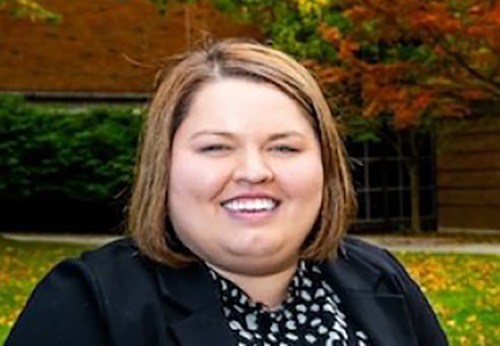
PHOENIX — Jennerations Bakery officially celebrated its opening with an Oct. 10 grand-opening event at its location in the Three Rivers Plaza, on Route 57, just outside the village of Phoenix in the town of Schroeppel.
Jennerations Bakery owner Jennifer Morey cut the ribbon in a traditional ribbon-cutting ceremony held that morning with the Greater Liverpool Chamber of Commerce.
Morey, a baker and cake decorator, says she first opened the bakery — at 219 County Route 57 Unit 6 — to customers on Jan. 31.
Jennerations Bakery offers breakfast, baklava, cakes, cookies, coffee, cupcakes, pies, and specialty desserts from family recipes of prior generations of Morey’s family “with a twist of me, Jenn,” she says on the bakery’s Facebook page. The business offered a 10-percent discount promotion on its entire menu on grand-opening day.

Clarkson to launch introduction to energy & utilities seminar course
POTSDAM — Clarkson University says it is partnering with leading industry executives to introduce a new one-credit seminar course, called “Introduction to Energy and Utilities,” during the spring 2026 semester. The class will introduce students to both the technical and business aspects of the field and will be presented through the Center for Electric Power
Become a Central New York Business Journal subscriber and get immediate access to all of our subscriber-only content and much more.

Click here to purchase a paywall bypass link for this article.
POTSDAM — Clarkson University says it is partnering with leading industry executives to introduce a new one-credit seminar course, called “Introduction to Energy and Utilities,” during the spring 2026 semester.
The class will introduce students to both the technical and business aspects of the field and will be presented through the Center for Electric Power Systems Research (CEPSR). The public is invited to attend the weekly lectures free of charge and can sign up on Clarkson’s Introduction to Energy and Utilities web page through this link: https://shorturl.at/G1EJu.
The weekly seminar will feature executive guest speakers who will cover a wide range of industry topics, including construction, power generation, transmission, distribution and industrial applications, Clarkson said in an Oct. 15 announcement. Sessions will also address the evolving role of utilities in serving new types of power users, such as data centers.
“Hearing directly from industry leaders gives students and industry professionals valuable insight into the complex challenges facing today’s energy sector, from integrating renewable resources to modernizing the grid and maintaining reliability,” Matt Barnett, National Grid’s chief operating officer for New York Electric, said in the Clarkson announcement. “These conversations help to provide a clearer understanding of what lies ahead.”
Students will gain insights into emerging business models and geo-political influences. The course will also cover the role of artificial intelligence (AI) in grid modernization and digital energy security. Additional topics include renewable and clean-energy growth, energy storage, fuel cells, green hydrogen, smart grids, microgrids, and electric vehicles.
“Our industry’s ability to deliver affordable and reliable electricity is facing significant short-term and long-term challenges, particularly with rising adoption of electricity-driven technology and AI,” Hala Ballouz, founder of Electric Power Engineers, said in the announcement. “I’m excited for the opportunity to inspire students and industry professionals to apply their passion and ingenuity to our energy industry, to roll up our sleeves together to develop the game-changing innovations the grid of the future demands.”
Offered through Clarkson’s Wallace H. Coulter School of Engineering and Applied Science, the seminar will be open to graduate students and upper-class undergraduates, including non-engineering majors. The course will be taught and moderated by Fram Akiki, a 1986 Clarkson graduate and president of Joun Technologies. Akiki has more than 35 years of experience in the semiconductor industry, including executive roles with IBM, Qualcomm, and Siemens.
Speakers for the 2026 course include Hala Ballouz, founder of Electric Power Engineers; Phil Barker, professor of practice and coordinator of the Power Engineering MSEE Cohort Program at Clarkson University; Matt Barnett, chief operating officer of National Grid New York; Richard Dewey, CEO of the New York Independent System Operator (NYISO); and many more.
Introduction to Energy and Utilities is the second seminar course of its kind at Clarkson, following on the success of last spring’s Introduction to Semiconductors speaker series, the university noted. In Introduction to Semiconductors, students heard from weekly guest speakers who are leading the global semiconductor industry.

OPINION: N.Y. Needs Safeguards to Prevent Marijuana-Impaired Driving
Marijuana-impaired driving accidents are on the rise, and New York remains one of the most lenient states when it comes to recreational marijuana use. Since legalization under the 2021 Marijuana Regulation and Taxation Act, the rollout of cannabis has been plagued by mismanagement and misplaced priorities. Regrettably, too many lawmakers in Albany have shown more
Become a Central New York Business Journal subscriber and get immediate access to all of our subscriber-only content and much more.

Click here to purchase a paywall bypass link for this article.
Marijuana-impaired driving accidents are on the rise, and New York remains one of the most lenient states when it comes to recreational marijuana use. Since legalization under the 2021 Marijuana Regulation and Taxation Act, the rollout of cannabis has been plagued by mismanagement and misplaced priorities. Regrettably, too many lawmakers in Albany have shown more interest in political optics rather than sound policy and public safety.
According to the Governors Highway Safety Association, more than half of people injured or killed in crashes nationwide tested positive for alcohol or drugs — most commonly cannabis. Last summer, right here in New York, a 14-year-old girl was killed and a 16-year-old was injured by someone driving while impaired by marijuana. Sadly, there are other reports of similar senseless tragedies.
In the rush to legalize marijuana, New York State failed to pair that decision with accountability measures — no consistent roadside testing, no clear enforcement standards — leaving law enforcement with few tools to stop marijuana-impaired drivers. Furthermore, the New York State Department of Health found that 54 percent of New Yorkers use cannabis for non-medical reasons, and today’s marijuana has tripled in potency compared to the 1990s. As recreational use becomes more widespread, the state must confront the growing risks that come with it.
Members of the Assembly Minority Conference recognize the urgent need for improved safety and measures to identify impaired drivers. Assemblyman Keith Brown (R,C–Northport) has been at the forefront of this issue and among the legislators who have introduced legislation to address valid concerns related to recreational cannabis usage:
• A.5271 (Brown) — Implements oral fluid tests, which test a person’s saliva for the presence of cannabis.
• A.5699 (Giglio) — Relates to arrest, prosecution, sentencing, and penalties for offenses involving vehicular assault, manslaughter and homicide, and operating a vehicle under the influence of drugs or alcohol.
• A.8599 (Norber) — Establishes an oral fluid task force to study and make recommendations on best practices for the testing of oral fluid to determine impairment due to drug intoxication while operating a motor vehicle in the state.
• A.5974 (Reilly) — Classifies operating a motor vehicle while under the influence of drugs by an individual under the age of 21 as a per se offense.
Another tragedy does not have to take place. The evidence is clear, and the consequences are real. While New York’s rollout of recreational cannabis has been poorly managed and short-sighted, there is still time to act. The state must take immediate steps to strengthen its laws, raise public awareness, and protect innocent lives from the dangers of marijuana-impaired driving.
William (Will) A. Barclay, 56, Republican, is the New York Assembly minority leader and represents the 120th New York Assembly District, which encompasses all of Oswego County, as well as parts of Jefferson and Cayuga counties.

OPINION: Don’t Believe the Headlines: Congressional Town Halls Matter
This past summer, Republican and Democratic members of Congress, alike, returned to their home districts. And, in one of the great pageants of democracy, they held multiple town halls on their home turf — welcoming one and all to bring their questions, concerns, and challenges. It was a stirring display of the kind of face-to-face
Become a Central New York Business Journal subscriber and get immediate access to all of our subscriber-only content and much more.

Click here to purchase a paywall bypass link for this article.
This past summer, Republican and Democratic members of Congress, alike, returned to their home districts. And, in one of the great pageants of democracy, they held multiple town halls on their home turf — welcoming one and all to bring their questions, concerns, and challenges. It was a stirring display of the kind of face-to-face exchange that strengthens civic engagement and allows elected representatives to carry the unfiltered priorities of their constituents back to Washington, D.C.
Only, of course, that’s not what happened. Instead, a handful of members of Congress held town halls this summer, while the vast majority avoided them. That’s because there was considerable unrest back home about the course of events in Washington, and most news coverage repeatedly dwelt on unruly, fractious crowds, and heated exchanges between audience members and their representatives. Looking on, many people dismissed town halls as inconsequential political theater.
Let me be blunt: That’s just plain wrong. Those few members of Congress who did hold town meetings deserve our thanks as citizens. Those who sidestepped them, whether out of concern for their image or on the advice of their leadership, should be abashed.
Here’s why. For starters, most people never get a chance to set foot in the Capitol or speak to a member of Congress. A town hall erases that distance: Voters can stand up, ask their representative questions without some staff member standing in the way, and gauge for themselves what they think of the answer. Town halls turn politics from an abstract process into an actual relationship for a few hours — and they make the people who attend them more likely to keep paying attention and to remain engaged.
So even if a gathering is likely to be tense, when politicians show up, listen, and try to present the best arguments they have for their actions, they are signaling respect for constituents’ voices and, more importantly, for the representative democracy that put them in office in the first place. Likewise, avoiding direct encounters — or hand-picking one’s audience — risks eroding Americans’ rightful belief that representatives should be accountable to the people instead of being insulated, unrepresentative elites. Politicians at the federal level get lots of chances to control their interactions with the public: They put out statements, appear on friendly media outlets, and rely on focus-group-tested talking points. A town hall forces them out of that protective shell.
It does something even more important, as well: When ordinary citizens gather in a room, they discover shared concerns. I may come because I’m distressed by rising health premiums or runaway prices at the supermarket — at a town hall, that gets echoed. My private concern, it turns out, is actually a public issue, and the town hall gives ordinary people a chance to hold their leaders accountable, not just rely on journalists or watchdog organizations to do it. In the best circumstances, neighbors leave with the sense that they can work together, not just complain individually. This is how we build civic energy and participation.
This summer, critics pointed at disorderly town halls as evidence of their futility. I saw something different: meetings that proved that Americans still cared enough to show up and demonstrate their investment in the direction of their communities and country. That’s much better than a silent room, a representative who never shows up, and apathy and disengagement.
In fact, town halls, even unruly ones, strengthen representative democracy because they are unscripted, open, and unpredictable. They remind us that our government belongs to us, and they remind representatives that their authority isn’t rooted in their party leaders or their donors, but in the votes of the people back home. That doesn’t strike me as an exercise in futility.
Though I’m a firm believer that Congress should be in session longer than it often is these days, one of the silver linings of members’ time off is that it offers more opportunities for them to get home and engage with the communities they represent. The next time they’re due back home for an extended period, let them know you want to see them in person. You’ll learn something, and so will they.
Lee Hamilton, 94, is a senior advisor for the Indiana University (IU) Center on Representative Government, distinguished scholar at the IU Hamilton Lugar School of Global and International Studies, and professor of practice at the IU O’Neill School of Public and Environmental Affairs. Hamilton, a Democrat, was a member of the U.S. House of Representatives for 34 years (1965-1999), representing a district in south-central Indiana.

Ask Rusty: Should I Claim SS Early Because it’s Going Bankrupt?
Dear Rusty: My best friend is going to be age 62 and wants to begin taking her Social Security (SS) immediately. Her reasoning not to wait is the thought that it is going to run out in 10 years, so she wants as much of her money before that happens. I have paid into Social
Become a Central New York Business Journal subscriber and get immediate access to all of our subscriber-only content and much more.
Click here to purchase a paywall bypass link for this article.
Dear Rusty: My best friend is going to be age 62 and wants to begin taking her Social Security (SS) immediately. Her reasoning not to wait is the thought that it is going to run out in 10 years, so she wants as much of her money before that happens. I have paid into Social Security my entire working life (44 years and counting). What are your thoughts on taking it as soon as you are eligible?
Signed: Uncertain what to do
Dear Uncertain: Deciding when to claim Social Security is a sometimes-confusing task, but no one should ever claim SS early because they believe Social Security will go bankrupt in the near future. Social Security cannot and will not go bankrupt. What your friend may be referring to is the fact that Social Security will be facing some financial issues in 2033 unless Congress acts soon to reform the program. And Congress will act, but likely not until it must.
The fact is, Social Security still has about $2.7 trillion in reserved funds, which are now being used to pay full benefits. If that reserves balance were to be fully depleted, then Social Security would need to go to a “cash basis” (essentially, paying out in benefits only what is received in SS taxes), which would result in about a 21 percent cut in everyone’s benefit. In other words, even if Congress neglected to reform the program, beneficiaries would still receive about 79 percent of their monthly benefit starting in about 2033/2034. Hardly anyone believes that Congress will fail to eventually reform Social Security, and, in fact, it already knows how to do that reform (it just currently lacks the bipartisanship to accomplish it). But neglecting reform would amount to political suicide for all members of Congress, which is extremely unlikely to happen.
Here at the AMAC Foundation, we are confident that Congress will soon address Social Security’s future financial dilemma, and we have been working on potential solutions. We have, for several years, been providing these suggestions to various members of Congress, and those members are now considering our proposals. Thus, we do not suggest making a Social Security claiming decision based on fear of the program going bankrupt. That fear is unfounded. Instead, we suggest that everyone decide when to claim based upon their individual personal situation, considering their need for the SS money, their life expectancy, and their marital status. And remember, claiming early (before one’s SS full retirement age (FRA) also means Social Security’s Annual Earnings Test (AET) will apply. The AET limits how much can be earned from working before FRA is attained.
So, our thought on the wisdom of taking Social Security as soon as you are eligible is that it is often not a wise decision, and certainly not if that decision is made based on fear of Social Security “not being there” soon. Instead, we suggest making your Social Security claiming decision based upon your unique personal circumstances, including, especially, your life expectancy, financial need, and marital status.
Russell Gloor is a national Social Security advisor at the AMAC Foundation, the nonprofit arm of the Association of Mature American Citizens (AMAC). The 2.4-million-member AMAC says it is a senior advocacy organization. Send your questions to: ssadvisor@amacfoundation.org
Author’s note: This article is intended for information purposes only and does not represent legal or financial guidance. It presents the opinions and interpretations of the AMAC Foundation’s staff, trained, and accredited by the National Social Security Association (NSSA). The NSSA and the AMAC Foundation and its staff are not affiliated with or endorsed by the Social Security Administration (SSA) or any other governmental entity.

Crews complete $4 million in renovation work at Upstate Medical University Arena
SYRACUSE, N.Y. — The $4 million renovation project at the Upstate Medical University Arena at the Oncenter War Memorial has wrapped up ahead of the

Ask the Expert: Protecting Investment Property Owners
When you think of construction or subcontracting, the first images that come to mind are hard hats, cranes, and crews on the job site. But
Stay up-to-date on the companies, people and issues that impact businesses in Syracuse, Central New York and beyond.