
Stay up-to-date on the companies, people and issues that impact businesses in Syracuse, Central New York and beyond.

OPINION: An Eerie Silence About the State of Education in NY
A recent analysis by National Assessment of Educational Progress (NAEP (https://www.nationsreportcard.gov/reports/mathematics/2024/g12/) lamented the declining state of U.S. education by highlighting how scores in grade 12 math and reading have hit record lows. While COVID-19 was definitely a factor, others correctly pointed out that the decline began before the pandemic. New York State shows a similar […]
Become a Central New York Business Journal subscriber and get immediate access to all of our subscriber-only content and much more.
Click here to purchase a paywall bypass link for this article.
A recent analysis by National Assessment of Educational Progress (NAEP (https://www.nationsreportcard.gov/reports/mathematics/2024/g12/) lamented the declining state of U.S. education by highlighting how scores in grade 12 math and reading have hit record lows. While COVID-19 was definitely a factor, others correctly pointed out that the decline began before the pandemic.
New York State shows a similar pattern: student performance started to decline before the pandemic and the resulting school shutdowns dealt an additional blow. Meanwhile, New York’s spending on education went through the roof and has shown no sign of slowing down.
According to NAEP results in grade 4 reading, New York scored above the U.S. average but significantly behind Massachusetts or New Jersey, which clinched the top spots. We were also outperformed by Mississippi, one of the poorest states in the country.
New York wasn’t always mediocre at reading. In fact, the Empire State’s grade 4 reading scores used to exceed the U.S. average in the 2000s. Later, however, New York’s scores began to dip and then fell sharply during the COVID epidemic.
Similar dynamics can be observed in grade 8 reading: They significantly exceeded the U.S. average in the 2000s but began to lag in the 2010s. In 2024, New York had its lowest score ever.
In mathematics, New York’s 4th graders scored three points below the U.S. average, and performed worse than much poorer states (for example: Alabama, Missouri, and Louisiana). Neighboring Massachusetts performed the best in the country.
For grade 8 mathematics, New York achieved an average score of 271, compared to the U.S. average of 272.
In grade 4 mathematics, as in reading, New York used to exceed the U.S. average. It started to lag in 2011 and imploded during COVID.
Similar dynamics can be observed in grade 8, except the COVID decline was less pronounced.
These falling academic outcomes would be an alarm bell for the education authorities of any state — except New York is not just any state. We spent more than $30,000 to educate each student in 2022-23, which was nearly double the U.S. average of $16,500. In fact, the Empire State spends more per pupil than any country in the world, yet it does not lead the world in educational outcomes.
Massachusetts, which is the best-performing state, spends 24 percent less per pupil than New York. Mississippi, which outperforms New York on grade 4 reading and mathematics, spends only 40 percent of what New York spends.
New York’s high spending on education is not new. We have been outspending all other states for half a century, and the gap is ever-increasing. According to the National Center for Education Statistics, from 1968 to 2021 the national average to educate one student jumped from $5,960 to $16,280, an increase of 173 percent in inflation-adjusted terms. However, New York’s spending skyrocketed from $9,475 to $29,720, or 214 percent, in the same period.
The issue is only going to get worse. Based on preliminary data, New York is going to spend about $35,000 to educate a single student in 2025-26.
The silence of New York’s leaders is confusing. Imagine the political firestorm if any other program generated double the cost while achieving mediocre results. When electricity prices recently rose, New York’s politicians and activists erupted with outrage.
New York’s education system has been spending piles of money and underperforming for more than a decade now. Where are the calls for reform?
Zilvinas Silenas is president and CEO of the Empire Center for Public Policy, Inc., an independent, non-partisan, nonprofit think tank based in Albany. The organization says its mission is to make New York a better place to live and work by promoting public policy reforms grounded in free-market principles, personal responsibility, and the ideals of effective and accountable government. This article is drawn from the Empire Center’s blog, where it was first published on Oct. 20.

OPINION: Why Voting in Elections Matters More Than Ever
Many states around the country [on Nov. 4 and before through early voting] will be holding municipal and in some cases, state elections. Whether that’s true for your state or not, I want to make a case for why turning out to vote, even in what might seem to be minor local elections, really matters.
Become a Central New York Business Journal subscriber and get immediate access to all of our subscriber-only content and much more.
Click here to purchase a paywall bypass link for this article.
Many states around the country [on Nov. 4 and before through early voting] will be holding municipal and in some cases, state elections. Whether that’s true for your state or not, I want to make a case for why turning out to vote, even in what might seem to be minor local elections, really matters. But first, let’s look at why lots of people don’t vote.
In an era when local newspapers have vanished from many towns, and community organizations have dwindled in number and vitality, it can feel harder than ever to make an informed choice at the ballot box. It’s tougher to come by reliable local coverage, neighbors, and civic organizations may no longer gather to compare notes, and national and online media drown out local priorities and perspectives. We’re busy with work and families and — especially as legislators in some states seek to make it harder to vote —getting to the polls can be a hassle.
Yet I would argue that these very trends make it more, not less, important to vote.
Let’s start with those local elections I mentioned. Mayors, councils, school boards, and county commissions determine zoning, taxes, infrastructure, policing, public education, and other policies affecting what it’s like to live where we do. Because turnout tends to be lower in municipal elections, a relative handful of votes can determine who controls a school board or a city council; when citizens don’t turn out, unrepresentative groups make decisions for everyone else.
Moreover, the fact that solid local-news coverage has become harder to find is exactly why citizens need to show up at the ballot box. If reporters aren’t around to pay attention, then voting itself — and boning up on the issues as you prepare to vote — is an act of civic oversight. It’s how we remind officeholders that we’re watching, and how we hold them accountable.
For most of my career, I have heard people justify not voting by arguing their vote won’t matter. I understand why people feel that way, but I don’t buy it, for two key reasons.
First, research by UCLA Prof. Clémence Tricaud has shown that while, on average, the margins between winning and losing candidates in federal elections have remained fairly stable over the decades, in the last 60 years “seat margins” — that is, the gap between the number of seats each party wins in a legislative body like the House, Senate, or Electoral College — have narrowed significantly. Had a small number of people voted differently in Georgia and Pennsylvania in 2020, for instance, their electoral votes could have given the election to President Trump.
That brings me to my second point. I firmly believe that voting isn’t just a way to boost a particular candidate or weigh in on a key issue; it’s also a signal that we value having a say in the direction of our city or country. In other words, by voting we reinforce the system — and when enough of us do so, we strengthen it. By contrast, when a fraction of the electorate votes, the people they elect feel less pressure to respond to the full range of voices they represent. Low turnout undermines a government’s moral authority.
It does even more damage than that. Cynicism discourages capable people from entering public service. When voters withdraw, they leave politics to the loudest and most extreme members of their communities. Participation — not just at the ballot box but in attending town halls, getting in touch with officials, organizing, and supporting good candidates — is the best way I know to show that citizens value integrity in public life.
I know that representative democracy demands work. It asks us to sort fact from fiction, learn which news sources give us trustworthy, fact-based information, and put in the time to listen to candidates so that we can judge them. But each ballot you cast is a message that the system belongs to the public, not to the few. Democracy survives only when people show up for it. It’s as simple as that.
Lee Hamilton, 94, is a senior advisor for the Indiana University (IU) Center on Representative Government, distinguished scholar at the IU Hamilton Lugar School of Global and International Studies, and professor of practice at the IU O’Neill School of Public and Environmental Affairs. Hamilton, a Democrat, was a member of the U.S. House of Representatives for 34 years (1965-1999), representing a district in south-central Indiana.
VIEWPOINT: Navigating the Shift from FIRE to IRIS
IRS changes for Forms 1098, 1099, and other information returns If your business files Form 1098, 1099, or other information returns with the Internal Revenue Service (IRS), a major shift is on the horizon. The IRS has recently announced the launch of its new Information Return Intake System (IRIS), which is set to go live
Become a Central New York Business Journal subscriber and get immediate access to all of our subscriber-only content and much more.
Click here to purchase a paywall bypass link for this article.
If your business files Form 1098, 1099, or other information returns with the Internal Revenue Service (IRS), a major shift is on the horizon. The IRS has recently announced the launch of its new Information Return Intake System (IRIS), which is set to go live in November 2025 and replace the Filing Information Returns Electronically (FIRE) platform. This shift will affect how businesses of all sizes file forms like 1099-MISC, 1099-NEC, 1099-K, and 1098, among others. The shift in systems is not optional — and failing to prepare could result in missed deadlines, rejected filings, or compliance issues.
Below are some common questions and answers related to this shift.
This change will apply to any taxpayer responsible for filing information returns with the IRS, including but not limited to Forms 1099-MISC, 1099-NEC, 1099-DIV, 1099-INT, 1099-K, 1098, 1098-T, 1042-S, and other similar filings within the 1098 and 1099 series.
The IRS is replacing its electronic filing system, called FIRE, with a new web-based system, IRIS, intended to simplify and modernize the information-return filing process. While IRIS is expected to be available for use beginning with tax-year 2025 filings that are due in 2026, IRIS will be mandatory beginning with tax-year 2026 filings that are due in 2027. In addition, as part of the IRS’s paperless-processing initiative, paper filings will no longer be permitted, meaning that all information returns will eventually need to be filed within IRIS.
Taxpayers will have two filing options, depending on the number of information returns to be filed within IRIS:
• Taxpayer Portal — Easy Online Filing. This option may be used for businesses or individuals filing less than 100 information returns. Taxpayers can manually enter data or upload a spreadsheet, and no special software is needed.
• Application-to-Application (A2A) — Bulk Filing. This option is designed for businesses or individuals filing 100 or more information returns. Taxpayers can send data directly from their software to the IRS using an XML format. This option requires setup and testing, so early preparation is key.
• IRIS Launch: November 2025
• FIRE System Retirement: Dec. 31, 2026
• Last Tax Year for FIRE: 2025 (filed no later than Dec. 31, 2026)
• First Tax Year for Mandatory IRIS: 2026 (filed in 2027)
Taxpayers are expected to be able to access IRIS through the IRS online platform. Depending on filing volume, taxpayers may be able to utilize assistance from a third-party provider. All users, including “Responsible Parties” and “Authorized Delegates,” must authenticate through their own individual ID.me accounts to then be able to access a company’s and/or their own IRIS accounts.
The IRS says that IRIS is intended to improve efficiency and accuracy. It allows for real-time data validation and corrections, stores filed forms, allows taxpayers to download and print recipient copies, request extensions and file certain corrected returns — and is a more modern, user-friendly system.
The transition to IRIS involves several steps and getting ahead of the process will help avoid delays or filing issues. We recommend taking the following steps as early as possible:
1. Determine filing volume. Taxpayers with less than 100 information returns should be able to use the Taxpayer Portal to file; however, taxpayers with 100 or more information returns will need to use the A2A modality for bulk filing.
2. Prepare for XML Filing. If expecting to use the A2A modality, begin data mapping and software integration. As XML is a specialized format, taxpayers may need assistance from a developer or service provider.
3. Register with the IRS. Taxpayers will need an EIN and an ID.me account. As part of the registration process, each business taxpayer must also designate at least two “responsible parties” and may assign up to two “authorized delegates” who are able to manage filings including third parties or service providers.
4. Apply for a New Transmitter Control Code (TCC). A new TCC that is specific to IRIS will be required, as legacy TCCs from FIRE cannot be used. Taxpayers may need more than one TCC, depending on role and filing method. During registration, taxpayers and individuals must select a role that reflects how they will interact with the system: an “Issuer” files forms for their own business using the same EIN registered with IRIS; a “Transmitter” files on behalf of other businesses or themselves using an SSN — only one role is needed if performing both functions; and a “Software Developer” builds or manages software that connects to the IRIS system but does not submit forms directly. The TCC application and approval process can take up to 45 days to complete.
Frank C. Mayer is a partner (member) in the Albany office of Syracuse–based Bond, Schoeneck & King PLLC and chair of the firm’s tax law practice group. Contact Mayer at fmayer@bsk.com. Jessica M. Blanchette is an associate attorney in Bond’s Albany office. Contact Blanchette at jblanchette@bsk.com. Lyndon E. Hall is an associate attorney in Bond’s Syracuse office. Contact Hall at lhall@bsk.com. This article is drawn and edited from the law firm’s website.

Drakos Urgent Care opens new location in Camillus
CAMILLUS, N.Y. — Drakos Urgent Care says it has opened an urgent-care center in Camillus, representing its third location providing urgent-care services. Drakos Urgent Care

Corning, LECOM at Elmira announce scholarship to address rural health-care shortages
CORNING, N.Y. — Corning Incorporated (NYSE: GLW) and the Lake Erie College of Osteopathic Medicine (LECOM) at Elmira have launched the Corning Incorporated Future Foundations
City of Binghamton, Broome County partnering on expanded mental-health crisis response
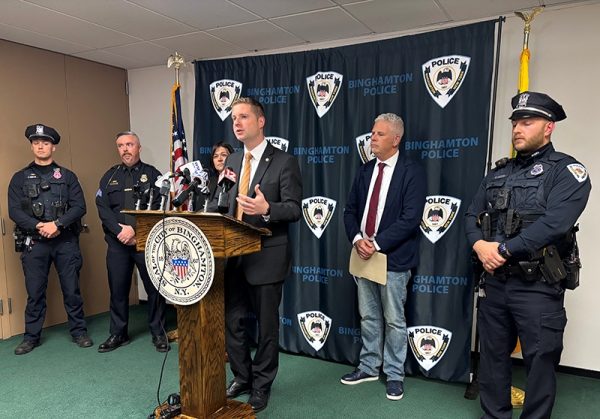
BINGHAMTON, N.Y. — The City of Binghamton is providing $100,000 to support the expansion of local mental-health crisis response. Binghamton Mayor Jared Kraham joined Broome

Turning Stone says its major expansion project will open much sooner than expected
VERONA, N.Y. — The Oneida Indian Nation on Wednesday said the massive Turning Stone Evolution expansion project is progressing ahead of schedule with the Crescent

Broome County appoints new deputy county executive for physical services
BINGHAMTON, N.Y. — Broome County Executive Jason Garnar has announced the appointment of Hal McCabe as the county’s new deputy county executive for physical services. In this position, McCabe will oversee 20 departments, “ensuring coordinated operations and strategic investment in Broome County’s infrastructure and physical assets.” McCabe most recently served as mayor of the Village
Become a Central New York Business Journal subscriber and get immediate access to all of our subscriber-only content and much more.
Click here to purchase a paywall bypass link for this article.
BINGHAMTON, N.Y. — Broome County Executive Jason Garnar has announced the appointment of Hal McCabe as the county’s new deputy county executive for physical services.
In this position, McCabe will oversee 20 departments, “ensuring coordinated operations and strategic investment in Broome County’s infrastructure and physical assets.”
McCabe most recently served as mayor of the Village of Homer in Cortland County from 2017-2025. In that role, he managed a multi-department operation including public works, water and sewer, fire, police, recreation, and code enforcement.
During his tenure, McCabe secured more than $15 million in state and federal grants, including a $10 million Downtown Revitalization Initiative award and $1 million in Restore NY funding, Broome County said.
“Hal has a proven track record of managing complex operations, securing major infrastructure improvements, and delivering real results for the communities he serves,” Garnar said in the announcement. “His leadership and extensive experience across all levels of government will be invaluable as we continue improving Broome County’s infrastructure and services.”
Altogether, McCabe brings more than two decades of experience in public administration, government relations, and political leadership at the local, state, and federal levels, per the Broome County announcement.
“Broome County has been instrumental in shaping the person I am today, instilling in me the values of hard work, resilience, and loyalty. My introduction to municipal service began with a summer job in the Town of Vestal Water Department in 1990, and most of my lifelong friendships were formed right here,” McCabe said. “Having spent more than half my life in Broome County, I am deeply honored to once again serve this community and to work alongside an exceptional team dedicated to building a stronger, brighter future for all our residents.”

CenterState CEO recognizes more than 350 companies during Economic Champions luncheon
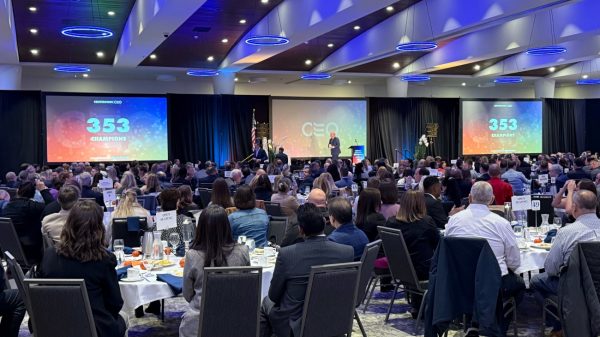
SYRACUSE, N.Y. — CenterState CEO on Wednesday recognized the efforts of 353 businesses and nonprofits during its annual Economic Champions Celebration at the Nicholas J.
Strengthen Every Layer of Your IT Security with Usherwood’s Expanded Managed IT Services
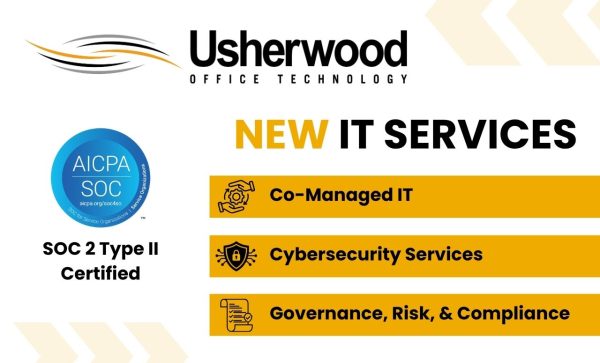
Usherwood has announced an expanded portfolio of IT services, including Governance, Risk and Compliance (GRC), Cybersecurity, and Co-Managed IT. These new offerings are designed to
Stay up-to-date on the companies, people and issues that impact businesses in Syracuse, Central New York and beyond.