Stay up-to-date on the companies, people and issues that impact businesses in Syracuse, Central New York and beyond.

Renovation project at Rome Family YMCA is ongoing
ROME, N.Y. — The first phase of the renovation effort at the Rome Family YMCA on West Bloomfield Street is ongoing after transitioning from plans for new construction to an “ambitious” remodeling effort. The work conducted so far has included a brand-new Spin Studio with modern lighting, sound, and air conditioning, along with new paint, […]
Become a Central New York Business Journal subscriber and get immediate access to all of our subscriber-only content and much more.
Click here to purchase a paywall bypass link for this article.
ROME, N.Y. — The first phase of the renovation effort at the Rome Family YMCA on West Bloomfield Street is ongoing after transitioning from plans for new construction to an “ambitious” remodeling effort.
The work conducted so far has included a brand-new Spin Studio with modern lighting, sound, and air conditioning, along with new paint, padding, and backboards in the gymnasium, per the Sept. 23 announcement.
Crews have also installed an electric gymnasium divider curtain.
In addition, the work has included pool maintenance and safety upgrades completed during the summer, refinished gymnasium hardwood floors; delivery and installation of $175,000 in cardio equipment; and the renovation of the cardio room with modern lighting, electrical, flooring, and aesthetics.
The work that is still to come will include repurposing underutilized spaces, including new personal training and group exercise areas. Second phase projects will also involve locker rooms, spa, roof, and energy-efficient systems with support from National Grid and NYSERDA. The second-phase work will target the venue’s heating, ventilation, and air conditioning system.
“This renovation allows us to expand our offerings and improve the facilities that have served our community for many generations,” Hank Leo, CEO, said in the announcement. The revitalized YMCA will feature modern fitness spaces, family-friendly areas, and enhanced programs for childcare and youth engagement. As the renovation progresses, the YMCA looks forward to inviting the community to experience the updates firsthand and join in the effort.”
The Rome Family YMCA was established in 1871. It is one of the oldest nonprofit organizations in the region and was founded only 27 years after the first YMCA in London. Rome Family YMCA is part of the YMCA of the Greater Tri-Valley, which also includes the Oneida Family YMCA and YMCA Child Care in Whitesboro.

NIH grant helps Cornell start autism-research center
ITHACA, N.Y. — Cornell University’s Ithaca campus and Weill Cornell Medicine in New York City are starting an autism-research center using a three-year, $5.1 million

Community Bank parent declares Q4 dividend of 47 cents a share
DeWITT, N.Y. — Community Financial System, Inc. (NYSE: CBU) — parent company of Community Bank, N.A. — recently announced that it will pay a quarterly cash dividend of 47 cents per share of its common stock for the fourth quarter. The dividend will be payable on Jan. 12, to shareholders of record as of Dec.
Become a Central New York Business Journal subscriber and get immediate access to all of our subscriber-only content and much more.
Click here to purchase a paywall bypass link for this article.
DeWITT, N.Y. — Community Financial System, Inc. (NYSE: CBU) — parent company of Community Bank, N.A. — recently announced that it will pay a quarterly cash dividend of 47 cents per share of its common stock for the fourth quarter.
The dividend will be payable on Jan. 12, to shareholders of record as of Dec. 12.
The quarterly payment equates to an annualized yield of about 3.4 percent, based on the banking and financial services company’s current stock price.
DeWitt–based Community Financial System is a diversified financial-services company with total assets of more than $16 billion focused on four main business lines — banking services, employee-benefit services, insurance, and wealth management. Community Bank, N.A. is among the nation’s 100 largest banking institutions and operates about 200 branches across upstate New York, northeastern Pennsylvania, Vermont, and western Massachusetts.

NNY Community Foundation announces nearly $52K in Lewis County Historic Preservation Fund grants
WATERTOWN, N.Y. — The Northern New York (NNY) Community Foundation recently announced that three local organizations will share $51,900 in grant funding from its Lewis County Historic Preservation Fund for projects at places of historical significance. The nonprofits that will receive grant funding from the Lewis County Historic Preservation Fund are the following: • Constable
Become a Central New York Business Journal subscriber and get immediate access to all of our subscriber-only content and much more.

Click here to purchase a paywall bypass link for this article.
WATERTOWN, N.Y. — The Northern New York (NNY) Community Foundation recently announced that three local organizations will share $51,900 in grant funding from its Lewis County Historic Preservation Fund for projects at places of historical significance.
The nonprofits that will receive grant funding from the Lewis County Historic Preservation Fund are the following:
• Constable Hall Association, Constableville, $24,500 to help complete needed repairs and restoration of the Servants Quarters, which is presently used for storage. Officials plan to gradually transition the Servants Quarters into displays of “Every Day Working Life” in Lewis County. Constable Hall was added to the National Register of Historic Places in 1973. Built in the early 19th century, it served as the home of the Constable family, early settlers and leaders who helped shape the region’s development during the 19th century.
• Adirondack Mennonite Heritage Association, $20,000 to help with needed repairs to the Adirondack Mennonite Heritage Farm, listed on the National Register of Historic Places. The farm preserves the mid-19th century John Moser homestead, an example of an early Mennonite settlement in Lewis County. Today, the property is operated as a museum and cultural site interpreting the history, faith, and lifestyle of the region’s Mennonite community. Funding will aid with restoration of the front and side porches of the farmhouse to preserve the building’s historic character and improve visitor safety.
• Society for the Preservation of West Martinsburg Church, $7,400 to help repair and stabilize the church’s original fieldstone foundation and replace a deteriorated walkway. Improvements are critical to preserving the structural integrity of the building and ensuring safe access for visitors. Built in 1840, it is one of the earliest rural churches in Northern New York. Listed on the National Register of Historic Places in 1983, it is one of only a few surviving historic structures in West Martinsburg, a hamlet that was once home to several businesses and institutions. The church also houses artifacts and documents from the congregation and surrounding community, serving as a museum.
The NNY Community Foundation is now seeking proposals from eligible Lewis County organizations for a second round of funding totaling up to $48,100.
Eligible applicants are 501(c)(3) nonprofit organizations and churches located entirely within Lewis County, which plan to undertake historic preservation or restoration. Projects should focus on the preservation or restoration of places of legitimate historical significance and significant historical community landmarks.

ICAN appoints four new members to board of directors
UTICA, N.Y. — Integrated Community Alternatives Network (ICAN) recently announced the appointment of four new board members: Anthony Brindisi, Iris Buczkowski, Keith Levatino, and Latavius Murray. These four will lend their expertise and talent in assisting with governance and guidance for the growing nonprofit. ICAN says it is a unique home and community-based network that
Become a Central New York Business Journal subscriber and get immediate access to all of our subscriber-only content and much more.
Click here to purchase a paywall bypass link for this article.
UTICA, N.Y. — Integrated Community Alternatives Network (ICAN) recently announced the appointment of four new board members: Anthony Brindisi, Iris Buczkowski, Keith Levatino, and Latavius Murray.
These four will lend their expertise and talent in assisting with governance and guidance for the growing nonprofit. ICAN says it is a unique home and community-based network that provides individualized and non-traditional services and care to the highest-risk individuals and families with social, emotional, mental health, and behavioral challenges.

Brindisi is a U.S. District Court judge for the Northern District of New York. He began his career at the law firm of Brindisi, Murad & Brindisi Pearlman LLP as a litigation associate, was named a partner in 2008, and appointed of counsel in 2014. In 2011, Brindisi was elected assemblyman to represent New York’s 119th State Assembly District and in 2018, was elected to the U.S. House of Representatives, serving New York’s 22nd Congressional District. He served until 2021 and then returned to the law firm as a partner until 2022 when he was appointed as a judge on the New York State Court of Claims in Utica. In 2024, Brindisi served as an acting Supreme Court justice in Oneida County and in late 2024 was appointed as a Federal District Court judge of the Northern District of New York.

Buczkowski is CEO and owner of Birch Wealth Management. She has been a financial planner for more than 23 years. Buczkowski built her business from the ground up offering personalized financial advice that helps her clients achieve their goals and navigate the complexities of wealth management by understanding their family lives and unique goals, the ICAN announcement stated.

Levatino is superintendent of schools at the Little Falls City School District. He brings experience from an extensive career in education to the ICAN board, and an expert perspective as ICAN expands essential services into additional school districts. Levatino was named the Little Falls City School District superintendent in 2015, currently overseeing a district made up of 1,050 students and 200 faculty. He is also a SUNY Poly College Council trustee and previously served as an adjunct lecturer at Utica University.

Murray is founder of the Jon Diaz Community Center. ICAN says he brings a unique mix of expertise and perspectives to its board as a former professional athlete, an experienced businessperson, and a nonprofit founder. Murray is a former running back in the National Football League (NFL), announcing his retirement in July of this year. He played for the Oakland Raiders, Minnesota Vikings, New Orleans Saints, Baltimore Ravens, Denver Broncos, and Buffalo Bills. Even while paying, he transitioned into the business world as the chief brand officer for Enduraphin, a startup nutrition company. Murray played a key role in fundraising, marketing, and product development, leveraging his unique perspective as an athlete to drive brand success and community engagement, ICAN said. He founded the Jon Diaz Community Center in Nedrow to serve as a hub of transformative opportunities, wellness, and recreation for the youth and families in the Central New York area where he grew up. The center is named for his longtime friend who was tragically killed by gun violence in 2016. ICAN will be the operational partner for the Jon Diaz Community Center, with a planned opening in 2027.

Click here to read about the companies featured in the 2025 Manufacturing Directory
Become a Central New York Business Journal subscriber and get immediate access to all of our subscriber-only content and much more.

Click here to purchase a paywall bypass link for this article.

SUNY Oneonta manufacturing bootcamp readies workers
ONEONTA, N.Y. — Nine residents of Otsego and Delaware counties earned a microcredential from their involvement in a recent manufacturing bootcamp through SUNY Oneonta’s Extended and Community Learning (ExCL) Center. The school held an Oct. 2 ceremony following the program, which is described as an intensive four-week effort designed to prepare workers for local manufacturing
Become a Central New York Business Journal subscriber and get immediate access to all of our subscriber-only content and much more.
Click here to purchase a paywall bypass link for this article.
ONEONTA, N.Y. — Nine residents of Otsego and Delaware counties earned a microcredential from their involvement in a recent manufacturing bootcamp through SUNY Oneonta’s Extended and Community Learning (ExCL) Center.
The school held an Oct. 2 ceremony following the program, which is described as an intensive four-week effort designed to prepare workers for local manufacturing jobs, per the SUNY Oneonta announcement.
“I saw an opportunity to get out into the workforce and find a long-term career without having to move outside my community,” Jayden Trask, a Sidney resident who completed the program, said in the school’s announcement. “The program taught me more than I expected. My goal now is to find a job where I can be my best … maybe operate a CNC machine and become a programmer in the future.”
Under the manufacturing bootcamp, students completed 100 hours of classroom instruction at the ExCL Center; 20 hours of hands-on instruction at local manufacturing facilities; and two days of resume writing and mock interviewing with the SUNY Oneonta Career Planning and Networking Center.
Students also toured five local manufacturing companies to learn more about their products and production.
“My favorite part of the training program was getting out in the community to tour manufacturing facilities,” said Dawn Rowe, a Unadilla resident and manufacturing bootcamp participant. “It gave me a greater sense of what they do and what they are seeking from their employees. I was impressed with how many important products are manufactured right here in our area, and I hope to find a manufacturing job soon.”
“SUNY Oneonta’s Advanced Manufacturing Training is an accelerated program with a clear end goal,” Misty Fields, director of the SUNY Oneonta Extended and Community Learning (ExCL) Center, said. “Since its ribbon cutting last year, the SUNY Oneonta ExCL Center has actively pursued opportunities to deliver workforce development initiatives tailored to the needs of our regional industries. This program was designed with flexible instruction and applied learning experiences to directly address the priorities of our local employers. As a result, participants are now prepared for manufacturing careers or registered apprenticeship programs.”
In-person and hands-on classes covered a wide-range of instruction from technical writing to manufacturing safety, blueprint reading, measuring devices, hand tools, battery assembly, soldering and shop-floor math. Local manufacturers — Brooks Manufacturing in Unadilla, Ioxus in Oneonta, and Custom Electronics — hosted students in their facilities for tours and more direct instruction alongside manufacturing professionals, the school said.
“I don’t believe most people realize just how many manufacturers are here in our region, or the fact that we are all seeking qualified employees,” said Bradford Brooks, president of Brooks’ Machine Products in Unadilla. “Training programs like this one can help us build that needed awareness and inspire more people to consider pursuing manufacturing careers here in Otsego County.”
Upon successful completion, the training program offered participants a $1,000 stipend, transportation assistance, a laptop, job interviews and placement support.
“Ioxus was glad to be a part of the manufacturing training program, as it allowed us to take people from the community to give them hands-on training, which they can take with them to any job, or can help them be hired with Ioxus,” Chad Hall, co-founder and president of Ioxus in Oneonta, said.
The workforce-development initiative was made possible through the combined efforts and funding of SUNY Oneonta, SUNY Broome, SUNY Pre-Apprenticeship Program, the New York State Department of Labor RADAR Grant program, the Oneonta Working Solutions office and the workforce development board of Herkimer, Madison and Oneida counties.

VIEWPOINT: The Success Engine: Strategic Planning and Goal Alignment
Strategic planning, when coupled with goal alignment, is the engine that drives organizations to successfully achieve their goals. Whether your strategic goals include organic growth through capturing more market share, acquisitions, expanding into new markets, adapting to changing market demands, expanding facilities, or succession planning (or some combination of these and others), creating alignment from
Become a Central New York Business Journal subscriber and get immediate access to all of our subscriber-only content and much more.
Click here to purchase a paywall bypass link for this article.
Strategic planning, when coupled with goal alignment, is the engine that drives organizations to successfully achieve their goals. Whether your strategic goals include organic growth through capturing more market share, acquisitions, expanding into new markets, adapting to changing market demands, expanding facilities, or succession planning (or some combination of these and others), creating alignment from these top-level goals throughout your organization to each individual is the basis of ongoing success.
Let’s start with the strategic-planning process. There are various approaches to developing a strong strategic plan. The one I prefer is one I have used many times with excellent results, both while working within companies as an operations leader and working with clients as a facilitator. The key will be to develop the plan together with the senior leadership group leading the way. Senior leadership must engage key leaders and team members across the organization throughout the process as well. I’m sure many of us can relate to working for a company and having new posters put up around the company with a “new” “vision” and “mission.” Or perhaps. You have been handed your annual goals in a “previous life” with no input whatsoever from you in developing them. It’s simple: the more engaged your team is in the development of the plan, the more vested they are in the success of the plan. Now, more about the planning process.
This statement should describe what or where the organization will be in a predetermined time frame that is appropriate for the organization. It is a “becoming statement;” it’s not who or what you are today, but rather what or who you aspire to be. You may want to view your vision in terms of a two- or three-year plan. That’s because it may be difficult to project much further as market dynamics, technology, and other externalities can change so quickly. This statement need not be specific. It does need to set a clear direction by describing something your organization currently is not but intends to become.
This is a brief statement, again in general terms, of what must be achieved in the next year to make significant strides in the direction of achieving the vision. What does your organization need to achieve in the first year to get a healthy start on achieving the vision in two or three years? The mission statement is usually longer than the vision statement, although it should still be brief and to the point.
These are the things both necessary and sufficient to achieve the mission. As the mission is a one-year focus, so too should be the critical-goal categories. These are usually limited to between four and eight. They should be more specific than the mission, but not as specific as goal statements.
These should meet the “SMART” criteria: specific, measurable, attainable, realistically high, and time sensitive. These again should be necessary and sufficient to accomplish the goal category.
These will define what actions need to be taken, by whom, and when they must be completed. There is a detailed process to go from goal statement to defined-action steps to best ensure the goal is met. The focus of this process is to define all obstacles to achieving the goal, then defining action steps to overcome the obstacles.
If the senior leaders have done a good job of aligning on the plan throughout this process themselves while bringing in key leaders from across the organization to get their input during the process as well, then the organization is on its way to goal alignment. As an example, a VP of operations for a manufacturer would have involved its director of operations, director of procurement, director of planning, and director of logistics at the detail level throughout this process. Each of these directors should also be involving their direct reports in detailed discussions during the process, right through to the front-line workers. By asking for and hearing the input from all and then using this as the plan is developed and refined, everyone has a stake in the plan. This is more time-consuming and, especially at the beginning, may require more effort, but the result will be a plan that all employees have a stake in and understand.
Another key to goal alignment is to assist all employees to see how the organization’s goals align with their personal goals and aspirations. This is vital to tapping into each person’s motivation. Real motivation comes from within. Leaders at every level of the organization must understand their employees’ personal goals and aspirations. This only happens when relationships are based on trust. Leaders that understand this and are capable of forming these types of working relationships throughout the organization at all levels is what will enable true goal alignment. Imagine what your organization could achieve with this level of alignment!
No sustainable positive behavior change (and therefore no sustainable positive result) is possible without the right attitudes. This is why initiatives fail so many times in all kinds of organizations. Most people have negative attitudes about change and uncertainty. Most people are not goal setters and achievers by habit. How then can leaders habituate goal planning and achievement in their organizations?
The answer is to implement a goal planning and achievement process. This will create an “I can / We can” attitude that becomes part of everyone’s regular routine. It becomes part of the culture.
Mark A. O’Donnell is founder and owner of Operations Excellence, LLC, a consulting firm that helps small- to mid-sized businesses and organizations with anything from boosting productivity to planning leadership transitions. He is a certified business coach.

Students get up-close look at area manufacturing plants
DeWITT, N.Y. — Area manufacturers hosted facility tours for students and educators across the region during October. MACNY, The Manufacturers Association, and its affiliate, Partners for Education & Business, Inc. (PEB), organized the tours. Throughout October, more than 450 students from 11 school districts in Central New York and the Mohawk Valley got a look
Become a Central New York Business Journal subscriber and get immediate access to all of our subscriber-only content and much more.
Click here to purchase a paywall bypass link for this article.
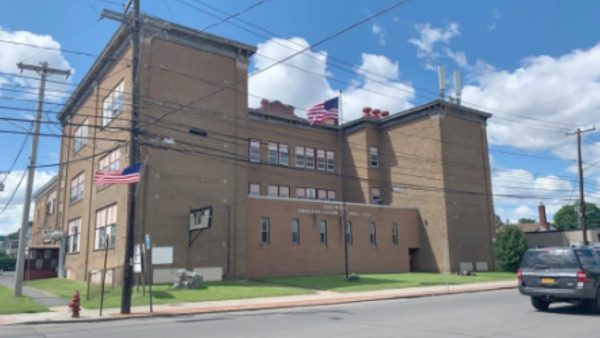
DeWITT, N.Y. — Area manufacturers hosted facility tours for students and educators across the region during October.
MACNY, The Manufacturers Association, and its affiliate, Partners for Education & Business, Inc. (PEB), organized the tours.
Throughout October, more than 450 students from 11 school districts in Central New York and the Mohawk Valley got a look at modern manufacturing and potential career opportunities. The objective of the facility tours is to show real-world examples of high-tech, high-demand manufacturing careers for students who may want to pursue that kind of work.
October is New York State’s official acknowledgement of Manufacturing Month, DeWitt–based MACNY noted.
“Manufacturing Month is about inspiring the next generation and showing them the exciting, meaningful careers available right here in New York,” Randy Wolken, president & CEO of MACNY, the Manufacturers Association, said in the announcement. “By opening their doors, manufacturers are not only highlighting advanced technologies and innovation, but also their vital role in building strong communities. We’re proud to partner with educators and industry leaders to create pathways for students to join this dynamic and growing sector.”
Groups toured facilities such as Gardall Safe Corporation of Syracuse; Golden Artist Colors in New Berlin; TTM Technologies of DeWitt; Inficon in DeWitt; Belden in DeWitt; Byrne Dairy; Eaton of Syracuse; JPW Structural Contracting, Inc. of DeWitt; Morse Manufacturing of Salina; Haun Welding Supply & Specialty Gases; OCWA – Central New York’s Water Authority; and Ralph W. Earl Co. Inc. of DeWitt.
“MACNY’s celebration of Manufacturing Month is a reminder that collaboration can shape the future of our region’s workforce,” Scott Walker, VP of operations for Inficon, said in the MACNY announcement. “INFICON is proud to show students and teachers that today’s manufacturing is driven by innovation, precision, and advanced technology. Our cleanrooms are high-tech and dynamic; it’s exactly the kind of exposure that can spark interest in a manufacturing career.”
During the tours, students were able to see up-close modern manufacturing and advanced technologies, such as precision metalwork and large-scale fabrication to high-tech electronics, and specialty products. Throughout the visits, students met with employees, asked questions about career paths, and watched demonstrations of the creativity and collaboration involved in manufacturing careers.
“These tours give students the unique opportunity to see modern manufacturing in action — from the equipment and processes to the people who make it all possible. For many, it’s their first time stepping inside a facility and envisioning themselves in a future career. Manufacturing Month allows us to connect education with industry in powerful ways, helping young people explore career options while strengthening our region’s workforce pipeline,” Emily Langan, manager of PEB, said.

National Grid to build transmission line connecting to Micron campus
CLAY, N.Y. — National Grid plans to build a two-mile, 345-kilovolt transmission-service line underground between an existing substation and the proposed Micron Technology (NASDAQ: MU) fabrication areas in the town of Clay. The New York State Public Service Commission (PSC) adopted the terms of a joint proposal during its meeting on Oct. 16, the office
Become a Central New York Business Journal subscriber and get immediate access to all of our subscriber-only content and much more.
Click here to purchase a paywall bypass link for this article.
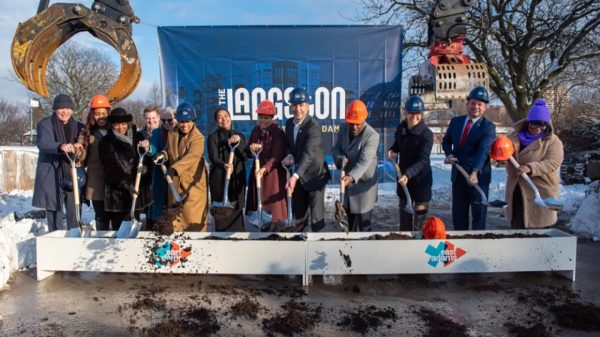
CLAY, N.Y. — National Grid plans to build a two-mile, 345-kilovolt transmission-service line underground between an existing substation and the proposed Micron Technology (NASDAQ: MU) fabrication areas in the town of Clay.
The New York State Public Service Commission (PSC) adopted the terms of a joint proposal during its meeting on Oct. 16, the office of Gov. Kathy Hochul said in an announcement that day.
The PSC also approved National Grid’s environmental management and construction plan for the first phase of construction activities. It involves the installation of the eastern expansion of the Clay substation, and installation of equipment from the Clay substation to the Micron campus.
The joint proposal was signed by National Grid (NYSE: NGG), the New York State Department of Public Service staff, and the New York State Department of Environmental Conservation.
“For a project as large and transformational as Micron’s, every government agency involved must play its part to ensure its success,” Rory Christian, chairman of the PSC, said. “We are pleased that for our part, no party opposed the transmission or infrastructure application or the terms of the joint proposal, and the certificate conditions are adequate to protect the public interest and to ensure potential significant negative impacts of the project are avoided or minimized.”
In addition to approving the transmission connections, the PSC also okayed the utility’s plans regarding receiving and addressing public complaints, addressing environmental concerns such as waterbody and wildlife protection, and where and when construction activities would occur. It also seeks to “identify and minimize” the disruptive effects of construction and describes cleanup and restoration following construction, per Hochul’s office.
“One of the main reasons Micron chose Onondaga County was access to abundant and reliable power,” Onondaga County Executive Ryan McMahon said in the state’s announcement. “Now with approvals from the PSC, today marks yet another important step forward as Micron prepares to make the largest private sector investment in the history of our country and make Onondaga County and Central New York the hub for semiconductor manufacturing in North America.”
It was just over three years ago that Micron announced plans to build a massive semiconductor campus at the White Pines Commerce Park in the town of Clay. Micron says the project will create the largest-ever cleanroom space announced in the U.S., creating nearly 50,000 New York jobs over more than 20 years. That includes 9,000 high-paying Micron jobs.
Stay up-to-date on the companies, people and issues that impact businesses in Syracuse, Central New York and beyond.