
Get our email updates
Stay up-to-date on the companies, people and issues that impact businesses in Syracuse, Central New York and beyond.
What's New
Upcoming Events
CNYBJ Job Board
Mohawk Valley Health System to host job fair on May 3 at Turning Stone Resort Casino
UTICA, N.Y. — Mohawk Valley Health System (MVHS) will host a job fair at the Turning Stone Resort Casino in Verona on May 3 from

Three teams advance to third round of Germinator business competition
SYRACUSE, N.Y. — Three teams will compete in third round of the Germinator, which CenterState CEO describes as “the region’s most comprehensive business competition.” The
New York’s DSRIP implementation continues
“Beware of little expenses; a small leak can sink a great ship.” — Benjamin Franklin The “Big Squeeze” continues in New York state, affecting each

Rowe Digital stays agile in new marketing world
Half the money I spend on advertising is wasted; the trouble is, I don’t know which half. — John Wanamaker NEW YORK MILLS — John Wanamaker was a merchandising genius. In 1875, his eponymous company was the first department store in Philadelphia, and he went on to open stores in New York City, London, and
Get Instant Access to This Article
Become a Central New York Business Journal subscriber and get immediate access to all of our subscriber-only content and much more.
- Critical Central New York business news and analysis updated daily.
- Immediate access to all subscriber-only content on our website.
- Get a year’s worth of the Print Edition of The Central New York Business Journal.
- Special Feature Publications such as the Book of Lists and Revitalize Greater Binghamton, Mohawk Valley, and Syracuse Magazines
Click here to purchase a paywall bypass link for this article.
Half the money I spend on advertising is wasted; the trouble is, I don’t know which half. — John Wanamaker
NEW YORK MILLS — John Wanamaker was a merchandising genius. In 1875, his eponymous company was the first department store in Philadelphia, and he went on to open stores in New York City, London, and Paris. He established the policies of “one price” and “returnable goods” and created the “money-back guarantee.”
The retail innovator also created the price tag, placed the country’s first half-page and full-page newspaper ads, and hired the world’s first, full-time copywriter. His marketing strategy revolutionized the retail industry.
Fourteen decades later, Kevin Rowe has the answer to Wanamaker’s dilemma. Rowe can tell you not only which half of your advertising dollars is wasted, but he can also tell you whether any of your marketing dollars are wasted and which dollars are productive. He is the founder and chief strategist at Rowe Digital, LLC, a search-engine, marketing firm that offers enterprise solutions along with advanced analytics to mid-size and large corporations.
In the 60 years after Wanamaker’s death in 1922, marketing changed only to the extent that mass-media channels — radio and television — were added to the advertising options. It wasn’t until the mid-1980s that digital marketing made its debut, when an agency developed a campaign for several auto companies to prompt magazine readers to return inserted reply cards. The readers who responded received a floppy disk, which contained multi-media content promoting the auto companies and offering test drives. Today, technology has revolutionized marketing by targeting and measuring multiple campaign channels in real time at a fraction of the cost previously required.
Digital marketing
“Digital marketing, in its simplest terms, is the promotion of products, services, and/or brands via one or multiple forms of electronic media,” explains Rowe. “It differs from traditional marketing primarily by using channels and methods of organization to analyze marketing campaigns and to understand what efforts are working, all in real time. Digital marketers monitor what customers are viewing, how often, how long, and what content works. While the Internet may be the most popular channel, digital marketers also need to monitor wireless-text messaging, content, mobile instant messaging, mobile apps, podcasts, electronic billboards, digital television, and radio channels, to name just some digital media.”
Consumers are driving the digital-marketing revolution, because they now have access to information anytime and anywhere they choose. Companies no longer control the message they want to share with the public. Digital media provides a growing source of news, entertainment, shopping, and social interaction, which means that consumers are listening more to the media, friends, relatives, and peers rather than to a controlled company message.
“Digital marketing is changing rapidly,” notes Rowe. “Just in the area of SEO (search-engine optimization), we’re quickly moving away from only using keywords to good quality, relevant content. Google, which controls roughly 67 percent of the North American [search] market and most of the European market, keeps changing its methodology for determining page optimization. While keywords are still an organic part of ranking, Google’s ranking algorithm is now stressing readability, relevance of the content to the query, and high-quality link authority. The digital-marketing industry is also shifting rapidly to catch up with mobile users, requiring us to recognize different devices and to understand the mobile-ranking factors. Add to this social-media signals such as tweets and likes in helping to boost rankings. Even though Google says it doesn’t directly use these signals in ranking sites, data suggests a positive correlation between the number of social signals and rankings. These social signals are clearly important for brand awareness and help to drive organic traffic to top-ranking sites.”
Rowe launched Rowe Digital in 2014, concentrating on New York City advertising agencies and public-relations firms which cater to international accounts such as Coca-Cola, Siemens, BMW, Motorola, Yahoo, General Motors, Walmart, Allstate, and Citrix. “The company has grown rapidly not only developing programs for Fortune 100 companies through agencies in Boston, Miami, and New York City, but also for start-ups in Silicon Valley,” notes the eponymous founder. “Rowe Digital operates from a 1,000-square-foot office in New York Mills and relies on a staff of five, including consultants. Our digital marketing [menu] includes SEO content, pay-per-click advertising, marketing and content management, social marketing, website management, online reputation management, lead generation, e-commerce sales, and audience interaction with brands.” Rowe is the sole shareholder.
Keeping up
Why are the world’s leading advertising and public-relations agencies coming to New York Mills to develop and monitor their digital marketing? “It’s not easy keeping up with technology that is changing quickly,” observes Rowe. “Look what happened just last year. Mobile SEO exploded, Apple released the Apple Watch, live streaming via mobile apps … [has hooked] consumers, Pinterest and Instagram launched ad platforms, many social channels added buy-buttons, Google launched ‘Adwords’ for small business, mobile in-feed promotions are finally being recognized by advertisers, Facebook released targeting for custom and look-alike audiences, machine-learning is becoming more sophisticated, and Google made a deal with Twitter to gain access to crawl Twitter’s database of real-time content.”
Keeping up with the technology is just one challenge. “Having the ability to gather all of this data is useless unless you can make sense of it,” avers Rowe. “Having advanced analytics is critical to plotting a campaign. Rowe Digital utilizes … [‘agile methodology’] to respond to unpredictability. Our software provides opportunities to assess the direction of a project throughout the development lifecycle. In our paradigm, every aspect of development is revisited throughout the lifecycle. Since we are regularly re-evaluating the direction of a project, there is always time to change direction to adapt to what’s working and to a marketplace that is always changing. The process we use reduces both development costs and time to market. The constant re-evaluation of a project optimizes its value and allows us to be competitive in the marketplace.”
Agility
“Agile Methodology,” as explained by Jennifer Rooney in an April 14, 2014, Forbes article, is a technique “… typically used in software development … In today’s fast-paced, multichannel world, marketers no longer have the luxury to spend months crafting large projects; they must innovate, produce on the fly, and respond immediately to market disruptions. [The technique] … drives long-term marketing strategies with short-term, customer-focused iterative projects that improve responsiveness and relevance. It allows for faster creative, more testing, smarter improvements, and better results.”
Traditional portfolio- and project-management tools only focus on the project. “You need a single work environment to connect individuals and teams across the entire work life-cycle,” emphasizes Rowe. “To monitor a project or campaign requires 360-degree visibility and real-time reporting capability from all of the … [stakeholders] working on the project. In addition to the project management, you need customizable reports and dashboards, time and source management, issue-tracking, mobile apps, auditing, and integration with popular products such as Dropbox and Google Drive. Staying on the cutting edge is getting more difficult because of the proliferation of digital channels, intensifying competition, and exploding data volumes. To manage digital marketing today requires managing complex customer relations, responding to and initiating dynamic customer interactions, and extracting meaningful value from mountains of data in order to make better decisions faster.”
Rowe Digital’s success is only partly based on keeping up with cutting-edge technology, innovating, and utilizing advanced analytics. “We meld software with the human element,” says Rowe. “Despite the sophistication of the tools now available for digital marketing, you still need trained people to review the process and make the right decisions. And most importantly, you need to listen to the client. [For example] … enterprise corporations are very concerned today about their brands. That’s why Rowe [Digital] just released ‘searchtelligence’: SEO reputation-monitoring software to track how well corporate online content is performing. This allows our clients the ability to protect their brands by monitoring the tone, relevance, and authority of Google’s top results.”
Rowe’s background
Rowe came to digital marketing via a circuitous route. Born in Newfoundland, he moved to Norwich, New York to attend the seventh grade. After studying for two years at Mohawk Valley Community College, he was admitted to Ithaca College to attend the Park School of Communications. Following graduation, Rowe visited South America to assist in biology research. A mugger changed his plans. Broke, he returned to Utica. Rowe chose SEO as a high-growth industry and taught himself the basics. He worked for three years at Site-Seeker, an area SEO company, before moving to Mohawk Hospital Equipment, where he worked in e-commerce marketing. The next step was serendipitous, when a freelance contact in New York City asked whether Rowe could handle an SEO project for an agency there. The project was the rationale for setting up Rowe’s LLC.
Rowe is in a hurry to grow his business. The Business Journalestimates Rowe Digital’s current revenue at between $400,000 and $500,000 annually.
Growth plans
“I have a sales goal of $5 million in five years,” asserts the company founder. “There is an opportunity for rapid growth in the industry, and I am positioning the company to take advantage of it while pivoting Rowe Digital’s focus from agency work to working directly for corporate clients. The goal is to sell the company within five years, and I need to have a client list where I am not competing with agencies. Currently, I am looking for sales reps in the New York [City]area who already have a book of business. I am also planning to add employees to handle the additional volume.”
Rowe has already begun talking with a holding company that has expressed interest in buying Rowe Digital. He plans to use the proceeds of the sale to build another service-based company that melds technology and software with service.
Rowe isn’t waiting to sell the company before spinning off micro-businesses. “Rowe Digital has launched Amplify, a PR analytics firm,” he notes. “The company has also just released Rapydly, a rapid-concept testing service. The idea is to create micro sites to generate leads that test what’s working. [In short] … what creates revenue quickly. It’s really prototyping, just not in … [plastic or metal]. A client should be able to test a new product or service quickly, while spending only $5,000 to $10,000 rather than the $150,000 it can potentially cost. Launching a business today is cheap; it also doesn’t need to take a lot of time. Anyone can try a number of ideas simultaneously, and select those with the best and most immediate revenue streams.”
At 33, Rowe understands the need for an organization to be data-driven, customer-focused, always prioritizing options, and making quick decisions. As chief marketing officers are increasingly pressured with the responsibility to grow their companies, there is a demand for support to ensure speed, flexibility, and results. In today’s always-on, always-connected marketplace, Rowe understands that companies can’t wait for the perfect campaign: They need to be agile and rapidly adjust to the market.
Rowe feels at home in today’s digital marketplace. He plans to remain in the Mohawk Valley where costs are low, while building targeted digital-solutions anywhere in the world. Where Wanamaker pioneered marketing changes in the 19th century, Rowe is pioneering them in the 21st century, helping make the Mohawk Valley a hub of innovation.

Syracuse University startup & mobile payment app, ChaChing, readies for launch
SYRACUSE — A Syracuse University–based student startup, ChaChing, is gaining momentum with its peer-to-peer mobile payment application. ChaChing came in second place at the Student Startup Madness contest at the South by Southwest Interactive Festival. It’s a five-day event in Austin, Texas, where emerging technology companies come together for panels, presentations, and networking. The fledgling
Get Instant Access to This Article
Become a Central New York Business Journal subscriber and get immediate access to all of our subscriber-only content and much more.
- Critical Central New York business news and analysis updated daily.
- Immediate access to all subscriber-only content on our website.
- Get a year’s worth of the Print Edition of The Central New York Business Journal.
- Special Feature Publications such as the Book of Lists and Revitalize Greater Binghamton, Mohawk Valley, and Syracuse Magazines
Click here to purchase a paywall bypass link for this article.
SYRACUSE — A Syracuse University–based student startup, ChaChing, is gaining momentum with its peer-to-peer mobile payment application.
ChaChing came in second place at the Student Startup Madness contest at the South by Southwest Interactive Festival. It’s a five-day event in Austin, Texas, where emerging technology companies come together for panels, presentations, and networking.
The fledgling business is now getting ready to enter the private beta phase with its payment app. The beta phase in software development is where developers find potential bugs in a service. For ChaChing, it will go into this trial-and-error phase privately, due to the nature of mobile security and payment applications. This means that only specific users can access ChaChing, and those users will work closely with the developers to give feedback before graduating to a public beta application.
ChaChing co-creator, Seth Samowitz, says using ChaChing will be as simple as sending an emoticon to a friend over text message. “You’d switch to a money keyboard, just like you would for an emoji keyboard,” Samowitz, a Syracuse University student, says. “The keyboard is the next frontier; there is so much clutter when it comes to apps.”
Users could send their friends money directly from iMessage, WhatsApp, and other similar texting applications without ever having to leave the conversation. ChaChing looks to eliminate the middleman, the application, by incorporating all of the payment in the keyboard. ChaChing says it will work seamlessly with iOS and Android texting devices.
Founders Samowitz, Eugene Chung, and George Balayan met at a hackathon last summer and shared frustration in the interference of other payment applications.
“I don’t want to get disrupted in a conversation. People will forget to send you the money, but with ChaChing, you’re already talking to them so it’s easier to send it to them,” Samowitz says. “We will be a cashless society and this is the next transition.”
Mobile peer-to-peer payment transactions in the U.S. totaled an estimated
$10 billion to $16 billion in 2015 and are projected to hit up to $86 billion by 2018, according to Business Insider Intelligence. The size of this growing industry could be lucrative for ChaChing.
“Most people don’t understand from an investment standpoint that it [the market] should be at least a billion-dollar market [to be attractive]. Because if you say it’s a huge market at $100 million, that’s not a huge market. For investors, that’s small. I want to know that you’re going after something that’s got potential to have gigantic effect,” Sean Branagan, creator and commissioner of Student Startup Madness, says.
Companies making waves in this industry include Google (Alphabet Inc. — NASDAQ: GOOG), Facebook (NASDAQ: FB), and Apple Inc. (NASDAQ: AAPL). Apple will likely incorporate peer-to-peer payment into Apple Pay, a payment system allowing users to pay at brick-and-mortar stores. Shifting from wallets to phones is more convenient for customers, but is also smarter for the economy according to a 2013 Tufts University study. Cash costs Americans $200 billion a year, researchers Bhaskar Chakravorti and Benjamin D. Mazzotta said in the study. This charge includes $101 billion in missed tax revenue due to under-the-table transactions, $43 billion for American consumers through travel time to ATMs and fees incurred at ATMs, and $55 billion in theft and increased security costs for businesses.
However, these emerging payment applications have yet to answer the question on how they will turn a profit. The operating system for these mobile applications are expensive but Samowitz says he already has made a plan for turning a profit. He declined to provide further details.
Another hurdle for ChaChing is convincing users that the payment application is safe. Cyber security comes to the forefront for users when they are releasing their banking information, and breaches in private account information can halt a startup in its tracks.
“We are working with a partner who allows us to send and receive money from any bank,” Samowitz says. “If people are uncomfortable at first with giving their information, we may let them use Venmo at first.” Venmo, a peer-to-peer mobile payment service using a free digital wallet, allows users to make and share payments instantly from their phones.
ChaChing co-creators Chung and Balayan have a combined 20 years of experience in software development. Balayan is a senior software engineer at the media company Bloomberg LP in New York City and Chung is director at Mezocliq, a tech company in New York City.
Because of that experience, Samowitz says he is confident that ChaChing’s security is strong. “They are both genius engineers who use military grade security to back our company,” Samowitz says. “Being a financial tech app, we have to be very, very careful. We don’t touch any of the money. It’s like sending a check.”
To ensure security, all transactions through ChaChing will expire within 15 minutes if the user does not accept the money. The engineers will also incorporate a transaction-cancellation option where anyone can terminate his or her transaction by 5 p.m. the same day. The money sent won’t be processed until 5 p.m. as well, due to the cost and risk associated with instant payment, Samowitz says. After that, users can transfer their money to their credit card, which can take up to 24 hours, depending on the user’s bank.
But the real issue isn’t security for the entrepreneurs — it’s figuring out how to go viral. “We’re trying to figure out the network effect,” Samowitz says. “Going viral will be the challenge.” In order for an app to stand out in the sea of programs, a large and loyal foundation of consumers is necessary.
Branagan agrees and says that investors want to see that real customers are interested. “The defining characteristic for startups is traction. Do you have customers? Do you have downloads? Do you have visitors? All of those things show real people care,” Branagan, a 1980 graduate from S.I. Newhouse School of Public Communications, says.
Samowitz says he does have the traction and customers and is focusing on college campuses. He adds that he wants to partner with fraternities and sororities across the nation once ChaChing launches.
“The best way to get a lot of people fast is through college,” Samowitz says. “We are always sending money, and if the money is not in front of us or if the payment app is not intuitive, we won’t send it. We need to get paid now; we’re all on strict budgets as college students.”
Another piece of the payment app’s success will be getting investors’ attention. “After South by Southwest, we’ve had a lot of interest from accelerators in California,” Samowitz says. Accelerators are programs for startups that usually provide about 12 weeks of mentorship, coaching, and education. The programs generally finish with a demo day or public pitch event.
“Right now we’re bootstrapping. We have the $3,000 that we won from Student Startup Madness, and have lots of other money and talks going on,” Samowitz says. The team will compete in other contests including the Whitman Entrepreneurial Idea Award, a competition through the Whitman School of Management at Syracuse University.
Samowitz is working toward a bachelor’s degree in finance at Whitman as well as a bachelor’s degree in information management and technology at the School of Information Studies and is expected to graduate in 2017.
Once the team has enough funding, the three co-creators and owners want to make ChaChing their full-time job. “For right now, we are doing it in our spare time, but we want to be full time,” Samowitz says. “We don’t know how it will go privately; Venmo was private for two years.”
ChaChing will stay in private mode until the engineers have finalized the application but expect to launch in June or July.
“It’s great to dream but you’ve got to execute. We need to get our product out there and get feedback and improve it,” Samowitz says. Eager to push forward,
ChaChing is allowing consumers to sign up for its public beta on its website at chaching.io.

Simpson: Pessimism and distrust on full display in Syracuse regio
SYRACUSE — CenterState CEO president & CEO Robert Simpson believes the area’s civic discourse has “descended to the lowest point” that he can recall since he returned to the area 13 years ago. “The pessimism and distrust that too often holds us back has been on full display,” said Simpson. The comments were part of
Get Instant Access to This Article
Become a Central New York Business Journal subscriber and get immediate access to all of our subscriber-only content and much more.
- Critical Central New York business news and analysis updated daily.
- Immediate access to all subscriber-only content on our website.
- Get a year’s worth of the Print Edition of The Central New York Business Journal.
- Special Feature Publications such as the Book of Lists and Revitalize Greater Binghamton, Mohawk Valley, and Syracuse Magazines
Click here to purchase a paywall bypass link for this article.
SYRACUSE — CenterState CEO president & CEO Robert Simpson believes the area’s civic discourse has “descended to the lowest point” that he can recall since he returned to the area 13 years ago.
“The pessimism and distrust that too often holds us back has been on full display,” said Simpson.
The comments were part of his remarks to conclude the CenterState CEO annual meeting at the Nicholas J. Pirro Convention Center at Oncenter in Syracuse on April 6.
CenterState CEO dubbed the event, “Disrupt: Challenge the Status Quo.”
In his remarks, Simpson referenced the region’s $500 million award in Gov. Cuomo’s economic-development contract, referring to it as a “once in a generation” investment and added that was “dubbed contributor capitalism by those that seek to delegitimize it.”
He also noted the recent lawsuit that “ground to a halt” the “decades-long quest” to build a waterfront neighborhood at the Inner Harbor. Simpson did not mention either Syracuse Mayor Stephanie Miner or the City of Syracuse as the plaintiffs that filed the lawsuit.
Simpson also pointed to the plan to redevelop an abandoned rock quarry in Jamesville into a modern railserve-transportation logistics hub that could create hundreds, if not thousands of jobs, “is almost immediately assailed by an active and well-resourced campaign to stop it.”
He noted that the motivations of 19 “highly respected” volunteers who have worked “openly and transparently” for more than 24 months to help reform local governments in Onondaga County “have been called into question.”
“These are reactions based on fear, not on hope. On cynicism, not on strategy,” said Simpson.
Syracuse “not healthy”
Simpson opened his remarks about the region’s “status quo,” referencing population losses, an “anemic” economy, and the number of people in the region living in poverty.
“Our city is not healthy,” Simpson concluded.
The statistics he referenced included that Syracuse is among 13 of the nation’s 104 largest metropolitan areas that lost population in the last two years, according to “data released last month.”
The population of Onondaga County, Simpson noted, hasn’t changed since 1970.
“A 46-year period of stagnation during which the population of New York state grew 8 percent and the population of [the United States] grew 55 percent,” said Simpson.
The trends for the city of Syracuse look “even worse,” he added.
In 1920, Syracuse ranked 37th on the list of largest cities in the U.S. with nearly 300,000 people.
By 1970, it had slipped to 66th, and today, Syracuse ranks as the nation’s 175th largest city, just behind Savannah, Georgia and just ahead of Dayton, Ohio.
The area’s economy has been “similarly anemic,” he said.
Since 1990, the U.S. economy grew 121 percent, but Onondaga County has 26,000 fewer people employed now compared to 25 years ago.
“Not only has job growth lagged, but our workers earn 11 percent less for the same day’s work,” said Simpson.
With the region’s lack of growth, the area’s homes are “worth less” than the national average, and, adjusted for inflation, “actually lost value over the last three years,” he added.
In addition, more than one-third of Syracuse’s residents live below the poverty level, ranking it as the 23rd poorest city in the U.S.
“Half of Syracuse’s children live in poverty,” Simpson said.
In Oswego County, that figure is 28 percent, which is more than 50 percent above the national average, he added.
In the city of Syracuse, 43.7 percent of the African-American population and 50 percent of the Hispanic population live in “concentrated poverty,” earning Syracuse the “dubious” distinction of having the highest concentration of poverty among minority populations of any city in the U.S.
Consensus
In the early portion of Simpson’s remarks, he noted the findings of the Consensus Commission on Government Modernization, which indicated that 18 of the 35 towns and villages in Onondaga County lost population between 2000 and 2010.
And 20 of those municipalities will face a point of fiscal stress in the next decade if “meaningful” steps aren’t taken to reduce spending.
“That’s not a scare tactic. That’s math,” said Simpson.
This area’s current system of local government, which consists of 36 municipalities, 57 fire departments, 26 school districts, and 212 independently elected officials, “perpetuates a culture of fragmentation and parochialism that divides us.”
That’s despite the fact that “we are truly an interdependent community,” he noted, where 82 percent of suburban residents work in a different municipality than where they live, with many commuting to the city where the largest employers and economic engines are located.
“Ladies and gentleman, this is our status quo in this region,” said Simpson.
He then returned to the government-consolidation idea in the final portion of his remarks.
Instead of talking about the continued decline of the 175th largest city in America, Simpson wondered if the community could envision a metropolitan Syracuse, a new and modern government formed by the city and county, towns, and villages, that “embraced the values of better government, economic growth, and equitable representation for all.”
Simpson says that the new city would become the second largest in New York state overnight, and the 38th largest in the U.S., reclaiming a position it held nearly 100 years ago.
“That is a strategy. It’s a vision. A path forward,” contended Simpson.

Henderson Wholesale Lamps wants to expand its footprint
SOLVAY — Henderson Wholesale Lamps, LLC has a customer base that’s primarily in Onondaga County, but the firm would like to expand its footprint across Central New York. “We’ve already started that a little bit,” says David Henderson, the company’s sole owner, noting the business has serviced referrals from outside the county. Henderson Wholesale Lamps,
Get Instant Access to This Article
Become a Central New York Business Journal subscriber and get immediate access to all of our subscriber-only content and much more.
- Critical Central New York business news and analysis updated daily.
- Immediate access to all subscriber-only content on our website.
- Get a year’s worth of the Print Edition of The Central New York Business Journal.
- Special Feature Publications such as the Book of Lists and Revitalize Greater Binghamton, Mohawk Valley, and Syracuse Magazines
Click here to purchase a paywall bypass link for this article.
SOLVAY — Henderson Wholesale Lamps, LLC has a customer base that’s primarily in Onondaga County, but the firm would like to expand its footprint across Central New York.
“We’ve already started that a little bit,” says David Henderson, the company’s sole owner, noting the business has serviced referrals from outside the county.
Henderson Wholesale Lamps, which sells lighting to wholesale and commercial customers, is located in a 1,500-square-foot space at 1427 Milton Ave. as the street winds its way through the village of Solvay.
About 85 percent of the firm’s customers are located in Onondaga County, but it would like to attract customers in the neighboring counties as well.
Henderson Wholesale Lamps services customers from Madison and Oneida counties who pick up their products while making trips to Syracuse.
Its business customers “have employees that make … runs into Syracuse twice a week, so they’ll just come in and pick their
-

Online Display Advertising
$499.00
Add to cart
-

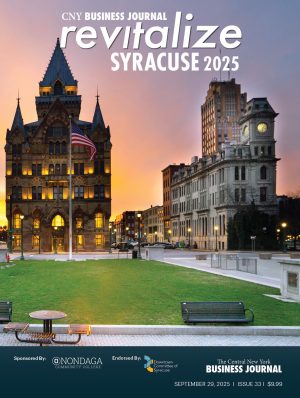
Revitalize Syracuse 2025
$9.99
Add to cart
-

Revitalize Mohawk Valley 2025
$9.99
Add to cart
-

2025 Revitalize Greater Binghamton
$9.99
Add to cart
-

CNY Legends 2024
$9.99
Add to cart
-
Revitalize Syracuse 2024
$9.99
Add to cart
-
Revitalize Mohawk Valley 2024
$9.99
Add to cart
-
2024 Revitalize Greater Binghamton
$9.99
Add to cart
-

2025 Book of Lists
$61.00 – $249.00Price range: $61.00 through $249.00
Select options
This product has multiple variants. The options may be chosen on the product page
-

Article Reprints
$50.00
Select options
-

Central New York Business Journal
From: $79.00 / year
Select options
This product has multiple variants. The options may be chosen on the product page
-
Revitalize Syracuse VII
$9.99
Add to cart
-
Revitalize Mohawk Valley 2023
$9.99
Add to cart
-
Revitalize Greater Binghamton 2023
$9.99
Add to cart
-
Revitalize Syracuse VI
$9.99
Add to cart
-
Revitalize Mohawk Valley 2022
$9.99
Add to cart
-
CNY Legends 2021
$9.99
Add to cart
-
Revitalize Syracuse V
$9.99
Add to cart
-
Revitalize Mohawk Valley 2021
$9.99
Add to cart
-

CNY Legends 2020
$9.99
Add to cart
-
Washington Station Commemorative Publication
$9.99
Add to cart
-
Revitalize Syracuse IV
$9.99
Add to cart
-
Revitalize Syracuse III
$9.99
Add to cart
-
Full Color Plaques
$189.00 – $295.00Price range: $189.00 through $295.00
Select options
This product has multiple variants. The options may be chosen on the product page
-

Revitalize Syracuse II
$9.99
Add to cart
-

NextGen III
$9.99
Add to cart
-

Revitalize Syracuse: The Downtown Transformation
$9.99
Add to cart
-

Hotel Syracuse Commemorative Publication
$9.99
Add to cart
-

NextGen II
$9.99
Add to cart
-

Mohawk Valley NextGen
$9.99
Add to cart









up,” says Rachel Henderson Kelly, the company’s director of sales and marketing.
The company also has customers in Oswego and Auburn who drive to Solvay to pick up their lighting products, David Henderson added.
“Everything we buy is for re-sale. Everything we sell is new. We really don’t look for retail business,” he notes.
The business
Henderson, who started the company nine years ago, says his customer base includes property-management companies, factories, electrical contractors, general contractors, churches, nonprofit organizations.
Some specific customers include Syracuse–based Sutton Companies, DeWitt–based Longley Jones Management Corp., Syracuse–based Pemco Group, Inc., and Onondaga County government, according to Henderson.
Since launching his company in 2007, Henderson figures he’s sold products to about 300 customers, noting that some are one-time buyers.
The product line includes fluorescent and incandescent light bulbs, light-emitting diode (LED) bulbs, along with LED fixtures, exit signs, replacement batteries, and emergency lights.
The company declined to disclose any revenue information.
Henderson’s wife, Pamela, started working for the business in 2013, handling administrative duties and enabling David Henderson to devote more time to his outside-sales efforts.
The Hendersons’ daughter, Rachel Henderson Kelly, joined the company in February as director of sales and marketing.
The Hendersons are proud of having a family-operated business, something that Rachel Henderson Kelly contends is “becoming more and more rare” in the region.
Henderson Wholesale Lamps is an authorized distributor for Ellwood City, Pennsylvania–based Appalachian Lighting Systems, Inc., manufacturer of LED lighting fixtures, according to its website.
The firm’s suppliers include Cooper Lighting, a subsidiary of Houston, Texas–based Eaton Corp.; Shawnee, Kansas–based EiKO Global, LLC; Salem, Virginia–based Green Energy Concepts Inc; Laurel, Mississippi–based Howard Industries; West Caldwell, New Jersey–based MaxLite, Inc.; and Ontario, California–based Plusrite, according to the site.
“We made some good connections over the years, and there’s people that we started with and they’ve grown with us,” says David Henderson.

Self-taught cookie baker looking for Armory Square storefront
SYRACUSE — A self-taught baker with a growing home-based cookie business is looking for a storefront in Armory Square. Cathy Pemberton, founder and sole owner of three-year-old Cathy’s Cookie Kitchen, wants to move the business that she is running from her house in Camillus to a 1,000–square-foot location in downtown Syracuse. “It’s the natural next
Get Instant Access to This Article
Become a Central New York Business Journal subscriber and get immediate access to all of our subscriber-only content and much more.
- Critical Central New York business news and analysis updated daily.
- Immediate access to all subscriber-only content on our website.
- Get a year’s worth of the Print Edition of The Central New York Business Journal.
- Special Feature Publications such as the Book of Lists and Revitalize Greater Binghamton, Mohawk Valley, and Syracuse Magazines
Click here to purchase a paywall bypass link for this article.
SYRACUSE — A self-taught baker with a growing home-based cookie business is looking for a storefront in Armory Square.
Cathy Pemberton, founder and sole owner of three-year-old Cathy’s Cookie Kitchen, wants to move the business that she is running from her house in Camillus to a 1,000–square-foot location in downtown Syracuse. “It’s the natural next step,” Pemberton says. “[I want] everything that’s just mine in one location and have that be the central point.”
She is working with Bethany Holbrook, an economic development and marketing specialist at CenterState CEO’s Downtown Committee of Syracuse, to find locations. Pemberton is also receiving business advice from the Small Business Development Center at Onondaga County College.
“It will be a few months until I have enough money to open up a retail shop,” she says. Pemberton is unsure what banks she will use to finance the move.
Pemberton is her business’s only employee, and handles the marketing, shopping, accounting, taxes, bookkeeping, cleaning, deliveries, and of course, baking. She is recruiting two workers that will help with baking and deliveries.
Occasionally, Pemberton bakes at the commissary kitchen at Elbridge Community Church to sell her products at local events like the Junior League of Syracuse Holiday Shoppes, the Buy Local Bash, and the Midnight Shopping Pop-Up in the Sky Armory.
Pemberton has also sold her cookies in fairs and festivals throughout Central New York like the New York State Blues Festival, the Syracuse Arts & Crafts Festival, and the Great New York State Food & Wine Festival in Clayton.
Most of Pemberton’s orders are from individual customers and businesses. She has 15 business accounts with companies like Liehs & Steigerwald on West Fayette Street, Finger Lakes Coffee Roasters in Destiny USA, and River Rat Cheese in Clayton. Pemberton has been selling her cookies to Taste NY stores in Binghamton and Albany, and she plans to send samples to more of these stores.
Pemberton calls select clients when she runs special offers. She gets about a whole month of private business orders and 20-25 orders a month from regular customers. Week after week, she sells different amounts of cookies, and she says it’s hard for her to estimate how many cookies she sells.
Pemberton says her average sale is $75-$100. Cathy’s Cookie Kitchen’s annual sales have increased five-fold since Pemberton founded the business in June 2013.
She declined to reveal sales totals.
Pemberton calls her customers after they receive their cookies to see if they liked them. “I think it’s nice and a personal touch you don’t get [with other businesses],” she says.
Cathy’s Cookie Kitchen’s competitors include bakeries that sell products with healthy ingredients, like Zimmer’s Bakes in Weedsport and Mo’Dough in Syracuse. “But I don’t think any of them compare to my cookies and that’s because of the ingredients,” Pemberton contends. “There isn’t anyone else who uses organic and natural ingredients and can have it taste delicious.”
All the cookies Pemberton sells are her own recipes. She sells 18 cookie flavors like Caramel Pretzel Chocolate Chip and Rocky Road—12 that can be made gluten-free. The cookies are sold at $3 for a pack of two; she also offers a senior citizen discount of $2 per pack.
Pemberton opened Cathy’s Cookie Kitchen while she worked as an assistant supervisor with the Syracuse City School District. “My true calling is baking, and I figured I could do something with it,” she says. Pemberton continues to work part time at the district.
When the new store opens, Pemberton plans to sell not only cookies, but also hot chocolate, coffee, tea, and the occasional cookie cake, which is a giant cookie. Pemberton wants to continue to sell to corporate and retail stores, and continue to take online and private orders.
Pemberton will continue to go to the events to network with clients. “I am the face of the company and I don’t think anybody is going to sell it the way I do,” she says.
She is trying to increase online sales, by adding a “Gifts” page to her website, and promoting the “Cookie of the Month Club” on her Facebook page. Customers can buy a dozen cookies for $19.99 each month. Pemberton is also planning to create a Nutella and pretzel cookie to add to her menu.
M3 Placement & Partnership hopes national certification spurs growth
UTICA — The Women Business Enterprise National Council (WBENC) has certified M3 Placement & Partnership of Utica as woman-owned. WBENC notified the Utica firm of its certification in January. Founded in 1997, the Washington, D.C.–based nonprofit WBENC is the “largest third-party certifier of businesses owned, controlled, and operated by women” in the U.S., according to
Get Instant Access to This Article
Become a Central New York Business Journal subscriber and get immediate access to all of our subscriber-only content and much more.
- Critical Central New York business news and analysis updated daily.
- Immediate access to all subscriber-only content on our website.
- Get a year’s worth of the Print Edition of The Central New York Business Journal.
- Special Feature Publications such as the Book of Lists and Revitalize Greater Binghamton, Mohawk Valley, and Syracuse Magazines
Click here to purchase a paywall bypass link for this article.
UTICA — The Women Business Enterprise National Council (WBENC) has certified M3 Placement & Partnership of Utica as woman-owned.
WBENC notified the Utica firm of its certification in January.
Founded in 1997, the Washington, D.C.–based nonprofit WBENC is the “largest third-party certifier of businesses owned, controlled, and operated by women” in the U.S., according to its website.
Founded in 2011, M3 Placement & Partnership is the d/b/a name of M3 Business Service Network.
The WBENC certification follows M3’s certification as a New York minority and women-owned business enterprise (MWBE) in 2013, says Mary Malone McCarthy, founder, CEO, and sole owner of M3 Placement & Partnership.
The MWBE certification provides an “added value” for companies that seek its staffing services and need to work with a woman-owned business in the process.
McCarthy spoke with CNYBJ on March 25.
After securing the statewide certification, M3 opted to pursue national certification, says McCarthy.
“We decided to go on to the national certification as we’re looking to grow our footprint, and to work with organizations that would value the certification,” she adds.
McCarthy describes M3 as a “boutique executive-search firm,” which also focuses on professional services for … temporary, contract, and temp-to-direct hires.
The firm recruits and places employees in the health care, finance, manufacturing, technology, hospitality, and nonprofit sectors, she says.
To qualify for the WBENC certification, a firm must demonstrate that 51 percent of the company is “owned, managed, and directed by a woman or women on a daily basis,” according to a news release M3 issued on March 1.
The process included “extensive” documentation and an on-site visit. The process lasted about nine months, she says.
Miranda Curtis, program manager, for the Women Presidents’ Educational Organization (WPEO) traveled up from New York City to interview McCarthy “to confirm whether or not I’d be eligible for the certification.” McCarthy says.
WPEO comprises two of the 14 regional-partner organizations of the WBENC, according to the WPEO website.
The certification wasn’t the only recent change for M3 Placement & Partnership in recent months, according to McCarthy.
M3 moved into its new office at 110 Lomond Court in Utica in October after initially operating at 4350 Middle Settlement Road in New Hartford.
About M3
The firm operates in a 1,500-square-foot space at its Lomond Court location. M3 leases its space from property owner Brian Gaetano.
“Because of the growth and my employees, I had to expand it,” says McCarthy.
M3 has four full-time employees, including McCarthy. She hopes to hire one additional full-time employee to handle recruitment and placement duties in the coming months.
McCarthy declined to disclose how much revenue M3 generated in 2015, but notes that the firm “doubled” its sales compared to 2014.
“We’d like to double again [in 2016], but that’s … aggressive growth,” she adds.
McCarthy says that it’s “hard to say” how many clients for which her firm has provided staffing services.
M3 has “thousands” of job candidates named in its database, “many” of whom might currently be working in jobs but are confidentially “wanting to explore new opportunities for growth.”
“So, it’s not a database of people [who] aren’t actively working,” McCarthy adds.
She credits “the trust we were building with our candidates and our clients” for the additional sales in 2015.
“We were getting a lot of referrals and we were getting a lot of continued business from our existing [clients],” says McCarthy.
M3 doesn’t collect a fee from its job candidates, she notes.
Future plans
M3 would like to expand with offices in both Albany and Syracuse and “take our model that’s working well here [in Utica] and grow it into other markets.”
But as of now, McCarthy has no immediate plans for expansion and files the idea under “future plans and goals.”
M3 is also exploring the possibility of starting a human-resources (HR) arm to provide consulting for companies “that aren’t quite big enough to have a full-time HR person on staff.”
Such an option would be a “great opportunity” for smaller organizations that need to fill an MWBE requirement, she contends.
But, unlike the expansion idea, the plan for an HR arm is “sooner than later.”
Origin
Prior to launching M3 Placement & Partnership, McCarthy spent more than 15 years as senior VP at Northland Communications, a company her family owns. She was responsible for the firm’s public relations, marketing, and customer relations.
Before her service with the family business, McCarthy worked as a regional manager for the staffing unit of Olsten Corp. in Albany, which Adecco, a Switzerland–based staffing company, acquired in 1999.
She launched M3 in June 2011.
“I absolutely loved [the work at Northland] but always had that passion to create something on my own, independent of the family business,” she adds.

Paradigm Consulting receives WBE certification
UTICA, N.Y. — Laurie Schoen, president and CEO, and Amy Mielnicki, executive VP, of Paradigm Consulting, Inc., recently announced that their firm has been granted Woman-Owned Business Enterprise (WBE) certification by Empire State Development’s Division of Minority and Women Business Development. Paradigm Consulting says it provides group retirement consultation and investment advisory services in Central
Get Instant Access to This Article
Become a Central New York Business Journal subscriber and get immediate access to all of our subscriber-only content and much more.
- Critical Central New York business news and analysis updated daily.
- Immediate access to all subscriber-only content on our website.
- Get a year’s worth of the Print Edition of The Central New York Business Journal.
- Special Feature Publications such as the Book of Lists and Revitalize Greater Binghamton, Mohawk Valley, and Syracuse Magazines
Click here to purchase a paywall bypass link for this article.
UTICA, N.Y. — Laurie Schoen, president and CEO, and Amy Mielnicki, executive VP, of Paradigm Consulting, Inc., recently announced that their firm has been granted Woman-Owned Business Enterprise (WBE) certification by Empire State Development’s Division of Minority and Women Business Development.
Paradigm Consulting says it provides group retirement consultation and investment advisory services in Central New York, as well as across the United States. The firm is headquartered in the Utica Business Park at 133 Business Park Drive.
The WBE certification may benefit an organization that receives state funding and is required to create relationships with minorities or women-owned businesses, Paradigm said in a news release.
Under state law, a WBE is a business enterprise in which at least 51 percent is owned, operated, and controlled by citizens or permanent-resident aliens who are women, according to Empire State Development’s website.
Get our email updates
Stay up-to-date on the companies, people and issues that impact businesses in Syracuse, Central New York and beyond.