Stay up-to-date on the companies, people and issues that impact businesses in Syracuse, Central New York and beyond.
Consumer sentiment declines across N.Y. to begin 2018
Consumers in upstate New York and statewide weren’t quite as confident about the economy to begin the new year, according to the latest Siena College Research Institute (SCRI) quarterly survey report of consumer sentiment issued April 11. Consumer sentiment in upstate New York fell to 83.9 in the first quarter from 90.4 in the fourth […]
Become a Central New York Business Journal subscriber and get immediate access to all of our subscriber-only content and much more.
Click here to purchase a paywall bypass link for this article.
Consumers in upstate New York and statewide weren’t quite as confident about the economy to begin the new year, according to the latest Siena College Research Institute (SCRI) quarterly survey report of consumer sentiment issued April 11.
Consumer sentiment in upstate New York fell to 83.9 in the first quarter from 90.4 in the fourth quarter of 2017, according to SCRI.
Statewide consumer sentiment fell to 87.1 from 92.3 in the fourth quarter. The statewide figure was 14.3 points lower than the first-quarter consumer sentiment of 101.4 for the entire nation, which was up 5.5 points from the fourth-quarter measurement, as measured by the University of Michigan’s consumer-sentiment index.
This quarter’s five-point drop in New York state consumer sentiment was due to a “weakening” in New Yorkers’ confidence in the state’s economic future, Douglas Lonnstrom, professor of statistics and finance at Siena College and SCRI founding director, said in the survey report.
“Overall confidence remains strong, but New Yorkers are far less secure today and optimistic about our state economy than Americans in general are towards their personal situation and the country’s future. Concerns about the future, perhaps due to recent market volatility and tariff talk is highest in Upstate and among older New Yorkers,” said Lonnstrom.
In the first quarter of 2018, buying plans were up 1.6 percentage points since the fourth-quarter measurement to 22.4 percent for major home improvements.
Buying plans were down 6.3 points to 38.2 percent for consumer electronics, off 0.5 points to 7.1 percent for homes, and down 1.6 points to 13.6 percent for cars and trucks.
Buying plans held even at 27.4 percent for furniture, according to the SCRI data.
“Despite some weakening in the overall index, with current sentiment buoyed by well over half of New Yorkers saying that this is a good time to buy major household items, we see plans for home improvements higher than at any point since 2007. Furniture buying as well as home buying look to remain robust,” said Lonnstrom.
SCRI conducted its survey of consumer sentiment between March 1 and March 29 by telephone calls conducted in English to 802 New York residents. It has an overall margin of error of plus or minus 4.4 percentage points, according to SCRI.

Ithaca Beer Co. develops pale ale with N.Y.-grown ingredients
ITHACA — It’s described as the state’s first commercially produced beer made with “predominantly” New York–grown ingredients. Ithaca Beer Co. plans to launch Brew York, which will be available in both bottles and draft starting May 15, the office of Gov. Andrew Cuomo said in an April 5 news release. It will be available year-round
Become a Central New York Business Journal subscriber and get immediate access to all of our subscriber-only content and much more.
Click here to purchase a paywall bypass link for this article.
ITHACA — It’s described as the state’s first commercially produced beer made with “predominantly” New York–grown ingredients.
Ithaca Beer Co. plans to launch Brew York, which will be available in both bottles and draft starting May 15, the office of Gov. Andrew Cuomo said in an April 5 news release. It will be available year-round and statewide.
Brew York is described as a pale ale that “uses nearly 70 percent New York–grown barley and 100 percent New York hops.”
Ithaca Beer’s investment in this new product line supports Southern Tier Soaring, the region’s “strategic plan to revitalize communities and grow regional economies,” Cuomo’s office said.
Ithaca Beer created Brew York to “showcase the state’s high-quality agricultural ingredients, and highlight New York’s advancement in supply and pricing that makes it feasible for commercial brewers to commit to buying and using local ingredients,” the release contended.
Ithaca Beer, which isn’t licensed as a farm brewery, isn’t required to use local ingredients. However, the company is sourcing 66 percent of its malting barley from 1886 Malt House in Fulton and from New York Empire Malt in Champlain in Clinton County.
The brewery is also “exceeding” New York’s 2019 farm-brewery license requirements by using 100 percent hops produced by Chimney Bluffs Hoppery in Wolcott in Wayne County and Ledyard Farms in King Ferry in Cayuga County.
The release of Brew York has been in the making for more than a decade, Dan Mitchell, president and founder of Ithaca Beer Co., said in Cuomo’s release.
“In 2004, we introduced an all New York State hopped Double IPA while working on getting the Northeast Hop Alliance off the ground. We spent significant time in front of state legislators requesting support to bring back the once thriving [New York State] hop industry, and working closely with [the New York] Farm Bureau to raise awareness and funds. It’s been a huge boost for those of us working on projects like this to have Gov. Cuomo behind us. When I first began working on Ithaca Beer, there was definitely some support, but the governor has created incredible awareness about all the great food and beer produced in New York State, and for all the farmers who support our local efforts,” said Mitchell.
The company’s brewery is based at 122 Ithaca Beer Drive in the town of Ithaca. It includes a taproom. Mitchell founded Ithaca Beer Co. in 1998.

Thousand Islands Bridge to run 1-way overnight for maintenance
ALEXANDRIA BAY — Traffic on the Thousand Islands Bridge will be reduced to one-way during overnight hours starting May 6 as crews go through annual cleaning and maintenance. The Thousand Islands Bridge Authority said in a release the bridge will operate alternating one-way travel from 10 p.m. until 6 a.m. Sunday evenings to Friday mornings
Become a Central New York Business Journal subscriber and get immediate access to all of our subscriber-only content and much more.
Click here to purchase a paywall bypass link for this article.
ALEXANDRIA BAY — Traffic on the Thousand Islands Bridge will be reduced to one-way during overnight hours starting May 6 as crews go through annual cleaning and maintenance.
The Thousand Islands Bridge Authority said in a release the bridge will operate alternating one-way travel from 10 p.m. until 6 a.m. Sunday evenings to Friday mornings starting May 6. Traffic is expected to return to normal June 22.
Kurt Hartmann, terminal manager for Cavalier Transportation in Syracuse, says much of the commercial traffic that crosses the bridge goes over at night. However, he says he doesn’t expect the maintenance work to delay shipments much.
Hartmann says that border crossings at the bridge have been streamlined with documentation arriving electronically before shipments do. He says that documents get sent and approval is received before trucks head for the bridge. “If there’s a problem, there is no sense in heading for the border.”
Thanks to the electronic processes adopted in the past five or so years, crossing the border is no more time consuming for truck drivers than for other motorists, Hartmann adds.
The authority said no traffic-slowing work is planned during daytime hours or during weekends, or during Canada’s May 21 Victoria Day holiday. However, the authority added, “momentary delays may be experienced.”
Built in 1937 and 1938, the Thousand Islands Bridge sees some 2 million crossings a year, according to the authority’s web site.
New York manufacturing index slides in April, but still positive
The Empire State Manufacturing Survey general business-conditions index fell 7 points in April to 15.8, but the positive reading indicated a sector that is still growing. The responses in the April survey showed that business activity “continued to expand, though at a somewhat slower pace than in March,” the Federal Reserve Bank of New York
Become a Central New York Business Journal subscriber and get immediate access to all of our subscriber-only content and much more.
Click here to purchase a paywall bypass link for this article.
The Empire State Manufacturing Survey general business-conditions index fell 7 points in April to 15.8, but the positive reading indicated a sector that is still growing.
The responses in the April survey showed that business activity “continued to expand, though at a somewhat slower pace than in March,” the Federal Reserve Bank of New York said in its report issued April 16.
A positive reading indicates expansion or growth in the state’s manufacturing activity, while a negative index number points to a sector decline.
The Empire State Survey found 38 percent of manufacturing respondents reported that conditions had improved over the month, while 22 percent said that conditions had worsened.
Survey details
The new-orders index fell 8 points to 9.0, and the shipments index declined 10 points to 17.5, indicating that orders and shipments “expanded, but less so than last month,” the New York Fed said.
Unfilled orders edged higher, and inventories increased. The delivery-time index was “little changed” at 15.6, a sign that delivery times “continued to lengthen.”
The index for number of employees declined 3 points to 6.0, a level “pointing to a modest increase” in employment. Moving in the opposite direction, the average workweek index climbed 11 points to 16.9, indicating a “significant” increase in hours worked.
Price increases remained “elevated.” The prices-paid index edged down 3 points to 47.4, just slightly below last month’s multi-year high. The prices-received index was little changed at 20.7, a level “suggesting ongoing, moderate” selling-price increases.
Optimism about the six-month outlook “plunged” among manufacturing firms, the New York Fed said.
The index for future business conditions slipped 26 points to 18.3, its lowest level in more than two years. After reaching its highest level in several years last month, the index for future prices paid was little changed, “indicating a widespread expectation” that input prices would increase in the months ahead.
The index for future prices received edged higher. The capital-expenditures index posted its third consecutive monthly decline, though at 25.2, it suggested that firms plan to increase capital spending “in the months ahead,” the New York Fed said.
The New York Fed distributes the Empire State Manufacturing Survey on the first day of each month to the same pool of about 200 manufacturing executives in New York. On average, about 100 executives return responses.

Seneca Falls Hampton Inn sold to Texas–based group
SENECA FALLS — The Hampton Inn in Seneca Falls has been purchased by SF Hotel Group of Houston, Texas. Real estate advisory firm HREC Investment Advisors said it arranged the sale of the 81-room inn. It represented the seller, Seneca Hospitality LLC of Ithaca in the transaction. The selling price for the property at 1950
Become a Central New York Business Journal subscriber and get immediate access to all of our subscriber-only content and much more.
Click here to purchase a paywall bypass link for this article.
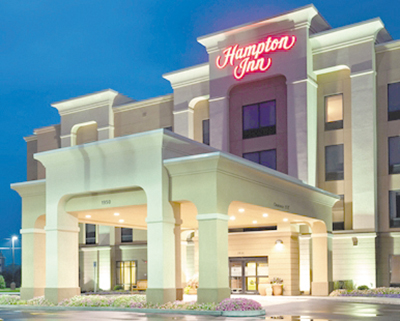
SENECA FALLS — The Hampton Inn in Seneca Falls has been purchased by SF Hotel Group of Houston, Texas.
Real estate advisory firm HREC Investment Advisors said it arranged the sale of the 81-room inn. It represented the seller, Seneca Hospitality LLC of Ithaca in the transaction.
The selling price for the property at 1950 Balsley Road in Seneca Falls was not provided.
The 1.88-acre property — featuring the 4-story, 48,000-square-foot hotel — was assessed at more than $3.7 million for 2017 and had a full market value of just over $4 million, according to Seneca County’s online property records. The hotel was built in 2011.
The hotel features a shuttle to del Lago Casino, Waterloo Premium Outlets, and downtown Seneca Falls, the home of the National Women’s Rights National Historic Park and the National Women’s Hall of Fame.
22 Ways to Make the Right Reputation
It always comes as a shock to find out what others see us quite differently than we see ourselves. Often, it can be distressing, particularly at work. “I don’t get it. I’m not that way.” Maybe not. But it happens. And when it does, a bad reputation can stick tighter than Super Glue, thanks to
Become a Central New York Business Journal subscriber and get immediate access to all of our subscriber-only content and much more.
Click here to purchase a paywall bypass link for this article.
It always comes as a shock to find out what others see us quite differently than we see ourselves. Often, it can be distressing, particularly at work. “I don’t get it. I’m not that way.” Maybe not. But it happens. And when it does, a bad reputation can stick tighter than Super Glue, thanks to word-of-mouth and social media.
In today’s highly competitive workplace, reputation makes a difference. Your competition can be down the hall, across the country, or 10 feet away. It can be someone who wants your customer or your job — maybe both.
When it comes to your reputation, hoping for the best isn’t good enough. It leaves it in the hands of others. Your reputation needs to be shaped and managed so it reflects the way you want to be viewed. Here are 22 ways to go about deliberately shaping how others see you.
Take on extra work
Sure, you have more than enough on your plate, so why pile on anything more? It lets you demonstrate your ability to shoulder a heavier load. And that doesn’t go unnoticed.
Meet deadlines
“I didn’t have enough time,” may be the top excuse for failing to meet deadlines, as if something beyond our control intervened and caused us to fail. What really happens is that we run out of time — and that’s due to poor planning.
Come up with ideas to improve something
It isn’t that most people don’t have ideas; it’s simply they’re afraid to present them. They say, What will people think? Maybe it’s stupid? Just take a chance. You’ll be surprised.
Express appreciation to someone who helps
We all get busy and move from one thing to another, and before we know it, several people have come to our aid. Just another day at the office. It shouldn’t be. Make it a point to say thanks.
Give credit to others
It seems as if it diminishes us if we make a point to give a “shout out” to a co-worker. But just the opposite is true. It says we understand what it means to be a team player.
Pitch in when someone is out
Whether it’s taking messages, answering questions, or solving a problem, it says you have their back. It won’t be forgotten.
Ask questions
We’ve all been in meetings where stuff goes by that’s new, unclear, or confusing. Ask a question. Don’t assume you’re the only one who didn’t get it. It shows you’re thinking.
Be careful about complaining
When there’s nothing else to do, it’s complain time, particularly at lunch or after work. Complaining can be toxic and those who do it put their reputation at risk.
Welcome new co-workers
There is a reason to be the first — first impressions are indelible, and you will be remembered.
Go out of your way to help customers
Look at these as opportunities, not interferences. They’re memorable. Customers like to talk about the times when someone did something special for them.
Come up with solutions for problems
Avoid the instinct to hold back, play it safe, and worry about: “What if it doesn’t work out? What if it’s rejected?” Give it a try and you may be surprised what happens.
Offer suggestions so others don’t trip themselves up
“Would it be helpful to look at it this way?” or “Have you considered other possibilities?” Such questions can help rescue someone from stepping off a cliff, from making an unnecessary mistake. They won’t forget it.
Admit it when you’re wrong
It’s easy to say, “Everybody makes mistakes” or “I’m just human” when we get something wrong. But passing it off is quite different from taking ownership and saying, “I was wrong.” Both impact one’s reputation.
If you spot a problem, propose a solution
Identifying problems is a popular workplace pastime. Coming up with possible solutions, not so much. One is seen as complaining, the other as being helpful.
Step back to get a bigger picture
What’s going on right around us holds our attention, blinding us to the bigger picture, distorting our thinking, and causing us to react inappropriately. It helps to step back so we can see more clearly.
Pay attention to details
Nothing is more disruptive, embarrassing, and frustrating than the wrong address or price, a phone number that’s one digit off, a misspelling, or something that was left out. Reputations are made on accuracy; the opposite is also true.
Don’t make excuses
It’s quite simple: the opposite of making excuses is taking responsibility. Either way, there’s a reward, one you want and one you don’t.
Avoid having someone remind you
Digital calendars and reminders should eliminate the need for someone to remind us. It hasn’t. The offenders are just more visible.
Thank those who help you
Although we may not admit it, there are many hands pulling up our bootstraps, not just our own. Be generous in expressing appreciation to everyone who literally gives you a hand.
Tell someone when they do a good job
Criticism comes easily, praise not so much. Most people benefit from less of the former and more of the latter.
Welcome challenges
If all we know is what we’re doing now at work, we’re coasting. When we dare to step out of our comfort zone and take risks, we do more than just hold a job.
Smile more
A Penn State study found that smiling employees are more approachable, likeable, and appear more competent, as well as more trustworthy, according to University of Pittsburgh researchers.
When all is said and done, your reputation is what you make it.
John Graham of GrahamComm is a marketing and sales strategy consultant and business writer. He is the creator of “Magnet Marketing,” and publishes a free monthly eBulletin, “No Nonsense Marketing & Sales Ideas.” Contact him at jgraham@grahamcomm.com or johnrgraham.com

Father and son ready to grow Addcom in a smaller space
CICERO — David M. Adams worked for himself for years, building and repairing communications equipment. He started the one-man shop as a home-based business, later rented space on Teall Avenue in Syracuse in the late 1980s, and then moved to a small building in an industrial park next to Hancock International Airport. He wasn’t always
Become a Central New York Business Journal subscriber and get immediate access to all of our subscriber-only content and much more.
Click here to purchase a paywall bypass link for this article.
CICERO — David M. Adams worked for himself for years, building and repairing communications equipment. He started the one-man shop as a home-based business, later rented space on Teall Avenue in Syracuse in the late 1980s, and then moved to a small building in an industrial park next to Hancock International Airport.
He wasn’t always alone, of course. He would get visits from his five children and, back in the day, one of his sons, David M. Adams II, would drive a go-cart around the quieter streets in the industrial park.
The younger Adams found what his father did interesting and pursued a degree in wireless communications at SUNY Canton until the college dropped the program. He returned to the Syracuse area, earned certification as an electrician, and worked for Time Warner Cable for a few years.
Then his father asked him about working with him at his company, Addcom Electronics, in space a short walk from his small shop. For the past 12 years, they’ve worked together at the former building 452 at the Hancock Airpark, a 9,800-square-foot building with Cold-War era cinderblock-and- rebar construction the company rents from Onondaga County.
Things have gone well, so well that young David became a partner in the business with his father three years ago.
While technically David M. Adams II, he refers to himself as “Junior” and his father as “Senior,” to make it easier for callers and others to figure out to whom they are speaking. He explains that he and his father share duties — both sell and repair communications equipment and both install equipment. A smile crosses Senior’s face as his son explains that when one of the company’s three radio towers needs to be climbed, it’s Junior who gets the job.
Competing in a market that includes United Radio, with more than 400 employees in Central New York, Addcom has carved out a niche providing communications to school-district bus fleets as well as farms, golf courses, taxi services, retailers, and hotels and motels. The firm has customers stretching from Oswego to Cortland counties and from Verona to halfway to Rochester, Senior says. The company designs, installs, and supports radio communication systems.
When off-the-shelf technology doesn’t fit the bill, Junior likes to turn to Senior for custom solutions. For instance, at a nursing home, the standard emergency pull-cord system would broadcast information about the person who had called for help. That might have been OK before, but violates today’s patient-privacy standards.
To solve the problem, Senior created a system that alerts workers to the call for help by radio, without sharing the information with those not authorized to know.
“They give us a problem and we give them something they can count on,” Junior says.
At 63, and with no plans to retire, Senior explains that radio communications has a bright future, even in the age of smartphones, particularly among those who deal with emergencies or care for children.
“In an emergency, the first thing to go is cell service,” he says, adding that in the event of disaster, radio will work, even if it has to fall back on battery service. “If something happens, radio users can continue to talk.”
Radio also allows one person to speak to many at once, something that can be very helpful in an emergency when there may not be time to dial individuals one by one, Junior adds.
“You’re never out of luck with radio,” Senior says.
In addition, 34-year-old Junior points out that while radio may seem to a casual observer to be a 20th century technology, it continues to evolve. Digital radio sets have improved reception and even increased range for radio sets, adding as much as 20 percent to the distance at which a signal can be clearly heard.
Looking to the future, Addcom is getting ready to grow while moving into a smaller building. The current building is far too large for the business, both men say. The nearly 10,000-square-foot building can cost $1,000 a month to heat and the sturdy construction makes modifying the space impractical, they say.
So they are preparing to break ground on a new 4,800 square-foot, steel-sided building. It features a more efficient layout and three offices next to each other to make room for a third employee as the business continues to grow. (The new building’s restroom is much smaller than the one in their current building with its three stalls and seven urinals.)
Like the previous space, Addcom’s new building will be in Hancock Air Park, a short walk from the current structure. The company applied for a payment-in-lieu-of-taxes agreement with the Onondaga County Industrial Development Agency (OCIDA) and asked for a break on the sales tax for materials used for the new location. The firm’s application to OCIDA puts the total tax savings at $47,797 and expects the project to cost about $275,000.
The OCIDA board approved the application at its April 10 meeting, noting it will create new taxable property and allow the county to sell Addcom’s current space and put it on the property-tax rolls as well.
Senior says he’s not sure what innovation will next bring growth to the communications industry, but he’s sure it will. In the meantime, he says, he and his son have built a successful business and are taking steps to keep it going. “We make a comfortable living. We have fun. That’s the important thing,” he says.
Covey Computer Services to move to new office within Utica
UTICA, N.Y. — Covey Computer Services (CoveyCS) of Utica is moving from its previous home on Genesee Street to the former GE building at 901

Rochester–area firm acquires Stevens Office Interiors
DeWITT — FM Office Express Inc., which operates in the Rochester area, has acquired Stevens Office Interiors of DeWitt in a deal that represents a succession plan for Stevens co-owners Thomas Maugeri and Patrick Lewis. The acquisition deal closed March 31, says Maugeri, who spoke with CNYBJ in his office at Stevens Office Interiors on
Become a Central New York Business Journal subscriber and get immediate access to all of our subscriber-only content and much more.
Click here to purchase a paywall bypass link for this article.
DeWITT — FM Office Express Inc., which operates in the Rochester area, has acquired Stevens Office Interiors of DeWitt in a deal that represents a succession plan for Stevens co-owners Thomas Maugeri and Patrick Lewis.
The acquisition deal closed March 31, says Maugeri, who spoke with CNYBJ in his office at Stevens Office Interiors on April 13. Fabricio Morales, CEO of FM Office Express, joined the interview over the phone.
With Stevens Office Interiors, FM Office Express is serving the Rochester, Syracuse, and Albany markets and can “better deploy more resources to better service the market,” says Morales.
Neither Maugeri nor Morales would disclose any financial terms of the acquisition agreement. Morales also declined to disclose how his company financed the purchase or specify the assets that his company acquired in the transaction.
Maugeri, who served as president of Stevens Office Interiors, and Lewis, who was company VP, have been retained as consultants. Maugeri will be in that role for “several months,” and Lewis will leave his role in about three months, according to Maugeri.
Both men bought the firm in November 2000. Stevens Office Interiors started operations in 1956.
Stevens Office Interiors operates in an 18,000-square-foot space at 6804 Manlius Center Road in DeWitt. The location includes a 10,000-square-foot showroom.
Similar companies
Both FM Office Express and Stevens Office Interiors are authorized dealers for Steelcase, Inc. (NYSE: SCS), with FM already servicing both the Rochester and Albany markets.
“We’ve known each other for several years, probably 15 years,” says Maugeri. “We work together in mutual projects.”
The deal “just made sense” to allow FM Office Express to service the Syracuse market with Steelcase products as well, Maugeri adds.
Steelcase describes itself as a Grand Rapids, Michigan–based provider of “office furniture, interior architecture and space solutions for offices, hospitals and classrooms.”
Besides Stevens Office Interiors in Central New York, FM Office Express also operates Merkel Donohue, also an authorized Steelcase dealer, in the Rochester and Albany markets.
“We both wanted this to happen. It’s a good thing,” says Maugeri, referring to Morales and the acquisition.
The DeWitt business will retain the Stevens Office Interiors name, even though it’ll be legally known as FM Office Express, dba Stevens Office Interiors, according to Maugeri.
Stevens Office Interiors has about 30 full-time employees. By adding those employees, FM Office Express’s total employee count rises to more than 100 workers.
Overcoming Barriers to Charitable Estate Giving
Nearly 75 percent of high-net-worth individuals consider charity to be an important consideration in their financial and estate planning, according to a survey conducted in 2013 by U.S. Trust. This sounds like good news for charities, but the data also highlights a breakdown in action by professional advisors that can derail those good intentions. Only
Become a Central New York Business Journal subscriber and get immediate access to all of our subscriber-only content and much more.
Click here to purchase a paywall bypass link for this article.
Nearly 75 percent of high-net-worth individuals consider charity to be an important consideration in their financial and estate planning, according to a survey conducted in 2013 by U.S. Trust. This sounds like good news for charities, but the data also highlights a breakdown in action by professional advisors that can derail those good intentions. Only about half of poll respondents reported having charitable conversations with their advisors, leaving a large margin of high-net-worth clients with an important goal that their advisors are not helping them to meet.
Sometimes charity is overlooked during planning because clients and advisors have to overcome both factual and psychological stumbling blocks.
What keeps advisors from having this important conversation?
• Focus on the Technical. Even in long-term client relationships, the advisor may not have had many conversations about the client’s values and charitable interests. Some advisors focus more on the technical aspects of the planning, making it hard to move into more values-based discussions.
• Lack of Knowledge. Some advisors lack extensive training on charitable-planning techniques. Others may have learned about charitable planning at some point, but have not used their knowledge frequently enough in practice to be comfortable starting that conversation now.
• Hesitation to Engage Others. Charitable planning often requires advisors to engage with the whole family rather than just their client. This may concern some advisors seeking to have clear boundaries around who they represent in those interactions.
Oftentimes, high-net worth families put off their charitable planning due to concerns that can be surpassed with proper planning and discernment.
• Fears of the Unknown. Some fear that they might outlive their money, causing them to hesitate in taking action. Others worry they will leave their heirs with less than they intend. In reality, charitable deductions can often offset the cost of estate taxes. When planned properly, this can lead to charitable gifts being included in an estate plan without a significant (or any) reduction to what is received by heirs.
• Loss of Control. Clients sometimes feel uncertainty over what nonprofits they want to support. They do not want to choose to support an organization and then be unable to change it if their interests change. Most donors find it reassuring when asked to identify their giving interests and document the story of their life experiences as part of their estate and legacy planning process. This oftentimes leads to the development of a flexible giving plan that fits their unique characteristics and yet can be easily changed over time without needing to restructure a will.
• Family Complexity. Each client has a unique family dynamic that can sometimes make it difficult to start a conversation about giving. Through the facilitation of a family meeting, multiple generations have the opportunity to come together to connect to their shared values. Through a series of exercises, family members can identify and document those values and how they connect to their lives. In addition, the introduction of charitable tools that allow them to give together as a family gives them reassurance that they can strengthen those values now and into future generations.
To get started, we recommend partnering with a chartered advisor in philanthropy (CAP) to conduct discernment conversations with your client or family that identifies what is important to them. From there, you can share best practices for incorporating charity into their plan, which will help to address any concerns about longevity, cost, control, nonprofit uncertainty, and tax benefits.
Family wealth and legacy planning, in the words of Tom Rogerson from Wilmington Trust, requires an integrated approach that allows clients to protect and grow their money, prepares money for their family, and prepares their family for money. Philanthropy is a key factor for success in this work, because it provides a way for the family to connect around their values and work together to achieve impact.
Thomas Griffith is director of gift planning at the Central New York Community Foundation. Contact him at tgriffith@cnycf.org or (315) 883-5544.
Stay up-to-date on the companies, people and issues that impact businesses in Syracuse, Central New York and beyond.