
Stay up-to-date on the companies, people and issues that impact businesses in Syracuse, Central New York and beyond.

Schumer seeks federal probe of 9 cyberattacks at CNYRIC
DeWITT — They started in April and have been reported as recently as early October — a series of nine cyberattacks at the Central New York Regional Information Center (CNYRIC) in DeWitt. The CNYRIC provides technology services to the Onondaga-Cortland-Madison (OCM) Board of Cooperative Educational Services (BOCES) and its 23 component school districts. CNYRIC has […]
Become a Central New York Business Journal subscriber and get immediate access to all of our subscriber-only content and much more.
Click here to purchase a paywall bypass link for this article.
DeWITT — They started in April and have been reported as recently as early October — a series of nine cyberattacks at the Central New York Regional Information Center (CNYRIC) in DeWitt.
The CNYRIC provides technology services to the Onondaga-Cortland-Madison (OCM) Board of Cooperative Educational Services (BOCES) and its 23 component school districts.
CNYRIC has reported coming under this type of cyber-attack on April 11, 12, 13, 18, and 20; along with Sept. 6, 7, and 27, and Oct. 4 of this year. That’s according to a news release on the topic that the office of U.S. Senate Minority Leader Charles Schumer (D–N.Y.) issued Oct. 29.
The lawmaker spoke that same day at the CNYRIC at 6075 E. Molloy Road in DeWitt.
Schumer called on the Department of Homeland Security (DHS) to “immediately” launch an investigation into the cyberattacks.
He explained that CNYRIC has fallen victim to nine cyber-attacks in recent months, impeding both students’ and teachers’ ability to access educational materials and forcing officials to devote significant resources to addressing the attacks.
“No data has been jeopardized” to this point, but repeated attacks could put “valuable student information at risk,” according to the release.
“Central New York school districts have fallen victim to far too many cyber-attacks in recent months, potentially putting valuable information at risk, impeding our students’ ability to learn in the classroom and costing taxpayers significant resources. Fortunately, none of these cyber-attacks have resulted in a breach of confidential information, but they still must be stopped in their tracks,” Schumer said. “That’s why today I’m calling on DHS to launch an investigation into these cyber-threats immediately and work as quickly as possible to get to the bottom of this matter. The feds should work hand-in-hand with local officials to figure out exactly where these attacks come from, help fill gaps in cybersecurity and eliminate these threats in the future.”
Attack impacts
In his remarks, Schumer explained that the cyberattacks were distributed denial of service (DDOS) attacks meant to “overload and essentially deny” access to the network.
The cyberattacks caused network-wide outages affecting all school districts within the CNYRIC, including OCM BOCES and its 23 component school districts. Without access to the network services of CNYRIC, students and teachers were left without access to online tests and other educational materials, causing “loss of student learning hours and payroll for teachers being impacted,” per Schumer’s release.
In addition, officials have had to devote “significant” resources to investigating the attacks and are considering purchasing expensive new defense systems.
Schumer said that uncovering facts — like where these attacks are coming from and where gaps in security exist — will help CNYRIC “determine the best response and where to invest precious dollars.”
About RICs
New York has 12 Regional Information Centers (RICs), which are organized under the Board of Cooperative Educational Services (BOCES). They provide services to school districts across the state, including technology-integration training, data analysis, management applications, and large-scale network infrastructure projects.
In Central New York, CNYRIC provides technological services to OCM BOCES and its 23 component school districts in the region. In total, CNYRIC serves 50 school districts and four BOCES across eight counties in Central New York. ν
CNY unemployment rates decline in September, job growth mixed
Unemployment rates in the Syracuse, Utica –Rome,Watertown–Fort Drum, Binghamton, Ithaca, and Elmira regions fell in September compared to a year ago. The figures are part of the latest New York State Department of Labor data released Oct. 23. On the job growth front, the Syracuse, Ithaca, Utica–Rome, and Watertown–Fort Drum regions gained jobs between September
Become a Central New York Business Journal subscriber and get immediate access to all of our subscriber-only content and much more.

Click here to purchase a paywall bypass link for this article.
Unemployment rates in the Syracuse, Utica –Rome,Watertown–Fort Drum, Binghamton, Ithaca, and Elmira regions fell in September compared to a year ago.
The figures are part of the latest New York State Department of Labor data released Oct. 23.
On the job growth front, the Syracuse, Ithaca, Utica–Rome, and Watertown–Fort Drum regions gained jobs between September 2017 and this past September. But the Elmira and Binghamton metro areas lost jobs in the same period.
That’s according to the latest monthly employment report that the state Department of Labor issued Oct. 18.
Regional unemployment rates
The jobless rate in the Syracuse area was 3.7 percent in September, down from 5.0 percent in September 2017.
The Utica–Rome region unemployment rate was 3.8 percent, down from 4.9 percent; the Watertown–Fort Drum area’s rate was 4.2 percent, down from 5.5 percent; the Binghamton region’s number was 4.0 percent, down from 5.1 percent; the Ithaca area’s rate was 3.3 percent, down from 4.5 percent; and the Elmira region posted 4.2 percent, down from a 5.4 percent jobless number in the year-earlier period.
The local-unemployment data isn’t seasonally adjusted, meaning the figures don’t reflect seasonal influences such as holiday hires. The unemployment rates are calculated following procedures prescribed by the U.S. Bureau of Labor Statistics, the state Labor Department said.
State unemployment rate
New York state’s unemployment rate decreased from 4.2 percent in August to 4.1 percent in September, “its lowest level since June 1988,” the state Labor Department said.
However, the state’s jobless number was higher than the U.S. unemployment rate of 3.7 percent in August.
The August statewide unemployment figure of 4.1 percent was down compared to the 4.7 percent reported in September 2017, according to department figures.
The federal government calculates New York’s unemployment rate partly based upon the results of a monthly telephone survey of 3,100 state households that the U.S. Bureau of Labor Statistics conducts.
September CNY jobs data
The Syracuse region gained 2,900 jobs in the past year, up 0.9 percent. The Utica–Rome metro area picked up 300 positions and the Watertown–Fort Drum region gained 200 jobs in the past year.
The Ithaca area posted a jobs gain of 1,200 positions, a 1.8 percent pick-up in the last year.
The Elmira region lost 200 jobs between September 2017 and this past September, a loss of 0.5 percent. The Binghamton area shed 600 jobs in the past year, a decrease of 0.6 percent.
New York state as a whole gained more than 109,000 jobs, an increase of 1.1 percent, in that 12-month period. The state economy gained 6,300 jobs, a 0.1 percent rise, between August and September of this year, the labor department said.

Wayfair formally opens new sales and service center in Big Flats
BIG FLATS — Wayfair — a Boston–based online retailer of furniture, home furnishings, and décor items — formally opened its new operations center in Big Flats in Chemung County with a ribbon-cutting event on Oct. 30. The 63,000-square-foot facility is a customer service and sales office and it first opened in July, according to Griffin
Become a Central New York Business Journal subscriber and get immediate access to all of our subscriber-only content and much more.
Click here to purchase a paywall bypass link for this article.
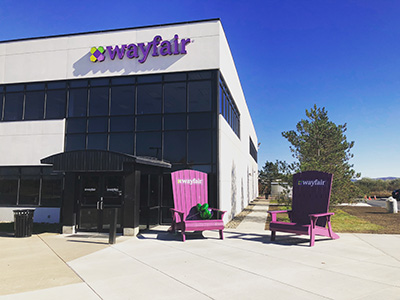
BIG FLATS — Wayfair — a Boston–based online retailer of furniture, home furnishings, and décor items — formally opened its new operations center in Big Flats in Chemung County with a ribbon-cutting event on Oct. 30.
The 63,000-square-foot facility is a customer service and sales office and it first opened in July, according to Griffin Carroll, a company spokesperson.
“Since opening in July, our Big Flats office has seen faster growth than any of our other sales and service offices around the country, already at 250 employees,” Carroll tells CNYBJ in an email. “With previously announced plans to bring 450 jobs to the area, we are already more than halfway there.”
At the ribbon-cutting event, Wayfair co-founder Steve Conine spoke about his roots in the area, as his parents grew up in Prattsburgh. Also, he and company co-founder Niraj Shah are graduates of Cornell University in Ithaca. The two men started the business in their senior year at Cornell, becoming CSN Stores in 2002.
The business has grown to employ nearly 10,000 people around the globe. Wayfair says it offers more than 10 million products and has 12.8 million active customers. The company generated
$5.7 billion in net revenue for the one-year fiscal period ending June 30, 2018.
In addition to Big Flats, Wayfair has customer service and sales offices in Boston, Maine, Texas, Utah, and Ireland.
5 Issues You Face When Inheriting a House
The death of legendary singer-songwriter Aretha Franklin in August initially posed a quandary for her four surviving sons. Because she didn’t leave a will, her $80 million fortune — including Franklin’s numerous real-estate holdings — likely will take longer to divide, and the process could become complicated. Although Franklin’s sons appointed her niece to execute the
Become a Central New York Business Journal subscriber and get immediate access to all of our subscriber-only content and much more.

Click here to purchase a paywall bypass link for this article.
The death of legendary singer-songwriter Aretha Franklin in August initially posed a quandary for her four surviving sons. Because she didn’t leave a will, her $80 million fortune — including Franklin’s numerous real-estate holdings — likely will take longer to divide, and the process could become complicated.
Although Franklin’s sons appointed her niece to execute the estate, the situation brings to mind how family feuds and other problems can potentially result when inheritance portions aren’t clearly defined, or when an executor may be in over his head. Many newfound executors can face uncertainty and feel stress when inheriting a property after the death of a loved one.
Inheriting a property can come as a shock and may feel like an insurmountable obstacle. Especially in the wake of a family tragedy or death, being the executor of an estate can be challenging. And usually the biggest asset in an estate — and the most difficult to resolve — is a house.
Following is a list of important decisions the executor might face when a house is part of an inheritance:
To keep, rent, or sell
Competing interests among siblings can make the right decision difficult. Caught in the middle, the executor has to ask the heirs to keep their emotions under control and put the rational facts on the table. Selling is often the best decision if medical bills, tax issues, or other reasons require cashing out. And it produces a specific amount that can be divided equally.
Can you manage a property investment?
When considering keeping the property in the family, the executor needs to be objective about the beneficiaries’ dependability. Would you choose the other beneficiaries to be your partners in any long-term investment? Could they get divorced, go bankrupt, or bring other entanglements? And if you decide to rent the property, there are issues to consider such as the local market for rentals and your ability to maintain the property.
Establishing value of the property
If one heir or beneficiary wants to buy the house, the estate must determine the market value and get a fair price for the heirs and beneficiaries. One way is to get two appraisals, and to look at estimates from a real-estate website such as Zillow. Alternatively, the executor can put the property on the market with the expressed provision that one of the heirs has the right of first refusal to match the highest offer.
Repair and renovate?
The executor must make sure the house is maintained in good condition, necessary repairs are carried out, and that it’s kept insured. “An executor can be personally liable for failure to maintain a property that results in losses for the heirs,” Lehr says. “But how much work is worthwhile before putting a home on the market? That’s a big question that depends on the property and circumstances.”
Furnished or unfurnished?
It’s not unusual for an inherited home to be filled with a 30-year accumulation of stuff. In most cases, when the property goes on the market, thinning out the furnishings will help it show better. Nine out of 10 buyers first see the home in online photographs.
Being an executor is a high-responsibility, time-consuming, and often thankless job that people often take on while grieving. It’s up to the executor to assess not only the physical assets of an estate, but also the people and emotions involved.
Alex Lehr is author of “The Unexpected Sale: Guidance For The Executor/Administrator Of An Estate.” Involved in the real-estate business for three decades, Lehr operates a concierge-type real estate firm — Lehr Real Estate in California — with an increased focus on selling estate and trust properties.

MVHS continues planning for downtown-hospital project, exterior renderings unveiled
UTICA — Mohawk Valley Health System (MVHS) has unveiled what its downtown hospital project will look like when completed near the end of 2022. MVHS on Oct. 26 revealed the exterior design of its new, 373-bed, 672,000-square-foot hospital in downtown Utica. The presentation included a timeline that indicates MVHS hopes to begin construction in September
Become a Central New York Business Journal subscriber and get immediate access to all of our subscriber-only content and much more.
Click here to purchase a paywall bypass link for this article.
UTICA — Mohawk Valley Health System (MVHS) has unveiled what its downtown hospital project will look like when completed near the end of 2022.
MVHS on Oct. 26 revealed the exterior design of its new, 373-bed, 672,000-square-foot hospital in downtown Utica. The presentation included a timeline that indicates MVHS hopes to begin construction in September 2019.
New York City–based NBBJ has been leading the design process for the new facility since May 2017.
Together with MVHS leaders, they have sought feedback and guidance from more than 2,000 people throughout the community, MVHS said in a news release. They wanted feedback on the design of the new hospital “and its integration with the surrounding downtown area.” The group also met with departments within the health system.
“We are excited to expand upon the vision of this new, integrated health-care campus by sharing this tangible example of how it fits in with the community,” Scott Perra, president and CEO of MVHS, said in the release. “We know that many members of our internal and external communities have been looking forward to the day when the design of the building would be revealed. We are designing the hospital from the inside out, first looking at the processes to care for patients and then designing the space to provide the care. Once the hospital’s layout was finalized, we were able to begin working on the aesthetics of the outside which included following the guiding principles established from the many community meetings held over the past year and a half. This feedback has allowed us to create a stunning design that will fit in beautifully in downtown Utica.”
Ryan Hullinger, partner with NBBJ, called the “guiding principles” from the community meetings “extremely important” in the design process for the new hospital.
“The principals related to the design and look of the building asked us to consider the historic nature of the buildings around the new hospital as well as both old and new aspects of Utica’s architecture. Using that feedback, our goal for the design was to create an exterior expression that respects the rich history of Utica and complements the surrounding neighborhoods, while projecting a sense of clinical excellence through rigorous detailing and craftsmanship. This design works to embody both Utica’s past and its future,” Hullinger said.
NBBJ is also working with MVHS providers and staff on the design and layout of the various rooms in the new hospital. Crews have built mock-rooms at the MVHS New Hartford Medical Office — Crossroads location which will help to test the designs and layouts to make sure they work “flawlessly in real-life situations.”

SUNY Poly’s Li to use $75K NSF grant for research on construction steel
UTICA — A professor at SUNY Polytechnic Institute (SUNY Poly) will use a $75,000 grant for ongoing work on advanced high-strength steels. The grant that the National Science Foundation awarded to Zhanjie Li is part of an overall award of $400,000 with collaborating researchers at Johns Hopkins University in Baltimore, Maryland, SUNY said in a
Become a Central New York Business Journal subscriber and get immediate access to all of our subscriber-only content and much more.

Click here to purchase a paywall bypass link for this article.
UTICA — A professor at SUNY Polytechnic Institute (SUNY Poly) will use a $75,000 grant for ongoing work on advanced high-strength steels.
The grant that the National Science Foundation awarded to Zhanjie Li is part of an overall award of $400,000 with collaborating researchers at Johns Hopkins University in Baltimore, Maryland, SUNY said in a news release.
The research aims to provide buildings with “improved sustainability” over time as well as “structural resilience,” while maintaining a “cost-effective approach,” per the release.
Such an approach would involve incorporating next-generation, advanced high-strength steels (AHSS) material into construction, and more specifically, as part of cold-formed steel framed buildings, the school added.
“I’m excited for the opportunity to perform this work along with the team from Hopkins. Society’s needs for quickly constructed, highly-efficient, cost-effective, sustainable, and resilient buildings are vast,” Li said. “AHSS with strengths as much as five times higher than conventional mild steels used in current constructions have great potentials in building structures.”
The automotive industry has benefitted from AHSS via “increased efficiency” for automobiles as a result of reduced mass and “better performance.”
Leveraging the same AHSS sheet steels already developed for automotive applications, Li’s research can provide an “accelerated path for society to benefit from these improvements.”
The work in this field provides a plan to “overcome the scientific barriers” in the application of next-generation steels to cold-formed, steel-building construction and “begin the optimization” of the uses of these steels.
“This research effort, while expanding the state of the art in steel structural design, will also provide our undergraduate students with the opportunity to work with Dr. Li as research assistants and also allow Dr. Li to provide students in his classes with the tools required for designing the next generation of steel structures,” Andrew Wolfe, interim dean of the College of Engineering at SUNY Poly, said in the release.
The NSF funding will enable the researchers to further their work developing and improving upon the use of these “enhanced” steels in the construction of structures as prototypes. Such prototypes could help to “maximize the benefit” of adopting AHSS in a number of construction-focused applications, SUNY Poly said.

State completes $1.9M intersection modernization project in Volney
VOLNEY — The New York State Department of Transportation (DOT) recently announced the completion of a $1.9 million intersection modernization project in the town of Volney in Oswego County. The project includes a new restricted crossing U-Turn — also called a legal U-Turn — at the intersection of State Route 481 and County Route 45
Become a Central New York Business Journal subscriber and get immediate access to all of our subscriber-only content and much more.

Click here to purchase a paywall bypass link for this article.
VOLNEY — The New York State Department of Transportation (DOT) recently announced the completion of a $1.9 million intersection modernization project in the town of Volney in Oswego County.
The project includes a new restricted crossing U-Turn — also called a legal U-Turn — at the intersection of State Route 481 and County Route 45 that the DOT says is the first of its kind in New York state.
Under the new design, vehicles traveling on Route 45 that are looking to turn left onto the busy, high-speed Route 481 must first turn right before proceeding to a legal U-Turn at a designated location that will allow them to more safely enter 481 in the direction they want to go, the agency said.
Before the redesign, crossing the six lanes of Route 481 was “difficult because of limited sight distance, high speeds and a wide center median,” the release stated. The new intersection features two U-turns newly constructed in the median of Route 481 — one just north of the intersection with Route 45 and one just south of the intersection.
All traffic on Route 45 is now required to turn right at the intersection with Route 481 with the following options, the DOT noted:
• Traffic heading east on Route 45 will be directed to turn right onto Route 481 southbound. Motorists can then proceed southbound on Route 481 or use the U-turn to access Route 481 northbound. They can then head north or take a right turn onto Route 45 to continue heading east.
• Traffic heading west on Route 45 will be directed to turn right onto Route 481 northbound. Drivers can then continue northbound or use the U-turn to access Route 481 southbound. They can then head south or take a right turn onto Route 45 to continue heading west.
“The change significantly reduces the risk of right-angle crashes at the intersection,” the state DOT contended in its release.
“The new configuration of this intersection on 481 addresses long-time safety concerns,” Assemblyman Will Barclay (R–120th Assembly District) said in the department’s release. “I am glad the DOT made this section of 481 in Volney a priority this year and happy to see it is completed before winter. The work will be a benefit to motorists for years to come.”
The DOT added that the intersection improvements will particularly benefit The Manor at Seneca Hill, a nearby nursing home and assisted-living facility, as most visitors and staff use the intersection of Route 481 and Route 45.
The Volney project also complements “Central NY Rising,” the region’s economic-development blueprint, the department said.

Aldi reopens DeWitt store after adding space in remodel
DeWITT — The Aldi store in DeWitt reopened to shoppers on Oct. 24, following a remodeling project that started back in September and expanded its retail space. The store, located at 6633 Manlius Center Road in DeWitt, closed on Sept. 11, Aaron Sumida, VP of Aldi’s Tully division, said in an email response to a
Become a Central New York Business Journal subscriber and get immediate access to all of our subscriber-only content and much more.
Click here to purchase a paywall bypass link for this article.
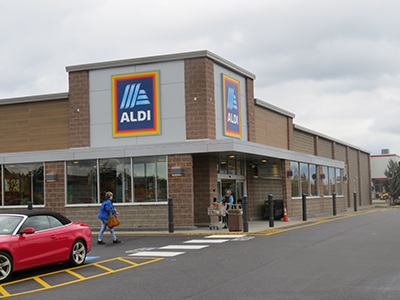
DeWITT — The Aldi store in DeWitt reopened to shoppers on Oct. 24, following a remodeling project that started back in September and expanded its retail space.
The store, located at 6633 Manlius Center Road in DeWitt, closed on Sept. 11, Aaron Sumida, VP of Aldi’s Tully division, said in an email response to a CNYBJ inquiry.
The project added about 2,000 square feet of retail space to the store that previously measured about 10,000 square feet, he said.
The remodeling work is part of a
$1.9 billion initiative to remodel and expand more than 1,300 Aldi stores nationwide by the end of 2020, the company said in a news release.
Citing its status as a privately held company, Sumida declined to disclose the company’s cost to remodel the DeWitt store or the contractor that handled the work.
The updated DeWitt store features open ceilings, natural lighting, and “environmentally friendly” building materials.
It also provides shoppers a “convenient, easy-to-navigate layout focused on what people love most: fresh food, produce, dairy and baked goods,” Sumida contended in the email response.
In operation in the grocery-retailing industry since 1976, Aldi operates more than 1,800 U.S. stores in 35 states. Aldi Inc. is headquartered in Batavia, Illinois, according to its website.

Madison County Courthouse $18M renovation project hits halfway point
WAMPSVILLE — Construction crews recently reached the halfway point on an $18.4 million renovation project at the Madison County Courthouse in Wampsville. The project is focusing on ADA accessibility, efficiency, increased security, and a “much needed addition,” according to a news release from the Madison County government. The courthouse was built in 1910 and has
Become a Central New York Business Journal subscriber and get immediate access to all of our subscriber-only content and much more.
Click here to purchase a paywall bypass link for this article.
WAMPSVILLE — Construction crews recently reached the halfway point on an $18.4 million renovation project at the Madison County Courthouse in Wampsville.
The project is focusing on ADA accessibility, efficiency, increased security, and a “much needed addition,” according to a news release from the Madison County government. The courthouse was built in 1910 and has had few upgrades since then.
On Oct. 8, the county held a “Topping Out Ceremony” at the courthouse. Members of the Madison County Board of Supervisors, county judges, and the contractors and staff who worked on the upgrades to the Madison County Courthouse gathered to watch as ironworkers installed the last piece of structural steel.
The steel beam was put in place with an American flag and was signed by many members of the Madison County staff and the construction crew, the county said.
Upgrades to the Madison County Courthouse began on Oct. 8, 2017, and with the installation of this last steel beam the project is more than 50 percent complete, the release stated. The project is expected to wrap up in May 2019.
Immediately following the installation of the last steel beam, Madison County hosted a luncheon to show its “appreciation for the hard work by the entire construction crew.”
John Regan, director of Madison County Public Facilities, thanked the people who have kept the project on budget and on time. They include Laird Updyke and Donald Banks, project managers from LeChase Construction; Jessica Kruse and Mark Kukuvka from LaBella Architects; Roger Bramer, project manager, and Jim Brockway, superintendent, from Murnane General Contractor; Michael Potrzeba. project manager, and Mark Clark, superintendent, from HJ Brandles Plumbing; Sheila Rhodes, project manager, and Dan Klingerman, superintendent, from King & King Mechanical, Inc.; Chris Randall, project manager, and Paul Gubbins, superintendent, from Ridley Electric; and Homer Ironworkers.
“The people of Madison County should be proud of what is being accomplished here,” Laird Updyke, senior project manager at LeChase Construction, said in the release. “This historic courthouse building is being preserved, improved and made more accessible…”

Work begins on $13M housing project in Cicero
CICERO — Construction work has started on a $12.8 million affordable and supportive housing development at 8700 Knowledge Lane in the town of Cicero. Developed by Webster, New York–based CDS Housing, Spring Village will provide 50 energy-efficient apartments for adults 55 and over, New York State Homes and Community Renewal (HCR) announced in an Oct.
Become a Central New York Business Journal subscriber and get immediate access to all of our subscriber-only content and much more.
Click here to purchase a paywall bypass link for this article.
CICERO — Construction work has started on a $12.8 million affordable and supportive housing development at 8700 Knowledge Lane in the town of Cicero.
Developed by Webster, New York–based CDS Housing, Spring Village will provide 50 energy-efficient apartments for adults 55 and over, New York State Homes and Community Renewal (HCR) announced in an Oct. 26 news release.
The project will include 10 apartments for individuals with developmental or intellectual disabilities.
Rochester–based Christa Construction, LLC, the general contractor on the project, is building the housing development on formerly vacant land at 8700 Knowledge Lane in Cicero. Crews will build the facility to meet the silver certification level of the U.S. Green Building Council LEED rating system, HCR said.
Christa Construction will work with between 10 and 15 subcontractors, Dave Mattucci, the firm’s VP, told CNYBJ in an interview after the ceremony.
They include DeWitt–based JK Tobin Construction, which is handling the site work; DeWitt–based Woodcock & Armani, which is providing the heating, ventilation, air conditioning, plumbing, and fire protection work; and Raulli & Sons of Syracuse, which is doing the steel work on the project.
The contractor should finish the project in October 2019, Mark Curletta, COO of Webster–based CDS Life Transitions, who also leads CDS Housing, told CNYBJ after the groundbreaking ceremony. CDS Life Transitions is the parent company of CDS Housing.
“Our construction company will work through the winter,” Curletta noted.
It’s been about 10 years since crews have built affordable housing — “senior specific or otherwise” — in this area in Cicero, Sankar Sewnauth, president and CEO of CDS Life Transitions, said in remarks at the groundbreaking.
“There’s a great need to serve the increasingly aging population in Cicero and Onondaga County and the strong demand for senior housing that is both affordable and handicapped accessible,” said Sewnauth.
Funding
The state awarded the funding in May, Lenny Skrill, upstate development director at HCR, said in his remarks at the ceremony.
“If we make an award in May, it’s going to be in the ground by fall,” he added.
HCR’s funding for the $12.8 million project includes federal low-income housing tax credits that will generate $7.8 million in equity and an additional $3.4 million in subsidy.
The New York State Office for People With Developmental Disabilities (OPWDD) is providing more than $1.2 million in project financing, along with ongoing rental subsidies for the 10 designated units for individuals with intellectual and developmental disabilities.
“We also work with NYSERDA to basically try to create a green and energy-efficient property, and they contributed $50,000 to this project,” Skrill added in his remarks.
About the project
The two-story building includes 48 one-bedroom apartments and 2 two-bedroom apartments. The 10 supportive apartments will receive project-based rental assistance from OPWDD.
Cayuga Centers of Auburn will provide supportive services, per the release.
Spring Village amenities will include a community room, laundry rooms, sitting areas, and a computer room.
Stay up-to-date on the companies, people and issues that impact businesses in Syracuse, Central New York and beyond.