Stay up-to-date on the companies, people and issues that impact businesses in Syracuse, Central New York and beyond.

B&L expands Watertown office, expects to add staff
WATERTOWN — Responding to a “steady increase” in the demand for its services, Barton & Loguidice, D.P.C. (B&L) says it has expanded its Watertown office. The expansion will accommodate planned staff growth from 12 to 24 full-time positions over the next few years, according to John Condino, senior project manager at B&L. The Salina–based engineering […]
Become a Central New York Business Journal subscriber and get immediate access to all of our subscriber-only content and much more.
Click here to purchase a paywall bypass link for this article.
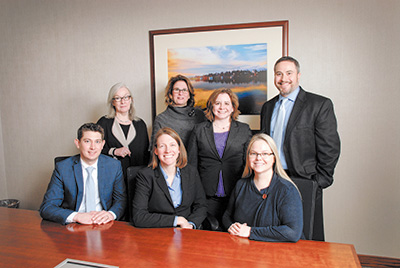
WATERTOWN — Responding to a “steady increase” in the demand for its services, Barton & Loguidice, D.P.C. (B&L) says it has expanded its Watertown office.
The expansion will accommodate planned staff growth from 12 to 24 full-time positions over the next few years, according to John Condino, senior project manager at B&L.
The Salina–based engineering firm now occupies the entire ground floor of the former HSBC building at 120 Washington St. B&L had been operating in a 2,000-square-foot space on the building’s second floor since opening the office in 2012, Jill Richmond, marketing communications manager at the firm, says in an email response to a CNYBJ inquiry.
In the expansion, B&L has moved to the building’s first floor, occupying 5,000 square feet, she adds.
The building is now known as the Barton & Loguidice Building. It’s located just off the public square in downtown Watertown.
The name became official as the firm expanded into the newly renovated space on Feb. 21. The signage on the front of the building made its debut on Jan. 2. B&L’s name on the building is a term in its new 10-year lease for operating space in the building, Richmond says.
Barton & Loguidice is an engineering, planning, environmental, and landscape-architecture firm. B&L’s headquarters is located at 443 Electronics Parkway in Salina. It has 250 employees.
The firm opened the Watertown office in 2012, but it has done work in the area for more than 50 years, Condino said in the firm’s release.
“The best way to become a part of a community is to invest heavily in it, as we’ve done in Watertown by joining the downtown revitalization initiative with our newly expanded offices. This commitment has been a key factor in our success to recruit what we consider to be some of the best and brightest engineering talent in the North Country. Many of our professionals work in the same communities they grew up in and are invested in giving back and continuing to improve the area,” said Condino.
Its new space includes ergonomically designed and “comfortable” work areas, two large, multi-media conference rooms for project collaboration, informal meeting areas, and “expansive” floor-to-ceiling glass throughout the space.
Barton & Loguidice has developed a “substantial” client base in the Watertown area over the years for transportation, solid waste, along with water and wastewater-engineering services, per its release.
More recently, B&L says it has provided environmental, structural, facilities and landscape-architecture services in the area as well.
The Facts about Grants for Small Businesses
As advisors and community economic-development specialists, we are often approached by individuals who are looking to start a business or expand an existing one with one common question: “Are there any grants available for my business”? There is a simple and a complex answer to this question. The simple answer is yes there are some grants
Become a Central New York Business Journal subscriber and get immediate access to all of our subscriber-only content and much more.
Click here to purchase a paywall bypass link for this article.
As advisors and community economic-development specialists, we are often approached by individuals who are looking to start a business or expand an existing one with one common question: “Are there any grants available for my business”? There is a simple and a complex answer to this question. The simple answer is yes there are some grants available, and the complex answer is that the grants offered may not apply to your business.
Grants are difficult to obtain and can have a variety of conditions attached. Many are not available to startup businesses. People also have a misconception that funds are available specifically for women and minority owned businesses. Also, the retail industry rarely has any grant opportunities.
Grants exist to help businesses that will have impact on the community as a whole. Impact on the community may come in the form of job creation, value added (agriculture benefits), or more revenue brought to the area in general — perhaps through a sector such as tourism. Now saying, “Well I will be creating a job for myself” doesn’t count or saying, “I will be bringing revenue in for my family” doesn’t count. Generally, money used for grants are public tax dollars; the state wants to see how your business, with the assistance of a grant, will impact as many residents as possible.
Yes, it is true you can find grant opportunities in some limited circumstances, such as when jobs are created. But you can’t rely on grants as a primary means to start or expand a business. Rather, in limited situations, grants can be pursued to help a business try something new or pursue a specific opportunity.
Business owners should keep in mind that grants are very competitive. Grants have deliverables and reporting requirements; they are not free, easy money. Some grants are reimbursable, which means you pay for everything first then submit receipts to be reimbursed.
Please, also understand you don’t do a project then apply for the grant. You must apply first, be approved, then do the work (pay for the project), and once the project stipulations are complete, you may receive the money. It’s always advisable to understand exactly what a grant will and will not fund, and confirm whether you are eligible prior to spending time preparing a grant proposal. The best way to do this is to look at what has been funded in the past and reach out directly to the funder.
The most common opportunities are through the Regional Economic Development Councils (REDCs). See regionalcouncils.ny.gov for more information.
If a business is planning to expand and create jobs, grants can be pursued for up to 20 percent of the startup or expansion costs. It should be noted that these grants are not paid to the awardee until the job creation (as committed in the grant application) is documented. This means you must spend the money first on the project, hire employees, and then get reimbursed. Jobs for family members of the business do not count toward overall job creation.
Small businesses in the agriculture sector may be eligible for a variety of grants related to value-added products, investments in conservation and clean-energy initiatives, and a variety of other programs. The Cornell Small Farms program is a great resource and information is available at smallfarms.cornell.edu/resources/funding/grants.
Adding energy efficiency measures to your business is another way to potentially access grants. The available programs change frequently and information is available at nyserda.ny.gov.
In general, unless your business includes a unique feature with a public benefit, any additional opportunities for grants will be on a limited and competitive basis. Please remember grants are not just free money for you to pursue your dream. Grants are meant for businesses that will be making a profound impact on the community. Check with your local Small Business Development Center or local economic-development agencies for any opportunities that might be specific to your community or geographic region. Keep in mind that these are rare.
Lauren Lines is executive director of the Cazenovia Area Community Development Association and Melissa Zomro Davis is an advanced NYS-certified small business advisor at the Small Business Development Center at Onondaga Community College.
How to Mess Up a Company’s Sales & How to Stop Doing It
When salespeople can’t do their job Thousands of salespeople work in conditions that are stacked against their success. Even though it’s 2019, the belief persists that “nothing happens until someone sells something.” Repeated so often, no one challenges it. Yet, those six words help explain why salespeople are given “special treatment” by management and barely
Become a Central New York Business Journal subscriber and get immediate access to all of our subscriber-only content and much more.
Click here to purchase a paywall bypass link for this article.
When salespeople can’t do their job
Thousands of salespeople work in conditions that are stacked against their success. Even though it’s 2019, the belief persists that “nothing happens until someone sells something.” Repeated so often, no one challenges it.
Yet, those six words help explain why salespeople are given “special treatment” by management and barely “tolerated” by others. Salespeople are frequently viewed both as separate and more-than-equal. When co-workers complain about the sales department, someone says, “Hey, they bring us the business, so suck it up and smile.” This dismal view has long passed its expiration date. Even so, it’s disturbing since so much depends on the successful performance of the salesforce.
Closely related is another problem and that’s marketing. Unfortunately, it’s still viewed as the handmaiden of sales in many companies, even though it long ago ran out of gas. In this view, marketing does what it’s told to do. When this happens, marketing is rudderless — all tactics and no strategy. Marketing departments become “do this” dumping grounds, throwing one-thing-after-another against the wall hoping something sticks.
Unfortunately, marketing’s unique mission is often misunderstood or disregarded. Its critical task of creating customers, those who want to do business with a brand, gets ignored. Or, as Seth Godin, the author of “This is Marketing,” says, “Marketers don’t use consumers to solve their company’s problems; they use marketing to solve other people’s problems.” Unfortunately, marketers don’t have a chance to do it.
If marketing is unable to do its job, salespeople can’t do their job of closing sales. To put it another way, when marketing comes down with the flu, the sales force calls in sick.
Letting marketing and sales do their work
Here are three principles that can help anyone in marketing and sales do a better job and be more successful.
1. Get over the idea that “nothing happens until somebody sells something.”
Forty years ago, those in sales had a point. Salespeople were the link between companies and their customers. Looking back, it’s no exaggeration to say customers were their captives. They depended on a salesperson for product or services information, troubleshooting, and support.
The salesperson had a dual role — educating customers and closing sales. This may help explain why customers were often far more welcoming to salespeople than they are today. Salespeople were not only needed — they were essential.
Today, the sales role has been upended. When it comes to accurate sales information, customers are often better informed before they ever see a salesperson. That’s not all. Sales are now so transaction-driven the salesperson’s role continues to erode. On top of this, the task of identifying and accessing prospects is so frustrating, it borders on the impossible.
All this points to a marketing-driven environment quite different from times past. It’s one in which nothing happens until someone decides they want to do business with a company or a brand. Then, the salesperson may arrive to close the deal.
2. Have a clear understanding of why customers should do business with you. Caution: Don’t blurt out the usual trite and self-serving nonsense: “Our people really care,” “We give great service,” “We’ve been in business since 1979.” It’s all hype. End of discussion.
Take it seriously because a lot is at stake. What separates you from the competition that makes a difference to your customers? What is your value statement; what your brand stands for? What do you bring to the customer’s buying experience that creates credibility and confidence? Unless your brand makes sense to customers, there is no sale.
Jeff Short, VP of sales for K&W Tire, a Cooper Tire distributor, tells of a meeting with a Connecticut tire dealer. Participating in the meeting was a counter salesperson who asked Jeff, “What does Cooper Tire stand for?”
Somewhat caught off guard, he replied. “Tier-one quality at a tier-two price … more tread patterns and designs than any other manufacturer … an American-owned company.” Knowing that she liked selling Nokian tires, Jeff asked her what Nokian stood for. She said, “Safety. They are the safest tires you can put on a car.”
As Jeff tells it, “Right then I knew I was done. She won that round hands down. She was more perceptive than all the other dealers I’d run into on this important point.” And then he adds, “Someone needs to wake up as to what resonates with customers. I’m so sick of hearing about rebates, road hazard warranties, and price.” Jeff isn’t alone. He has lots of friends. We call them customers.
Got it? Now, why should customers do business with you?
3. Make a commitment to execute perfectly.
“We’ve got to get this out tomorrow.” “They need it now.” “I know, but it’s a rush.” Such words do more damage to sales than just about anything else.
Of course, there are exceptions. But, far too often, the exceptions take over and become the rule. “Just get it done” is a mindset, an attitude that permeates too many companies —it’s the new normal.
The number-one enemy in all this is cutting corners. It sabotages the best practices and the best intentions. When everything is rush, rush, rush, cutting corners is inevitable. There is never enough time to execute perfectly. We settle for “good enough” and it isn’t.
Cutting corners gives someone else a competitive advantage. Here are examples of what happens:
• A proposal is due tomorrow. “Just repurpose something you used last week.”
• The presentation date gets pushed up. “Don’t worry. Go ahead and wing it.”
• There’s no time for having the needed planning meetings. “Just squeeze it to one meeting.”
• The intel isn’t complete. “Run with what we’ve got.”
Here’s the point. Cutting corners puts salespeople at a major disadvantage. Tolerating, or permitting it to occur, taints their reputation, impairs performance and, ultimately, costs them sales.
If you want to be increasingly successful, then make a commitment to execute perfectly.
Messing up a company’s sales is easy and it doesn’t take a lot of time or effort. It occurs without thinking.
John Graham of GrahamComm is a marketing and sales strategy consultant and business writer. He is creator of “Magnet Marketing,” and publishes a free monthly eBulletin, “No Nonsense Marketing & Sales Ideas.” Contact him at jgraham@grahamcomm.com or johnrgraham.com
New Syracuse-to-Denver Flights will Support Business Competitiveness
[CenterState CEO members have] told us that convenient, affordable air service is vital to [their] business’ competitiveness, and we recognize it as a key strategic priority for the region. Surveys completed by our members specifically showed that Denver, Colorado is one of our most-traveled business routes without daily, non-stop service. Therefore, we are excited to
Become a Central New York Business Journal subscriber and get immediate access to all of our subscriber-only content and much more.
Click here to purchase a paywall bypass link for this article.
[CenterState CEO members have] told us that convenient, affordable air service is vital to [their] business’ competitiveness, and we recognize it as a key strategic priority for the region. Surveys completed by our members specifically showed that Denver, Colorado is one of our most-traveled business routes without daily, non-stop service. Therefore, we are excited to announce, along with partners from the City of Syracuse and the Syracuse Regional Airport Authority that United Airlines is adding new, non-stop flights between Denver and Syracuse, starting June 6.
This announcement is the result of a significant and targeted effort to bring this service to Syracuse, which will directly benefit some of Central New York’s key industries with strong ties to Colorado, including aerospace, defense, engineering, and higher education. Flights will depart Denver at 8:00 a.m. and arrive in Syracuse at 1:45 p.m.; and depart Syracuse at 2:30 p.m. and arrive in Denver at 4:30 p.m.
This new service makes Syracuse the only upstate city with daily United flights to-and-from Denver, and the first mid-sized market in the Northeast to feature this service on a year-round basis.
United operates more than 400 daily flights at its Denver hub to nearly 150 airports in the U.S. and 13 international destinations. Additionally, these flights will create additional convenient connections to smaller destinations in the Mountain West and West Coast regions. This announcement also compliments the significant progress made by major network carriers, including United and Delta Air Lines, as well as discount airlines, such as Frontier and Allegiant.
If you would like to engage with our air-service development efforts or have questions about [this new] announcement, please contact Kevin Schwab, VP of air service development at: kschwab@centerstateceo.com or (315) 470-1944.
Robert M. (Rob) Simpson is president and CEO of CenterState CEO, the primary economic-development organization for Central New York. This viewpoint is drawn and edited from the “CEO Focus” email newsletter that the organization sent to members on Feb. 14.
Minimum-Wage Increase Hurts Those it Means to Help
Small businesses in New York are facing mounting pressure to comply with the state’s escalating minimum wage. Nearly every facet of the economy has felt the bruising impact of artificially raising the rates that have left already overtaxed business owners out to dry. Making matters worse, the full impact of the law has not even occurred
Become a Central New York Business Journal subscriber and get immediate access to all of our subscriber-only content and much more.
Click here to purchase a paywall bypass link for this article.
Small businesses in New York are facing mounting pressure to comply with the state’s escalating minimum wage. Nearly every facet of the economy has felt the bruising impact of artificially raising the rates that have left already overtaxed business owners out to dry. Making matters worse, the full impact of the law has not even occurred yet, with wage increases on the books scheduled through 2021.
The food service industry is a prime example of the damage these incessant minimum-wage increases can have on both workers and employers. The latest increase has some New York City businesses paying $15 an hour — with Long Island, Westchester, and the rest of the state not far behind.
The verdict is in; the wage hikes are leading to layoffs, price increase,s and service cutbacks. Not only do the restaurant owners have to raise prices to keep up with the law, they are also paying more for their goods and ingredients as farms and manufacturers struggle with the same dilemma. It’s a vicious cycle borne from a misguided sentiment that fails miserably in practice.
One of the greatest sins in policymaking is forgetting laws don’t exist in a vacuum. Financially strong small businesses, with a robust workforce, adequate service, and solid bottom line are good for everyone. Increasing the minimum wage for a worker, whose hours are cut back as a result, or worse, eliminated entirely, serves no one. This is the definition of reckless, misguided policy designed as respite.
There is a better way to lift everyone
The Assembly Minority Conference has advocated for a number of solutions to aid struggling lower-class employees. Among the proposals is a boost in the earned income tax credit (A.4177, Kolb), which has remained stagnant even as the minimum wage has continued to grow. We have also advocated for the implementation of a training wage (A.988, Kolb), set below the minimum wage, which would allow less-experienced employees to gain needed work skills without crippling businesses in the process.
Along those lines, the Learning for Work Program (A.4255, Ra) would combine academic work with on-the-job training, paired with a tax incentive for participating businesses. This would give workers the skills necessary to earn higher wages over their career and help struggling business owners by providing a tax break.
The New York Legislature can right these wrongs by reversing course, stunting the minimum-wage hikes, and instituting common-sense policies that achieve the same goals without harming the backbone of New York’s economy along the way. Using a sledgehammer to crack a nut usually does more harm than good. This is one such case.
Brian M. Kolb (R,I,C–Canandaigua), a former small-business owner, is the New York Assembly Minority Leader and represents the 131st Assembly District, which encompasses all of Ontario County and parts of Seneca County. Contact him at kolbb@nyassembly.gov
KeyBank has promoted KATHLEEN A. SLIFKA to VP, payments advisor in enterprise commercial payments. She has been with KeyBank since 1993, where she’s served in many roles including area retail leader, district operations manager and branch manager. In her new role, Slifka will be serving the entire Central New York market for small business treasury
Become a Central New York Business Journal subscriber and get immediate access to all of our subscriber-only content and much more.
Click here to purchase a paywall bypass link for this article.
KeyBank has promoted KATHLEEN A. SLIFKA to VP, payments advisor in enterprise commercial payments. She has been with KeyBank since 1993, where she’s served in many roles including area retail leader, district operations manager and branch manager. In her new role, Slifka will be serving the entire Central New York market for small business treasury services. KeyBank has also promoted
ADELIA MOSLEY to branch manager, overseeing its Southside and Valley Plaza branches in Syracuse. Mosley has 30 years of banking experience. She rejoined KeyBank in 2017, after working as a personal banker at M&T Bank. Mosley had a previous stint with Key from 1987-2013 as a teller and client service manager/operations manager.
Tompkins County Area Development (TCAD) has appointed CHUCK SCHWERIN as its new managing director of business services. He will be responsible for business retention, expansion, and attraction initiatives, offering direct incentives, and developing relationships with business leaders, entrepreneurs, and a variety of stakeholders. He will provide direct assistance to retain, grow, and attract new business
Become a Central New York Business Journal subscriber and get immediate access to all of our subscriber-only content and much more.
Click here to purchase a paywall bypass link for this article.
Tompkins County Area Development (TCAD) has appointed CHUCK SCHWERIN as its new managing director of business services. He will be responsible for business retention, expansion, and attraction initiatives, offering direct incentives, and developing relationships with business leaders, entrepreneurs, and a variety of stakeholders. He will provide direct assistance to retain, grow, and attract new business and industry in Tompkins County. The nonprofit TCAD, founded in 1964, is Tompkins County’s economic-development organization. Before joining TCAD, Schwerin was a certified business advisor for the New York Small Business Development Center (SBDC) at Binghamton University for three years, where he specialized in advising tech-based companies. There, he was also the New York State coordinator for FAST (Federal and State Technology), a U.S. Small Business Administration (SBA)-funded program that helps states enhance the use of Small Business Innovation Research grants. Schwerin is a co-founder (and current board member) of a biotech spin-off from Binghamton University. He holds three patents on geographic information technology and received his master’s degree in urban policy and planning from Tufts University, TCAD said. He was an adjunct professor, teaching entrepreneurship, in Binghamton University’s School of Management.
The Hobart and William Smith Colleges board of trustees has named JOYCE JACOBSEN as the schools’ first woman president. Jacobsen is the 29th president of Hobart College and the 18th president of William Smith College. She begins her presidency on July 1. Jacobsen currently serves as provost and senior VP for academic affairs at Wesleyan
Become a Central New York Business Journal subscriber and get immediate access to all of our subscriber-only content and much more.
Click here to purchase a paywall bypass link for this article.
The Hobart and William Smith Colleges board of trustees has named JOYCE JACOBSEN as the schools’ first woman president. Jacobsen is the 29th president of Hobart College and the 18th president of William Smith College. She begins her presidency on July 1. Jacobsen currently serves as provost and senior VP for academic affairs at Wesleyan University in Middletown, Connecticut. Jacobsen will succeed Patrick McGuire, who has been serving as interim president following the resignation of former president Gregory Vincent. Hobart and William Smith Colleges describe Jacobsen as a “renowned scholar of economics, an award-winning teacher and an experienced administrator.” She has degrees from Harvard University, the London School of Economics, and Stanford University, and more than three decades of experience taking on “increasingly complex roles” in higher education.
Mohawk Valley Community College
SALINA BILLINS was appointed by Mohawk Valley Community College (MVCC) to the grant-funded position of GEAR UP coordinator and will manage programming and support services for the GEAR UP program. Billins has been with MVCC since 2012 in several capacities, including GEAR UP academic specialist, adjunct instructor, and completion coach. She previously worked at Mohawk
Become a Central New York Business Journal subscriber and get immediate access to all of our subscriber-only content and much more.
Click here to purchase a paywall bypass link for this article.
SALINA BILLINS was appointed by Mohawk Valley Community College (MVCC) to the grant-funded position of GEAR UP coordinator and will manage programming and support services for the GEAR UP program. Billins has been with MVCC since 2012 in several capacities, including GEAR UP academic specialist, adjunct instructor, and completion coach. She previously worked at Mohawk Valley Community Action Agency as a family advocate, child development site supervisor, ARRA job training program manager, education manager, and older youth vocational specialist. Billins holds a bachelor’s degree in education from SUNY Buffalo and a master’s degree in science, leadership, and instruction for inclusive classrooms from Utica College. NORMA CHRISMAN was promoted to the position of manager of educational technologies at MVCC. She is responsible for the operations of the college’s Educational Technologies Department, serving faculty, staff, and students; the software administration for all educational technologies initiatives; and actively engaging in technical training for all members of the college community. Chrisman previously held the title of educational technology specialist at MVCC since 2002. She previously worked for Herkimer County Trust as a PC software specialist, computer room supervisor, and IT operations administrator. Chrisman holds an associate degree in accounting from Herkimer County Community College and a bachelor’s degree in business from Bellevue University. JESSICA KACZOR has joined MVCC as a recruitment and employment specialist, a position in which she’ll be responsible for the coordination and implementation of human resource processes and procedures, including recruitment, employment, civil service processing, and payroll. Kaczor previously worked at Family Dollar Distribution as an HR generalist and human resources support coordinator. She also worked at Upstate Cerebral Palsy as a payroll/operations specialist, benefits specialist, and administrative assistant of recruitment. She also served as human resources specialist at Premier Aviation. Kaczor holds bachelor’s degrees in English and theatre from SUNY Oneonta. JEFFREY ZALEWSKI was appointed to the grant-funded position of completion coach in the Mandia Family Learning Commons at MVCC. He will be responsible for guiding, counseling, mentoring, and advocating for student success completion. Zalewski has worked at MVCC in several capacities since 2016, including TASC/GED exam instructor, adjunct instructor, and writing and history tutor. He previously was an exchange traded funds administrator for Bank of New York Mellon and an instructor at Bowling Green State University in Ohio.
Potentia Management Group, LLC
Potentia Management Group, LLC — a New Hartford–based firm that offers, LED lighting systems and controls, solar systems, EV charging stations, and cooler and refrigeration controls — announced that DAVE AUSTIN, owner of solar company Great Brook NRG, LLC., has joined its team. Austin has more than 40 years of field experience, both commercial and
Become a Central New York Business Journal subscriber and get immediate access to all of our subscriber-only content and much more.
Click here to purchase a paywall bypass link for this article.
Potentia Management Group, LLC — a New Hartford–based firm that offers, LED lighting systems and controls, solar systems, EV charging stations, and cooler and refrigeration controls — announced that DAVE AUSTIN, owner of solar company Great Brook NRG, LLC., has joined its team. Austin has more than 40 years of field experience, both commercial and residential. Potentia will utilize Austin to bring expertise on the solar and electric-vehicle charging side of projects.
Potentia has also added a new project manager, MELINA DANIELS. Her previous role was as a job tech for Potentia. She now will help in the execution of projects. Both hires are part of an effort for Potentia to expand services and regional reach for project incentives.
Stay up-to-date on the companies, people and issues that impact businesses in Syracuse, Central New York and beyond.