Stay up-to-date on the companies, people and issues that impact businesses in Syracuse, Central New York and beyond.
MVP Health Care names chief medical officer
SCHENECTADY — MVP Health Care on April 29 announced the appointment of Dr. Bruce Himelstein as chief medical officer. Himelstein will lead MVP’s medical-management strategy by “implementing policies and programs to improve outcomes for MVP’s members and continue to build healthy communities,” the health insurer said in a news release. “Bruce is bringing the highest […]
Become a Central New York Business Journal subscriber and get immediate access to all of our subscriber-only content and much more.
Click here to purchase a paywall bypass link for this article.
SCHENECTADY — MVP Health Care on April 29 announced the appointment of Dr. Bruce Himelstein as chief medical officer.
Himelstein will lead MVP’s medical-management strategy by “implementing policies and programs to improve outcomes for MVP’s members and continue to build healthy communities,” the health insurer said in a news release.
“Bruce is bringing the highest caliber of expertise to MVP through his experience as a chief medical officer and a physician,” Denise Gonick, MVP’s CEO and director, contended. “His vision and passion to improve the lives of our members is unparalleled and we look forward to the positive impact he will have at MVP.”
Schenectady–based MVP Health Care operates Central New York regional offices at 333 W. Washington St. in Syracuse; at 3360 George F Highway in Endwell; and at 421 Broad St. in Utica, per its website.
Himelstein joins MVP Heath Care with more than 25 years of leadership in clinical medicine, education, research, and strategic program design. He most recently served as the senior executive medical director for government solutions at the Health Care Service Corporation, a privately held, nonprofit Blue Cross plan in Chicago.
He began his career as a pediatric oncologist at the Children’s Hospital of Philadelphia and after years of clinical practice and research, he made a career change to executive roles in various managed-care organizations.
Himelstein earned his doctor of medicine degree from New York University School of Medicine. He earlier received his bachelor’s degree from Harvard University and his executive MBA degree from the University of South Florida.
“Bruce is a highly accomplished, forward-thinking health care executive with a dynamic track record,” Christopher Del Vecchio, MVP’s president and COO, added in the news release. “He is an innovator who will build upon our clinical strategies and programs to cultivate positive results.”
YMCA of Greater Syracuse names Grayson VP of HR & development
SYRACUSE — The YMCA of Greater Syracuse announced that Erin Grayson recently joined the organization as VP of human resources & development. Grayson is a longtime YMCA professional in the areas of human resources, leadership development, coaching, and a wide range of program development. Grayson most recently was the leadership development and human resources director
Become a Central New York Business Journal subscriber and get immediate access to all of our subscriber-only content and much more.
Click here to purchase a paywall bypass link for this article.
SYRACUSE — The YMCA of Greater Syracuse announced that Erin Grayson recently joined the organization as VP of human resources & development.
Grayson is a longtime YMCA professional in the areas of human resources, leadership development, coaching, and a wide range of program development.
Grayson most recently was the leadership development and human resources director at the Central Connecticut Coast YMCA. While her husband Tim was pursuing his education, she spent a short period of time with the YMCA of Greater Syracuse at the East Area YMCA, working with youth and teens, according to an organization news release.
Prior to Syracuse, Grayson worked at the Silver Bay YMCA, serving in many different roles for more than a decade. She grew up in Norwich, and spent most of her time at the Norwich Family YMCA.
Grayson has a bachelor’s degree in youth development, with a minor in YMCA professional studies, and master of education degree in recreation management from Springfield College. She holds her organizational leader certification from YMCA of the USA, as well as certifications from the Center for Creative Leadership and The Bigger Game Company, per the release.
3 Ways to Reduce Employee Turnover & Produce a Better Workforce
Sometimes a good salary isn’t enough. Companies that want to attract and keep the best talent are finding that — perhaps more than ever — they need to understand just what it is that today’s employees want out of work and then find ways to provide that. While a great salary and good benefits are
Become a Central New York Business Journal subscriber and get immediate access to all of our subscriber-only content and much more.
Click here to purchase a paywall bypass link for this article.
Sometimes a good salary isn’t enough.
Companies that want to attract and keep the best talent are finding that — perhaps more than ever — they need to understand just what it is that today’s employees want out of work and then find ways to provide that.
While a great salary and good benefits are important, employees also desire such things as flexible schedules, a way to let their talents shine, and work that gives them a purpose, according to the 2018 Global Talent Trends study by Mercer.
And, with the unemployment rate so low, it’s easier for employees to find work elsewhere if they become discontented. That makes it even more important to keep them happy, since replacing employees can prove expensive.
The majority of human behavior is emotionally driven, but unfortunately a higher percentage is driven by negative emotions.
A high turnover of employees suggests a high level of stress, which indicates there are human-resources problems that need to be addressed. In some cases, an employee may just be a bad fit. But in other cases, it could be that management in some way isn’t meeting the needs of the employees.
Anytime an employee leaves, the business will need to find a replacement and then train that replacement. There is reduced productivity during that hiring and training timeframe, and there also could be morale problems if other employees have to take up the slack.
Just a few of the ways companies can give employees what they want — and benefit the business at the same time — include the following.
• Help them understand their purpose. It’s important for employees to be able to grasp the connection between their daily tasks and the goals, vision, and purpose of the company. This connection is the key to building the employees’ awareness that they are a part of something bigger than themselves, which gives them purpose. This is especially true for the millennial generation. Purpose is essential to their happiness and retention. One of the most important things to millennials in a work setting is to be able to make that connection, allowing them to adopt the company’s goals as their own.
• Empower them to grow and learn. A good manager should inspire employees to think outside the box. You want to push them outside their comfort zones so they can find better ways to achieve their goals. Employees who don’t feel they are being challenged, who aren’t growing in their abilities, are more likely to become bored and seek employment elsewhere.
• Provide coaching and mentoring. Coaching and mentoring means guiding people through failures and mistakes. This is the best way to learn and gain experience. But if you try to mentor people by telling them exactly what they need to do and making sure they do it, he says, you’re not a leader or a mentor. Instead, you are a supervisor who is ensuring that processes are being followed. There’s no creativity there. Telling people how to solve a problem limits their professional growth and prevents them from realizing their potential.
To keep employees happy and engaged, it’s important for businesses to have a clarity of purpose and an ability to communicate expectations.
Without these, employees end up not knowing what they should be doing, how they should be doing it, what goals they need to achieve, and how they fit into the organization. They become frustrated and start looking for another workplace that will give them what they need.
Alex Zlatin (www.alexzlatin.com) is CEO of Maxim Software Systems, a dental-practice-management software company, and author of the book, “Responsible Dental Ownership”

Community Foundation of Herkimer & Oneida Counties awarded nearly $7 million in grants last year
UTICA — The Community Foundation of Herkimer & Oneida Counties recently announced that it awarded nearly 750 grants in 2018, totaling more than $6.9 million to support programs and initiatives that will have long-lasting impact. The foundation added that its donor support set a record with $15.4 million received from 4,300 donors and 30 charitable funds
Become a Central New York Business Journal subscriber and get immediate access to all of our subscriber-only content and much more.
Click here to purchase a paywall bypass link for this article.
UTICA — The Community Foundation of Herkimer & Oneida Counties recently announced that it awarded nearly 750 grants in 2018, totaling more than $6.9 million to support programs and initiatives that will have long-lasting impact.
The foundation added that its donor support set a record with $15.4 million received from 4,300 donors and 30 charitable funds created.
“In the past year, we have seen extraordinary growth from every angle, both in our community and as an organization,” Alicia Dicks, president and CEO of the Community Foundation of Herkimer & Oneida Counties, said in a news release.
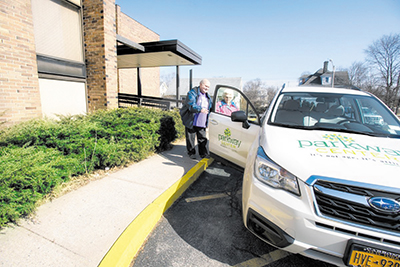
The foundation said it awarded competitive grants of more than $807,000 in the fourth quarter to 26 nonprofit organizations, primarily in support of the foundation’s priorities: education, economic development, health and wellness, and arts and culture. The grants included: Cornell Cooperative Extension — $51,400 for a business and farm incubator; Little Falls Hospital — $40,000 for a community wellness space at the Dolgeville Primary Care Health Center; Masonic Medical Research Institute — $93,800 for the purchase of new equipment; and, Parkway Center — $24,500 to buy a senior transportation vehicle.
Community Foundation of Herkimer & Oneida Counties awarded nearly $7 million in grants last year
UTICA — The Community Foundation of Herkimer & Oneida Counties recently announced that it awarded nearly 750 grants in 2018, totaling more than $6.9 million to support programs and initiatives that will have long-lasting impact. The foundation added that its donor support set a record with $15.4 million received from 4,300 donors and 30 charitable funds
Become a Central New York Business Journal subscriber and get immediate access to all of our subscriber-only content and much more.
Click here to purchase a paywall bypass link for this article.
UTICA — The Community Foundation of Herkimer & Oneida Counties recently announced that it awarded nearly 750 grants in 2018, totaling more than $6.9 million to support programs and initiatives that will have long-lasting impact.
The foundation added that its donor support set a record with $15.4 million received from 4,300 donors and 30 charitable funds created.
“In the past year, we have seen extraordinary growth from every angle, both in our community and as an organization,” Alicia Dicks, president and CEO of the Community Foundation of Herkimer & Oneida Counties, said in a news release.
The foundation said it awarded competitive grants of more than $807,000 in the fourth quarter to 26 nonprofit organizations, primarily in support of the foundation’s priorities: education, economic development, health and wellness, and arts and culture. The grants included: Cornell Cooperative Extension — $51,400 for a business and farm incubator; Little Falls Hospital — $40,000 for a community wellness space at the Dolgeville Primary Care Health Center; Masonic Medical Research Institute — $93,800 for the purchase of new equipment; and, Parkway Center — $24,500 to buy a senior transportation vehicle.
Lead with Intention to Create Great Companies and Communities
As I shared with the nearly 1,200 attendees at CenterState CEO’s annual meeting on April 24, there is something exciting happening in this community, a rare and remarkable momentum and convergence of economic opportunities. It is coupled with a tangible shift in attitudes, a renewed commitment to collaboration, and perhaps more importantly, a sense of
Become a Central New York Business Journal subscriber and get immediate access to all of our subscriber-only content and much more.
Click here to purchase a paywall bypass link for this article.
As I shared with the nearly 1,200 attendees at CenterState CEO’s annual meeting on April 24, there is something exciting happening in this community, a rare and remarkable momentum and convergence of economic opportunities. It is coupled with a tangible shift in attitudes, a renewed commitment to collaboration, and perhaps more importantly, a sense of hope and optimism that hasn’t been seen in recent memory.
These opportunities include the Syracuse Surge and corresponding Smart Cities investments that will unlock innovation in public-service delivery, traffic-management, and data analytics, while simultaneously helping to bridge the real gaps in digital inclusion. The $3 million investment in Syracuse by JPMorgan Chase, one of five winning cities announced on April 18 in its inaugural AdvancingCities Challenge, will help create the business ecosystem and workforce necessary to help all members of this community prosper.
And the long-awaited release of the formal Draft Environmental Impact Statement by the New York State DoT, which selected the Community Grid as the preferred alternative for the future of I-81, promises to bring more than a billion dollars in economic stimulus to our region. It also represents an opportunity to jointly develop and implement a new model for civic collaboration, citizen engagement, and re-development.
While these growth and investment opportunities are necessary preconditions for improving our economic performance, they do not guarantee greater prosperity for all. In order to make the most of this moment for our community, we must go further and lead with intention.
To achieve that, we can adapt what we learned about great places to work, shared by our event’s keynote speaker, Tony Bond, executive VP and chief innovation officer of Great Place to Work, and create high-trust environments built on respect, credibility, and fairness. These attributes apply not just to our places of employment, they also create pride in a community, a desire to participate and contribute, a willingness to engage and go above and beyond — creating a great place to live.
So, let us lead with intention and see this confluence of economic circumstance for what it is, a gift, a long-awaited and fortuitous chance not just to grow but also to grow differently, better, in a way embraces a more inclusive, equitable, respectful, and fair future — for our entire community.
As always, please contact me at president@centerstateceo.com to share your thoughts.
Robert M. (Rob) Simpson is president and CEO of CenterState CEO, the primary economic-development organization for Central New York. This viewpoint is drawn and edited from the “CEO Focus” email newsletter that the organization sent to members on April 26.
New York State’s Linked-Deposit Program Benefits Economy
In 1994, the state began the Linked Deposit Program (LDP) to assist and encourage firms, manufacturers, and small businesses to make investments. This program offers reduced-rate financing to makes it less expensive to borrow money. Under this program, qualifying businesses can obtain loans through commercial banks, savings banks, savings and loan associations, farm credit institutions
Become a Central New York Business Journal subscriber and get immediate access to all of our subscriber-only content and much more.
Click here to purchase a paywall bypass link for this article.
In 1994, the state began the Linked Deposit Program (LDP) to assist and encourage firms, manufacturers, and small businesses to make investments. This program offers reduced-rate financing to makes it less expensive to borrow money.
Under this program, qualifying businesses can obtain loans through commercial banks, savings banks, savings and loan associations, farm credit institutions and the New York Business Development Corporation at a reduced rate. Interest rates for these loans are subsidized by the state. Since the start of this program, it has helped lower interest rates for thousands of business owners and brought in billions of dollars in private capital investments.
In 2016, the LDP processed 98 applications and approved 89, which resulted in more than $40.85 million in deposits. It’s estimated that these funds helped generate $51.01 million in private-sector capital investment. Currently, there are 73 lenders participating in the LDP in New York state. For each loan, the state deposits the same amount as the loan to the lending institution but earns less interest on the deposit. This allows the lender to transfer the interest-rate savings to the borrower. At the end of the loan term, the bank returns the initial deposit to the state. The program eases some risks for the banks and reduces commercial interest rates for borrowers, which encourages private investments. Help from the LDP has proven to stimulate the economy by allowing businesses to expand, become more competitive, upgrade their equipment, and develop new products. A 2017 report for the governor and the state legislature showed assistance from the LDP created 253 jobs in 2016, and would retain an additional 268 through at least 2021.
Many businesses in Central New York and the Finger Lakes region have utilized this LDP program. In 2016, 12 projects were approved in Central New York and 27 in the Finger Lakes. This resulted in $13.91 million in assistance for both regions. Since the program’s establishment, most assisted businesses have been small businesses with 100 employees or less. In 2016, 98 percent of the loans approved benefitted small businesses. In that same year, it cost the state just under $2 million to provide this reduced interest rate through the program. This is a small investment the state can make that provides an incentives for private investments. For some businesses, it’s the only way they can stay in business or expand.
New York has made numerous legislative changes designed to help increase participation in the Linked Deposit Program. The lifetime maximum amount to borrow for eligible companies increased from $1 million to $2 million. Another change allowed companies to apply for a four-year extension for the life of the loan, providing up to eight years of assistance on certain loans. I was pleased to support a measure in the Assembly that extended a higher interest-rate benefit to agricultural businesses. Helping farmers and local agricultural businesses to access these reduced interest rate loans helps keep local farms in business. In addition, the legislature enabled technology and innovation businesses to benefit from a higher subsidy in an effort to spur investments and bring more high-paying jobs to New York.
To learn how to apply or find more information, visit http://www.esd.ny.gov/BusinessPrograms/LinkedDeposit.html
William (Will) A. Barclay is the Republican representative of the 120th New York Assembly District, which encompasses most of Oswego County, including the cities of Oswego and Fulton, as well as the town of Lysander in Onondaga County and town of Ellisburg in Jefferson County. Contact him at barclaw@assembly.state.ny.us or (315) 598-5185.
Nascentia Health announced it has added the following new employees. In the Certified Home Health Agency: AMBER CAMPILANGO, billing specialist; DAWN DANN, customer service center coordinator; TITILOPE DARAMOLA, care navigator; JABOR EDWARDS, care navigator; ALLISON GROTH, office assistant; LEIGH HILGENBERG, home care coordinator; KAMESHA JONES, care navigator; ERIC LACEY, customer service center coordinator; JENNY LENHARD,
Become a Central New York Business Journal subscriber and get immediate access to all of our subscriber-only content and much more.
Click here to purchase a paywall bypass link for this article.
Nascentia Health announced it has added the following new employees. In the Certified Home Health Agency: AMBER CAMPILANGO, billing specialist; DAWN DANN, customer service center coordinator; TITILOPE DARAMOLA, care navigator; JABOR EDWARDS, care navigator; ALLISON GROTH, office assistant; LEIGH HILGENBERG, home care coordinator; KAMESHA JONES, care navigator; ERIC LACEY, customer service center coordinator; JENNY LENHARD, registered nurse; LYNNE MINKEL, physical therapist; ABIGAIL MORALES FLORES, registered nurse; ANDREA OBIT, registered nurse; ELIZABETH OLMSTED, registered nurse; CONSTANCE PATTI, registered nurse; ROBERT QUINTANO, active directory & security administrator; DOROTHY RAMIREZ, registered nurse; AMANDA RUDOLPH, recruitment and retention specialist; LESLIE SANTOS-GONZALEZ, patient care coordinator; and JACQUELINE TAYLOR, health information coordinator. In the Licensed Home Care Service Agency, Nascentia Health added: CATHERINE CLEM, PRI nurse; SHAMECCA COLEY-HORDGE, home health aide; BONNIE DEMKO, home health aide; PAULINE D’EREDITA, home health aide; TEAJIA DOWDELL, home health aide; ASIA HARRISON, home health aide; MARY LEONARD, home health aide; JESSICA MANLEY, home health aide; JODEAN MCGRATH, home health aide; MARIAH MYERS, home health aide; PRISCILA ROMERO, home health aide; NICOLE SCHEEL, home health aide; JENNIFER WOOD, home health aide; and SOPHIA YURCO, home health aide. In the Managed Long-Term Care Program, the following people have joined: VICTORIA BOLSTER, transportation member services representative; BECKY CURTIS, transportation member services representative; SHARON DUDINSKI, care manager; DEBORAH GOSS, care manager; TIMOTHY GURAL, driver; JESSICA JEANNOTTE, care manager; KAITLYN MONHEIM, utilization review nurse; RYAN MOORE, transportation member services representative; ELIZABETH O’HERN, care coordinator; RHONDA REALS, enrollment member services representative; SANDEE SANFORD, care manager; JENNIFER SCARANO, care coordinator; KATHLEEN SOCIE, care manager; KARYSSA WAREHAM, care manager; and ILEDEJA YANCY, enrollment member services representative. For the Medicare Advantage Plan, Nascentia added: RAYMON SCHWEITZER, Medicare benefit consultant.
HCR Home Care has added CHRISTINE RAMSING, a registered nurse, to its Onondaga County staff as an RN assessment nurse.
Become a Central New York Business Journal subscriber and get immediate access to all of our subscriber-only content and much more.
Click here to purchase a paywall bypass link for this article.
HCR Home Care has added CHRISTINE RAMSING, a registered nurse, to its Onondaga County staff as an RN assessment nurse.
Capital Collection Management has added two new employees to its Syracuse staff. CHRISTINA HORNER joins as a collections specialist I. She has 12 years of experience in retail sales management. MICHAELA ORMAN also joins the company as a collections specialist I. She previously worked in the retail and food service industries.
Become a Central New York Business Journal subscriber and get immediate access to all of our subscriber-only content and much more.
Click here to purchase a paywall bypass link for this article.
Capital Collection Management has added two new employees to its Syracuse staff. CHRISTINA HORNER joins as a collections specialist I. She has 12 years of experience in retail sales management. MICHAELA ORMAN also joins the company as a collections specialist I. She previously worked in the retail and food service industries.
Stay up-to-date on the companies, people and issues that impact businesses in Syracuse, Central New York and beyond.