Stay up-to-date on the companies, people and issues that impact businesses in Syracuse, Central New York and beyond.

SUNY Canton receives $8K grant as part of SUNY “Outdoors for All” Program
CANTON — SUNY Canton recently announced it received an $8,000 SUNY grant to help equip students for outdoor adventures. SUNY Canton was included in SUNY Chancellor John B. King, Jr.’s Oct. 10 announcement launching “Outdoors for All,” a program designed to promote inclusivity, sustainability, wellness, and community development. “With the launch of SUNY’s Outdoors for […]
Become a Central New York Business Journal subscriber and get immediate access to all of our subscriber-only content and much more.
Click here to purchase a paywall bypass link for this article.
CANTON — SUNY Canton recently announced it received an $8,000 SUNY grant to help equip students for outdoor adventures.
SUNY Canton was included in SUNY Chancellor John B. King, Jr.’s Oct. 10 announcement launching “Outdoors for All,” a program designed to promote inclusivity, sustainability, wellness, and community development.
“With the launch of SUNY’s Outdoors for All program, we are working to ensure that our students have access to inclusive, welcoming, and accessible outdoor spaces on- and off-campus,” King said in his announcement. “Through this program, more students and New Yorkers of all ages will have access to hands-on and engaging experiences that will hopefully inspire a life-long love of nature and demonstrate that there is a place at SUNY for every New Yorker, both indoors and outdoors.”
Outdoors for All is the latest climate initiative announced by Chancellor King and supports the SUNY Climate and Sustainability Action Plan’s commitment to engage students on sustainability issues, along with SUNY’s diversity, equity, and inclusion pillar. Thirteen SUNY campus proposals will each receive an $8,000 grant award.
At SUNY Canton, the new funding will be used to make outdoor recreation accessible to all students by eliminating barriers such as cost, a lack of equipment, and transportation, according to Richard J. Thayer, SUNY Canton’s director of student affairs technology, who will oversee the new initiative.
“The project supports student wellness, inclusion, and leadership development, aligning with the college’s goals to expand outdoor-based programming and enhance campus spaces,” Thayer said in an Oct, 23 SUNY Canton announcement. “We are located on a 555-acre campus near the Adirondack Park. Our natural environment is one of our greatest and most defining assets.”
Thayer added that the funding will be used to create a gear library and fund introductory skills workshops, so students can safely and confidently explore nature without having to purchase equipment. SUNY Canton plans to buy snowshoes, daypacks, rain layers, trekking poles, and basic repair kits for future adventures, in addition to a new storage shed to house the new equipment.
During the first phase, which launches during the spring semester, participants will focus on winter gear and safety equipment. Plans for future phases include incorporating items and supplies suitable for warm weather.
SUNY Canton says it has an active outdoor adventure club and a rock-climbing club. Resources purchased through the Outdoors for All program will also be available to these student-led organizations, per the college’s announcement.

TCPDC wraps up renovation of mixed-use building in downtown Owego
OWEGO — The Tioga County Property Development Corporation (TCPDC) recently announced the completion of its latest revitalization project — a newly renovated historic building located at 81 North Avenue in downtown Owego. The project highlights the successful partnership between the TCPDC and Tioga County through the leveraging of funds from the New York State Homes
Become a Central New York Business Journal subscriber and get immediate access to all of our subscriber-only content and much more.
Click here to purchase a paywall bypass link for this article.
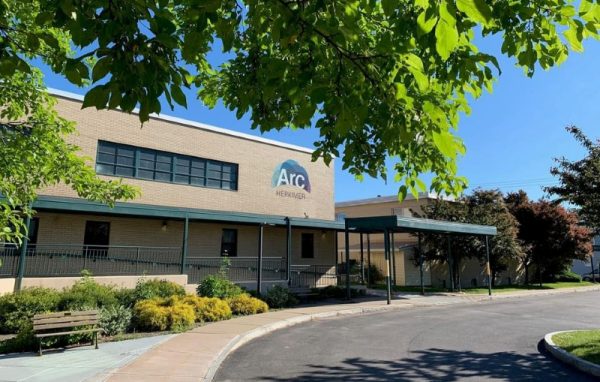
OWEGO — The Tioga County Property Development Corporation (TCPDC) recently announced the completion of its latest revitalization project — a newly renovated historic building located at 81 North Avenue in downtown Owego.
The project highlights the successful partnership between the TCPDC and Tioga County through the leveraging of funds from the New York State Homes and Community Renewal Land Bank Initiative and Empire State Development’s RESTORE NY program, according to an Oct. 23 announcement from the TCPDC, which is part of Team Tioga.
The building features 990 square feet of ground-floor commercial space and two updated two-bedroom residential apartments on the second and third floors. The TCPDC said it worked with the State Historic Preservation Office and the Owego Historic Preservation Commission to “maintain the original historic features of the building and return it to its former glory,” the TCPDC said. “This effort showcases the TCPDC’s role in restoring dilapidated buildings and adding units of high-quality housing to Tioga County’s housing stock,” it added.
To celebrate the project, the TCPDC hosted a public open house on Oct. 24, welcoming community members to explore the space and learn more about the project’s role in ongoing downtown revitalization efforts.

OPINION: NYS Electric System Faces Era of Profound Reliability Challenges
The closer we get to the deadlines imposed by the disastrous Climate Leadership and Community Protection Act (CLCPA), the more obvious it becomes that New York State’s overall energy plan is not merely inadequate but extremely dangerous. The latest indication the state’s energy policy is headed in the wrong direction comes by way of two
Become a Central New York Business Journal subscriber and get immediate access to all of our subscriber-only content and much more.
Click here to purchase a paywall bypass link for this article.
The closer we get to the deadlines imposed by the disastrous Climate Leadership and Community Protection Act (CLCPA), the more obvious it becomes that New York State’s overall energy plan is not merely inadequate but extremely dangerous.
The latest indication the state’s energy policy is headed in the wrong direction comes by way of two separate reports from the New York Independent System Operator (NYISO), which indicated major concerns about grid reliability in the New York City and Long Island region as well as the state’s broader energy policy over the next decade.
The first report, NYISO’s third-quarter Short-Term Assessment of Reliability, warns that downstate energy consumers could face critical reliability issues as soon as next summer. It cites “generator deactivations, increasing consumer demand, and transmission limitations” as the key drivers of the energy shortfall. There is a reason the Assembly Minority Conference has warned against transitioning away from traditional energy sources without adequate safeguards in place, and this report speaks directly to the concerns our members have raised for years. We do not have the infrastructure to handle complete electrification.
Further highlighting the impending unreliability of our power grid, a second NYISO report, the 2025-2034 Comprehensive Reliability Plan (CRP), offered an even more dire view of the state’s trajectory.
“The CRP warns that the New York State electric system faces an era of profound reliability challenges driven by the convergence of three structural trends: the aging of the existing generation fleet; the rapid growth of large loads (e.g.: data centers and semiconductor manufacturing); and the increasing difficulty of developing new supply resources due to public policies, supply chain constraints and rising costs for equipment.”
This is extremely alarming. We are moving toward unprecedented energy demands due to technological advancements, industrial needs, and other external factors. Now, more than ever, we need an energy plan that not only accounts for a massive spike in tech-based consumption but also meets basic heating and cooling needs for residents. We already came close to disaster in June when NYISO was forced to issue an Energy Warning, which immediately precedes a full-blown Energy Emergency. Should the grid fail during a heat wave or during extreme winter weather, New Yorkers would be in real danger.
One potential solution we have identified is expanded nuclear energy production. Recently, Gov. Kathy Hochul directed the New York Power Authority to develop and execute a plan to build a “zero-emission advanced nuclear power plant” in upstate New York. I am glad to see some acknowledgment that we must bolster our grid’s reliability with nuclear energy, but more needs to be done.
An unreliable energy grid is unsafe, economically disadvantageous, and entirely avoidable. To my Democrat colleagues in the legislature, I ask: What are you waiting for? We must address these concerns now, with the full measure of our legislative tools. Waiting until we are face to face with a widespread power shortfall is simply not an option.
William (Will) A. Barclay, 56, Republican, is the New York Assembly minority leader and represents the 120th New York Assembly District, which encompasses all of Oswego County, as well as parts of Jefferson and Cayuga counties.

OPINION: Washington’s Farewell Address holds lessons for today
George Washington’s Farewell Address is one of the key documents of America’s founding era. It’s not as familiar as the Declaration of Independence, the Constitution, and some other writings, but it was a clarion call for national unity when the United States was forming its identity. It’s also remarkably pertinent to our own time. As
Become a Central New York Business Journal subscriber and get immediate access to all of our subscriber-only content and much more.
Click here to purchase a paywall bypass link for this article.
George Washington’s Farewell Address is one of the key documents of America’s founding era. It’s not as familiar as the Declaration of Independence, the Constitution, and some other writings, but it was a clarion call for national unity when the United States was forming its identity.
It’s also remarkably pertinent to our own time. As political scientist Robert Strong writes in a recent essay, the dangers that Washington foresaw for the young republic “seem startlingly contemporary and relevant 229 years later.” Chief among Washington’s concerns was excessive partisanship, which, he wrote, “agitates the community with ill-founded jealousies and false alarms, kindles the animosity of one part against another, (and) foments occasionally riot and insurrection.”
The Farewell Address, written with help from James Madison and, especially, Alexander Hamilton, and published in a Philadelphia newspaper on Sept. 19, 1796, explained Washington’s reasons for not seeking a third term as president. Washington was uniquely popular. The hero of the American Revolution, he was already celebrated as the father of his country. Presidential electors had voted unanimously for him in 1788 and 1792. He could have been president for life, but he put the government in the capable hands of his contemporaries.
The Farewell Address, when it’s mentioned, is often cited for its warning that America should “steer clear of permanent alliances” with other nations. That language has been used — wrongly, I believe — to justify isolationism. But Strong, who spent time working in my congressional office as an American Political Science Association fellow, writes that the overall focus is on domestic affairs.
George Washington warned that the government shouldn’t accumulate debt, for example. When it had to borrow money, he wrote, it should promptly repay it, “not ungenerously throwing upon posterity the burden which we ourselves ought to bear.” Today, our national debt approaches $40 trillion, a burden for future generations. He also worried about regional disputes, especially between North and South, a conflict that would tear the nation apart 65 years later. Today, we are divided between blue states on the coasts and red states in the interior. We aren’t at war, but our relations can be tense.
Washington’s strongest warnings were against partisanship, or what he called “the baneful effects of the spirit of party, generally.” At a time when the first American political parties, Hamilton’s Federalists and Thomas Jefferson’s Democratic-Republicans, were taking shape, Washington conceded that creating parties was “inseparable from our nature.” But he feared the consequences: “disorders and miseries” that “incline the minds of men to seek security and repose in the absolute power of an individual; and sooner or later the chief of some prevailing faction … turns this disposition to the purposes of his own elevation on the ruins of public liberty.” The language may seem dated, but the concern about extreme partisanship, the concentrated power of an individual leader and even the “runs of public liberty” should speak to Americans today.
Washington pointed to the Constitution’s checks and balances between the branches of government as a critical safeguard against absolute power. “To preserve them must be as necessary as to institute them,” he wrote. It seems likely that he would be concerned about the way Congress, in recent years, has stood by while presidents accumulate more power.
America’s founders weren’t perfect. They were men of their time (and they were all men). Many of them, including Washington, were slaveowners. They couldn’t foresee the ways the nation would change and grow. But they thought deeply about the meaning of freedom and about how to institute a government that would preserve it. We would do well today to take their words to heart.
Lee Hamilton, 94, is a senior advisor for the Indiana University (IU) Center on Representative Government, distinguished scholar at the IU Hamilton Lugar School of Global and International Studies, and professor of practice at the IU O’Neill School of Public and Environmental Affairs. Hamilton, a Democrat, was a member of the U.S. House of Representatives for 34 years (1965-1999), representing a district in south-central Indiana.

NBT Bancorp profit surges 43 percent in Q3
NORWICH — NBT Bancorp Inc. (NASDAQ: NBTB), parent company of NBT Bank, recently reported that its net income rose 43 percent to $54.5 million in the third quarter from $38.1 million in the year-prior period, as it improved margins and benefitted from a recent merger. NBT’s earnings per share rose to $1.03, compared to 80
Become a Central New York Business Journal subscriber and get immediate access to all of our subscriber-only content and much more.
Click here to purchase a paywall bypass link for this article.
NORWICH — NBT Bancorp Inc. (NASDAQ: NBTB), parent company of NBT Bank, recently reported that its net income rose 43 percent to $54.5 million in the third quarter from $38.1 million in the year-prior period, as it improved margins and benefitted from a recent merger.
NBT’s earnings per share rose to $1.03, compared to 80 cents over the same period.
Norwich–based NBT Bancorp completed the acquisition of Evans Bancorp, Inc. on May 2, adding 200 employees and 18 branches in Western New York, $1.67 billion in loans, and $1.86 billion in deposits. In connection with the transaction, NBT issued 5.1 million shares of common stock, with a value of $221.8 million as of the closing date.
“For the third quarter of 2025, we achieved record net income and earnings per share, and we reported a return on average assets of 1.35% and a return on average tangible common equity of 17.35%,” NBT Bancorp President and CEO Scott Kingsley said in the Oct. 27 earnings report. “These results reflect productive growth in earning assets, deposits, and our sixth consecutive quarter of net interest margin improvement, including a full quarter of our merger with Evans Bancorp, Inc. completed in May.”
The NBT board of directors approved a fourth-quarter cash dividend of 37 cents per share at a meeting held on Oct. 27. The dividend is up by 3 cents, or 8.8 percent, over the amount the banking company paid in the fourth quarter of 2024. This is NBT’s 13th straight year of annual dividend increases. The company will pay the new, higher dividend on Dec. 15, to stockholders of record as of Dec. 1.
Kingsley said the dividend increase is “illustrative of our ongoing commitment to providing favorable long-term returns.”
NBT Bancorp did not purchase any shares of its common stock during the third quarter, ended Sept. 30. On the same day as its earnings report and dividend increase, the NBT board authorized and approved an amendment to the company’s previously announced stock repurchase program. Pursuant to the amended stock buyback program, NBT may repurchase up to
2 million shares of its common stock with all repurchases under the program to be made by Dec. 31, 2027.
Ithaca Rotary Club awards nearly $15,000 in community grants to 11 local nonprofits
ITHACA — The Ithaca Rotary Club recently handed out $14,798 to its 2025 Community Grants awardees. From a pool of 41 applications, 11 grant proposals from area nonprofits received funding, the club announced. Awards are made from the Rotary Club’s donor-advised fund held at the Community Foundation of Tompkins County. The Ithaca Rotary Club, in
Become a Central New York Business Journal subscriber and get immediate access to all of our subscriber-only content and much more.
Click here to purchase a paywall bypass link for this article.
ITHACA — The Ithaca Rotary Club recently handed out $14,798 to its 2025 Community Grants awardees. From a pool of 41 applications, 11 grant proposals from area nonprofits received funding, the club announced.
Awards are made from the Rotary Club’s donor-advised fund held at the Community Foundation of Tompkins County.
The Ithaca Rotary Club, in a Sept. 24 announcement, listed the following local not-for-profit organizations as 2025 grant recipients, with dollar amount and grant purpose included:
• Community Science Institute, $1,500 — Provide discounted water testing through the newly launched Water Testing Assistance Fund program
• Downtown Ithaca Children’s Center, $1,000 — Rechargeable two-way radios for organizational safety and emergency support
• Enfield Food Distribution, $1,500 — Offset the sudden 50-percent reduction in funding received from The Emergency Food Assistance Program (TEFAP)
• Family & Children’s Service, $1,500 — Purchase 30 $50 food gift cards for homeless youth supported by the Open Doors program
• Foodnet Meals on Wheels, $875 — Buy a picnic table and a bike rack for staff use
• Friends of Stewart Park, $1,500 — Match Wegmans’ donation to complete construction of one new accessible picnic table near the Stewart Park playground
• Ithaca Children’s Garden, $1,500 — Install a pond liner, replace deteriorating dock decking, and mount interpretive watercolor panels at its Tadpole Pond Habitat
• Ithaca Community Childcare Center, $1,500 — Purchase weather-resistant play materials that support physical development and integrate into the natural playscape
• Lansing Center Trail, $1,423 — Create a Volunteer Tool Library stocked with gardening and outdoor tools
• Loaves & Fishes, $1,500 — Purchase an ice machine to support daily meal service and enhance food safety
• New Roots Charter School, $1,000 — Expand the free personal-care product pantry and add basic school supplies
The Ithaca Rotary Club said it issues a call for proposals in June of each year. Grants are intended to promote the quality of life in Tompkins County. Small nonprofit organizations are especially encouraged to apply. All grant applications must be for projects completed within Tompkins County.

Ask Rusty: How Do I Navigate the Social Security Maze?
Dear Rusty: I am a woman, turning 65 [soon]. It seems that deciding when to claim Social Security is complicated. I would like more information to navigate through this maze. Thank you. Signed: Ready to Claim Dear Ready to Claim: Deciding when to claim Social Security can be challenging, but we hope to make it
Become a Central New York Business Journal subscriber and get immediate access to all of our subscriber-only content and much more.
Click here to purchase a paywall bypass link for this article.
Dear Rusty: I am a woman, turning 65 [soon]. It seems that deciding when to claim Social Security is complicated. I would like more information to navigate through this maze. Thank you.
Signed: Ready to Claim
Dear Ready to Claim: Deciding when to claim Social Security can be challenging, but we hope to make it a bit easier for you. You can, of course, call us at any time to speak to one of our certified Social Security advisors, but I’ll share some pertinent information here as well.
Be aware that at age 65, you have not yet reached your Social Security (SS) full retirement age (FRA). Born in 1960, your FRA is age 67, and that is when you can receive 100 percent of the SS benefit you’ve earned from a lifetime of working. If you claim SS at age 65, your monthly amount will be reduced by about 13.3 percent from your age 67 entitlement (a permanent reduction). If you wait a bit more and claim at age 66 the reduction would be about 6.7 percent. To receive 100 percent of your “primary insurance amount” you should wait until age 67 to claim. Note you can also wait longer than your FRA and earn delayed retirement credits up to age 70, when your monthly amount would be about 24 percent more than your FRA entitlement.
If you are still working, at age 65 you will also be subject to Social Security’s annual earnings test (AET), which limits how much you can earn when collecting SS benefits before your full retirement age. The earnings limit for 2025 is $23,400 (it changes annually) and if you earn more than that, the Social Security Administration will take away $1 in benefits for every $2 you are over the limit. There is also a special rule for the first calendar year you are collecting early benefits, which will result in you not getting benefits for any month your work earnings are more than $1,950 after your early benefits start. So, if you claim SS at age 65 and continue to work, you won’t get any SS benefits in any 2025 month thereafter that you earn more than the monthly limit (unless your total annual; 2025 earnings are less than the annual limit). FYI, the earnings limit no longer applies once you attain your full retirement age.
In the end, when deciding when you should claim Social Security, you should consider your need for Social Security money, your life expectancy, your plans for working, and your marital status. If you are (or were) married, you might be eligible for a spousal (or ex-spouse) benefit. You may also want to peruse the Social Security Q&A section at our website: www.SocialSecurityReport.org. So, as you have already discerned, deciding when to claim Social Security can be confusing, but we are always here to assist you as needed.
You can either call us directly at (888) 750-2622 or email your specific Social Security questions to us at: SSAdvisor@amacfoundation.org. In either case, we will be most happy to help you decide when to claim, based on your unique personal circumstances.
Russell Gloor is a national Social Security advisor at the AMAC Foundation, the nonprofit arm of the Association of Mature American Citizens (AMAC). The 2.4-million-member AMAC says it is a senior advocacy organization. Send your questions to: ssadvisor@amacfoundation.org.
Author’s note: This article is intended for information purposes only and does not represent legal or financial guidance. It presents the opinions and interpretations of the AMAC Foundation’s staff, trained, and accredited by the National Social Security Association (NSSA). The NSSA and the AMAC Foundation and its staff are not affiliated with or endorsed by the Social Security Administration (SSA) or any other governmental entity.

Urban farms, community gardens in CNY, Mohawk Valley, Southern Tier awarded state funding
ALBANY, N.Y. — Organizations in Central New York, the Mohawk Valley, and the Southern Tier were among 51 groups awarded a total of $2.5 million

Solvay Bank hires branch manager for upcoming James Street Wegmans plaza location
DeWITT, N.Y. — Solvay Bank on Thursday said it has appointed Briana Fox as AVP, branch manager for its upcoming East Syracuse–area location at the Wegmans plaza on James Street in the town DeWitt. It will be the 10th branch for Solvay Bank, the oldest community bank established in Onondaga County, per the announcement. Fox
Become a Central New York Business Journal subscriber and get immediate access to all of our subscriber-only content and much more.
Click here to purchase a paywall bypass link for this article.
DeWITT, N.Y. — Solvay Bank on Thursday said it has appointed Briana Fox as AVP, branch manager for its upcoming East Syracuse–area location at the Wegmans plaza on James Street in the town DeWitt.
It will be the 10th branch for Solvay Bank, the oldest community bank established in Onondaga County, per the announcement.
Fox joined Solvay Bank in 2016 as a banking solutions representative at its Fairmount office. Along the way, Solvay Bank promoted Fox to assistant branch manager at Solvay Bank’s DeWitt location, and most recently, branch manager for the North Syracuse office.
The future 2,200-square-foot Smart Office, located in the Wegmans plaza on James Street, is making “significant” progress, with framing now complete and further phases “actively underway” Solvay Bank noted. This branch will offer personal, business, and municipal-banking products and services.
Founded in 1917, Solvay Bank currently has nine branch locations in Solvay, Baldwinsville, Camillus, Cicero, DeWitt, Liverpool, North Syracuse, Westvale, and downtown Syracuse in the State Tower Building, as well as a commercial lending presence in the Mohawk Valley.

SUNY to represent New York in Center for State Service Innovation
ALBANY, N.Y. — Service Year Alliance has selected New York to join the inaugural group of the Center for State Service Innovation, an effort seeking
Stay up-to-date on the companies, people and issues that impact businesses in Syracuse, Central New York and beyond.