Stay up-to-date on the companies, people and issues that impact businesses in Syracuse, Central New York and beyond.

Gillibrand co-sponsors proposed HEAL Act
U.S. Senator Kirsten Gillibrand (D–N.Y.) says she will co-sponsor a bill that would “remove barriers” to health care for immigrants as the nation and immigrant communities are “grappling with the ongoing impact of COVID-19.” The proposal is titled the Health Equity and Access under the Law (HEAL) for Immigrant Women and Families Act. Gillibrand’s office […]
Become a Central New York Business Journal subscriber and get immediate access to all of our subscriber-only content and much more.
Click here to purchase a paywall bypass link for this article.
U.S. Senator Kirsten Gillibrand (D–N.Y.) says she will co-sponsor a bill that would “remove barriers” to health care for immigrants as the nation and immigrant communities are “grappling with the ongoing impact of COVID-19.”
The proposal is titled the Health Equity and Access under the Law (HEAL) for Immigrant Women and Families Act.
Gillibrand’s office says the lawmaker has “joined the calls of over 250 organizations to co-sponsor” the bill. The proposed legislation was introduced by U.S. Senator Cory Booker (D–N.J.) on May 20.
The HEAL Act would expand access to care by removing the five-year waiting period that immigrants face before becoming eligible for Medicaid and the Children’s Health Insurance Program (CHIP).
It would enable undocumented immigrants to purchase health-insurance plans from the online marketplace made available by the Affordable Care Act and restore Medicaid eligibility for some migrants.
“The coronavirus pandemic has reinforced the need for health-care equity and access for all, regardless of immigration status, gender, or race,” Gillibrand contended. “This virus does not discriminate and it has made providing affordable, accessible health care even more urgent as it has put some of our country’s most underserved communities on the front lines of this public health emergency.”
Insured rates are “considerably lower” among noncitizens, including both documented and undocumented immigrants. Barriers to health coverage “disproportionately” harm immigrant women, who are the majority of immigrants and are “particularly likely” to have low incomes and be young and uninsured, she said.
Nearly half of noncitizen immigrant women of reproductive age who would otherwise qualify for Medicaid are uninsured, Gillibrand’s office said, citing data from the New York City–based Guttmacher Institute.

Hancock Estabrook summer associates complete their work virtually
SYRACUSE — Law students Nabil Akl and Bryan O’Keefe recently spent about a month working with Syracuse law firm Hancock Estabook, LLP as summer associates. Because of the COVID-19 restrictions, their work with the firm has been “100 percent virtual,” Mary Miner, hiring partner with Hancock Estabrook, tells CNYBJ in an email message. Akl and
Become a Central New York Business Journal subscriber and get immediate access to all of our subscriber-only content and much more.
Click here to purchase a paywall bypass link for this article.
SYRACUSE — Law students Nabil Akl and Bryan O’Keefe recently spent about a month working with Syracuse law firm Hancock Estabook, LLP as summer associates.
Because of the COVID-19 restrictions, their work with the firm has been “100 percent virtual,” Mary Miner, hiring partner with Hancock Estabrook, tells CNYBJ in an email message.
Akl and O’Keefe started their work May 14 and were set to conclude their duties as of June 19, Miner adds.
Akl attends the Syracuse University College of Law, where he is the trial division director of Advocacy Honor Society and co-founded the Middle Eastern Law Student Association. He is also a member of the Black Law Student Association. He had previously completed an internship with Glenn Suddaby, Chief U.S. District Judge for the Northern District of New York. Akl earned a bachelor’s degree in business administration from Drexel University.
O’Keefe attends Albany Law School of Union University. He is a member of the Student Bar Association and the executive editor for State Constitutional Commentary on the Albany Law Review. He previously externed with Lawrence Kahn, U.S. District Judge for the Northern District of New York. O’Keefe earned a bachelor’s degree from the University of Vermont.
Hancock Estabrook was founded in 1889 and has continuously maintained offices in downtown Syracuse since that time. The firm’s practice areas include bankruptcy and creditors’ rights, construction, corporate, elder law and special needs, environmental, family business succession planning, government relations, intellectual property, labor and employment, litigation, military, public finance, real property valuation, startup and emerging business, tax, trusts and estates, and zoning and land use, per its website.

SUNY Morrisville appoints new chief financial officer
MORRISVILLE — Jamie Cyr, of Chittenango, is the new chief financial officer at SUNY Morrisville, beginning July 1, the college announced. Cyr comes to SUNY Morrisville with broad experience in financial planning and forecasting and leading auxiliary-services organizations in the hospitality and higher-education industries. “Jamie has impressive skills,” SUNY Morrisville President David Rogers said in
Become a Central New York Business Journal subscriber and get immediate access to all of our subscriber-only content and much more.
Click here to purchase a paywall bypass link for this article.
MORRISVILLE — Jamie Cyr, of Chittenango, is the new chief financial officer at SUNY Morrisville, beginning July 1, the college announced.
Cyr comes to SUNY Morrisville with broad experience in financial planning and forecasting and leading auxiliary-services organizations in the hospitality and higher-education industries.
“Jamie has impressive skills,” SUNY Morrisville President David Rogers said in a statement. “His unique blend of auxiliary services, hospitality, budget, accounting and financial management experience will be an asset to carry out the mission of the college.”
Cyr’s experience includes the fiscal management of operating and capital budgets of $150 million and strategic leadership of diverse teams of more than 2,000 employees.
Most recently, Cyr served as executive director and general manager of the Sheraton Syracuse University Hotel & Conference Center. His position included directing all operations for the hotel and conference center and related properties, including managing the operations at Drumlins Country Club and Minnowbrook Conference Center.
During his tenure, he “revitalized the hotel, conference centers, golf and country club, streamlining operations, and developed a strategic plan and co-branding initiatives for university and corporate properties,” SUNY Morrisville said.
Cyr also served as director of auxiliary services at Syracuse University for more than six years, where he led numerous self-operated departments, identifying opportunities for efficiencies, which led to increased funding for facility renovations.
A certified auxiliary-services professional, Cyr serves as president of the Syracuse University Hotel & Conference Center LLC board of directors and is a member of the Greater Syracuse Hospitality & Tourism Association and the National Association of College Auxiliary Services.
Cyr has an MBA degree in management from Syracuse University and a bachelor’s degree in accounting from Le Moyne College.

State tax receipts fall nearly 20 percent in May, DiNapoli says
New York State tax receipts in May declined $766.9 million, or 19.7 percent, from the prior year, according to the monthly state cash report that State Comptroller Thomas P. DiNapoli released on June 15. “With an economy still suffocated by a global pandemic, the state’s finances took another serious hit in the month of May,”
Become a Central New York Business Journal subscriber and get immediate access to all of our subscriber-only content and much more.
Click here to purchase a paywall bypass link for this article.

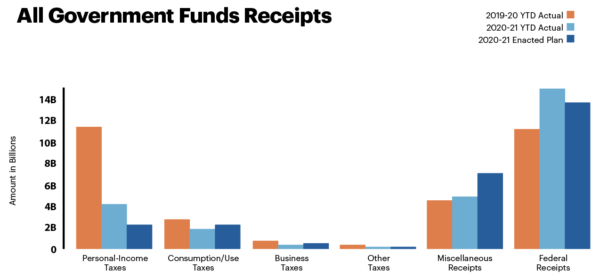
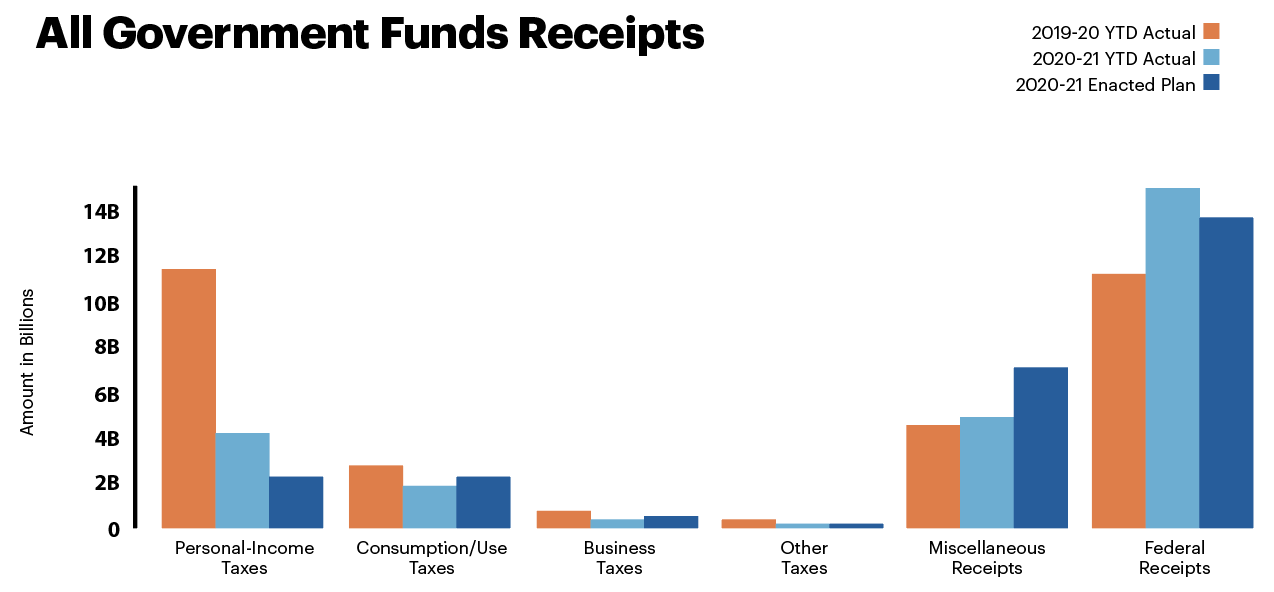
New York State tax receipts in May declined $766.9 million, or 19.7 percent, from the prior year, according to the monthly state cash report that State Comptroller Thomas P. DiNapoli released on June 15.
“With an economy still suffocated by a global pandemic, the state’s finances took another serious hit in the month of May,” DiNapoli said in a statement. “We are now clearly seeing the recession’s impact on tax receipts.”
DiNapoli highlighted the following items in the report:
• Personal income-tax withholding revenues were $291.8 million below May 2019 levels, a decline of more than 9 percent, reflecting both depressed economic activity and timing factors.
• Local-assistance spending through May totaled $17.9 billion, $1.4 billion less than the state Division of Budget projected in the enacted budget financial plan. In addition, spending for capital projects totaled $915.8 million through May, which was $412.2 million lower than projected.
• The New York Department of Education made $4 billion in general-aid payments to school districts.
• The state’s general fund ended the month with a balance of $7.3 billion, which was $1.1 billion higher than the latest projection by the Division of Budget.
Board Directors Beware: Potential Liability in Data-Breach Suit
On April 28, 2020, a shareholder of Laboratory Corporation of America Holdings (LabCorp) started a derivative action against LabCorp, and several of its individual directors and officers. The complaint arises from two major data security incidents and principally alleges that the individual defendants breached their fiduciary duties in a myriad of ways. LabCorp is one of
Become a Central New York Business Journal subscriber and get immediate access to all of our subscriber-only content and much more.
Click here to purchase a paywall bypass link for this article.
On April 28, 2020, a shareholder of Laboratory Corporation of America Holdings (LabCorp) started a derivative action against LabCorp, and several of its individual directors and officers. The complaint arises from two major data security incidents and principally alleges that the individual defendants breached their fiduciary duties in a myriad of ways.
LabCorp is one of the leading providers of diagnostic medical testing services in the world and offers a variety of clinical-testing services. Testing more than 2.5 million patient specimens on a weekly basis, the lab giant processes a staggering amount of personally identifiable information (PII) and personal-health information (PHI). In offering its services to patients, LabCorp generates invoices to bill patients, which are then forwarded to a collection agency, such as American Medical Collection Agency (AMCA), if they are not paid in a timely manner.
It is LabCorp’s relationship with AMCA that led to the first data breach, giving rise to this lawsuit. Analysis from a cybersecurity firm revealed that a large number of compromised payment cards and associated PII from AMCA were on the dark web. The security audit revealed that the information was likely stolen from AMCA’s payment portal during a nearly eight-month breach. The complaint alleges that this breach “directly impacted and affected millions of LabCorp patients.”
On May 14, 2019, LabCorp was notified of the breach, and it informed investors of the matter on June 4, 2019 through an SEC filing. The delay in notifying investors is one of the ways the defendant directors and officers are alleged to have breached their fiduciary duties. The company’s June 4 public disclosure of the data breach (less than one month from receiving notice of the breach) drew national attention and prompted a series of inquiries from U.S. senators, state attorneys general, and various other state and federal agencies. In addition to this derivative action, a class action brought by patients whose information was compromised as a result of the first breach is also pending in the District Court of New Jersey.
LabCorp allegedly suffered a second data breach in January 2020 when “an unprotected web address granted access to LabCorp documentation containing PHI.” The complaint states that LabCorp was informed of this breach on Jan. 28. However, neither the company nor the individual defendants have publicly addressed the second breach or acknowledged that it in fact occurred.
This shareholder derivative action was brought in response to both data breaches.
Specific allegations in complaint
The fundamental claim made in the complaint is that LabCorp had insufficient cybersecurity practices and inadequate oversight of AMCA. Most of the claims relate to the allegation that the individual defendants, directors, and officers of LabCorp, breached their fiduciary duties of care, loyalty, and good faith. The complaint specifically alleges that these duties were breached when the individual defendants:
• Failed to implement effective systems to protect patient PII and PHI;
• Failed to exercise appropriate oversight by not monitoring LabCorp’s compliance with state and federal regulations;
• Provided PII and PHI to a LabCorp business associate with deficient cybersecurity and breach detection;
• Failed to ensure that LabCorp and its business associates used proper cybersecurity safeguards to adequately protect patient PII and PHI;
• Failed to timely notify potentially affected individuals;
• Failed to make adequate public disclosures following the data breaches;
• Allowed LabCorp to violate unspecified state and federal laws; and
• Failed to review and affirm or revise LabCorp’s existing data-security policies and procedures.
Each of these alleged failures is characterized as evidence that the shareholders intend to prove through the litigation and trial, that LabCorp’s directors and officers did not act, and continue to not act in the best interest of the company.
Key takeaways
Though the litigation is in its early stages and dispositive motions have yet to be made, the allegations raise several important points that businesses everywhere would be wise to keep in mind.
• Companies should regularly review their data privacy and cybersecurity policies and revise accordingly. As the legal landscape of cybersecurity is constantly evolving, regular review of internal practices will help prevent internal controls from becoming stale.
• Employees charged with handling and processing personally identifiable information and personal-health information should be properly trained in how to do so in a safe and secure manner. This is an obligation imposed by several laws such as the EU’s General Data Protection Regulation, the California Consumer Privacy Act, and the New York SHIELD Act, and simply is a best practice even in the absence of a legislative mandate. Employees should also be sufficiently well-versed in the data-privacy laws and cybersecurity laws that apply to their employer’s business.
• Third-party risk mitigation and management are critical. The vendors and third parties to which a company discloses PII and/or PHI should be appropriately vetted at the onboarding stage and regularly evaluated and monitored depending on the level of risk associated with the type of data such vendor receives and manages for the company. A third-party’s data-privacy and cybersecurity practice should be assessed for competence prior to disclosing PII and/or PHI. Organizations should impose contractual requirements on third parties even in the absence of a statutory or regulatory obligation to do so.
• Security audits are a critical tool for understanding potential vulnerabilities in an organization’s (and it’s third-party vendors’) data privacy and cybersecurity programs.
• The long-term cost of inadequate data privacy and cybersecurity practices can be exorbitant. For instance, LabCorp spent an estimated $11.5 million in out-of-pocket costs on response and remediation costs following the first data breach. Remarkably, this figure does not include any litigation-related expenses associated with defending this action or the patients’ class action. Giving compliance efforts due attention in advance may be well worth the effort in light of the high cost of rectifying a data breach after the fact.
Jessica L. Copeland is a member (partner) of Bond, Schoeneck & King PLLC. She is co-chair of the firm’s cybersecurity and data privacy practice. Contact Copeland at jcopeland@bsk.com. Hannah K. Redmond is an associate attorney in the Syracuse office of Bond, Schoeneck & King. She focuses her practice on representing employers in labor and employment law matters. Contact Redmond at hredmond@bsk.com
Reenergizing the Economy as More Businesses Reopen
New York state [recently] surpassed the 100-day mark since the beginning of the COVID-19 public-health crisis, a time of significant economic disruption and uncertainty. While this community has seen its fair share of challenges, we are beginning to see the results of our strategic and collaborative efforts [upon entering] phase three (https://forward.ny.gov/phase-three-industries) of Gov. Cuomo’s
Become a Central New York Business Journal subscriber and get immediate access to all of our subscriber-only content and much more.
Click here to purchase a paywall bypass link for this article.
New York state [recently] surpassed the 100-day mark since the beginning of the COVID-19 public-health crisis, a time of significant economic disruption and uncertainty. While this community has seen its fair share of challenges, we are beginning to see the results of our strategic and collaborative efforts [upon entering] phase three (https://forward.ny.gov/phase-three-industries) of Gov. Cuomo’s New York Forward reopening plan.
Phase three, which [began June 12] in Central New York, includes consumer-facing and service-based industries such as restaurants, personal-care businesses, and other services, some of the hardest hit by closures. Reopening and supporting these economic drivers is one of the most important steps we can take to ignite our regional economy. Before COVID-19, our metro region was experiencing significant job growth and economic progress. While the economic crisis has driven down the number of small-businesses openings by 20 percent in Onondaga County, that number is showing signs of improvement — almost 10 percentage points since May 15. We anticipate even more progress as more businesses reopen.
We will continue to advocate at the local, state, and national levels for policies and resources that will further stimulate the local economy. For its part, the City of Syracuse announced it is waiving fees for sidewalk-café operations as many restaurant owners look to meet safety standards and expand their outdoor-seating spaces. Gov. Andrew Cuomo also announced his strategy for advancing the state’s economic recovery, calling for new investments in large-scale development projects that take advantage of reduced transportation activity.
As we seek to reenergize the economy, we are also looking at how to capitalize on the longer-term shifts to the economic landscape. Our Research, Policy and Planning team has been tracking reports that show people are leaving large metropolitan areas. In fact, the three largest cities, New York, Los Angeles, and Chicago, all lost population in the past several years according to the Brookings Institution. Analysts anticipate that the impacts from the COVID-19 crisis will accelerate this trend. At the same time, we know that downtown Syracuse’s population has surged by 77 percent over the last 10 years, and 73 percent of recent movers to Syracuse were between 25 and 34 years old. Through programs like the Good Life CNY, we have targeted our marketing efforts to attract the young professionals who are leaving these larger metro areas and highlighting the career and quality-of-life opportunities that exist here. If you would like to be involved with Good Life CNY, please contact Ben Sio, chief of staff at CenterState CEO, at bsio@centerstateceo.com.
There is more work to do. We are beginning a series of conversations with our board of directors to help us develop new strategies and build on these opportunities to advance our recovery from the economic crisis to create a more inclusive and resilient community.
Robert M. (Rob) Simpson is president and CEO of CenterState CEO, the primary economic-development organization for Central New York. This viewpoint is drawn and edited from the “CEO Focus” email newsletter that the organization sent to members on June 11.
No region of our state was spared from the economic devastation that followed the governor’s lockdowns and business closures in response to COVID-19. Family businesses that thrived for generations were suddenly on the brink. Hardworking people were forced to stay home. When they needed help from state government, too often they encountered a bureaucracy that
Become a Central New York Business Journal subscriber and get immediate access to all of our subscriber-only content and much more.
Click here to purchase a paywall bypass link for this article.
No region of our state was spared from the economic devastation that followed the governor’s lockdowns and business closures in response to COVID-19. Family businesses that thrived for generations were suddenly on the brink. Hardworking people were forced to stay home. When they needed help from state government, too often they encountered a bureaucracy that was too ineffective to get them the unemployment benefits they deserved.
It’s time to turn the page. It’s time to get back to work. We need to accelerate the timetable of our reopening process and get our economy growing again.
In the Finger Lakes Region, infection rates remain extremely low. Now that we have expanded access, thousands of people per day in our region are getting tested. [Almost daily], 99 percent of them test negative.
My colleagues and I have continually been pushing the governor to loosen or eliminate restrictions when they stopped making sense. We called for reopening our houses of worship. We wrote him a letter calling for in-person high school graduations. We wrote him seeking reopening of our bowling alleys. We urged him to release funding we allocated in the budget for local road and bridge repairs through the CHIPS, Pave NY, and Bridge NY programs. We petitioned the governor to allow dentists and real-estate offices to open their doors. Months ago, we called for common-sense re-openings of our golf courses and marinas. Additionally, we wrote him to eliminate restrictions on construction projects.
Most importantly, we called for the governor to allow schools to deliver the in-person classroom instruction and services that students with special needs rely on.
My colleagues and I will keep listening to you. We will keep fighting to eliminate the restrictions that are clearly more about the governor’s ego than anything related to public health.
One thing we can all do is ramp up our support of small, locally-owned businesses. They showed grit and resolve and made it through. Keeping our dollars local will help our neighbors get back to work and provide much-needed stability for small-business owners. Let’s help them come back stronger than ever.
Brian M. Kolb (R,I,C–Canandaigua) represents the 131st Assembly District, which encompasses all of Ontario County and parts of Seneca County. Contact him at kolbb@nyassembly.gov
Talented and Dedicated Citizens are Reason for Hope
Discouraging news surrounds us. It’s hard to hide from. It’s in the newspapers, on television and radio, and on the internet. Our nation is divided, and our politics are polarized. We are torn apart by disagreements over immigration and by racial divisions. A pandemic has killed more than 100,000 Americans and hobbled the economy. Health
Become a Central New York Business Journal subscriber and get immediate access to all of our subscriber-only content and much more.
Click here to purchase a paywall bypass link for this article.
Discouraging news surrounds us. It’s hard to hide from. It’s in the newspapers, on television and radio, and on the internet.
Our nation is divided, and our politics are polarized. We are torn apart by disagreements over immigration and by racial divisions. A pandemic has killed more than 100,000 Americans and hobbled the economy. Health care is unaffordable for many. Economic inequality is at near-record levels. President Trump is not responsible for all these problems, but his leadership has not helped.
Moreover, we are not sure how to respond to the existential threat of climate change or the rise of China. We do not know how to stop the arms race and seem to simply accept it. We have stopped talking about arms control, and are stymied by gun violence, environmental degradation, and many other issues.
Political commentators describe America as at a low ebb or even at a breaking point.
Not all the news is discouraging, of course. The history of the country can be written by our successes, in founding the country, in overcoming the devastation of a civil war, in becoming a world power after WWI and WWII, and emerging as the dominant global power during the Cold War.
Our great blessing as a country is our wealth of talented and dedicated citizens.
I am always encouraged by the strong desire of Americans to be useful and to make a contribution. They want to make life better not only for themselves, their families, and their friends, but also for their communities and the nation.
They are good citizens and problem solvers. They obey the laws. They pay their taxes. They work hard to be good parents and raise their children to contribute to society. They vote and take seriously their responsibilities as citizens.
They go about their lives with a kind of underlying patriotism. They may not talk much about this, but most believe strongly in our country and its ideals. They take seriously its founding values of liberty and justice for all. When you ask people what they value most, many will point to the United States as a land of unparalleled opportunity.
Many Americans are acutely aware of how much we owe to those who came before us, who gave their time and talents, and in many cases, their lives, as an example of service. That includes prominent people and well-known leaders, but also more often than not, they also cite personal mentors, family, friends, and others who have influenced them in their jobs and their communities.
Most Americans are ready to roll up their sleeves and tackle problems. When I have sat down with people to discuss one challenge or another, it’s impressive how often they ask, “What can I do to help?”
It’s a challenging question: The answer depends on the problems and the time, resources, and talents that the person possesses.
Yes, there is a lot of discouraging news, but we have every reason to have an abiding confidence in the American people. Their talent, creativity, and eagerness to help should give us confidence and hope. The future can be what we make it.
Lee Hamilton, 89, is a senior advisor for the Indiana University (IU) Center on Representative Government, distinguished scholar at IU Hamilton Lugar School of Global and International Studies, and professor of practice at the IU O’Neill School of Public and Environmental Affairs. Hamilton, a Democrat, was a member of the U.S. House of Representatives for 34 years (1965-1999), representing a district in south central Indiana.
New York State Agriculture Commissioner Richard A. Ball has named the members of the 2020 New York State Dairy Promotion Order Advisory Board. The Advisory Board, which administers the Dairy Promotion Order and evaluates dairy marketing-promotion programs, consists of 10 New York milk producers appointed by the commissioner. Each member serves a three-year term starting
Become a Central New York Business Journal subscriber and get immediate access to all of our subscriber-only content and much more.
Click here to purchase a paywall bypass link for this article.
New York State Agriculture Commissioner Richard A. Ball has named the members of the 2020 New York State Dairy Promotion Order Advisory Board. The Advisory Board, which administers the Dairy Promotion Order and evaluates dairy marketing-promotion programs, consists of 10 New York milk producers appointed by the commissioner. Each member serves a three-year term starting May 1, 2020. Five of the 10 members will serve on the Advisory Board for the first time. Members from the Central New York region are: JULIE PATTERSON of Auburn, an at-large member, and JUDY WHITTAKER of Whitney Point, an at-large member and new to the board. The Dairy Promotion Order Advisory Board advises the commissioner on the annual distribution of about $15 million in funds collected from milk producers under the producer-approved New York Dairy Promotion Order. Nominations to the board are submitted and endorsed by milk producers.
SEFCU has hired KENDRA RUBIN to its executive team as chief legal officer. She will be SEFCU’s general counsel — working with internal and external business partners, providing legal advice and strategy to senior management, and managing external legal-counsel relationships and will also oversee contract administration, regulatory compliance, and advocacy. Before joining SEFCU, Rubin was
Become a Central New York Business Journal subscriber and get immediate access to all of our subscriber-only content and much more.
Click here to purchase a paywall bypass link for this article.
SEFCU has hired KENDRA RUBIN to its executive team as chief legal officer. She will be SEFCU’s general counsel — working with internal and external business partners, providing legal advice and strategy to senior management, and managing external legal-counsel relationships and will also oversee contract administration, regulatory compliance, and advocacy. Before joining SEFCU, Rubin was VP of government affairs at the New York Credit Union Association, where she led the association’s state and federal lobbying and advocacy. She previously worked in various positions with New York State, including as deputy director for the Bureau of Program Counsel and Health Insurance with the state Department of Health and various positions within the state’s executive chamber. Rubin graduated from the University at Albany and Albany Law School.
Stay up-to-date on the companies, people and issues that impact businesses in Syracuse, Central New York and beyond.