The New York State Department of Environmental Conservation (DEC) and New York Sea Grant recently announced $199,696 in grants for five Great Lakes basin projects. The initiatives support local community plans to restore water quality, protect ecosystems, and strengthen community resilience and stewardship. These selected projects support measurable progress toward the priority goals of the […]
Already an Subcriber? Log in
Get Instant Access to This Article
Become a Central New York Business Journal subscriber and get immediate access to all of our subscriber-only content and much more.
- Critical Central New York business news and analysis updated daily.
- Immediate access to all subscriber-only content on our website.
- Get a year's worth of the Print Edition of The Central New York Business Journal.
- Special Feature Publications such as the Book of Lists and Revitalize Greater Binghamton, Mohawk Valley, and Syracuse Magazines
Click here to purchase a paywall bypass link for this article.
The New York State Department of Environmental Conservation (DEC) and New York Sea Grant recently announced $199,696 in grants for five Great Lakes basin projects.
The initiatives support local community plans to restore water quality, protect ecosystems, and strengthen community resilience and stewardship. These selected projects support measurable progress toward the priority goals of the Great Lakes Action Agenda for New York’s Great Lakes watershed.
“New York’s Great Lakes Basin Small Grants support local science-based projects that restore habitats, combat invasive species, and engage communities while strengthening the resilience of our shared environment and the State’s economy,” DEC Commissioner Amanda Lefton said in the announcement. “Through partnerships like this with New York Sea Grant, DEC is advancing the goals of the Great Lakes Action Agenda and delivering real, measurable results.”
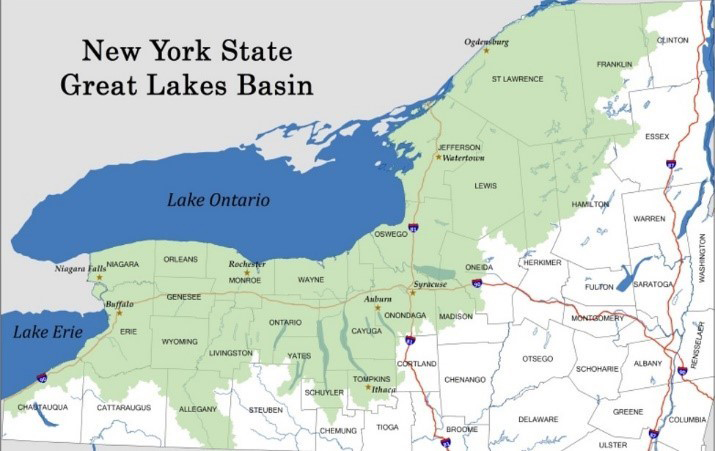
New York’s Great Lakes Basin Small Grants program has awarded more than $2 million in small grants to date for a combined total of 66 projects since the program’s inception in 2015. The five projects selected for this round of New York’s Great Lakes Basin Small Grants funding included three projects in Western New York and two in Central New York (Jefferson County and Oswego County).
The two Central New York projects are as follows.
Cornell Cooperative Extension of Jefferson County: $40,000 for “Seeds of Stewardship: Community-Based Native Seed Network for the Northeast Lake Ontario and St. Lawrence River Region” to launch a native seed collection and propagation program across Jefferson, Lewis, and St. Lawrence counties. The project will train volunteers, develop local seed storage and propagation infrastructure, and utilize native plant material to support habitat restoration and resilience.
Atlantic States Legal Foundation: $39,943 for “A Community-Driven Tree Planting Initiative for Adaptation and Revitalization in Pulaski” to engage residents and partners in planning and planting more than 70 trees in priority locations throughout the village of Pulaski, reducing risks such as flooding and heat stress, enhancing ecosystem services, and supporting long-term environmental stewardship, per the announcement. Guided by the Richland-Pulaski Comprehensive Plan and Climate Action Plan and three inclusive community workshops, residents and local partners will help identify strategic planting locations, develop site-specific plans, and learn about the social, ecological, and economic benefits of trees.
New York Sea Grant, a cooperative program of Cornell University and the State University of New York, administers the program in partnership with DEC’s Great Lakes Program. The program is funded through the New York State Environmental Protection Fund (EPF) and Article 14: the New York Ocean and Great Lakes Ecosystem Conservation Act outlined in the EPF. The 2025-26 enacted state budget increases the EPF to a record $425 million, helping support critical environmental programs such as land acquisition, farmland protection, invasive-species prevention and eradication, enhanced recreational access, water-quality improvement, and “an aggressive environmental justice agenda,” the DEC said.
More information on the New York’s Great Lakes Basin Small Grants program with past project profiles is available online at: nyseagrant.org/glsmallgrants. Those interested can learn more about the New York’s Great Lakes Action Agenda that applies ecosystem-based management to conserve, protect, and enhance New York State’s Great Lakes natural resources on DEC’s website: dec.ny.gov/nature/waterbodies/lakes-rivers/great-lakes/action-agenda.