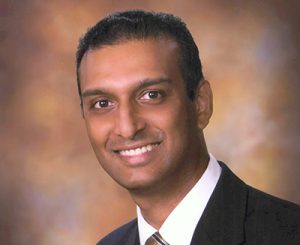
UTICA, N.Y. — The American Heart Association has awarded a $160,000 postdoctoral fellowship to Abhishek Mishra, Ph.D., a postdoctoral fellow at Masonic Medical Research Institute (MMRI). Mishra works in the laboratory of Maria Kontaridis, Ph.D., MMRI executive director and the Gordon K. Moe professor and chair of biomedical research and translational medicine at MMRI. This […]
Already an Subcriber? Log in
Get Instant Access to This Article
Become a Central New York Business Journal subscriber and get immediate access to all of our subscriber-only content and much more.
- Critical Central New York business news and analysis updated daily.
- Immediate access to all subscriber-only content on our website.
- Get a year's worth of the Print Edition of The Central New York Business Journal.
- Special Feature Publications such as the Book of Lists and Revitalize Greater Binghamton, Mohawk Valley, and Syracuse Magazines
Click here to purchase a paywall bypass link for this article.
UTICA, N.Y. — The American Heart Association has awarded a $160,000 postdoctoral fellowship to Abhishek Mishra, Ph.D., a postdoctoral fellow at Masonic Medical Research Institute (MMRI).
Mishra works in the laboratory of Maria Kontaridis, Ph.D., MMRI executive director and the Gordon K. Moe professor and chair of biomedical research and translational medicine at MMRI.
This funding will support Mishra’s ongoing research in heart failure with preserved ejection fraction (HFpEF) for two years. It’s a condition that affects millions worldwide, MMRI said.
“This grant is funding a study which could ultimately affect millions of people worldwide,” Dr. Jennifer Carbone Zuccaro, president of the Mohawk Valley board of directors of the American Heart Association, said in the announcement. “Research is critical to understanding conditions like heart failure, so that we can build a way to diagnose, treat, and improve current therapies. Our continued investment in MMRI and Dr. Kontaridis’ lab fuels our local economy and shows the importance of the work being done in the Mohawk Valley. We are incredibly fortunate to have a lab like MMRI and scientists like Dr. Kontaridis here locally in our community and supported nationally by organizations like the American Heart Association.”
Zuccaro is also a pediatric cardiology and intensive-care physician at Golisano Children’s Hospital at Upstate Medical University in Syracuse.
Mishra’s research builds upon the laboratory’s study in “Science Signaling,” which identified PTP1B, a key regulator of the heart’s energy balance, as a molecular switch that determines whether the heart uses fat or sugar as fuel. He aims to “deepen the mechanistic insights into how PTP1B dysregulation contributes to cardiac dysfunction under metabolic stress in HFpEF,” MMRI said.
“Looking ahead, we’re excited to move toward the translational potential of PTP1B inhibition, exploring targeted inhibitors as novel therapeutic strategies for cardiometabolic diseases,” Mishra said. “This could pave the way for clinical interventions that improve patient outcomes in clinical settings. I’m grateful for the American Heart Association’s support in advancing this critical area of cardiovascular science.”
Mishra joined MMRI in 2024, bringing his expertise in heart failure and potential regenerative therapies. Prior to joining MMRI, he completed his Ph.D. at Dalhousie University, Nova Scotia, Canada.