Inflation, interest rates, tariffs. These economic and business topics make for splashy headlines in the national news, but they aren’t making the same waves across Central New York’s business community according to a local banking expert. “Central New York is always a little more moderate,” when it comes to the effect of such economic changes, […]
Already an Subcriber? Log in
Get Instant Access to This Article
Become a Central New York Business Journal subscriber and get immediate access to all of our subscriber-only content and much more.
- Critical Central New York business news and analysis updated daily.
- Immediate access to all subscriber-only content on our website.
- Get a year's worth of the Print Edition of The Central New York Business Journal.
- Special Feature Publications such as the Book of Lists and Revitalize Greater Binghamton, Mohawk Valley, and Syracuse Magazines
Click here to purchase a paywall bypass link for this article.
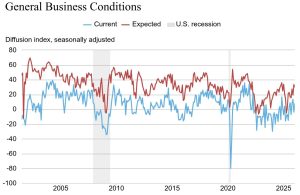
Inflation, interest rates, tariffs. These economic and business topics make for splashy headlines in the national news, but they aren’t making the same waves across Central New York’s business community according to a local banking expert.
“Central New York is always a little more moderate,” when it comes to the effect of such economic changes, says Lindsay Weichert, regional president at Community Bank, N.A., a unit of DeWitt–based Community Financial System, Inc. (NYSE: CBU), which has more than
$16 billion in total assets and is one of the 100 biggest banks in the U.S.
Inflation, while higher than some may like, has leveled out, she says. That allows businesses to factor those price changes in when planning. And at 2.7 percent in June, inflation is vastly improved from a high of 9 percent in 2022, she adds.
Stock markets are trading near all-time highs and unemployment rates remain historically low. All that paints a fairly strong economic picture, which we are also seeing in Central New York, Weichert contends.
Across Community Bank’s business portfolio, “sales are still holding really strong,” she says. Many of the bank’s business customers are posting solid earnings results.
“Businesses … are really resilient right now despite all the stuff you see in the headlines,” Weichert contends.
Looking at other signs of economic health, she says Community Bank is seeing consistent and solid capital expenditures and credit-line utilization rates by business clients. There aren’t any concerning upticks in credit use that could signal economic distress.
“We’re seeing really strong credit metrics,” Weichert says. The bank isn’t seeing an increase in charge-offs or delinquencies with its business customers either.
Interest rates have also remained relatively stable — the benchmark 10-year U.S. Treasury Note has spent much of the last five months in a range between 4.2 percent and 4.6 percent. This allows businesses, such as those planning capital projects, to have increased visibility and factor those rates into their costs. Current interest rates are nowhere near historic highs. However, coming on the heels of some historically low interest rates, particularly during the pandemic, makes the rates now seem much higher.
The rates could impact some businesses when it comes to projects, particularly because a lender will want to see a significant capital investment from the company to offset borrowing. Businesses that don’t have the capital to invest may need to delay projects for the time being, but Weichert isn’t seeing a lot of that happening.
The overall trend for the region is moderate expansion, she says. That is bolstered by several factors including projects like Micron.
The nature of the Central New York business community also contributes to that sense of stability.
“All the stakeholders in the community work very well together,” Weichert explains. On top of that, businesses and lenders in the region are disciplined. Businesses tend not to expand at outrageous rates, while lenders follow good lending practices, she explains.
Community Bank is feeling the positivity with its own corporate expansion plans.
“We decided we wanted to put up more branches,” Weichert says. Community Financial System is also investing $42 million in its Syracuse–area headquarters and will invest a total of $110 million in new branches and new regional headquarters in areas such as Rochester.
“We think it’s a strong [regional] economy, and we think it’s going to be profitable for the bank,” she says.