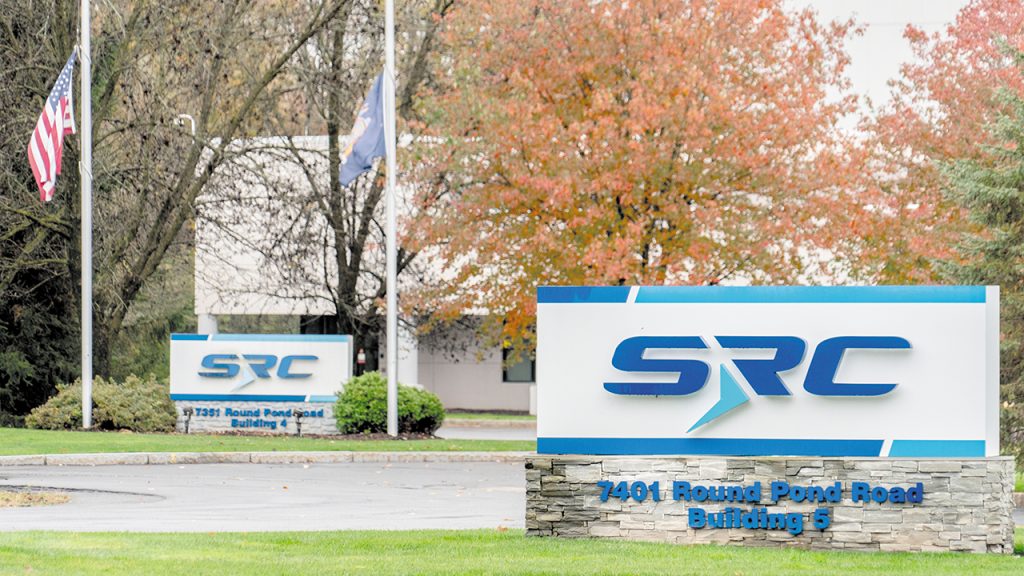
It’s part of a $1 billion sales agreement with the U.S. government. CICERO — SRC, Inc. plans to send a suite of its advanced C-UAS (counter-unmanned aircraft systems) technologies to international buyers as a part of a $1 billion foreign-military sales agreement between the U.S. government and the country of Qatar. It marks the first […]
It’s part of a $1 billion sales agreement with the U.S. government.
CICERO — SRC, Inc. plans to send a suite of its advanced C-UAS (counter-unmanned aircraft systems) technologies to international buyers as a part of a $1 billion foreign-military sales agreement between the U.S. government and the country of Qatar.
It marks the first international sale of the U.S. Army’s fixed site–low, slow, small, unmanned aircraft system integrated defeat system (LIDS), “underscoring SRC’s role as a global leader in the defense against UAS threats,” per the company’s announcement.
Based in Cicero, SRC, Inc. is a nonprofit defense research and development company.
SRC’s LIDS technologies are engineered to detect, track, identify and defeat unmanned aircraft systems, which are a “growing threat” in modern conflict zones. Under this agreement, SRC will deliver mission-critical technologies that enable detection and “robust electronic-warfare capabilities” to international buyers for the first time.
These technologies allow for layered defense at fixed-site locations and provide real-time situational awareness and threat response, SRC said. The inclusion of LIDS in the agreement “highlights the urgency with which nations are addressing the rising threat” of unmanned systems to critical infrastructure and defense operations.
“We’re proud that our proven systems will be deployed internationally to secure critical airspace, defend warfighters and protect high-value infrastructure,” Kevin Hair, president and CEO of SRC, Inc., said in the announcement. “In today’s rapidly evolving threat landscape, advanced sensing and electronic warfare capabilities are essential. This achievement reflects the strength of the LIDS team, the trust placed in us by our government partners and the operational relevance of American-engineered solutions.”
LIDS supports the rapid detection and engagement of unmanned aircraft, while maintaining low collateral damage to minimize risk to friendly forces and surrounding infrastructure, SRC said.
As a “system of systems,” SRC went on to say that “LIDS allows for the swift integration of emerging sensors and effectors, ensuring the system can adapt to evolving threats and remain effective across future mission sets. Its modular design supports deployment in both fixed and mobile configurations, offering tactical commanders the flexibility to address a wide range of operational scenarios.”