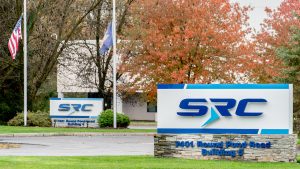
SYRACUSE, N.Y. — Syracuse University (SU) says it will use $900,000 in federal funding to create new Building Training and Assessment Centers (BTAC) to train undergraduate and graduate engineering students and “build a clean energy workforce.”
The U.S. Department of Energy (DOE) awarded the money.
The SU-BTAC, aligned with the vision of the DOE BTAC program, will educate and provide hands-on training for engineering students to perform assessments. Those assessments will focus on reducing the energy burden for commercial and institutional buildings with a focus on disadvantaged communities, SU said.

Latest Tax Scams and Schemes for Tax Filing Season
With the 2024 tax filing season upon us, now is a great time to remind taxpayers to stay vigilant and watch out for bogus tax strategies and schemes. Now more
Time to Prepare for OSHA’s new “Walkaround Rule”
In a development consistent with President Biden‘s growing reputation as leading the most pro-union administration in history, the Occupational Safety and Health Administration (OSHA) has published a rule allowing employees
The SU-BTAC will be housed at the Syracuse Center of Excellence (SyracuseCoE) at 727 E. Washington St. in Syracuse.
With Syracuse CoE, the SU-BTAC will create relationships and company-screening opportunities to connect commercial and institutional buildings with existing programs in the region relating to unions, apprenticeships, trade organizations, community programs, and others.
“I see the SU-BTAC as an expansion of the Syracuse University Industrial Assessment Center (SU-IAC), now SU-ITAC, and as a great experiential learning opportunity for our students. Not only are we able to help commercial and institutional buildings with reducing their energy burden, but we are also able to teach and mentor the next generation of energy engineers,” Jackie Anderson, director of IAC and associate teaching professor in mechanical and aerospace engineering, said in the school’s announcement.
SU-BTAC will be led by faculty from Syracuse University and supported by faculty from the City University of New York. The center will be co-directed by professor Ian Shapiro with involvement from professors Jensen Zhang and Bing Dong, SU noted.