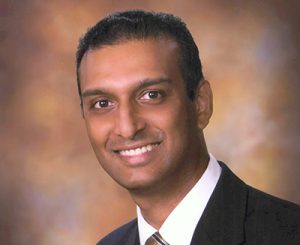
McGovern took the lead on researching integral products and components of the UAS wind tunnel, including a global navigation satellite system (GNSS) simulator and motion capture environment. GNSS is much like the GPS in a phone, but in addition to time and location, GNSS also determines speed, vehicle motion, and more.
Utilizing a GNSS simulator within a closed environment allows for the safe flight-testing of drones in different scenarios and weather conditions, “removing the potential risk” of putting people or property in harm’s way, NUAIR said.
Jean-Eric van der Elst Portero

Is Your Small Business Ready for the Unexpected?
Essential Coverage Every Family Enterprise Needs Small businesses are built on big dreams, and those dreams run even deeper when family is involved. You’ve invested your time, money, and heart

Ask the Expert: Solving Your Workforce Challenges with Registered Apprenticeship
Finding skilled workers isn’t getting any easier. Whether you’re facing retirements, turnover, or a lack of qualified candidates, you’re not alone. Businesses across every industry are struggling to fill critical

As a computational fluid dynamics (CFD) engineering intern, van der Elst Portero worked at simulating a newly designed open-loop wind tunnel concept that would be able to produce a multitude of flow conditions, such as gusts of wind and turbulent shear flow. The challenge was to “precisely replicate” urban atmospheric weather conditions that a drone might encounter.
Understanding and calculating for various changes in weather patterns is an “essential piece” to the commercialization of drones, especially within an urban environment, which can cause “major wind variations from block-to-block,” NUAIR said.
The Syracuse graduate student is currently identifying and investigating upstream inlet conditions, such as Reynolds Averaged Navier Stokes (RANS) and Large Eddy Simulation (LES) Turbulent models, that will produce the desired downstream effects for drones to encounter.
Using the predicted model’s data, van der Elst Portero has been able to analyze turbulent kinetic energy (TKE) and TKE dissipation rates of the primary flow, and is investigating vortex mitigation techniques. He is also currently designing and implementing a 3-component, closed-loop testing system which will be able to quantify a drone’s ability to “accurately” execute a real-life flight plan under hazardous weather conditions.