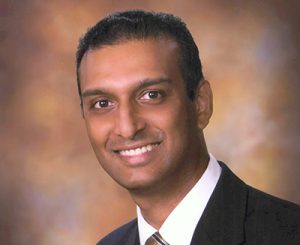
VESTAL, N.Y. — M. Stanley Whittingham, a 2019 Nobel laureate and distinguished professor at Binghamton University, has been named a fellow of the Royal Society.
The Royal Society, founded in 1660, is the oldest scientific academy in continuous existence. It is a fellowship of many of the world’s most eminent scientists and the United Kingdom’s national academy of sciences, as described in a Binghamton University news release.
Whittingham won the 2019 Nobel Prize in Chemistry for “pioneering research” leading to the development of the lithium-ion battery.
New York State Now Requires 30-Minute Paid Lactation Breaks
For the past year or so, New York employers have been adapting to the State law protections granting employees returning from childbirth leave the right to express breast milk at

How to Generate Staff Buy-In for Cloud Document Management
How businesses manage important documents has changed quite a bit throughout history. Information that used to be housed in filing cabinets and rolodexes is now stored digitally, often in one
“I am honored to be recognized beside so many outstanding researchers,” Whittingham said in the release. “The work being conducted by this group of scientists is important and touches a diverse array of fields, and I thank the Royal Society for helping to raise the profile of my research and that of my colleagues.”
This year, the organization elected 52 fellows, 10 foreign members, and one honorary fellow who were all selected for their “exceptional contributions to science.” These new fellows and foreign members join the ranks of Michael Faraday, Isaac Newton, Charles Darwin, Albert Einstein, Dorothy Hodgkin, Lise Meitner, Stephen Hawking, and William Hume-Rothery.
“Stan is a pioneer and I am thrilled that the Royal Society would recognize his important contributions to the field of chemistry,” Binghamton University President Harvey Stenger said. “We’re proud of him and hope that this appointment will bring further attention to the groundbreaking research going on in his lab.”