ITHACA — The largest donation in the history of Cornell University’s College of Agriculture and Life Sciences (CALS) will help establish the Cornell CALS Ashley School of Global Development and the Environment. The school is named in honor of Cornell graduate Stephen Ashley, who donated $55 million to endow the school, Cornell said. It combines […]
Already an Subcriber? Log in
Get Instant Access to This Article
Become a Central New York Business Journal subscriber and get immediate access to all of our subscriber-only content and much more.
- Critical Central New York business news and analysis updated daily.
- Immediate access to all subscriber-only content on our website.
- Get a year's worth of the Print Edition of The Central New York Business Journal.
- Special Feature Publications such as the Book of Lists and Revitalize Greater Binghamton, Mohawk Valley, and Syracuse Magazines
Click here to purchase a paywall bypass link for this article.
ITHACA — The largest donation in the history of Cornell University’s College of Agriculture and Life Sciences (CALS) will help establish the Cornell CALS Ashley School of Global Development and the Environment.
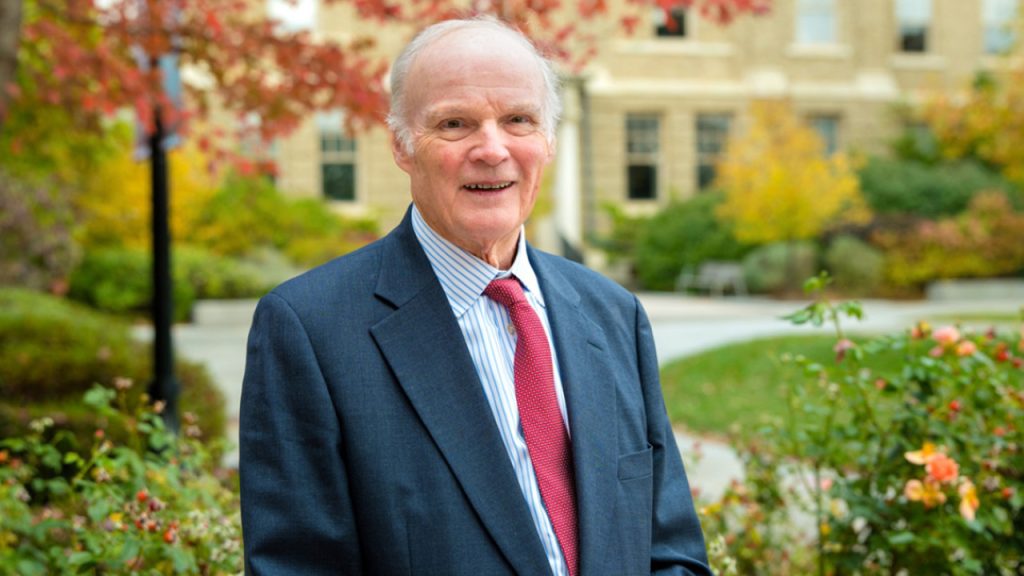
The school is named in honor of Cornell graduate Stephen Ashley, who donated $55 million to endow the school, Cornell said. It combines the departments of global development and natural resources and the environment, per the university’s Dec. 16 announcement.
Ashley is chairman and CEO of The Ashley Companies, a Rochester–based firm that specializes in property management, brokerage, financing, and real-estate investment.
“Steve Ashley’s decades of leadership, advocacy and support for Cornell have had a profound impact on the university,” Cornell University President Michael Kotlikoff said in the announcement. “This investment to create the Ashley School is both timely and visionary, allowing us to bring together the expertise in agricultural, life, environmental and social sciences that underpin environmental and human well-being locally and globally. We are so grateful to Steve for his generosity, partnership and friendship.”
Ashley has been involved with Cornell University for more than a half century, including 55 years on the University Council, 16 years on the Cornell board of trustees, and 10 years as co-chair of the Far Above capital campaign, the school said.
In 2016, he received the Frank H.T. Rhodes Exemplary Alumni Service Award, the university’s highest award for alumni service.
“My family has had a strong, multigenerational relationship with Cornell,” Ashley said. “I met my wife, Janice, at Cornell and over the years, Cornell has influenced much of my personal and professional life. I am delighted to be able to support this initiative, which has been so thoughtfully framed and structured. I appreciate how it creates even stronger collaborations between agriculture, environmental science, economics and research to positively impact communities.”
CALS plans to recruit at least 10 additional faculty members to the new school, including three who will focus on agricultural, development and environmental economics, Benjamin Houlton, dean of CALS, said in the Cornell announcement.
Houlton said the concept for the school began with growing recognition of shared teaching, research and extension interests, especially among new faculty in the departments of natural resources and the environment and global development.
“The Ashley School will create a dynamic ecosystem for discovery, experiential learning and innovation, transcending disciplines to spark scientific breakthroughs and real-world economic benefits for New York state and the world,” Houlton said. “Steve’s vision will allow us to leverage research, teaching and extension to address many of the world’s greatest challenges — personifying our land-grant mission.”
The school will continue to support the two departments’ two undergraduate degrees (including one, environment and sustainability, that is shared with the College of Arts and Sciences), five undergraduate minors, four master’s degree programs and two Ph.D. degrees. Enrolled students won’t be affected, and students seeking to enroll in those programs can continue to do so. No new programs, majors or minors are forming at this time, but future formations will be considered in collaboration with faculty, CALS leadership said.